
Liaoyuan
Jilin Sheng, China
Why visit Liaoyuan?
Liaoyuan (辽源) is a small prefecture-level city tucked into the southern hills of Jilin Province, where the Songliao plain begins to fold up into the Changbai foothills. For much of its modern history it was a coal town — mining expanded heavily during the Japanese occupation era (1931–1945), and a memorial site preserving the graves of forced-labour miners from that period remains one of the city's most sobering attractions. Coal extraction continued after 1949 until the seams were largely worked out by the 1990s, and Liaoyuan has since reoriented its economy around textiles (it is a significant sock-manufacturing centre), agriculture, and light industry.
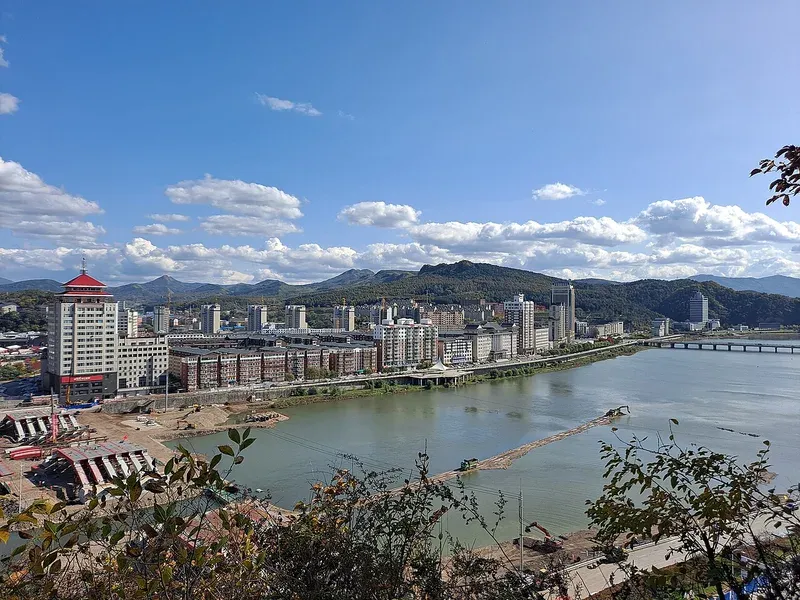
For travellers, Liaoyuan is not a marquee destination — it sees very few foreign visitors and relatively few domestic tourists outside Jilin itself. Come for an honest slice of small-city Northeast China: river walks, a hilltop pavilion, sober historical memory, and Dongbei food and drinking culture without the crowds of Changchun or Shenyang. The compact urban core sits on the Dongliao River, split between districts on either bank, with most hotels and the railway station on the north side.
Climate is solidly continental and harsh: long, dry, bitterly cold winters (regularly well below −20°C), a brief spring, hot humid summers with afternoon thunderstorms, and a crisp autumn. Late May through early October is by far the most comfortable window.
Planning Liaoyuan? Tell us your dates and we’ll tailor the trip.
Ask on WhatsAppHow do you get there?
By Plane
Liaoyuan has no commercial airport of its own. The nearest options are Changchun Longjia International Airport (CGQ), the main gateway, and Shenyang Taoxian International Airport (SHE) further southwest, both requiring an onward train or bus connection.
By Train
Liaoyuan Railway Station sits on a branch line and is the principal way in, with direct conventional trains to Changchun, Siping (the usual changeover point for high-speed connections), Shenyang, Tonghua and Meihekou. For high-speed travel from Beijing or Dalian, the standard routing is HSR to Siping or Changchun, then a regional train or bus down to Liaoyuan.
Book through the 12306 app or Trip.com. Tickets around major national holidays sell out well ahead — buy as soon as the booking window opens.
By Car / Road
Liaoyuan is connected by expressway to Changchun, Siping, Shenyang and Tonghua. Long-distance buses run frequently from Changchun and Siping, generally cheaper than the train. Self-drive is straightforward in summer; in winter, snow and black ice on the expressways are serious.
Liaoyuan's centre is compact and very walkable. City buses cover the wider area for a flat low fare. Taxis are plentiful and cheap. Didi ride-hailing works reliably.
There is no metro. You'll see informal three-wheeled electric carts ferrying locals on short hops — agree the fare before getting in. Standard China-wide caution applies: insist taxi drivers use the meter, and don't accept rides from touts hanging around the railway station forecourt.
What are the things to do?
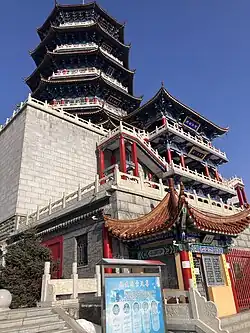
Kuixing Tower — a reconstructed Qing-style hilltop pavilion in the city centre, dedicated to the Daoist deity of literary success. The climb up gives the best panoramic view of Liaoyuan and the Dongliao River valley.
Memorial to the forced-labour miners — the city's most important historical site and a designated patriotic-education base, documenting the labourers who died in the Liaoyuan coal mines under Japanese occupation between 1931 and 1945. Sombre and well-curated, and essential context for understanding the Northeast.
A landscaped forest park on the city's outskirts and a working agricultural demonstration garden offer pleasant half-days in the warmer months.
Walk the Dongliao River embankment — landscaped with paths and willows, this is where the city actually lives in the warm months: morning tai chi, evening square-dancing, kite-flying, and grandparents with grandchildren.
Day-trip into the surrounding hills — the low forested hills around Liaoyuan are popular weekend escapes for locals in summer; ask your hotel for the current best-accessed trailhead.
Winter ice activities on the river — when the Dongliao freezes solid (typically December to early March), informal skating and ice-sledding appear.
Spend an evening at a local barbecue joint with cold beer and skewers — the most authentic "thing to do" in any Northeastern Chinese city.
Sock-factory outlet shopping — Liaoyuan is a significant hosiery production hub, and outlet markets near the manufacturing zones sell branded and unbranded socks at low prices.
Planning Liaoyuan? Want these on a customised itinerary?
Ask on WhatsAppWhere to eat?
Liaoyuan's food is straight-down-the-line Dongbei (Northeastern) cuisine: hearty, generous, garlicky, and built for cold weather. Look for guo bao rou (sweet-and-sour fried pork), di san xian (stir-fried potato, eggplant and green pepper), suan cai bai rou (fermented cabbage and pork-belly stew), Northeastern jiaozi (dumplings), and shaokao (charcoal skewers), the universal Dongbei evening meal.
Local jiaozi houses around the railway station are a reliable budget option, as are the evening barbecue stalls that fill with smoke and crowds after dark; Northeastern home-style restaurants serve the classic stewed dishes at moderate prices.
Vegetarians can eat well by sticking to vegetable stir-fries and ordering dumplings explicitly with vegetable filling, but pure-vegetarian restaurants are rare in a city this size. Halal food is available at Hui Muslim noodle houses. Gluten-free is genuinely difficult; soy sauce is everywhere.
Where to drink?
The Northeast drinks hard. The local default is cold lager with food — Snow, Harbin Beer and Tsingtao dominate. Baijiu appears at any sit-down dinner with locals; pace yourself and eat continuously.
Non-drinkers have plenty of options: green tea, jasmine tea, hot soy milk at breakfast, and the national line-up of bubble tea and coffee chains.
Tap water is not drinkable. Stick to bottled water, boiled water, or canned/bottled drinks. Ice in lower-end establishments is best avoided.
Planning Liaoyuan? We’ll book the stays and dining for you.
Ask on WhatsAppWhere to stay?
Liaoyuan has simple guesthouses near the railway station, national budget chains (7 Days Inn, Hanting, Home Inn and similar), and a handful of mid-range city hotels in the centre offering the best comfort available locally.
What should you buy?
Liaoyuan is a manufacturing city, not a craft town, and shopping reflects that:
- Socks and hosiery — look for outlet markets and wholesale streets in the textile-industry zones.
- Local agricultural products — ginseng, deer-antler products, black fungus, pine nuts and wild mushrooms from the Changbai foothills. Buy from established pharmacies or supermarket chains rather than street stalls.
- Northeastern liquor and rice — locally distilled baijiu and Jilin's short-grain rice make decent gifts.
Main shopping is concentrated in the central commercial district and around the railway station. Bargaining is normal at outdoor markets and small independent shops; fixed prices apply in malls and supermarkets.
Where to go next?
- Changchun — a couple of hours by train. Jilin's provincial capital, with the former Manchukuo Imperial Palace and Stalinist-era boulevards.
- Siping — about an hour by train. Gateway to high-speed rail and home to Battle of Siping memorials from the Chinese Civil War.
- Jilin City — a few hours away. Famous nationally for winter rime-ice along the Songhua River.
- Tonghua — a couple of hours south. A foothill city and base for excursions into the Changbai mountain region.
- Changbai Mountain / Changbaishan — best reached via Tonghua or Yanji. Jilin's spectacular volcanic massif on the North Korean border, with the crater lake Tianchi.
- Shenyang — a few hours by road or via Siping by HSR. The Northeast's largest city, with the UNESCO-listed Mukden Palace.
Nearby in Jilin Sheng
More places to explore around Liaoyuan.

Guide content as of July 2026. Portions adapted from Wikivoyage, CC BY-SA 4.0.

Contact Us
Get in touch with us.
Get in touch
Contact Us
Tell us where you'd like to go and how you like to travel. A real Tripcuro planner — not a bot — will craft an itinerary around you.
- Personalised, hassle-free planning end-to-end
- Transparent pricing, no hidden costs
- 24/7 support for complete peace of mind