
Longjing
Jilin Sheng, China
Why visit Longjing?
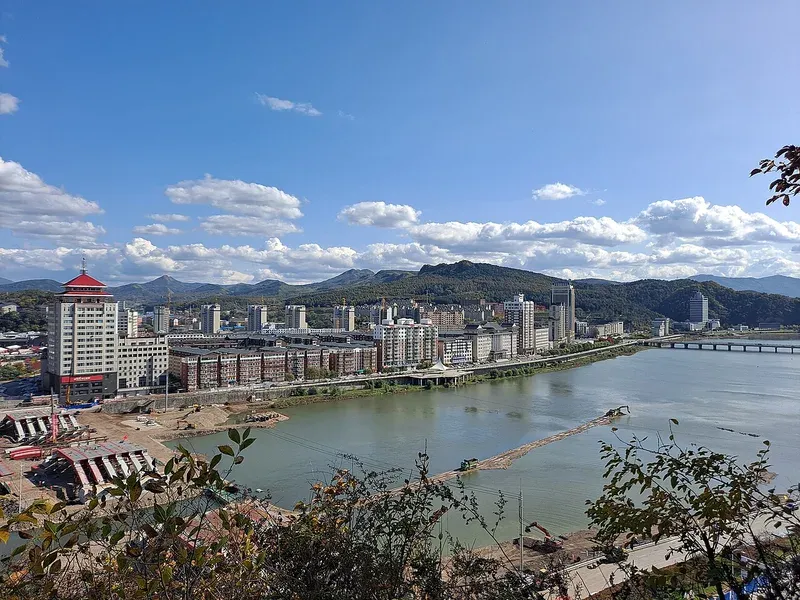
Longjing (龙井) is a county-level city in the Yanbian Korean Autonomous Prefecture, in the southeast corner of Jilin province in northeastern China. It sits on the Tumen River, directly across the water from the North Korean city of Hoeryong, and it is often called the heartland of Chinese Korean (Joseonjok) folk culture. Of the roughly 178,000 residents recorded in the late 2010s, ethnic Koreans form the majority, and you will hear Korean spoken on the street as commonly as Mandarin. Bilingual signage, Korean-style courtyards, cold-noodle houses and a surprisingly strong local coffee culture give Longjing a character distinct from a typical inland Chinese city of its size.
The city grew as a farming and market town in a broad, fertile valley, and it remains proud of its agricultural bounty: rice, Chinese pears (Pyrus pyrifolia), matsutake mushrooms, red sun-cured tobacco, Yanbian cattle and fine-wool sheep are all associated with the area. The wider county covers about 2,208 square kilometres with a forest coverage rate above 70 percent, so mountains, orchards and nature reserves are never far from the built-up centre. Administratively the city is organised into two subdistricts (Anmin and Longmen), several towns and townships, but for the visitor the compact downtown, laid out with wide streets and squared-off blocks, is walkable end to end.
The climate is a cold continental one with a strong monsoon influence. Winters are long and severe, with record lows around -30 degrees Celsius, while summers are mild, green and comparatively short, with most of the year's modest rainfall (around 570 mm) falling between June and August. Spring tends to be dry and windy; autumn is crisp and clear. Come in the warmer half of the year for orchards, hiking and folk villages, and come in deep winter only if you are prepared for genuine cold.
Planning Longjing? Tell us your dates and we’ll tailor the trip.
Ask on WhatsAppHow do you get there?
By Plane
The nearest airport is Yanji Chaoyangchuan International Airport (IATA: YNJ), which lies roughly 12 to 13 kilometres north of Longjing and serves the whole Yanbian prefecture. It handles domestic flights to cities such as Beijing, Shanghai and Changchun, plus some international routes. From the airport the simplest option to Longjing is a taxi or ride-hail car for the short cross-town hop; alternatively travel the few kilometres into Yanji first and pick up the frequent Yanji to Longjing coach. Confirm current airport operating status before booking, as the runway underwent maintenance work in 2025.
By Train
Longjing is not the region's high-speed hub. The main bullet-train gateway is at Yanji, on the Changchun to Hunchun intercity high-speed railway, which links the prefecture to Jilin, Changchun and onward to the national network at speeds up to 250 km/h. From the Yanji high-speed station it is a short bus or taxi transfer to Longjing. Book intercity high-speed tickets in advance through the national railway channels, especially around holidays, and carry your passport, which is required for ticket collection and boarding.
By Car / Road
Longjing is closely tied to Yanji, the prefectural capital, which sits only about 20 minutes away by road. Frequent coaches run from Yanji's Dongbeiya (东北亚) bus station to Longjing; the fare is only a few yuan (around 5.5 CNY) and the trip takes roughly 20 minutes. Roads across the Yanbian basin are generally good, and self-drivers or hired cars can reach other prefecture towns such as Tumen and Hunchun within one to two hours. Because this is a sensitive border zone along the Tumen River, carry identification and be mindful of restricted areas near the frontier.
Longjing's downtown is small and flat, and walking is the most practical way to cover it: the central pedestrian street and main squares are easily explored on foot. Local city buses cover the built-up area and run out to nearby villages for a couple of yuan a ride, paid in cash or by local QR-code apps. Taxis are inexpensive and plentiful for short hops, and Chinese ride-hailing apps such as Didi operate in the area; agree on the meter or app fare rather than negotiating. For outlying sights like orchards, nature reserves and folk villages, a taxi hired for a half-day or a car with driver is the most efficient choice, as public transport to rural spots can be infrequent.
What are the things to do?
- Korean Folklore Museum (朝鲜族民俗博物馆): The signature cultural attraction, a large museum holding several thousand Korean folk artifacts alongside hundreds of historical relics, dedicated to the Joseonjok community whose culture is preserved here more strongly than almost anywhere else in China. A must for understanding the city's identity.
- Oriental Bear Paradise (东方熊乐园): Described as one of China's largest bear-breeding bases, a wildlife-focused attraction on the outskirts of the city.
- The Dragon Well (龙井): The historic well that gives the city its name, a small but symbolic landmark tied to local Korean settler history, marked near the city centre.
- 10,000 Mu Orchard (万亩果园): A vast fruit-growing area, reputed to be one of Asia's largest orchards, most rewarding to visit in blossom season and again at harvest.
- Jilin Tianfozhishan National Nature Reserve: A protected area of pine forest and matsutake habitat in the county, good for nature walks and appreciating the region's rich biodiversity.
- Tumen River border viewpoints: Points along the river offer distant views across to North Korea; treat these as a sensitive border area and observe local rules.
Longjing rewards slow, culturally-minded travel rather than a checklist of big-ticket activities. Spend time in the folk-culture sites and, better still, in one of the surrounding Korean villages, where traditional architecture, food and music give a living sense of Joseonjok heritage. In blossom and harvest seasons, orchard visits and rural drives through the valley are a highlight. Nature lovers can hike in the county's forested reserves and hills. The city has an unexpectedly lively café scene for its size, so lingering over coffee is a genuine local pastime. Border-interest travellers use Longjing as a base for excursions to Tumen River viewpoints and other frontier towns. In winter, the wider Yanbian region is a jumping-off point for cold-weather scenery and regional skiing.
Planning Longjing? Want these on a customised itinerary?
Ask on WhatsAppWhere to eat?
Food is one of the best reasons to visit. Longjing sits at the heart of Chinese Korean cuisine, so the local table leans toward Korean flavours: cold buckwheat noodles (naengmyeon), grilled meats, spicy soups, an array of banchan side dishes, and abundant kimchi. Rice, grown in the surrounding paddies, is a point of local pride, and dishes built around Yanbian beef are common. Dog-meat soup is a traditional regional dish still served in some establishments, which some visitors will prefer to avoid. Vegetarians can generally assemble a meal from the many vegetable banchan, tofu and noodle dishes, though it helps to ask, as broths and side dishes may contain meat or fish. For specific choices, family-run Korean restaurants and cold-noodle houses cluster around the downtown and pedestrian street.
Where to drink?
The standout local drink culture is coffee: Longjing has a notably strong café scene for a city its size, and small independent coffee shops run by young locals are part of the town's laid-back atmosphere. On the Korean side of the table you will find makgeolli-style rice wine and soju alongside Chinese baijiu and beer in restaurants. Barley tea and other simple teas accompany meals. As across China, tap water is not considered safe to drink untreated: stick to bottled or boiled water, which is universally available and inexpensive.
Planning Longjing? We’ll book the stays and dining for you.
Ask on WhatsAppWhere to stay?
Most travellers base themselves in Longjing's simple local guesthouses and business hotels, or stay in nearby Yanji, which has a far wider range of accommodation and is only about 20 minutes away.
Budget: Small local guesthouses (招待所) and inexpensive inns around the town centre offer basic rooms at low nightly rates. Yanji, a short hop away, has numerous budget hostels and guesthouses for those wanting more choice.
Mid-range: Standard Chinese business hotels in central Longjing provide clean en-suite rooms with heating, essential in winter. For a wider mid-range selection, Yanji is the practical option.
Upscale / heritage: Longjing itself has limited high-end lodging; travellers seeking upscale hotels generally stay in Yanji.
What should you buy?
Shopping in Longjing centres on local produce and Korean specialties rather than luxury goods. Look for the area's celebrated agricultural products: Yanbian rice, Chinese pears, matsutake mushrooms in season, and locally cured red tobacco. Korean-style foodstuffs such as kimchi, chili pastes, dried side dishes and rice cakes are widely sold in markets and small shops, and make good edible souvenirs. Korean folk crafts and clothing linked to the region's heritage can be found around the cultural sites and central shopping street. Bargaining is modest: fixed prices are normal in shops, while a little polite negotiation is acceptable at open markets.
Where to go next?
- Yanji (延吉): The prefectural capital, about 20 minutes by road, with the region's main airport, high-speed rail, museums and the fullest range of Korean dining and nightlife.
- Tumen (图们): A border city on the Tumen River opposite North Korea, roughly one to two hours away, known for its riverside promenade and cross-border views.
- Hunchun (珲春): A frontier city near the point where China, Russia and North Korea meet, about two hours from Yanji, a gateway for border tourism.
- Changbai Mountain (Changbaishan): The region's premier natural attraction, a volcanic massif famed for the crater lake known as Heaven Lake, a longer excursion best done as a multi-day trip from Yanbian.
- Longjing's Korean folk villages: Several traditional villages in the surrounding countryside offer close-up Joseonjok culture and, in places, distant views toward North Korea, reachable as short day trips.
Nearby in Jilin Sheng
More places to explore around Longjing.

Guide content as of July 2026.

Contact Us
Get in touch with us.
Get in touch
Contact Us
Tell us where you'd like to go and how you like to travel. A real Tripcuro planner — not a bot — will craft an itinerary around you.
- Personalised, hassle-free planning end-to-end
- Transparent pricing, no hidden costs
- 24/7 support for complete peace of mind