
Dunhua
Jilin Sheng, China
Why visit Dunhua?
Dunhua (敦化市) is a county-level city in the Yanbian Korean Autonomous Prefecture, in the southeastern part of Jilin province in northeastern China. Sitting among the northern folds of the Changbai Mountains, it covers close to 11,957 square kilometres, which makes it the largest county-level division in Yanbian by area, yet its population is only around 390,000 (2020 census), so the sense of open forest, river valley and mountain is never far away. Like the rest of Yanbian, Dunhua has a strong ethnic Korean presence, and you will see Korean script beside Chinese on street signs, shopfronts and government buildings.
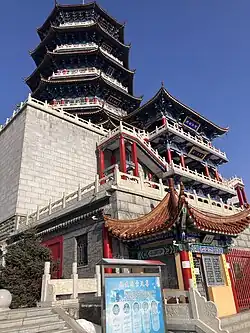
The city carries an unusually deep history for its size. The surrounding area was the early heartland of the Balhae (Bohai) kingdom, and Dunhua served as its capital between roughly 742 and 756, when it was known as Junggyeong. Under the Qing dynasty the settlement was called Aodong (敖东). That long past is still visible today in the Bohai-era tombs and city remains scattered around the district, and it is the main reason cultural travellers make the trip. The other draw is Buddhist: Liuding Mountain (六鼎山) just south of town has grown into one of the region's best-known pilgrimage and sightseeing complexes.
Dunhua has a monsoon-influenced humid continental climate with four sharply defined seasons: long, very cold winters and short, warm summers. January averages around −16°C and July only about 20°C, so this is firmly a place of deep-freeze winters and mild green summers rather than heat. Snow, ice and short daylight define the cold months, while the warm season is brief but comfortable. The compact urban core sits along the Mudan River, and most sights of interest to visitors are either in that centre or a short ride out toward Liuding Mountain.
Planning Dunhua? Tell us your dates and we’ll tailor the trip.
Ask on WhatsAppHow do you get there?
By Plane
The most convenient airport for Dunhua is Yanji Chaoyangchuan International Airport (IATA: YNJ), the main airport of Yanbian, located near Yanji to the east. Long-distance coaches connect the airport and Dunhua in roughly 1 hour 45 minutes. YNJ handles domestic flights to major Chinese cities as well as some regional international services. Onward from the airport you can also reach Dunhua by continuing to Yanji and taking a train. For flight-specific fares and schedules, check at the time of booking.
By Train
Dunhua railway station is the main gateway and sits on the Changchun–Tumen railway and the Jilin–Hunchun intercity (high-speed) railway, putting the city on the fast rail spine that runs from Jilin and Changchun through to Yanji, Tumen and Hunchun. High-speed services are frequent: there are around 26 high-speed trains a day between Changchun and Dunhua, with the trip taking roughly 1.5 to 2 hours. Trains east reach Yanji in well under an hour. All services are operated by China Railway; buy tickets through the official China Railway 12306 channel, the railway's app, or agency counters, and carry your passport, which is required both to buy and to board.
By Car / Road
Dunhua is linked into the northeastern expressway network and is reachable by road from the region's larger cities, with Yanji to the east, Jilin and Changchun to the west, and Mudanjiang (in neighbouring Heilongjiang) to the north. Long-distance and intercity coaches serve the city's bus station from these hubs, and the coach from Yanji Chaoyangchuan airport to Dunhua takes about 1 hour 45 minutes. Winter driving in this region means snow and ice, so allow extra time and use a vehicle suited to the conditions.
Dunhua's urban core is compact and walkable, and most in-town errands can be done on foot. City buses cover the centre and the run out toward Liuding Mountain: bus #8 reaches the Liuding Mountain scenic area for about CNY 2. Metered taxis are the easiest way to cover longer hops, with a ride from the town centre out to Liuding Mountain quoted around CNY 15 to 20. Chinese ride-hailing apps (such as Didi) work here as they do across the country and are handy if you do not speak Chinese. There is no metro. As anywhere, agree on metered fares or use the app rather than a negotiated flat price, and keep small cash for buses.
What are the things to do?
Liuding Mountain Scenic Area (六鼎山) is the headline sight, about 5 km south of the city centre and rated a national AAAAA attraction. It combines Buddhist monuments, historic tombs and lake scenery on one large site. Admission is around CNY 100 to 120 per adult (free for small children under about 1.2 m tall), and opening hours run roughly 07:30 to 16:30; an internal hop-on hop-off sightseeing shuttle costs about CNY 10. Highlights within the area include:
- Jinding Giant Buddha: a bronze seated Buddha standing 48 metres including its lotus base, described as one of the tallest outdoor bronze seated Buddhas in the world. The 48-metre height references the traditional birth date of the Buddha.
- Zhengjue Temple (正觉寺): a large working monastery rebuilt in 1992, said to be among the largest nunneries in the world, with grounds spanning roughly 25 hectares.
- Bohai (Balhae) tombs: more than 100 tombs of the Bohai kingdom's early royalty and aristocracy lie on the mountain, the most famous being associated with a Bohai princess. These, together with the associated museum displays, are the core of Dunhua's claim as the old Balhae capital region.
- Buddhist culture halls: including a hall filled with thousands of small Buddha statues and a jade-Buddha hall, plus an ancestral hall linked to Qing-dynasty legend.
- Liuding Mountain Lake: a small natural lake circled by a wooden plank walkway, a gentle add-on to the temple visit.
Dunhua rewards a slower, cultural pace rather than a checklist of thrills. The main experience is a half- to full-day at Liuding Mountain, walking between the temples, the Giant Buddha, the Bohai tomb field and the lakeside boardwalk; a common route strings the tombs and museum, the ancestral hall, the main temple, the Giant Buddha and the lake together over roughly six to seven hours. Beyond the scenic area, the appeal is the wider Changbai Mountain setting: easy walking in forested, river-valley country in the warm months, and snow scenery in winter. Because Dunhua sits on the fast rail line, it also works well as a base for day trips deeper into Yanbian and toward the Changbai Mountains. Yanbian's Korean cultural life, food and music are part of the experience of simply being in town.
Planning Dunhua? Want these on a customised itinerary?
Ask on WhatsAppWhere to eat?
Dunhua's food is where its Korean heritage shows most clearly, layered over hearty northeastern (Dongbei) Chinese cooking. The signature dish is Korean-style cold noodles (naengmyeon): buckwheat noodles in an ice-cold beef or chicken broth, sharpened with vinegar and topped with egg, cucumber and slices of meat, and eaten enthusiastically even in cold weather. Also look for mandu (Korean-style filled dumplings, with pork, beef or vegetable fillings), grilled meats, kimchi and other banchan side dishes, and ginseng chicken soup, which makes sense in a province built on ginseng. From the Dongbei side of the table you will find generous stews and cold-climate comfort food.
- Cold-noodle houses: small local restaurants specialising in naengmyeon are the quintessential cheap, satisfying Dunhua meal.
- Korean barbecue and banchan spots: mid-range grill restaurants where you cook meat at the table and share pickled sides.
- Dumpling and mom-and-pop shops: budget places turning out fresh mandu and everyday Dongbei dishes.
Vegetable-filled dumplings and vegetable banchan give vegetarians workable options, and the vegetarian dining associated with the Buddhist temple complex at Liuding Mountain is worth knowing about for a meat-free meal.
Where to drink?
Everyday drinks track the wider region: Chinese tea, hot water and soft drinks with meals, and strong grain spirit (baijiu) as the traditional toast. The Korean cultural influence also brings Korean-style drinks into local life, and beer is widely available with grilled-meat meals. Casual eating-and-drinking happens mostly in the restaurants and small barbecue houses rather than a dedicated bar district. On water safety, follow the standard China rule: do not drink the tap water. Stick to bottled water or water that has been boiled, both of which are easy to find.
Planning Dunhua? We’ll book the stays and dining for you.
Ask on WhatsAppWhere to stay?
Dunhua has the usual range of Chinese urban lodging, from budget guesthouses near the railway station up to mid-range business hotels in the town centre, but no specific properties or nightly rates could be verified for this guide. As a general guide, confirm before booking that a given hotel accepts foreign guests, as not every smaller Chinese hotel is registered to, and staying near the station or the central streets keeps you close to transport and food.
What should you buy?
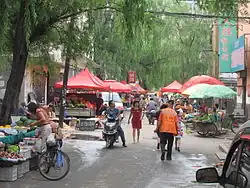
The regional specialities to look for come straight from the Changbai Mountains and the local Korean culture. Ginseng is the signature product of Jilin, which grows the large majority of China's ginseng, and it is sold locally alongside other mountain forest products such as wild mushrooms and medicinal roots. Korean-influenced foodstuffs, from packaged cold-noodle kits to kimchi and other pickles, make easy edible souvenirs. Shopping is concentrated in the town-centre streets and markets rather than in large malls. Prices in shops are generally fixed; in open markets modest bargaining is normal, and buying quantity helps.
Where to go next?
- Yanji: the prefectural capital of Yanbian, less than an hour east by high-speed train, with a lively Korean-Chinese food and market scene.
- Changbaishan / Changbai Mountain area: the great volcanic massif and Heaven Lake on the China–North Korea border, the region's premier natural attraction, reached south from Dunhua via the Yanbian rail and road network (allow the better part of a day; check current train and bus routings).
- Hunchun: at the far eastern end of the intercity rail line, near the point where China, Russia and North Korea meet.
- Jingpo Lake: a large, scenic lava-dammed lake to the north in neighbouring Heilongjiang province, a popular add-on for travellers touring the northeast.
- Jilin and Changchun: the province's major cities to the west, both on the direct high-speed line from Dunhua (Changchun roughly 1.5 to 2 hours away), useful gateways for onward travel.
Nearby in Jilin Sheng
More places to explore around Dunhua.
Guide content as of July 2026.

Contact Us
Get in touch with us.
Get in touch
Contact Us
Tell us where you'd like to go and how you like to travel. A real Tripcuro planner — not a bot — will craft an itinerary around you.
- Personalised, hassle-free planning end-to-end
- Transparent pricing, no hidden costs
- 24/7 support for complete peace of mind