
Changchun
Jilin Sheng, China
Why visit Changchun?
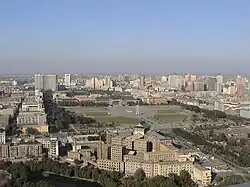
Changchun (长春, "Long Spring") is the capital of Jilin Province and one of the major cities of Northeast China (Dongbei), with a metropolitan population of several million. It is best known as the cradle of China's automotive industry — home of FAW (First Automobile Works), which built the country's first domestically-produced car in the 1950s — and as a centre of optical and rail-vehicle manufacturing. Travellers who do come, however, usually come for a different reason: the strange, photogenic legacy of Manchukuo, the Imperial Japanese puppet state headquartered here from 1932 to 1945 under the nominal rule of Puyi, the last Qing emperor. The grand axial avenues, government buildings and Puyi's residence survive in unusually intact form, making Changchun one of the more rewarding cities in China for early-20th-century architecture.
Beyond the Manchukuo relics the city has a quietly likeable, low-pressure feel: broad boulevards lined with trees, large parks, and a sizeable university-town population. It is also a gateway to Changbai Shan and the Jilin ski belt, and hosts a winter ice-and-snow festival, on a smaller scale than Harbin's.
Changchun has a monsoon-influenced continental climate with brutal seasonal swings. Winters are long, dry and cold (January highs around −10°C, lows well below −20°C are routine), with biting wind. Summers are warm and humid; late May through September is the most comfortable window. The city is laid out on a clear north–south spine — Renmin Dajie (People's Avenue) — running from the main railway station past People's Square, with the old Manchukuo government quarter immediately east of it, and newer commercial and university districts spreading south and southeast.
Planning Changchun? Tell us your dates and we’ll tailor the trip.
Ask on WhatsAppHow do you get there?
By Plane
Changchun Longjia International Airport (CGQ) lies about 30 km east of the city centre. It is the main air gateway for Jilin Province, with frequent domestic flights to Beijing, Shanghai and most other Chinese hubs, plus a modest set of regional international routes.
- High-speed train — a dedicated rail station is built into the airport complex, with bullet trains reaching Changchun Railway Station in around 15 minutes.
- Airport coach — regular shuttles run to the city centre.
- Taxi — expect the meter fare plus tolls; some airport-rank drivers push a flat rate instead — agree a price or take the bus.
By Train
Changchun has several passenger stations; the two most useful are:
- Changchun Railway Station — at the north end of Renmin Dajie. Large and busy; conventional services and some high-speed trains. The 12306 app (English interface available) works fine for foreigners with a passport.
- Changchun West Railway Station — the dedicated high-speed hub; almost all D- and G-class high-speed trains depart from here.
High-speed trains connect Changchun with Harbin, Jilin City, Shenyang, Dalian, Beijing and Shanghai — journey times range from under an hour (Jilin City) to well over ten hours (Shanghai).
By Car / Road
Changchun sits on major national expressways connecting it with Jilin City, Shenyang, Harbin and Dalian. Roads are modern toll expressways in good condition; winter driving requires real caution due to black ice. Long-distance buses connect most provincial destinations from terminals near the main train station, though the train is almost always the faster and more comfortable choice for longer runs.
The city is compact by Chinese standards and was planned on a clean grid, so orientation is easy. The north–south backbone is Renmin Dajie.
- Metro. A growing network operated by Changchun Rail Transit, with lines covering the main downtown grid and reaching the suburbs and university belt. Pay by QR code (metro app, Alipay or WeChat Pay) or a transit card.
- Bus. A dense network at a flat low fare; route numbers and destinations are in Chinese only.
- Taxi. Inexpensive for most cross-city trips; drivers rarely speak English, so have your destination written in Chinese.
- Ride-hailing. Didi works exactly as elsewhere in China and is the easiest option for foreign visitors.
- Walking. Comfortable in the historic Manchukuo quarter and in the university/lake areas. In winter, pavements are icy — wear gripped soles.
What are the things to do?
Manchukuo-era architecture and museums
- Museum of the Imperial Palace of "Manchu State" — Puyi's actual residence as puppet emperor from 1932 to 1945, with the throne hall, private quarters and an extensive exhibition on the occupation. The single most important sight in the city.
- The former Manchukuo government quarter — the wide axial avenue known historically as Xinmin Dajie is lined with the original Manchukuo ministries, built in a heavy hybrid Japanese/Art Deco style and now largely occupied by Jilin University departments. Walking the strip is one of the best free things to do in the city.
- Jilin Provincial Museum — strong on Northeast China prehistory and Manchukuo-era history.
Parks and lakes
- Jingyuetan National Forest Park — a vast forested reservoir on the southeast edge of the city, good for hiking and cycling in summer, and hosting winter ice-and-snow events including a cross-country ski race.
- Nanhu Park — one of the largest urban parks in Changchun, centred on a lake popular for ice-skating in winter and boating in summer.
- Changchun World Sculpture Park — hundreds of sculptures by artists from around the world set around a small lake.
Other
Changchun Film Studio — once one of the most important film studios in the People's Republic, housed in former Manchukuo-era buildings.
FAW / Red Flag automotive heritage sites — exhibitions charting the history of China's homegrown car industry, centred in Changchun since the 1950s.
Walk the former Manchukuo government axis — a half-day walk past the old ministries is the most coherent surviving piece of Japanese imperial urban planning in China.
Ski — Changchun is a gateway to Jilin's ski country, with a small local resort near the city and larger resorts (Beidahu near Jilin City, and the Changbaishan resorts) a train ride away.
Changchun Ice and Snow Festival — held annually in winter at Jingyuetan and other venues, with ice sculptures and winter-sport activity.
University campus tours — Jilin University is one of China's largest, with handsome former Manchukuo ministry buildings now in active campus use.
Day trip to Jilin City by bullet train to see the winter rime-ice (wusong) on the Songhua River.
Planning Changchun? Want these on a customised itinerary?
Ask on WhatsAppWhere to eat?
Dongbei cuisine is generous, hearty and built for cold weather. Expect big plates of stewed meat and vegetables, thick wheat noodles, plenty of pickled cabbage (suancai), and influence from Korean, Russian and Manchu cooking. Signature dishes to try: guo bao rou — twice-fried pork in a sweet-and-sour glaze, an iconic Northeastern dish widely associated with this region; suancai dun fentiao — pickled cabbage stewed with pork and sweet-potato noodles; di san xian — potato, aubergine and green pepper sautéed together; and xiao ji dun mogu — chicken stewed with wild Changbai mushrooms. The city also has good Korean food, reflecting the large Korean-Chinese population in Jilin.
Student-strip street-food stalls near the universities are a good budget option for grilled skewers and cold noodles; Dongbei home-style restaurants around the main commercial squares serve the classic dishes above at moderate prices; and hotel restaurants offer a more formal take for a special meal.
Dietary notes. Strict vegetarians will struggle — even "vegetable" dishes often contain pork stock — but di san xian, mapo tofu, and most noodle shops can do veg-only on request. Halal food is available at Hui-Muslim lanzhou lamian noodle shops scattered across the city. Gluten-free is difficult given how central wheat is to the local diet.
Where to drink?
- Baijiu — Northeast sorghum spirits are the regional drink, usually shot at meals.
- Beer — Harbin Beer and Snow are ubiquitous and cheap; a locally brewed Changchun lager is also widely available.
- Coffee — a growing café scene near the universities, with national chains and a handful of independents.
- Bars and nightlife — student-oriented bars near the universities, and a mid-range bar/club scene in the newer commercial districts.
- Water — tap water in Changchun is not safe to drink; boil or stick to bottled. Hotel rooms always have a kettle and bottled water is ubiquitous.
Planning Changchun? We’ll book the stays and dining for you.
Ask on WhatsAppWhere to stay?
Changchun has the full range of Chinese accommodation: budget hostels and national chain hotels (Hanting and similar brands) near the main station and university areas, established mid-range chains (Atour, Holiday Inn Express and similar) around People's Square and the high-tech zone, and international-standard upscale hotels including a long-standing Shangri-La property in the city.
What should you buy?
Changchun is not a souvenir city, but a few things are worth seeking out:
- Northeast specialities — wild-foraged products from the Changbai Mountain region: ginseng, deer antler velvet, pine nuts, wild mushrooms, hazelnuts and blueberries.
- Local liquor — Northeastern baijiu makes a decent gift.
- Film memorabilia from the Changchun Film Studio's gift shop.
Shopping districts. Renmin Dajie and the pedestrianised commercial streets south of the station are the main shopping areas, lined with department stores and international chains, alongside student-oriented strips near the universities for cheap clothes and street food. Bargaining is normal in markets but not in malls; most retail accepts mobile payment only.
Where to go next?
- Jilin City — a short high-speed rail hop. Riverside city on the Songhua; famous for winter rime-ice (wusong) and the Beidahu ski resort.
- Changbai Mountain (Changbai Shan) — several hours by train and bus, or fly to Changbaishan Airport. Sacred Manchu mountain, Heaven Lake crater, premier skiing in winter and hiking in summer.
- Harbin — under two hours by high-speed rail. The "Ice City"; Russian-era architecture and the famous Ice and Snow World festival.
- Shenyang — about an hour by high-speed rail. Former Manchu capital with the second imperial palace and the tombs of the early Qing emperors.
- Dalian — several hours by high-speed rail. Seaside city with beaches, seafood and a softer climate.
Nearby in Jilin Sheng
More places to explore around Changchun.
Guide content as of July 2026. Portions adapted from Wikivoyage, CC BY-SA 4.0.

Contact Us
Get in touch with us.
Get in touch
Contact Us
Tell us where you'd like to go and how you like to travel. A real Tripcuro planner — not a bot — will craft an itinerary around you.
- Personalised, hassle-free planning end-to-end
- Transparent pricing, no hidden costs
- 24/7 support for complete peace of mind