
Baishan
Jilin Sheng, China
About Baishan
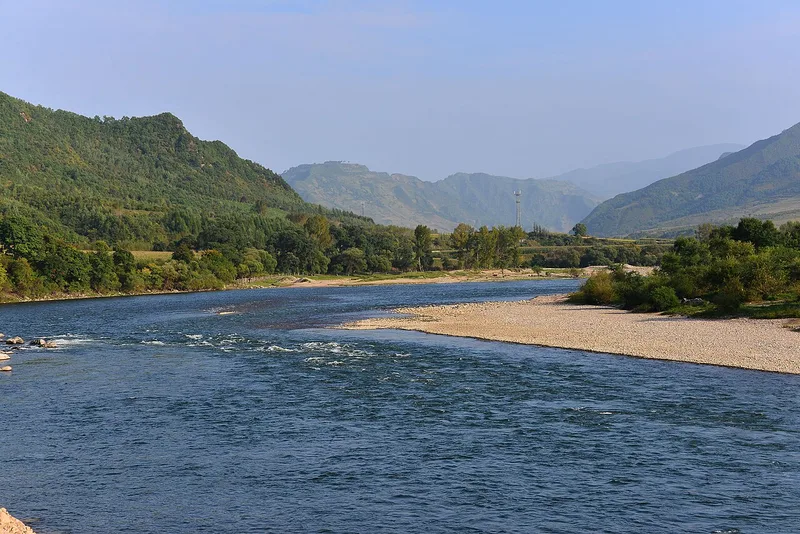
Baishan (白山, "White Mountain") sits in the rugged southeastern corner of Jilin Province, wedged between the Changbai mountain range and the Yalu River that forms the border with North Korea. The city takes its name from the snow-capped peaks that dominate the region — most famously Changbai Shan, the volcanic massif whose crater holds Heavenly Lake. Historically a lightly populated frontier of forests, hot springs and Manchu hunting grounds, Baishan grew into a coal-mining and timber centre during the 20th century and was formally elevated to prefecture-level city status in 1985. For travellers, it functions less as a destination in its own right than as the western gateway to Changbai Shan — but the surrounding canyons, lava plateaus, caves and hot springs reward anyone who lingers.
The character of Baishan is shaped by three things: mountains, ethnic Korean heritage, and severe cold. The prefecture borders Yanbian Korean Autonomous Prefecture and contains its own Korean autonomous county (Changbai), so Korean signage, kimchi-laden restaurants and church spires are commonplace alongside Han Chinese norms. Winters are long and brutal — January lows routinely fall below −20 °C and snow lies on the ground from November to April, making this one of the coldest inhabited corners of China. Summer (June–August) is short, green and pleasant with daytime highs around 22–26 °C; autumn (mid-September to mid-October) is the visual peak, when the Red Leaves Festival draws domestic visitors to the maple-clad slopes. Spring is muddy and unreliable.
The urban core is compact and clusters along the Hunjiang River in Hunjiang District (浑江区), which holds most hotels, the train and bus stations, and the riverfront promenade. Outlying county-level units — Linjiang, Jiangyuan, Fusong, Changbai and Jingyu — each anchor their own attractions and are typically reached by bus or rented car rather than on foot.
Planning Baishan? Tell us your dates and we’ll tailor the trip.
Ask on WhatsAppHow to reach
By Plane
The nearest airport is Changbaishan Airport (IATA: NBS) in Fusong County, roughly 100 km east of central Baishan and built primarily to serve Changbai Shan tourism. It has seasonal and year-round flights to Beijing, Shanghai Pudong, Yanji, Changchun and Dalian; the schedule thins dramatically outside the summer and winter peak seasons. A taxi from NBS to Baishan city centre takes about 1.5–2 hours and runs roughly ¥400–500; airport shuttle buses meet most arrivals and head to nearby resort areas rather than into Baishan proper, so confirm the route before boarding.
For more flight choice, Changchun Longjia International Airport (CGQ), about 320 km northwest, offers far better connectivity and is linked to Baishan by onward train or long-distance bus (5–6 hours).
By Train
Baishan Railway Station (白山站) and the older Hunjiang Station sit in the central district. The Shenyang–Jilin–Tumen line connects Baishan with Tonghua (≈2 hours), Jilin City (≈6–7 hours) and Changchun (≈7–8 hours); through services also run to Shenyang and Dandong. Most trains are conventional (slow, K- or T-class) rather than high-speed, and scenery aside, the ride can feel its length. Book on the 12306 app or website at least a few days ahead in peak season; standard ID/passport rules apply. A separate station, Baishanshi East (白山市东), handles a handful of services on the Hunbai line — check which station your ticket uses.
By Car / Road
Long-distance buses leave the Baishan Bus Terminal (白山客�总站) for Tonghua (≈2 hours), Ji'an (≈3 hours), Yanji (≈5 hours), Changchun (≈6 hours) and the Changbai Shan western/northern gates (2–4 hours depending on gate). Roads through the mountains are paved and generally in decent condition but twist heavily; in winter, snow and black ice make self-driving inadvisable unless you have winter tyres and chains. The G11 Hegang–Dalian Expressway and G1212 Shenyang–Baishan Expressway connect the city to the wider Northeast highway grid.
Within central Baishan, city buses (公交车) cost ¥1–2 flat fare and cover the Hunjiang District grid; signage is Chinese-only. Taxis are cheap and plentiful — flagfall is ¥5–6 and most in-town trips run ¥10–20. Didi (滴滴出行) works reliably and is easier than hailing if you don't speak Mandarin; link a Chinese payment method (Alipay or WeChat Pay) before arriving. The centre is walkable along the river but spread out enough that you'll want wheels for anything beyond the immediate hotel zone.
For outlying sights — Changbai Shan, the karst caves, hot springs, Yalu River cruise piers — public transport is patchy and slow. Most visitors hire a car with driver for the day; expect ¥500–800 depending on distance, with your hotel front desk the easiest place to arrange it. Scams are rare in Baishan, but unmetered "black" taxis loiter outside both train stations — insist on the meter (打表) or agree a price upfront.
Things to do
Heavenly Lake (å¤©æ± , Tianchi) — The crater lake atop Changbai Shan, straddling the China–North Korea border at 2,189 m. The single most famous sight in the region; on a clear day the sapphire water rimmed by 16 peaks is unforgettable, but cloud cover obscures it more often than not. Reached via the Changbai Shan Western Gate (西å?¡, the closest to Baishan, ≈2.5 hours by car) or Northern Gate (北å?¡). Park entry Â¥105 plus mandatory shuttle Â¥85; open roughly 06:30–16:00 in summer, shorter hours in winter when the western slope often closes.
Jinjiang Grand Canyon (锦江大峡谷) — A 70 km volcanic canyon carved into the western flanks of Changbai Shan; vertiginous viewing platforms over forested ravines. Usually visited as part of the Western Gate ticket.
Changbai Mountain Karst Caves (长白山喀斯特溶洞) — Limestone cave system with stalactites and underground streams, near Fusong. Open roughly 08:00–17:00; entry ≈¥80.
Yalu River Cruise (é¸ç»¿æ±Ÿæ¸¸èˆ¹) — Boat trips from Linjiang give close-up views of the North Korean bank, complete with watchtowers and farming villages. Departures roughly hourly in summer from Linjiang's riverfront; tickets Â¥60–120 depending on route length. Photography of the DPRK side is technically discouraged — be discreet.
Beishan Park (北山公å›) — Central Baishan's main green space, with a small lake, pavilions and locals doing morning tai chi. Free; open dawn to dusk.
Lingguang Pagoda (�光塔) — A rare surviving Tang Dynasty (Bohai-era) brick pagoda in Changbai County, about 1,000 years old. UNESCO-listed Bohai heritage. Free entry.
Puyi Abdication Site (溥仪退�旧�) — In Linjiang, the modest building where the last Qing emperor (and puppet Manchukuo ruler) formally abdicated in August 1945. Open 08:30–16:30; entry ¥30.
Xianren Cave (仙人洞) — "Immortal's Cave," a folklore-laden grotto near Hunjiang with Buddhist shrines inside.
Longshan Lake Scenic Area (龙山湖) — Reservoir lake popular for boating and summer picnics; quiet outside Chinese holidays.
Ski at Changbai Shan. The region has become one of China's premier winter sports destinations. The closest large resort is Wanda Changbaishan International Resort (about 90 minutes by car), with day passes around ¥400–500; Baishan Skiing Field within the prefecture is smaller and cheaper. Season runs mid-November to early April.
Soak in a hot spring. Changbai Hot Springs (长白温泉) near the Northern Gate and Fusong Hot Springs (抚�温泉) closer to Baishan both pipe mineral-rich water into outdoor pools — magical when you're up to the neck in steaming water and snow is falling. Day passes typically ¥100–200.
Ginseng-hunt with a local guide in autumn. The Changbai foothills produce some of the world's most prized wild ginseng (人�), and several villages around Fusong offer guided foraging walks in September–October as a tourist activity.
Red Leaves walks in late September and early October — the Erdaobaihe and Jinjiang Canyon trails turn spectacular shades of crimson and gold.
Ice and Snow Festival (December–February) — Baishan and neighbouring Tonghua host smaller, less crowded ice-sculpture exhibitions than Harbin, but with a fraction of the queues.
Cross-border viewing at Linjiang, where pedestrian bridges and observation decks let you peer directly into the North Korean town of Jungang. Border-crossing for foreigners is not permitted here.
Planning Baishan? Want these on a customised itinerary?
Ask on WhatsAppFood & Dining
Baishan's kitchen sits at the crossroads of three traditions: Dongbei (Northeast Chinese) — hearty, garlic-heavy, with stews, dumplings and pickled cabbage; Korean-Chinese, courtesy of the local ethnic Korean minority — cold noodles, grilled meats, banchan; and a strong wild forest strand built around mushrooms, ginseng-stewed chicken, and venison or wild boar. Signature local dishes worth seeking out:
- Xiao ji dun mogu (�鸡炖蘑�) — chicken slow-stewed with Changbai mushrooms and glass noodles. The defining dish of the region.
- Renshen ji (人�鸡) — ginseng chicken soup.
- Lengmian (冷�) — Korean-style cold buckwheat noodles in chilled beef broth.
- Suancai bairou (酸�白肉) — sour cabbage and pork belly hotpot, essential winter food.
- Kao lengmian (烤冷�) — griddled Korean-style noodle "pancake" eaten as a street snack.
Recommendations:
- Korean BBQ stalls along Hunjiang Street (budget, ¥40–70 per person) — point-and-grill places where charcoal-grilled pork belly and beef ribs come with kimchi and rice paper wraps.
- Lao Bian Jiaozi (è€?边饺å?) — reliable Dongbei dumpling chain with a Baishan branch; Â¥30–60 per person.
- Xiang Cun Yuan (乡æ?‘å›) — rustic farmhouse-style restaurant specialising in chicken-and-mushroom stew and forest-foraged vegetables; Â¥80–120 per person.
- Hotel restaurants at the Huashen or Yangguang (mid-range) for cleaner, English-friendlier sit-down meals; ¥100–180 per person.
Vegetarians will find the going harder than in larger Chinese cities — many "vegetable" dishes contain pork or lard. Korean restaurants and Buddhist-leaning teahouses are the easier bets. Halal (清真) noodle shops run by Hui Muslims exist but are not numerous; look for green signage in Arabic-style script.
Cafes & Nightlife
Tap water is not safe to drink unboiled anywhere in China, Baishan included. Hotels provide thermos flasks of boiled water; bottled water (¥2–4) is everywhere.
The local drink culture leans rural and northeastern: strong grain spirits, beer, and herbal infusions. Things to try:
- Songhua Hu Jiu (�花湖酒) — local sorghum-based baijiu (clear grain spirit, 40–55% ABV); fierce.
- Forest herbal teas infused with wild chrysanthemum, ginseng root, or schisandra berry (五味å?) — sold in supermarkets and tea shops.
- Blueberry wine from Changbai — sweet, low-alcohol, more like a cordial.
- Snow Beer (雪花) and Harbin Beer are the standard mass-market lagers; expect ¥5–10 a bottle.
Bars are limited and tend toward karaoke parlours (KTV) or hotel lounges rather than dedicated drinking establishments. The Hunjiang riverfront has a handful of late-night street barbecue joints (烧烤摊) where most of the city's social drinking actually happens.
Planning Baishan? We’ll book the stays and dining for you.
Ask on WhatsAppPlaces to Stay
Budget
- Baishan Baishun Ludian (白山百顺旅店), Xinhua Road — simple inn with clean basic rooms; ¥80–150/night. Don't expect English.
- Hanting Hotel Baishan branch (汉åºé…’店) — reliable mid-budget chain; Â¥180–250/night.
Mid-range
- Huashen Hotel (�盛宾馆), 114-4 Hunjiang Street — long-standing local business hotel with English-speaking front desk on most shifts; ¥280–400/night.
- Yangguang Hotel (阳光大酒店), 139 Hunjiang Street — central, decent restaurant on site; ¥300–450/night.
- Hongxiang Hotel (鸿祥宾馆), 37 Tongjiang Road — older but well kept; ¥250–350/night.
Upscale
- Beishan Hotel (北山宾馆), 102 Hunjiang Street — the city's longest-running upper-tier address, refurbished, with conference facilities and a banquet restaurant favoured by visiting officials; ¥450–700/night.
- Wanda Changbaishan International Resort (~90 minutes east of Baishan, in Fusong) — full ski-resort complex with several international-brand hotels (Holiday Inn, Park Hyatt, Westin) when you'd rather sleep at the mountain than in the city; ¥800–2,500+/night depending on brand and season.
What to buy
Baishan's shopping is more about regional produce than fashion or souvenirs. The Baishan Central Market and shops along Hunjiang Street are the main places to look. Specialties to bring home:
- Wild ginseng (野山�) — the Changbai mountains are the heartland of Chinese ginseng. Genuine wild root is extremely expensive (thousands of yuan per gram for old specimens); cultivated renshen is affordable and still excellent. Buy only from established shops with provenance documentation; counterfeits are common.
- Lingzhi (��) — reishi mushroom, valued in Chinese medicine.
- Dried Changbai mushrooms — cloud-ear (木耳), pine mushroom (�茸), monkey-head (猴头�).
- Antler products (鹿茸) — sika deer are farmed in the region.
- Blueberry products — the wild blueberry (�莓) of Changbai is sold as juice, jam, wine and dried fruit.
- Korean-style sauces, kimchi and rice cakes in Changbai County.
Bargaining is expected in markets but not in supermarkets or branded shops. Cash is increasingly rare; WeChat Pay and Alipay are near-universal.
Go next
- Changbaishan National Nature Reserve (~2.5 hours by car) — the obvious next stop; the Western Gate is closest to Baishan and far less crowded than the Northern Gate.
- Tonghua (~2 hours by train) — coal-and-wine city with the Goguryeo-era tombs and Yang Jingyu memorial.
- Ji'an (~3 hours by bus) — UNESCO-listed Goguryeo kingdom capital ruins and tombs along the Yalu River.
- Linjiang (~1.5 hours by car) — North Korean border town with the Puyi abdication site and Yalu River cruises.
- Yanji (~5 hours by bus) — capital of the Yanbian Korean Autonomous Prefecture; the place to dive deeper into Korean-Chinese culture.
- Changchun (~7 hours by train) — Jilin's provincial capital, with the Manchukuo Imperial Palace museum and Puppet Emperor Puyi's wartime residence.
Nearby in Jilin Sheng
More places to explore around Baishan.
Portions adapted from Wikivoyage, CC BY-SA 4.0.

Contact Us
Get in touch with us.
Get in touch
Contact Us
Tell us where you'd like to go and how you like to travel. A real Tripcuro planner — not a bot — will craft an itinerary around you.
- Personalised, hassle-free planning end-to-end
- Transparent pricing, no hidden costs
- 24/7 support for complete peace of mind