
Jiangyin
Jiangsu Sheng, China
About Jiangyin
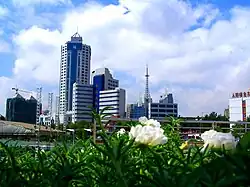
Jiangyin (江阴) is a county-level city on the south bank of the lower Yangtze River, administered as part of Wuxi prefecture in Jiangsu Province. The name literally means "south of the river" — historically a key defensive choke point where the Yangtze narrows before its final stretch to the sea, and today one of the most economically productive county-level cities in China, regularly ranking near the top of national lists for industrial output. The Jiangyin Fortress (Huangshan) saw heavy fighting during the Ming-Qing transition, the late Qing coastal-defense buildup, and the 1937 Battle of Jiangyin against the Imperial Japanese Navy, and the river-defense theme runs through most of the city's heritage sites. Jiangyin is also the hometown of Ming-dynasty traveller-geographer Xu Xiake (1587–1641), whose travel diaries are a foundational text in Chinese travel writing — fitting credentials for a destination guide.
Most travellers come for a half-day or overnight side trip from Wuxi, Suzhou or Shanghai rather than as a primary destination, but the mix of Yangtze riverfront parks, the well-preserved Jiangnan water-town fabric at Changjing, and the Xu Xiake heritage circuit makes a satisfying one-to-two-day itinerary. The city has a humid subtropical / temperate monsoon climate: hot, sticky summers (July–August highs around 33 °C with humidity routinely above 80%), cool damp winters (January lows near 0 °C), and a notably wet plum-rain (梅雨) season in mid-June to early July. The best windows are late March to early May (cherry blossoms at Zhongshan Park, mild temperatures) and mid-September to early November (clear skies, cooler air over the river).
The urban core is compact and centred on Chengjiang Street (澄江街�), where the government, the main shopping streets and Zhongshan Park sit. Nanzha and Yunting streets extend the city southward; Huangshan / Yaogang to the north faces the river and holds the fortress and Ebizui Park. The outlying towns matter for travellers too: Xu Xiake Town in the southwest for the writer's former residence, Changjing in the south for the ancient water town, and Xinqiao for Feima Water City.
Planning Jiangyin? Tell us your dates and we’ll tailor the trip.
Ask on WhatsAppHow to reach
By Plane
Jiangyin has no commercial airport of its own. The two practical options are:
- Wuxi Sunan Shuofang International Airport (WUX) — about 40 km southeast, 40–60 minutes by car. The closest airport and the most convenient for domestic arrivals (Beijing, Guangzhou, Shenzhen, Chengdu, Kunming, Xiamen, plus regional international routes). Airport taxi to central Jiangyin runs roughly ¥150–200; a Didi (滴滴) ride is usually ¥120–160.
- Shanghai Hongqiao International Airport (SHA) — about 160 km east, 2–2.5 hours by car or roughly 1.5 hours via Wuxi by high-speed rail + onward transfer. Best for international arrivals.
Changzhou Benniu International Airport (CZX) is also within ~70 km and useful for some domestic routes; Shanghai Pudong (PVG) is the fallback for long-haul international flights.
By Train
- Jiangyin Railway Station (江阴站), No. 301 Daqiao South Road — the conventional-rail station, served by regular trains on the Xinyi–Changxing line.
- Jiangyin East Station (江阴东站) — primarily high-speed rail (CRH/G-trains), the more convenient option for visitors. The most common pattern is to take a high-speed train to Wuxi or Wuxi East and continue by taxi, metro extension, or bus to Jiangyin; once on the line, Jiangyin East has rapid links to Wuxi, Suzhou, Shanghai and Nanjing.
Book through the 12306 app (English interface available, foreign passport supported), Trip.com, or at the station with your passport for ID. Reserve 1–3 days ahead during weekends and holidays.
By Car / Road
The G2 Beijing–Shanghai Expressway and S38 Changshu–Jiangyin Expressway put Jiangyin within easy driving range of the Yangtze Delta:
- From Wuxi: ~40 km, 45–60 minutes via S48 / Wuxi–Jiangyin highway.
- From Suzhou: ~80 km, ~1.5 hours.
- From Shanghai: ~160 km, 2–2.5 hours via G2.
- From Nanjing: ~190 km, ~2.5 hours via G42 / G2.
The Jiangyin Yangtze River Bridge (built 1999) connects Jiangyin to Jingjiang on the north bank and is the main road crossing for traffic between southern Jiangsu and the northern bank.
Long-distance buses operate from the Jiangyin Bus Station (江阴汽车客�站) with frequent services to Wuxi, Shanghai, Suzhou, Nanjing and Changzhou. Wuxi–Jiangyin buses run every 15–30 minutes for around ¥20–30.
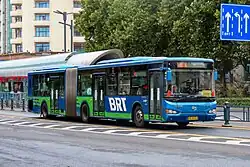
- Buses: Jiangyin has an extensive city bus network with flat fares typically ¥1–2 (cash or transit QR). Useful for reaching outlying towns like Xu Xiake Town and Changjing, though journeys can be slow.
- Taxis: Base fare ¥10–12 for the first 3 km, then roughly ¥2.4–2.8 per additional km, with a small fuel surcharge. Cross-town rides in the urban core are usually ¥15–30.
- Ride-hailing: Didi Chuxing (滴滴出行) is the dominant app and works well in Jiangyin. The app has an English mode; payment via WeChat Pay or Alipay (link an international card via Alipay's "Tour Pass" feature if you don't have a Chinese bank card).
- Shared bikes: Hellobike (哈啰), Meituan Bike (美团�车) and DiDi-Qingju (�桔) cover the urban core. Unlock via the respective WeChat/Alipay mini-program; rates are typically ¥1.5 per 30 minutes. Excellent for the riverfront and lake parks.
- City sightseeing bus: A seasonal tourist bus (April–December, weather dependent) loops through major attractions including the Jiangyin Museum, the Yangtze River Bridge area and Huangshan Lake Park. Routes and reservations change year to year — confirm at your hotel or the tourism information desk on arrival.
- Walkability: The Chengjiang core, the Renmin Road / Zhongshan Park area and the lakeside parks are pleasant on foot. Outlying towns require transit.
Scams / annoyances: Unmetered "black taxis" linger near transport hubs — refuse and use Didi or the official taxi rank. As elsewhere in China, foreign cards rarely work outside major hotels; install WeChat Pay or Alipay and link an international card before arrival.
Things to do
Parks & Yangtze Riverfront
Ebizui Park (鹅鼻嘴公å›), No. 288 Huangshan Road. A headland park where the Yangtze narrows, named for its goose-beak shape jutting into the river. The best vantage point for the Jiangyin Yangtze River Bridge and ocean-going freight traffic; tree-lined paths and a small beach make it a popular sunset walk.
Huangshan Lake Park (黄山湖公å›), No. 88 Gongyuan Road. An ecological park around a man-made lake with footpaths, bridges and pedalo rentals — good for an unhurried afternoon. Free entry; the lake itself is large enough to occupy 2–3 hours.
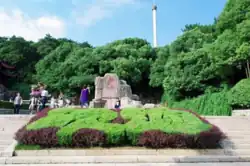
Zhongshan Park (ä¸å±±å…¬å›), central Chengjiang. Built in 1928 to commemorate Sun Yat-sen, with mature plane trees, a small lake and seasonal cherry and plum blossoms in spring. Free entry; centrally located, an easy stop between the museum and old town.
Jiangyin Junshan Park (å?›å±±å…¬å›), Junshan Road. A hill park associated with Wu and Yue–period royalty, sprinkled with stelae and pavilions tied to Jiangyin's history. Compact, walkable in 1–2 hours.
Old Towns & Water Towns
Changjing Ancient Town (长泾�镇), southeast of Jiangyin. A Jiangnan water town with over two thousand years of history; quieter and far less commercialised than Zhouzhuang or Tongli, with intact stone bridges, whitewashed lanes and a working canal. Free to enter the town; some individual museums and former residences charge small fees.
Feima Water City (江阴飞马水城), Xinqiao Town. A purpose-built modern "water town" with canals, traditional-style buildings, an equestrian theme, dining and shopping. Polished and family-friendly rather than historic — useful as a half-day with children.
Cultural & Historical
Xu Xiake's Former Residence (�霞客故居), Xu Xiake Town (formerly Ma Town). The birthplace and study of the Ming-dynasty geographer-traveller; the on-site exhibition covers his thirty years of journeys across China and the Travel Diaries of Xu Xiake (�霞客游记). An obvious pilgrimage for anyone interested in the history of Chinese exploration. Combine with the adjacent Xu Xiake Mausoleum (�霞客墓) and themed park.
Former Residence of the Liu Brothers (刘�兄弟故居), No. 49 Xiheng Street. Commemorates Liu Bannong (劉�農), linguist and New Culture Movement figure, and Liu Tianhua (劉天�), pioneering modern erhu composer. A compact courtyard house with manuscripts, instruments and family artefacts — quick but rewarding for fans of modern Chinese literature and music.
Huangshan Fort (黄山炮�), Huangshan Scenic Area. A late-Qing coastal-defence battery built into the bluffs above the Yangtze, with surviving gun emplacements, magazines and observation posts. The same site saw fighting in 1937. Now operated as a patriotic-education base and historical park; included in the Huangshan / Ebizui scenic-area ticket.
Jiangyin Museum (江阴�物馆). The municipal museum; collections cover local archaeology, Wu-period bronzes, Ming-Qing decorative arts and Jiangyin's industrial and revolutionary history.
Walk the Yangtze waterfront from Ebizui Park up to the bridge viewing platform — about 3 km of riverside path with constant freighter traffic; combine with sunset and a riverside-restaurant dinner.
Cycle Huangshan Lake on a shared bike; the perimeter path is flat, mostly traffic-free and roughly 5 km.
Trace the Xu Xiake circuit: former residence, mausoleum and themed park in Xu Xiake Town, ideally on the same day as Changjing Ancient Town.
Catch an erhu or traditional-music performance if your visit aligns with the periodic Liu Tianhua memorial concerts and Jiangyin Folk Music Festival — Jiangyin takes pride in being a "city of national music".
Yangtze River cruise / ferry hop: short pleasure cruises run seasonally from the Huangshan riverfront; the Jiangyin–Jingjiang vehicle ferry is a low-key way to see the river up close even if you don't need to cross.
Day-trip into Wuxi for Lake Tai (Tai Hu) and the Lingshan Grand Buddha — easy by bus or rail and a natural pairing with Jiangyin.
Industrial / business tourism: Jiangyin is famously the home of major listed companies (Shagang Group steel, Sunan textiles, etc.) and hosts manufacturing tours by prior arrangement — relevant if you're visiting for business.
Planning Jiangyin? Want these on a customised itinerary?
Ask on WhatsAppFood & Dining
Jiangyin cooking is squarely in the Su-Xi-Chang (è‹?锡常) Jiangnan tradition — slightly sweet, light on chilli, heavy on river fish and freshwater produce, with a strong seasonal calendar dictated by the Yangtze. Spring is "three freshes of the Yangtze" (长江三鲜) season: daoyu (knife fish), shiyu (Reeves shad) and hetun (river puffer, prepared by licensed chefs only). Year-round staples include red-cooked pork, freshwater shrimp (白虾), drunken crab, and Wuxi-style sweet-soy spareribs. Vegetarians will find Buddhist-influenced sucai (ç´ è?œ) at temple-adjacent restaurants and ample tofu and seasonal vegetable dishes in most local kitchens; halal eaters should look for 清真 signage — options exist but are limited.
Suggested places to try:
- Street and snack tier — the night-market stretch near Renmin Road for skewers, sheng jian bao (生煎包), wonton soup and xiaolongbao; ¥20–50 for a substantial meal.
- Mid-range Jiangnan — neighbourhood restaurants around Chengjiang and the Wanda Plaza area serve full Su-Xi-Chang menus for roughly ¥80–150 per person; look for crowded family-run rooms with seasonal river-fish boards on the wall.
- Riverside specialty — restaurants along the Yangtze near Huangshan / Ebizui Park feature seasonal Yangtze fish set menus; ¥200–400+ per person in season for hetun tasting menus (book ahead, only at licensed venues).
- Hotel dining — the Sheraton Jiangyin and Crowne Plaza Jiangyin both run all-day-dining and Chinese restaurants suitable for business meals; ¥150–300 per person.
Cafes & Nightlife
- Tea is the everyday drink. Local teahouses serve Bi Luo Chun from neighbouring Taihu, Yuhua from Nanjing, and locally produced green teas; Huangshan Lake Park and Junshan Park both have garden teahouses where a pot runs ¥30–80.
- Beer: Tsingtao and Yanjing dominate; craft beer is limited but a few bars near Wanda Plaza and the Aegean Mall stock imports and small Chinese craft brands.
- Baijiu: Jiangsu's Yanghe (洋河) — particularly Yanghe Daqu and Mengzhilan — is the local default at banquet tables; Shuanggou (�沟) is the other home-province name.
- Yellow wine (黄酒): warm Shaoxing-style huangjiu is common with river-fish meals, especially in winter.
- Coffee: Starbucks, Luckin and Manner have multiple outlets in Chengjiang; independent cafés cluster around Wanda Plaza.
Water: tap water is not safe to drink unboiled. All hotels provide kettles and bottled water; bottled water costs ¥2–4 in convenience stores.
Planning Jiangyin? We’ll book the stays and dining for you.
Ask on WhatsAppPlaces to Stay
Budget
- 7 Days Inn / Hanting / Home Inn (Jiangyin branches) — multiple locations across Chengjiang and near the bus station; clean, no-frills chain rooms from roughly ¥180–260 per night. Reliable, English booking via Trip.com.
Mid-range
- Atour Hotel Jiangyin (亚朵酒店), central Chengjiang — design-led Chinese mid-scale chain, comfortable rooms and good coffee, typically ¥400–600 per night.
- Holiday Inn Express Jiangyin — standard international mid-scale with English-speaking front desk; typically ¥450–650 per night.
Upscale
- Sheraton Jiangyin Hotel (江阴市喜�登大酒店) — full-service international five-star with river views, multiple restaurants and an indoor pool; typically ¥800–1,400 per night.
- Crowne Plaza Jiangyin (æ±Ÿé˜´çš‡å† å?‡æ—¥é…’店) — comparable international five-star with executive lounge and conference facilities; typically Â¥750–1,300 per night.
What to buy
Jiangyin doesn't have a heritage handicraft on the scale of Suzhou silk or Yixing teaware, but it offers a few worthwhile categories:
- Xinqiao wool textiles — Xinqiao Town is nationally known as the "Famous Town of Wool Textile in China"; factory outlets and town-centre showrooms sell suiting fabric, blankets and finished garments at well below department-store prices.
- River fish and dried Yangtze specialities — daoyu (knife fish 刀鱼) and hetun (river puffer 河豚) are the local culinary icons; vacuum-packed or smoked versions make characteristic gifts. Buy from reputable shops in season (spring for daoyu).
- Local snacks — Jiangyin maguo (江阴马蹄酥), heitang macheng black-sesame and brown-sugar pastries, and Changjing-style preserved goods are widely available at supermarkets and railway-station shops.
- Shopping districts: Renmin Road (人民路) pedestrian street in Chengjiang for mid-market brands and street food; Chengjiang East Road (澄江东路) and the Aegean / Wanda Plaza complexes for mall shopping.
Bargaining is normal in markets and small textile shops (expect 20–40% off opening prices); fixed prices apply in malls and chain stores.
Go next
- Wuxi — ~40 km / 45 min by road or rail. Jiangyin's parent prefecture, gateway to Lake Tai (Tai Hu) and the Lingshan Grand Buddha; an obvious overnight pairing.
- Suzhou — ~80 km / 1 hr by rail. The classical-gardens capital of Jiangnan and a UNESCO-listed canal city; minimum a full day, ideally two.
- Changzhou — ~50 km / 40 min by road. Dinosaur Park, Tianning Temple's pagoda and the old Qing-dynasty residences; an easy day trip.
- Nanjing — ~190 km / 1.5 hr by high-speed rail. Former imperial capital, Ming city walls, Sun Yat-sen Mausoleum and the Nanjing Massacre Memorial; 2–3 days.
- Shanghai — ~160 km / 1.5 hr by high-speed rail. The natural in/out point and the region's nightlife and dining anchor.
- Jingjiang & Taizhou (north bank) — across the Jiangyin Yangtze River Bridge. Less touristed Subei (北�) towns, river-fish restaurants and the Taizhou old quarter; a quiet contrast to the polished south bank.
Nearby in Jiangsu Sheng
More places to explore around Jiangyin.
Portions adapted from Wikivoyage, CC BY-SA 4.0.

Contact Us
Get in touch with us.
Get in touch
Contact Us
Tell us where you'd like to go and how you like to travel. A real Tripcuro planner — not a bot — will craft an itinerary around you.
- Personalised, hassle-free planning end-to-end
- Transparent pricing, no hidden costs
- 24/7 support for complete peace of mind