
Henan Sheng
China · Province · 28 destinations with guides
Photography coming soonOverview
Henan sits at the geographical and historical heart of China, a broad alluvial province straddling the middle reaches of the Yellow River. Its name — "south of the river" — only tells half the story: the river loops through the north of the province, and over four millennia its silt and floods have shaped a landscape of flat wheat plains in the east, the Funiu and Taihang mountains rising in the west, and the Dabie range guarding the southern border with Hubei. Roughly 100 million people live here, making Henan one of the most populous administrative units on earth.
For travellers, the appeal is overwhelmingly historical. Three of China's "Eight Great Ancient Capitals" — Luoyang, Kaifeng, and Anyang — lie within Henan's borders, and the province bills itself, with some justification, as the cradle of Han Chinese civilisation. The Shang dynasty oracle bones were unearthed at Yinxu near Anyang; Buddhism entered China through the White Horse Temple outside Luoyang; Shaolin kung fu was codified at the foot of Mount Song; and the Northern Song capital at Kaifeng was, in the 11th century, the largest and richest city in the world.
Modern Henan is a study in contrasts. Zhengzhou, the provincial capital, has reinvented itself as a high-speed-rail crossroads and logistics megacity, while a half-hour bullet train away you can stand inside a Tang-dynasty grotto carved into a limestone cliff. Visitors who come for one site usually leave wishing they had given the province a week.
When to Visit
April to early June and September to late October are the comfortable windows. Spring brings the Luoyang peony bloom (mid-April) and mild, dry weather across the Yellow River plain; autumn delivers crisp, clear skies ideal for hiking the Songshan and Yuntai ranges.
Summers (June–August) are uncomfortably hot and humid on the plain — Zhengzhou and Kaifeng routinely hit 35–38 °C — and July brings the bulk of the annual rainfall, including the kind of cloudburst that flooded Zhengzhou catastrophically in 2021. Plan mountain stays (Songshan, Yuntaishan) rather than city sightseeing if you must visit in summer.
Winters (December–February) are cold, dry, and grey, with daytime highs of 3–8 °C and notable air-quality dips driven by coal heating across the North China Plain. Snow on the Shaolin Temple rooftops is photogenic but services thin out and some scenic-area cable cars close.
Festival anchors worth timing around: the Luoyang Peony Festival (roughly 5 April – 5 May), the Kaifeng Chrysanthemum Festival (mid-October to mid-November), and Lunar New Year temple fairs at Baima Si and Dixianggu, when Henan's Buddhist and folk traditions are at their most vivid.
Tell us your dates and we'll shape a Henan Sheng route around them.
WhatsAppGetting Around
Henan is one of the easiest Chinese provinces to navigate because nearly everywhere you want to go is on the Beijing–Guangzhou or Xuzhou–Lanzhou high-speed rail spines, both of which intersect at Zhengzhou East.
- High-speed rail (Gaotie / G-trains) — Zhengzhou to Luoyang in ~40 minutes (¥56 second class), Zhengzhou to Kaifeng in ~25 minutes (¥35), Zhengzhou to Anyang in ~50 minutes (¥85). Zhengzhou East is the hub; book on the 12306 app or Trip.com.
- Intercity rail (Zhengzhou–Kaifeng C-trains) runs every 15–30 minutes and is the workhorse for day-trippers.
- Long-distance buses still matter for the mountain scenic areas — Yuntaishan, Laojunshan, Jigongshan — that high-speed rail does not reach. Most depart from Zhengzhou Long-Distance Bus Station next to the regular railway station.
- Didi (ride-hail) is universal in cities and works for short hops between sites. Expect ¥30–60 for a typical cross-town ride in Zhengzhou or Luoyang.
- Driving is feasible — the G4 and G30 expressways are excellent — but a Chinese licence is required, so most foreign visitors hire a car-and-driver for the Songshan/Shaolin loop (~¥600–800/day from Zhengzhou).
Rough distances from Zhengzhou: Luoyang 130 km west, Kaifeng 70 km east, Anyang 190 km north, Xinyang 320 km south, Shaolin Temple 80 km southwest.
Top Destinations
- Zhengzhou — provincial capital and rail hub; gateway to everywhere else.
- Luoyang — ancient capital; base for the Longmen Grottoes and the peony festival.
- Kaifeng — Northern Song capital; the most atmospheric old city in the province.
- Anyang — birthplace of Chinese writing; the Yinxu oracle-bone site.
- Dengfeng — temple town at the foot of Mount Song; home of the Shaolin Temple.
- Jiaozuo (Yuntaishan) — dramatic red-rock canyons and waterfalls.
- Xinyang — green tea country and the Dabie Mountains in the south.
Want the scenic legs and stays booked for you? Just ask.
WhatsAppCuisine
Henan cuisine — known as Yu cai (豫菜) — is one of China's quieter regional traditions, anchored in wheat (this is noodle and dumpling country, not rice) and shaped by centuries as the imperial kitchen of successive Yellow River capitals.
The signature dishes:
- Hui mian (烩面) — Zhengzhou's defining bowl: hand-pulled wheat noodles in a long-simmered mutton-and-bone broth with wood-ear, daylily, and quail egg. Try Hesi Hui Mian (合记烩面), the century-old chain whose original branch is on Renmin Lu.
- Luoyang Water Banquet (洛阳水席) — a 24-course Tang-dynasty sequence in which every dish is wet (soup, stew, or sauce), served strictly in order. Zhen Bu Tong (真不同) on Zhongzhou Donglu is the canonical address; expect ¥300–600 per head for the full sequence.
- Kaifeng guan tang bao (开封灌汤包) — soup dumplings with a distinctly thinner skin and more delicate broth than the Shanghai version. Eat them at the Drum Tower night market or at Diyilou (第一楼).
- Daokao rou (道口烧鸡) — Daokou-style braised chicken from Hua County, sold whole and vacuum-packed at every Henan railway station; a classic train snack.
- Hu la tang (胡辣汤) — Henan's breakfast soup: a peppery, vinegar-sharpened broth thickened with wheat starch and studded with beef, seaweed, and tofu skin. Xiaoyao Town in Zhoukou is the spiritual home.
Dietary notes: wheat dominates, so coeliacs should plan carefully; mutton is heavily used, especially in the north; halal (清真) restaurants are common because of Henan's significant Hui Muslim population, particularly around Zhengzhou's Beidajie. Vegetarians do well at temple restaurants in Songshan and at the Baima Si vegetarian hall outside Luoyang.
Culture & Festivals
Henan's cultural calendar revolves around its imperial-era heritage and the agricultural rhythms of the Yellow River plain.
- Luoyang Peony Cultural Festival (5 April – 5 May) — the province's biggest tourism event, centred on Wangcheng Park and the National Peony Garden. Hotel rates double; book six weeks ahead.
- Kaifeng Chrysanthemum Cultural Festival (mid-October to mid-November) — one million potted chrysanthemums staged across Longting Park and the old city walls, harking back to the Northern Song court's flower obsession.
- International Shaolin Wushu Festival (late October, biennial in odd years) — martial-arts demonstrations and competitions hosted in Dengfeng; a remarkable spectacle of synchronised forms.
- Yellow Emperor Ancestor-Worship Ceremony (third day of the third lunar month, usually April) — held at Xinzheng south of Zhengzhou; the official state ceremony honouring the legendary progenitor of the Han Chinese.
- Kaifeng Lantern Festival (15th day of the first lunar month) — the old town's wall and waterways glow with hand-made silk lanterns; a quieter, more traditional alternative to the Beijing or Nanjing versions.
Beyond festivals, Henan is the heartland of several living traditions: Yuju (Henan opera), the most-watched regional opera form in China; Junci porcelain from Yuzhou, prized for its kiln-fired purple-and-blue glazes; Luoyang Tang sancai three-colour glazed pottery; and the Shaolin Temple's Chan Buddhism and martial-arts lineages, which remain genuinely practised rather than purely performative.
Travelling during a festival? We'll plan around the crowds.
WhatsAppNotable Experiences
- Stand inside the Longmen Grottoes at dawn — over 100,000 Buddhist statues carved into the limestone cliffs of the Yi River south of Luoyang between the 5th and 9th centuries. The 17-metre Vairocana Buddha at Fengxian Temple, modelled — tradition holds — on the face of Empress Wu Zetian, is one of the great sights of Asian art. UNESCO listed; ¥90 entry; arrive at 07:30 to beat the tour groups.
- Watch the morning training at the Shaolin Temple — the working monastery at the foot of Mount Song is touristy by day but extraordinary at 06:00, when the resident monks and students from the surrounding wushu academies drill in the courtyards. Combine with the cable car up to the Sanhuangzhai cliff walks on the Songshan summit ridge.
- Walk Kaifeng's old city after dark — the Drum Tower night market, the restored Song-era streets around Shudian Jie, and the floodlit Iron Pagoda together do more to evoke a thousand-year-old capital than almost anywhere else in China. Pair with a performance of The Riverside Scene at Qingming Festival at the Millennium City Park.
- Hike the red-rock canyons of Yuntaishan — three hours northwest of Zhengzhou, this UNESCO Global Geopark delivers the Hongshi Gorge's narrow crimson-walled corridors and the 314-metre Yuntai Waterfall (China's tallest single-drop). Two full days for the main scenic areas.
- Read 3,300-year-old writing at Yinxu — the oracle-bone pits and royal tombs at Anyang are the archaeological foundation of Chinese history. The new National Museum of Chinese Writing next door traces the script from Shang inscriptions to modern simplified characters; together they reward a full day and a half-decent guide.
Top Destinations
Every destination in Henan Sheng with a guide — tap a place for the full guide.

Anyang
Anyang (安阳; Ä€nyáng) is a prefecture-level city of about 5.4 mil…
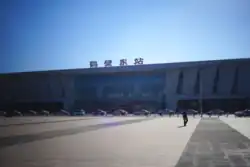
Hebi
Hebi (鹤å£?) is a small prefecture-level city tucked into northern H…

Kaifeng
Kaifeng (å¼€å°?) is one of China's Eight Great Ancient Capitals, perc…
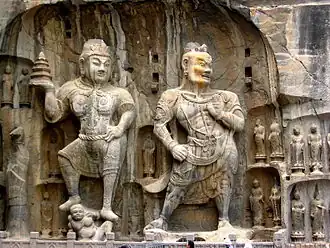
Longmen National Park
Longmen National Park — better known internationally as the Longmen…
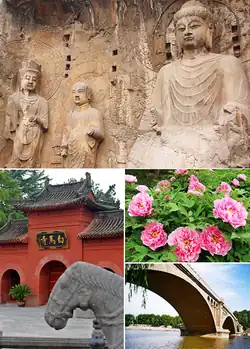
Luoyang
Luoyang (洛阳) is one of China's "Four Great Ancient Capitals," and…
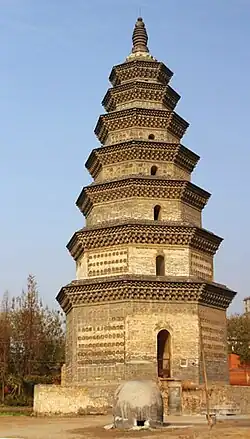
Nanyang
Nanyang (å?—阳) is a prefecture-level city tucked into the southwest…
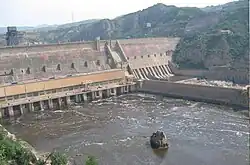
Sanmenxia
Sanmenxia (三门峡) is a prefecture-level city of about 2.2 million…
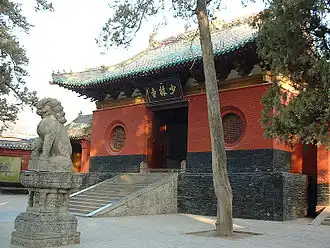
Songshan National Park
Songshan National Park (嵩山) is the protected mountain and scenic…
Xinxiang
Xinxiang (新乡) sits in northern Henan Province on the fertile Nort…
Yuzhou
Yuzhou is a county-level city of roughly 1.2 million people in centra…
Zhengzhou
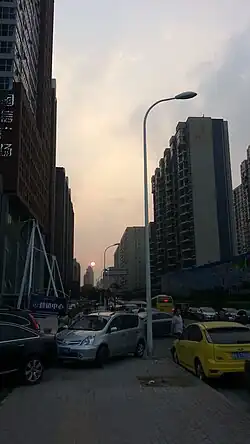
Zhengzhou (郑州) is the capital of Henan Province and the political…
Dengfeng
Dengfeng (登封) is a county-level city in central Henan Province, admin…
Jiaozuo
Jiaozuo (焦作) is a prefecture-level city in northern Henan Province, l…
Jigongshan National Park
Jigongshan takes its name from a summit silhouette that, viewed from…
Jiyuan
Jiyuan (济源) is a county-level city in northern Henan Province, direct…
Linlushan National Park
Linlü Shan (林虑山) is the central section of the Taihang Mountai…
Luohe
Luohe (漯河) is a prefecture-level city in central Henan Province, loca…
Pingdingshan
Pingdingshan (平顶山) is a prefecture-level city in west-central Henan P…
Puyang
Puyang (濮阳) is a prefecture-level city in northeastern Henan Province…
Qingtianhe National Park
Qingtianhe National Park (清天河国家森林公å›, sometimes rend…
Shangqiu
Shangqiu (商丘) is a prefecture-level city in eastern Henan Province, l…
Shennongshan National Park
Shennongshan (神农山) National Park sits in the southern foothills…
Shirenshan National Park
Shirenshan National Park (石人山国家森林公å›), officially re…
Wangwushan-Yuntaishan National Park
The Wangwushan–Yuntaishan UNESCO Global Geopark is a twinned protec…
Xinyang
Xinyang (信阳) is a prefecture-level city in southern Henan Province, l…
Xuchang
Xuchang (许昌) is a prefecture-level city in central Henan Province, lo…
Zhoukou
Zhoukou (周口) is a prefecture-level city in eastern Henan Province, lo…
Zhumadian
Zhumadian (驻马店) is a prefecture-level city in southern Henan Province…
Pair the highlights of Henan Sheng into one easy trip — we'll plan the route.
WhatsApp
Contact Us
Get in touch with us.
Get in touch
Contact Us
Tell us where you'd like to go and how you like to travel. A real Tripcuro planner — not a bot — will craft an itinerary around you.
- Personalised, hassle-free planning end-to-end
- Transparent pricing, no hidden costs
- 24/7 support for complete peace of mind