
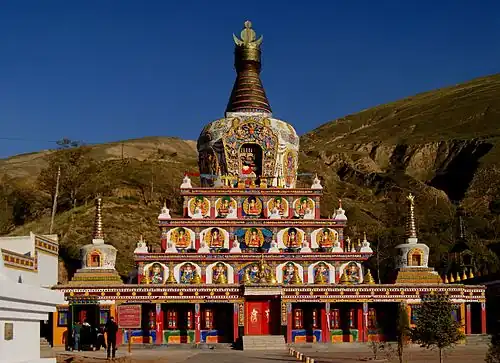
Tongren
Guizhou Sheng, China
Why visit Tongren?
Tongren (铜仁; Tóngrén) is a prefecture-level city tucked into the rugged northeastern corner of Guizhou, where the province bleeds into Hunan and Chongqing. For most of its history it was a remote frontier settlement on the Jin Jiang and Da Jiang rivers, which meet in the old town to form the Jin River — a confluence locals call "the meeting of two dragons." The area has long been home to Tujia, Miao, Dong, and Gelao communities, and that ethnic mix still shapes its food, festivals, and stilted wooden-house architecture in surrounding villages. Until very recently Tongren was a backwater even by Guizhou standards; today it is the gateway to Fanjingshan (梵净山), inscribed as a UNESCO World Heritage Site in 2018, and visitor numbers have climbed sharply.
The city proper is unhurried and workmanlike, with a small but pleasant old riverside quarter on the Jin Jiang. Most travellers treat it as a one-night base before heading to Fanjingshan, an hour or so to the north in Jiangkou County. The mountain itself — one of Chinese Buddhism's sacred peaks, associated with Maitreya — rises in mist-soaked spires of weathered granite topped by two tiny temples on the iconic Red Clouds Golden Summit (红云金顶). The wider prefecture is karst country: caves, gorges, terraced fields, and slow ethnic-minority villages.
Climate is humid subtropical. April to early June and September to October are the sweet spots: mild temperatures, manageable humidity, and the best odds of clear views from Fanjingshan. July and August are hot, very wet, and crowded; winters are damp, grey, and surprisingly cold at altitude — the summit can be snowed in and the cable car sometimes closes.
Planning Tongren? Tell us your dates and we’ll tailor the trip.
Ask on WhatsAppHow do you get there?
By Plane
Tongren Fenghuang Airport (IATA: TEN) is about 21 km south of the city centre, near the border with Hunan. It has regular domestic flights to Beijing, Shanghai, Guangzhou, Shenzhen, Chongqing, Kunming, Hangzhou, and Xi'an, with seasonal additions. A taxi into town runs roughly ¥60–80 (about 30 minutes); a shuttle bus meets most arrivals and runs to the city centre for around ¥20.
By Train
Tongren is served by two stations, and it matters which one you book:
- Tongren South Railway Station (铜仁南站) is the high-speed-rail station on the Zhangjiajie–Jishou–Huaihua corridor, with onward bullet-train links to Changsha, Guiyang, Chongqing, and Guangzhou. It sits well outside the city; allow 30–40 minutes by taxi (~¥70–100) or take the connecting bus.
- Tongren Railway Station (铜仁站) is the older conventional-rail station closer to town, on the Yuhuai line, with slower overnight services to Huaihua, Chongqing, and Guiyang.
Book through 12306 (China Railway's official site/app) or Trip.com; high-speed seats to/from Guiyang and Changsha sell out on weekends and holidays.
By Car / Road
Tongren is connected by expressway to Guiyang (~330 km, around 4–4.5 hours), Chongqing (~430 km, 5–6 hours), and Changsha via Jishou (~400 km, 5 hours). Roads in the prefecture itself are mountainous but generally well-paved; the drive north from the city to Fanjingshan's main (eastern) gate at Heiwan He near Jiangkou takes about 1 hour 15 minutes.
Long-distance buses use the Tongren Bus Station in the city centre, with services to Guiyang, Zunyi, Kaili, Jishou, Fenghuang (Hunan), and Chongqing. Frequent local minibuses run to Jiangkou (江口) for Fanjingshan's east gate; for the quieter west gate, transfer in Yinjiang (印江).
The old town and waterfront around the Jin Jiang confluence are easily walkable. Otherwise:
- City buses cover most of urban Tongren at a flat fare of about ¥1–2. Routes are signed in Chinese only; have your destination written in characters.
- Taxis are cheap, with flagfall around ¥6–8 and short hops across town rarely exceeding ¥15. Insist on the meter (打表, dǎ biǎo); a few drivers near the stations try to negotiate flat rates.
- Didi (滴滴出行) works well and is the easiest option for non–Mandarin speakers, though you'll need a Chinese phone number or a linked international account.
- Shared minivans and minibuses depart from the bus station and informal stands for nearby counties and the Fanjingshan gates; expect ¥20–40 per seat depending on distance.
Scams are uncommon, but at Fanjingshan's east gate touts will press private cars and "VIP" cable-car tickets on you — buy everything inside the official ticket hall.
What are the things to do?
Fanjingshan (梵净山), Jiangkou County, ~70 km north of Tongren. The reason most visitors come. A granite massif rising to 2,572 m, with two summit pinnacles — the Red Clouds Golden Summit (红云金顶), reached by a near-vertical staircase and chains, and the more accessible Old Golden Summit (老金顶). Endemic species include the Guizhou snub-nosed (golden) monkey and the Fanjingshan fir. From the east gate at Heiwan He you take a shuttle, then the cable car, then climb. Daily visitor numbers are capped — book entry online a day or two ahead via the official Fanjingshan WeChat mini-program. Open roughly 08:00–17:00; entry ¥100, sightseeing shuttle ¥20, cable car ¥160 round-trip (subject to change).
Jiuolong Cave / Jiulongdong (九龙洞), about 17 km east of the city. A large karst cavern complex on the Jin River with illuminated chambers, an underground stream, and a scenic gorge above.
Jin Jiang Riverside and Old Town (锦江/中南门古城), central Tongren. The renovated Zhongnanmen Historic District preserves a cluster of Ming-Qing courtyard houses, narrow lanes, and a temple or two along the river. Free to walk; some individual buildings charge a small entry. Pleasant at dusk when the lanterns come on.
Chuanzhu Temple / Chuanzhu Gong (川主宫), Zhongnanmen area. A small surviving Qing-dynasty guildhall–temple founded by Sichuanese merchants, with intact stone carvings and a courtyard stage.
Yunshe Tujia Ancient Village (云舍土家民俗文化村), Jiangkou County, near the road to Fanjingshan. A water-village of Tujia families with paper-mill ruins, stone lanes, and a clear spring pool — often combined with a Fanjingshan trip. Modest entry fee.
Shiqian Hot Springs (石阡温泉), Shiqian County, ~2 hours west of the city. Long-established mineral baths in a small county town.
Climb Fanjingshan in a single day. From Tongren, leave by 07:00, take the shuttle and cable car at the east gate, then ascend the Old Golden Summit and queue for the Red Clouds Golden Summit chains. Allow 5–6 hours on the mountain; descend before the last cable car (typically around 17:00). Wear grippy shoes — the granite steps get slick in mist.
Photograph the sea of clouds at dawn. Sleep at a guesthouse near the east gate the night before; first cable cars leave around 08:00. Cloud inversions are most reliable in late summer and early autumn.
Walk the Jin Jiang at night. The riverfront promenade between the confluence and Zhongnanmen lights up with red lanterns and is full of locals strolling, dancing, and snacking on grilled tofu.
Visit a Tujia or Miao village. Yunshe (Tujia) is easiest from town; for Miao culture, ask about day trips toward Songtao Miao Autonomous County to the north.
Boat trip on the Jin River. Small tourist boats run from the city out into the gorge below Jiulongdong when water levels cooperate.
Time a visit to a festival. Tujia "Sixiyue" (社巴节) and Miao Lunar New Year celebrations in surrounding counties are vivid, with long-table feasts, lusheng pipes, and dancing. Dates shift with the lunar calendar; ask at your hotel.
Planning Tongren? Want these on a customised itinerary?
Ask on WhatsAppWhere to eat?
Tongren food sits at the meeting of Guizhou, Hunan, Sichuan, and Tujia–Miao kitchens — sour, smoky, and chilli-heavy, with a strong line in river fish and pickled vegetables. Signature things to look for: sour-soup fish (酸汤鱼, suān tāng yú) made with fermented tomato and rice broth; social rice / shèfàn (社饭), a Tujia spring dish of glutinous rice steamed with wild herbs and cured pork; mǐ dòufu (米豆腐), a soft rice "tofu" served cold with chilli, vinegar, and peanuts; bā mǐ chá (巴米茶 / 油茶), an oil-tea broth with puffed rice and peanuts; and grilled Wujiang river fish. Vegetarians manage on stir-fried mountain greens, mapo tofu, eggplant, and the ubiquitous mi doufu; halal (清真, qīngzhēn) noodle shops are present but not common — ask at your hotel.
- Zhongnanmen riverside food street (中南门美食街), old town. The easiest first stop: a strip of small restaurants and stalls doing sour-soup fish hotpot, grilled skewers, mi doufu, and rice-noodle bowls. Mains ¥25–60; hotpot for two from ~¥120.
- Tongren-style rice noodle shops (铜仁绿豆粉/米粉), all over town. Breakfast and lunch staple — mung-bean noodles or rice noodles in a peppery broth with pickled vegetables. ¥8–15 a bowl; look for places packed with locals around 08:00.
- Tujia shefan restaurant, Jiangkou town near Fanjingshan. Several family-run places serve shefan, cured pork, and wild-vegetable dishes for guests coming off the mountain.
- Sour-soup fish house, Huandong Avenue area. Mid-range hotpot restaurants specialise in clay-pot suan tang yu with local river fish; expect ¥80–150 per person.
- Hotel restaurants at the Jinjiang International and similar properties do reliable, less spicy renditions of Guizhou classics for travellers who've had a long day on the mountain. ¥100–200 per person.
Where to drink?
- Baijiu. Guizhou is China's distilling heartland; even modest restaurants pour something local. Sip, don't shoot, unless you want to be carried home.
- Local beers. Snow (雪花) and Tsingtao are everywhere; ¥5–10 a bottle in restaurants, less from supermarkets.
- Oil tea (油茶). A Tujia–Dong tradition: roasted tea leaves pounded with ginger and salt, then poured over puffed rice, peanuts, and soybeans. Savoury and warming — try it at a Tujia restaurant or in Yunshe village.
- Fanjingshan green tea. Served as a matter of course in better restaurants and teahouses; ask for cuìfēng chá (翠峰茶).
- Riverside bars and cafés cluster around Zhongnanmen, ranging from quiet teahouses to louder LiveHouse-style bars with cover bands. Drinks ¥30–60.
Water safety: tap water is not potable. Stick to bottled or boiled water; hotels supply electric kettles. Ice in cheaper places may not be made from filtered water.
Planning Tongren? We’ll book the stays and dining for you.
Ask on WhatsAppWhere to stay?
- Budget
- Tongren Jinjiang Youth Hostel / riverside guesthouses in the Zhongnanmen old town — dorm beds and basic doubles from around ¥80–150. Variable English; expect Chinese ID/passport registration.
- Jiangkou County guesthouses near the Fanjingshan east gate (Heiwan He) — simple farmstay rooms from ¥120–200, useful for an early start on the mountain.
- Mid-range
- Hanting Hotel Tongren (汉庭酒店) and other reliable chain hotels (Home Inn, Jinjiang Inn, Atour) near the train station and main shopping streets, with doubles from ~¥250–400. Clean, predictable, English booking via Trip.com or Booking.
- Fanjingshan-area resort hotels in Taiping Town near the east gate — comfortable rooms with mountain views, ~¥400–700 in season.
- Upscale / heritage
- Jinjiang International Hotel Tongren (铜仁锦江国际大酒店) — the city's long-standing higher-end option on the river, doubles typically ¥500–800.
- Fanjingshan Trip Hotel / Mountain View Resort (in the scenic-area approach) — upper-tier option for travellers who want to be at the mountain's foot. ~¥700–1,200 in high season.
Booking on Trip.com or Ctrip generally gets you better rates and reliable Chinese-government registration than walk-ins, especially at the Fanjingshan gates.
What should you buy?
Tongren is not a serious shopping destination, but a few specialties are worth seeking out:
- Tujia and Miao textiles — indigo-dyed batik (蜡染), cross-stitch embroidery, and woven brocade. Small stalls in Zhongnanmen and at Yunshe village sell pieces from genuine to mass-produced; look for hand-knotted threads on the reverse.
- Silver jewellery — Miao silverwork (heavier, more sculptural than Han styles). Sold by weight; bargain to roughly 60–70% of the opening price.
- Fanjing green tea (梵净山翠峰茶) — a respected local green tea grown on the mountain's lower slopes. Loose-leaf packets from ¥80 upward; buy from tea shops rather than scenic-area stalls.
- Local liquor — Guizhou-style sorghum baijiu; you'll see Maotai's smaller cousins on every shelf.
- Roasted Fanjingshan mushrooms and dried tofu — vacuum-packed, easy to carry home.
Main shopping is along Huandong Avenue (环东大道) and around Zhongnanmen. Department stores have fixed prices; markets and craft stalls expect haggling.
Where to go next?
- Fanjingshan (~70 km, 1¼ hours) — if you haven't already gone; the obvious headline trip.
- Fenghuang Ancient Town, Hunan (~150 km, 2½ hours by road or fast train via Jishou) — riverside stilt-house old town, China's most famous photogenic water village.
- Zhangjiajie (~250 km, ~3 hours by high-speed rail to Zhangjiajie West) — the Avatar sandstone pillars of Wulingyuan; combine easily with Fanjingshan on a Hunan–Guizhou loop.
- Kaili (~5 hours by road or train, southern Guizhou) — base for Miao and Dong villages around Xijiang Qianhu and Zhaoxing.
- Guiyang (~4 hours by high-speed rail) — Guizhou's capital, gateway to Huangguoshu Waterfall and onward to Anshun.
- Chongqing (~2½–3 hours by high-speed rail) — hotpot, the Yangtze, and a complete change of pace from rural Guizhou.
Nearby in Guizhou Sheng
More places to explore around Tongren.
Guide content as of July 2026. Portions adapted from Wikivoyage, CC BY-SA 4.0.

Contact Us
Get in touch with us.
Get in touch
Contact Us
Tell us where you'd like to go and how you like to travel. A real Tripcuro planner — not a bot — will craft an itinerary around you.
- Personalised, hassle-free planning end-to-end
- Transparent pricing, no hidden costs
- 24/7 support for complete peace of mind