
Qianling Park
Guizhou Sheng, China
Why visit Qianling Park?
Qianling Park (Qianlingshan Park) is the best-loved green space in Guiyang, the capital of Guizhou Province in southwest China. Opened to the public in 1957, it spreads over a forested hillside on the northwestern edge of the city centre and combines genuine wilderness — dense subtropical forest, a lake and a limestone cave — with a much-photographed Buddhist temple and one of China's most famous troupes of free-roaming wild macaque monkeys.
The park takes its name from Qianling Mountain, and its centrepiece is Hongfu Temple, a Qing-dynasty Buddhist monastery founded in the 17th century near the summit. Visitors climb the "Nine-Bend Path" through the forest to reach it, often accompanied (and occasionally harassed) by the resident macaques. Below lies Qianling Lake, with rowing boats, and the karst Qilin Cave. For a major city park, Qianling is unusually wild and hilly, and it gives an easy taste of Guizhou's karst-and-forest scenery without leaving Guiyang.
Guiyang's climate is mild and humid, earning it a reputation as a "summer capital" thanks to cool, comfortable summers. Spring and autumn are the most pleasant times to visit the park; summer is green and refreshing but can be rainy, and winters are cool, grey and damp. The park is busiest on weekends and during Chinese public holidays, so an early start makes for a quieter walk.
Planning Qianling Park? Tell us your dates and we’ll tailor the trip.
Ask on WhatsAppHow do you get there?
By Plane
The nearest airport is Guiyang Longdongbao International Airport (KWE), around 10–12 km southeast of the city centre. From the airport, metro, airport shuttle buses, taxis and ride-hailing reach central Guiyang; a taxi to the park area typically takes 30–40 minutes depending on traffic. From the city centre, the park is a short bus, metro or taxi ride away.
By Train
Guiyang is a major rail hub. Guiyang North Railway Station handles high-speed trains to cities including Chengdu, Chongqing, Kunming, Guangzhou and Changsha, while Guiyang Railway Station serves conventional services. Both connect to Qianling Park by city bus, metro or taxi (roughly 15–30 minutes). Book high-speed tickets in advance, especially around public holidays.
By Car / Road
Guiyang is well connected by expressway to the rest of Guizhou and neighbouring provinces. The park sits on the northwestern side of the city, reachable by taxi or ride-hailing in 10–20 minutes from most central areas. Long-distance buses serve Guiyang's coach stations from cities across Guizhou; from there it is a short transfer to the park.
Qianling Park is explored on foot. Trails climb the hillside through forest to Hongfu Temple, and the Nine-Bend Path is the classic route up; a cable car offers an easier alternative for the climb to the temple area. Within the park there are also rowing boats on Qianling Lake. Wear comfortable shoes, as the paths are steep in places. To reach the park, Guiyang's expanding metro, city buses and taxis are all straightforward; ride-hailing apps such as Didi are widely used. Fares for city buses are low (typically a few yuan), and taxis around the city are inexpensive. The main hassle inside the park is the macaques rather than scams — keep bags closed and do not display or offer food.
What are the things to do?
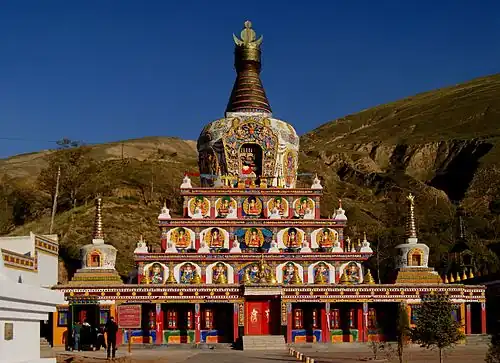
Hongfu Temple — a 17th-century Qing-dynasty Buddhist temple near the top of Qianling Mountain, the park's spiritual and architectural highlight, with halls, courtyards and city views. Reached by the Nine-Bend Path or cable car.
Qianling Lake — a tranquil lake within the park where visitors can hire rowing boats.
Qilin Cave (Kirin Cave) — a karst limestone cave within the park, typical of Guizhou's underground landscapes.
The macaque colony — large troupes of wild rhesus macaques roam the forest trails, especially along the Nine-Bend Path; entertaining to watch but bold and best given a wide berth.
Forest trails and viewpoints — the wooded hillside offers walking paths and lookouts over Guiyang.
Walk the Nine-Bend Path up through the forest to Hongfu Temple — the signature Qianling Park experience.
Ride the cable car for an easier ascent or a different perspective over the forested hills.
Watch the macaques along the trails (keep food hidden and bags secured).
Hire a rowing boat on Qianling Lake for a relaxed hour on the water.
Explore Qilin Cave to see karst formations without leaving the city.
Birdwatching and forest walks — the park's subtropical woodland is a green retreat within Guiyang.
Planning Qianling Park? Want these on a customised itinerary?
Ask on WhatsAppWhere to eat?
Within the park, expect simple snack stalls and basic eateries; for a proper meal, Guiyang's city centre is close by. Guizhou cuisine is known for sour, spicy and fermented flavours — the signature dish is sour-soup fish hotpot (suan tang yu), and Guiyang street food is famous, with specialities such as siwawa (rice-flour wraps filled with vegetables), changwang mian (intestine noodle soup) and grilled tofu.
- Budget: snack stalls near the park gate and street-food vendors in central Guiyang serve cheap local bites.
- Mid-range: Guiyang restaurants specialising in sour-soup hotpot and Guizhou home cooking offer hearty meals at moderate prices.
- Upscale: hotel restaurants and contemporary regional-cuisine venues in central Guiyang provide the city's higher-end dining.
Where to drink?
Tea is the everyday drink, and Guizhou produces well-regarded green tea worth trying. The province is also famed as a heartland of Chinese baijiu (white spirit) — Maotai is produced in Guizhou — and local rice wines appear at gatherings. Inside the park, bottled water and soft drinks are sold at stalls. Treat tap water as unsafe to drink untreated; stick to boiled or bottled water.
Planning Qianling Park? We’ll book the stays and dining for you.
Ask on WhatsAppWhere to stay?
There is no accommodation inside Qianling Park itself; visitors stay in Guiyang and visit as a half-day trip.
- Budget: hostels and budget guesthouses in central Guiyang offer simple rooms at low rates.
- Mid-range: numerous business and chain hotels across central Guiyang provide comfortable rooms with modern facilities.
- Upscale: international and high-end domestic hotels in Guiyang's commercial districts cater to the top tier.
What should you buy?
Inside and around the park you will find stalls selling snacks, drinks and simple souvenirs. For more substantial shopping, head into central Guiyang. Guizhou specialities worth seeking out include batik and embroidery from the province's Miao and Buyi communities, silver ornaments, local teas, and edible souvenirs such as chilli products and preserved foods. Bargaining is normal at markets and tourist stalls but not in fixed-price shops and malls.
Where to go next?
- Central Guiyang — Jiaxiu Pavilion on the Nanming River and the city's lively food streets are a short ride from the park.
- Qingyan Ancient Town — a well-preserved Ming-dynasty walled town about 30 km south of Guiyang, an easy day trip.
- Huangguoshu Waterfall — one of China's largest waterfalls, roughly 2 hours west of Guiyang by road or rail.
- Kaili — a gateway to the Miao and Dong minority villages of southeast Guizhou, reachable by high-speed train.
- Anshun — a city west of Guiyang known for the Dragon Palace caves and karst scenery.
- Libo County — famed for its emerald karst landscapes and waterfalls, about 1.5 hours by high-speed train.
Nearby in Guizhou Sheng
More places to explore around Qianling Park.

Guide content as of May 2026. Portions adapted from Wikivoyage, CC BY-SA 4.0.

Contact Us
Get in touch with us.
Get in touch
Contact Us
Tell us where you'd like to go and how you like to travel. A real Tripcuro planner — not a bot — will craft an itinerary around you.
- Personalised, hassle-free planning end-to-end
- Transparent pricing, no hidden costs
- 24/7 support for complete peace of mind