
Guizhou Sheng
China · Province · 27 destinations with guides
Photography coming soonOverview
Guizhou is a mountainous province in southwest China where karst landscapes ripple across more than 90% of the land, sculpting a country of limestone pinnacles, sinkholes, caves, and some of Asia's most dramatic waterfalls. Wedged between Sichuan, Chongqing, Hunan, Guangxi and Yunnan, the province has long been one of China's least industrialised and least visited — a fact that today reads as a virtue. Old stone villages cling to terraced hillsides, rivers cut through gorges still spanned by covered wooden bridges, and the road from one valley to the next can swing through three different ethnic-minority cultures in an afternoon.
Roughly 37% of Guizhou's population belongs to officially recognised ethnic minorities — chiefly Miao, Dong, Buyi, Tujia, Yi and Shui — and their villages, festivals, silverwork, indigo dyeing and polyphonic singing are the province's defining cultural draw. The provincial capital, Guiyang, anchors the centre; Anshun guards the great Huangguoshu waterfall to the west; Kaili and the Qiandongnan prefecture are the heartland of Miao and Dong country to the southeast; and the old garrison town of Zhenyuan strings out along the Wuyang River in the east.
For travellers, Guizhou offers what coastal China largely no longer can: a sense of the unfamiliar. It is poorer and slower than Yunnan, with less polished tourism infrastructure, but the rewards — a Dong drum-tower festival, a karst sunrise over Wanfenglin, a bowl of sour-fish soup in a wooden Miao stilt house — are correspondingly outsized.
When to Visit
April to early June and September to October are the sweet spots. Spring brings rapeseed bloom across the karst basins (especially around Xingyi and Anshun in March), waterfalls swelling with snowmelt, and the major Miao festivals. Autumn delivers clear skies, terraced-rice gold, and comfortable hiking temperatures in the 18–25 °C range.
Summer (June–August) is the wettest season — humid, frequently overcast, and prone to afternoon thunderstorms — but it is also when Huangguoshu Waterfall is at its most thunderous and the high-altitude air stays cooler than the Yangtze valley furnaces. Guiyang's nickname is "the summer capital" for exactly this reason; expect domestic-tourist crowds at headline sights from mid-July to late August.
Winter (December–February) is cold, damp and frequently foggy, with sub-zero nights at altitude and occasional ice storms that close mountain roads. Visit only if your priority is a specific Miao Lunar New Year festival — in which case the cold is worth it.
Festival highlights to plan around: Miao New Year (lunar Oct–Nov, Leishan and surrounding villages), Sister's Meal Festival (lunar 15th day of the 3rd month, Shidong and Taijiang), Lusheng Festival (multiple dates Jan–Feb, Kaili area), and the Dong Grand Song gatherings around Zhaoxing in late autumn.
Tell us your dates and we'll shape a Guizhou Sheng route around them.
WhatsAppGetting Around
Guizhou's transport has been transformed in the last decade. The province is now criss-crossed by high-speed rail and toll expressways that bridge ravines on some of the world's tallest viaducts.
- High-speed rail is the fastest backbone. Guiyang North (Guiyangbei) is the hub. Sample journey times: Guiyang–Anshun ~30 min, Guiyang–Kaili ~40 min, Guiyang–Tongren ~2 hr, Guiyang–Zhenyuan ~1 hr 50 min, Guiyang–Xingyi ~2 hr 15 min on the newer line.
- Conventional trains still serve some smaller towns (e.g. parts of Qiannan) and are cheap but slow.
- Long-distance buses remain essential for reaching minority villages off the rail map — Kaili's bus station is the launch point for Xijiang, Langde, Shidong, Zhaoxing and Basha. Expect 1.5–4 hours to most villages, ¥20–60 per leg.
- Taxi and DiDi work well in Guiyang, Anshun, Kaili and Zunyi. Outside these cities, use local ride-hailing or negotiate a half-day private car (¥400–700) — often the only sane way to chain together two or three villages in a day.
- Driving yourself is feasible for foreign-licence holders only with a Chinese permit; the expressway network is excellent but mountain back roads can be slow, foggy and prone to landslides in summer.
Distances to anchor planning: Guiyang–Anshun 110 km, Guiyang–Kaili 195 km, Kaili–Zhaoxing 280 km (4–5 hr by road), Anshun–Xingyi 240 km, Guiyang–Zunyi 150 km.
Top Destinations
- Guiyang — the provincial capital and transit hub; Qianling Park, Jiaxiu Pavilion, and a famously punchy night-market food scene.
- Anshun — gateway to Huangguoshu Waterfall and the Getu River karst caves; a workable base for two or three days of waterfall and cave country.
- Kaili — capital of Qiandongnan Miao and Dong Autonomous Prefecture and the launchpad for almost every Miao village visit.
- Xijiang Qianhu Miao Village — the "Thousand Household Miao Village", the largest and most developed Miao settlement; touristic but visually staggering at dusk.
- Zhaoxing Dong Village — the headline Dong settlement, with five drum towers, covered "wind-and-rain" bridges and Grand Song performances.
- Zhenyuan — an ancient riverside garrison town strung along a hairpin of the Wuyang River, with Ming-era temples climbing the cliff.
- Xingyi (Wanfenglin) — the "Forest of Ten Thousand Peaks", a karst landscape of conical hills cut by farmland and the Maling River gorge.
- Zunyi — historically significant for the 1935 Communist Party conference; also the gateway to Chishui's bamboo forests and Danxia red-rock waterfalls.
- Chishui — UNESCO-listed Danxia landform of red sandstone cliffs, bamboo seas and cascading waterfalls in the far north.
- Fanjing Shan — a sacred Buddhist mountain in Tongren prefecture; UNESCO Natural Heritage site famous for its needle-like Red Cloud Golden Summit.
Want the scenic legs and stays booked for you? Just ask.
WhatsAppCuisine
Guizhou cooking is sour and spicy rather than the numbing Sichuan model — fermentation, not Sichuan peppercorn, is the defining technique. Lacto-fermented red tomatoes (hong suan), fermented glutinous-rice broth and pickled greens underpin most savoury dishes; chillies arrived early and stayed.
Signature dishes to seek out:
- Suan tang yu (酸汤鱼) — sour fish soup, the unofficial provincial dish, traditionally Miao; typically river fish simmered in a scarlet tomato-and-rice fermented broth at the table.
- Siwawa (丝娃娃) — Guiyang's "silk doll" street snack: a thin rice-flour wrapper filled with a dozen shredded vegetables and doused in spicy-sour broth.
- Changwang mian (肠旺面) — pork-intestine and blood noodle soup; a Guiyang breakfast staple.
- Huaxi niurou fen (花溪牛肉粉) — beef rice noodles from Huaxi, served across the province.
- Doufu yuanzi (豆腐圆子) — fried fermented tofu balls, a Zhenyuan and Guiyang street snack.
- Lajiao in every form —
zhe gen cao(houttuynia) dipping sauces, dry-fried chilli with peanuts, and the ubiquitouslaoganmachilli crisp, which was invented in Guiyang. - Maotai (茅台) — China's most famous baijiu, distilled in the town of the same name in northern Guizhou; ABV around 53% and an acquired taste.
For street food, Guiyang's Qingyun Lu night market and Erqi Lu are the obvious starts; in Kaili, the lanes around the old market sell sour-soup hotpot for under ¥60 a head. Vegetarians manage but should expect lard and stock to be the default; in Miao and Dong villages, pre-arranging a vegetarian table with the host family is the only reliable approach. Halal eateries cluster near mosques in Guiyang's Hequn Lu area.
Culture & Festivals
Guizhou's calendar is built around its minority cultures, and almost every village has its own variant of the headliners below. Dates follow the lunar calendar and shift each year — confirm before booking.
- Miao New Year (Miao Nian, 苗年) — late October to early December (lunar 10th–11th month). Leishan, Langde and Xijiang stage lusheng-pipe processions, bullfights, and silver-clad dance circles lasting up to a week.
- Sister's Meal Festival (Zimei Fan, 姊妹饭) — 15th day of the 3rd lunar month (typically April). Shidong and Taijiang on the Qingshui River; coloured glutinous rice given as love tokens, antiphonal singing, and one of the most photogenic gatherings of Miao silverwork anywhere.
- Lusheng Festival — multiple dates Jan–Feb (lunar New Year period), centred on Kaili, Zhouxi and Gulong; massed lusheng-reed-pipe ensembles and competitive village dance.
- Dong Grand Song (Dong Da Ge, 侗族大歌) — UNESCO-listed polyphonic a cappella singing, performed year-round in Zhaoxing, Xiaohuang and Tang'an, with the largest gatherings around Lunar New Year and the autumn harvest.
- Sanyuesan (3rd day of the 3rd lunar month) — a Buyi spring festival, especially around Anshun and Wangmo.
- Torch Festival (Huoba Jie) — a Yi festival in late June/early July in northwestern Guizhou.
Crafts to watch for and buy from source: Miao silver jewellery (Kongbai and Shidong are the silversmithing villages), batik (Anshun and Danzhai), indigo-dyed and pleated cloth (Basha and surrounding Miao villages), Dong cotton brocade (Zhaoxing area), and Yuping bamboo flutes from eastern Guizhou.
Travelling during a festival? We'll plan around the crowds.
WhatsAppNotable Experiences
- Witness Huangguoshu in full flood. At 78 m wide and 81 m tall, Huangguoshu is the largest waterfall in Asia; visit in July or August when monsoon flow lets you walk the Water Curtain Cave behind the sheet of falling water (entry ¥160, plus ¥50 shuttle).
- Sleep in a Dong drum-tower village. Stay two nights in Zhaoxing or quieter Tang'an, time a meal with a Grand Song rehearsal in the drum tower, and walk the rice terraces of Tang'an at sunrise. Family-run guesthouses run ¥150–300 per night.
- Catch the Sister's Meal Festival in Shidong. The procession of Miao women in full silver headdresses — kilos of it — along the Qingshui River is one of the great sights of ethnic-China travel; book Kaili accommodation six months ahead for the festival weekend.
- Hike the karst at Wanfenglin, Xingyi. Cycle or e-bike the loop through the Buyi villages of Shuangsheng and Lebei among 20,000 conical hills; pair with a half-day boat ride through the Maling River gorge.
- Climb Fanjing Shan's Red Cloud Golden Summit. A cable car (¥160 return) plus a 1.5-hour stair ascent to a knife-edge twin-temple peak rising out of the cloud forest; go on a weekday and start before 8 am to beat both queues and afternoon mist.
- Tour the Maotai distilleries in Renhuai. The town of Maotai on the Chishui River is open to distillery visits; tastings of vintage
feitianMaotai are a once-in-a-trip indulgence at ¥300+ per flight.
Top Destinations
Every destination in Guizhou Sheng with a guide — tap a place for the full guide.
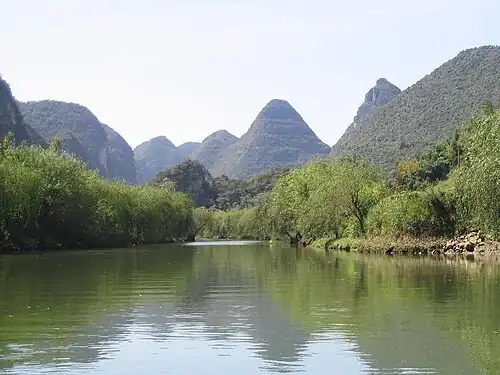
Anshun
Anshun (安顺; Ānshùn) is a city in Guizhou Province, southwestern China…

Fanjingshan
Fanjingshan (梵净山, "Brahma Pure Mountain") rises abruptly from t…
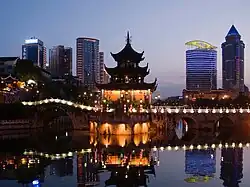
Guiyang
Guiyang (贵阳, Guìyáng) is the capital of Guizhou province and th…
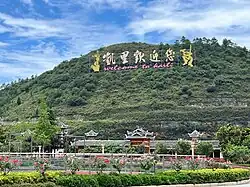
Kaili
Kaili sits at the foothills of the Miaoling Mountains on the banks of…
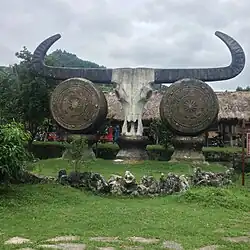
Libo County
Libo County sits in far southern Guizhou, on the Guangxi border, and…
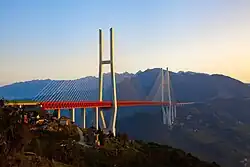
Liupanshui
Liupanshui (å…盘水) is a prefecture-level city in western Guizhou,…

Taijiang
Taijiang County (å?°æ±ŸåŽ¿) sits in the heart of the Qiandongnan Miao…
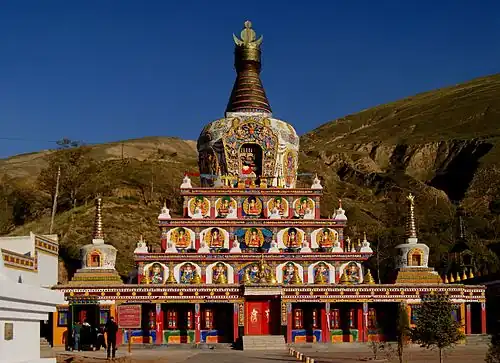
Tongren
Tongren (é“œä»?; Tóngrén) is a prefecture-level city tucked into th…
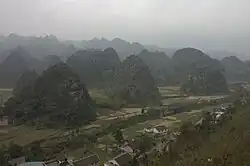
Xingyi
Xingyi (兴义) is the prefecture-level seat of the Qianxinan Buyei a…
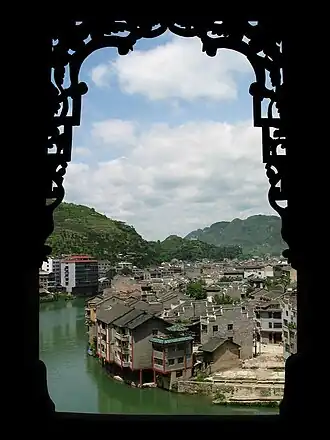
Zhenyuan
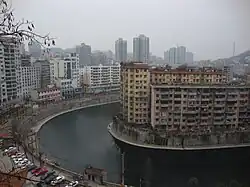
Zhenyuan is a 2,000-year-old riverside town tucked into the mountains…
Zunyi
Zunyi (é?µä¹‰) is a mid-sized city of roughly three million in northe…
Bijie
Bijie (毕节) is a prefecture-level city in northwestern Guizhou Provinc…
Congjiang
Congjiang (从江) is a county in the Qiandongnan Miao and Dong Autonomou…
Duyun
Duyun (都匀) is a county-level city and the capital of the Qiannan Buye…
Guiyang Huaxi Park: it is a scenic spot in Guiyang City
Huaxi Park (花溪公å›) sits about 17 km south of central Guiyang i…
Guiyang Qianling Mountain Park: this is a large urban park
Qianling Mountain Park (é»”ç?µå±±å…¬å›, QiánlÃng ShÄ?n GÅ?ngyuán)…
Huangguoshu Falls: one of the famous waterfalls in China
Huangguoshu Falls (é»„æžœæ ‘ç€‘å¸ƒ), tumbling 77.8 metres over a 101-…
Lang De
Lang De (郎德, LÇŽngdé) is a Miao ethnic village tucked into a nar…
Langde
Langde (朗德) is a small Miao ethnic village in Leishan County, about 3…
Libo
Libo County lies in the far south of Guizhou Province, in the Qiannan…
p Tongren Wanfeng Forest: this place is famous for its strange Karst landform
Wanfeng Forest (万峰林, Wà nfÄ“nglÃn — "Forest of Ten Thousand…
Qianhu Miao Village in southeastern Guizhou: this is a large Miao settlement
Xijiang Qianhu Miao Village (西江å?ƒæˆ·è‹—寨, "West River Thousand…
Qianling Park
Qianling Park (Qianlingshan Park) is the best-loved green space in Gu…
Rongjiang
Rongjiang (榕江) is a county in the Qiandongnan Miao and Dong Autonomou…
Weining
Weining is unlike the rest of Guizhou.
Xijiang
Xijiang (西江) is a large Miao ethnic village in Leishan County, Qiando…
Zhaoxing Dong Zhai: Zhaoxing Village
Zhaoxing Dong Village (肇兴侗寨, Zhà oxÄ«ng Dòngzhà i) is one of…
Pair the highlights of Guizhou Sheng into one easy trip — we'll plan the route.
WhatsApp
Contact Us
Get in touch with us.
Get in touch
Contact Us
Tell us where you'd like to go and how you like to travel. A real Tripcuro planner — not a bot — will craft an itinerary around you.
- Personalised, hassle-free planning end-to-end
- Transparent pricing, no hidden costs
- 24/7 support for complete peace of mind