
Chongzuo
Guangxi Zhuangzu Zizhiqu, China
About Chongzuo
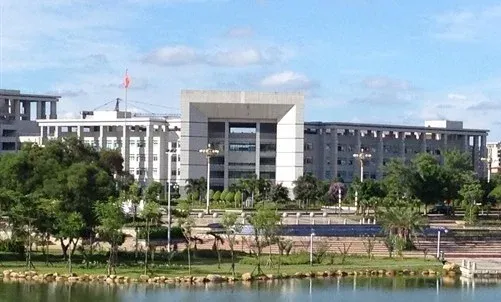
Chongzuo (崇左) sits in the southwest of Guangxi Zhuang Autonomous Region, hard against the Vietnamese border and roughly 1.5 hours by road from Nanning. It is one of the birthplaces of Zhuang culture, and ethnic Zhuang people remain the dominant community across its villages and markets. The city is best known for three things: dramatic karst landscapes (limestone peaks that rise straight out of sugarcane fields and the Zuojiang River), its role as a major ASEAN gateway with active border trade into Vietnam, and its standing as "China's sugar capital" — sugarcane fields stretch in every direction for much of the year.
Chongzuo also carries a deep revolutionary history. In the late 1920s and early 1930s, the region was part of the Left River Revolutionary Base Area, where Deng Xiaoping and other Communist organizers mobilized workers, peasants, and ethnic minority communities along the Vietnam frontier. Memorial halls and former residences scattered across the prefecture document this period. For visitors, the prefecture's headline draws lie outside the urban core — De Tian Transnational Falls on the Vietnamese border, Friendship Pass (Youyiguan), and the UNESCO-listed Huashan rock paintings along the Zuojiang River — while the city itself is a compact, low-rise base for organizing trips.
The climate is subtropical monsoon: long, hot, humid summers (July highs around 34 °C) and short, mild winters (January lows around 11 °C, daytime highs near 18 °C). Rain is heavily concentrated from May through September, with July and August averaging over 190 mm a month — De Tian Falls is at its most thunderous then, but roads to outlying scenic spots can flood. The sweet spot for travel is October to early April, when skies are clearer, humidity drops, and outdoor walking is comfortable. The urban core is centred on Jiangzhou District (江州区), with Xinmin Road and the Zuojiang River as the main orientation points.
Planning Chongzuo? Tell us your dates and we’ll tailor the trip.
Ask on WhatsAppHow to reach
By Plane
Chongzuo has no commercial airport of its own. The nearest is Nanning Wuxu International Airport (NNG), about 130 km northeast of Chongzuo city, roughly 2 hours by road. From the airport you can take the airport shuttle to Nanning city, then transfer to a long-distance bus or train onward to Chongzuo. Door-to-door taxi or chartered car from NNG runs roughly ¥400–600 one way depending on negotiation; for travellers heading straight to De Tian Falls, a chartered car from the airport is often the simplest option.
By Train
- Chongzuo South Railway Station (崇左�站) — opened 2020, located between Nanyou Expressway and Luoyue Avenue in Jiangzhou District. This is the high-speed rail station and the one most travellers will use; frequent services connect to Nanning (under 1 hour), with onward high-speed links across Guangxi and beyond.
- Chongzuo Station (崇左站) — built in 1952 in Taiping Town, Jiangzhou District. A third-class station on the Xianggui Railway handling slower passenger and freight services.
- Setan Station (濑�站) — a small fourth-class station on the Xianggui Railway in Setan Town, mostly of interest for local connections.
Book tickets via the China Railway 12306 app or website; foreign passports can be used to register and to collect tickets at the station with the same passport. Reserve seats a few days in advance for weekends and holiday periods.
By Car / Road
- From Nanning: roughly 130 km southwest via the Nanyou Expressway (G7211), about 1.5 hours by car on good toll highway.
- From Pingxiang / Friendship Pass (Vietnamese border): roughly 110 km, about 1.5 hours by expressway.
- From Baise: roughly 250 km north, around 3.5 hours.
Long-distance coach: regular buses link Chongzuo's main bus terminal with Nanning and surrounding cities. For onward scenic-area trips, tourist buses run to De Tian Falls and other major sights; fares range from ¥14 to ¥45 one way depending on the route, and a round-trip ticket is typically about ¥80.
Chongzuo is small and easy to manage. The urban core in Jiangzhou District can be walked end to end in under an hour.
- City buses: several numbered routes cover the main areas — Route 1, 2, 3 link the bus station with the riverside districts and outlying cement plants/sugar factories; Route 8 runs from Chongzuo South Station through City Hospital and Chongzuo High School to the City Government. Flat fare ¥1, paid on boarding. Buses run roughly 06:30–18:30 (Route 8 until 20:30). Flag them down by waving.
- Taxis: plentiful and cheap. Flagfall is ¥2 for the first 2 km, then ¥1.4 per km. Most rides within the city come to about ¥10. Taxi complaint line: 0771-7832532.
- Ride-hailing: Didi (滴滴出行) works in Chongzuo, but coverage is thinner than in Nanning — expect short waits during peak times.
- Rental car / electric car: useful for outlying attractions, where distances are large and public transport is limited. A Chinese driver's licence (or recognised conversion) is required for self-drive.
- Tourist buses: the most practical way to reach De Tian Falls and other scenic spots without a car. Tickets sold at the bus station.
Scams are rare for the level seen in big tourist cities, but always insist taxis use the meter and avoid unmarked "black cabs" near the train stations.
Things to do
Leaning Pagoda (斜塔, Xiétǎ) — Intersection of Zuojiang Road and Xinmin Road, Jiangzhou District. A whitewashed pagoda perched on top of a large rock in the middle of the Zuojiang River; a small boat ferries visitors across for around ¥5 to climb it. Crossings stop when the river runs high (typically spring/summer rainy season). Bus Route 3 from the bus station drops you about 500 m away — tell the driver "斜塔". Open 24 hr, free.
Chongzuo Ecology Park (崇左生æ€?å…¬å›) — Shi Jinglin Road, Jiangzhou District. A research reserve run with Beijing University focused on the endangered white-headed leaf monkey (白头å?¶çŒ´); around 500 individuals live in and around the park. The monkeys leave their cliffside caves at sunrise and return at sunset — those are the windows to see them. Daytime sightings are unlikely. A minibus from the bus station (about 1 hour, Â¥10) drops you at the park. Open 08:00–18:00. Adult Â¥36 / child Â¥18. Best season Sep/Oct–Mar.
Stone Forest (石景林) — Shijinglin Road, Jiangzhou District. A compact park built around natural karst formations resembling a "forest" of stone, similar in spirit to (but much smaller than) the famous Stone Forest near Kunming. Far less crowded than its Yunnan cousin and a pleasant half-day stop. Open 08:00–18:00. Adult ¥36 / child ¥18.
Chongzuo Zhuang Nationality Museum (崇左市壮��物馆) — New Min Road, Jiangzhou District. Despite the name, the bulk of this three-floor museum is dedicated to a well-designed exhibition on the Huashan rock paintings, painted along the nearby Zuojiang River some 2,000 years ago and now a UNESCO World Heritage site. The remaining sections cover Zhuang customs, dress, and material culture. Open 09:00–17:00. Free entrance.
De Tian Transnational Falls (德天跨国瀑布) — Daxin County, about 3 hours northwest of Chongzuo city. The headline sight of the whole prefecture: a multi-tiered waterfall straddling the China–Vietnam border, fed by the Guichun River. The falls are at full power July–September, but stay impressive year-round.
Friendship Pass (å?‹è°Šå…³, YÇ’uyìguÄ?n) — Pingxiang City, about 2.5 hours southwest of Chongzuo. A historic stone gate that has marked the China–Vietnam border for centuries; a still-active border crossing and a striking colonial-era structure.
Huashan Rock Paintings (花山岩画) — Ningming County, on the cliffs above the Zuojiang River. UNESCO-listed prehistoric rock art produced by ancestors of the Zhuang people roughly 2,000 years ago, best viewed from a river cruise.
Cruise the Zuojiang River to the Huashan rock paintings. Boat trips depart from Ningming County and pass towering ochre cliff panels of stick-figure warriors, drums, and animal forms — among the oldest large-scale rock art in southern China.
Watch the white-headed leaf monkeys at sunset. Position yourself near the observation points in Chongzuo Ecology Park in the hour before sunset and wait for the troop to descend from the hilltops to their cliff-face caves. Bring binoculars.
Walk the border at Friendship Pass. Combine a visit to the historic gate with a stroll up to the ridgeline French-era fortifications and, if your visa allows, a step across into Vietnam at the active crossing.
Visit a Zhuang village for Sanyuesan. If you can time a trip to the third day of the third lunar month, the Zhuang Sanyuesan Festival (三月三) is the region's biggest cultural event — folk singing duels, bamboo pole dances, traditional costume, ancestor offerings, and lively ethnic markets.
Attend the China–Vietnam Border Folk Culture Festival in Pingxiang / Friendship Pass, which highlights cross-border cultural exchange with music, dance, and ethnic food stalls from both sides.
Cycle the sugarcane country. The flatlands between Chongzuo city and Fusui County are a patchwork of cane fields and karst peaks — rent an electric bike in the city and ride out for a half-day.
Climb the Leaning Pagoda. A quick, easy thing to do: take the ¥5 ferry across, scramble up the rock, and watch the river traffic from the top.
Planning Chongzuo? Want these on a customised itinerary?
Ask on WhatsAppFood & Dining
Chongzuo's food culture sits at the intersection of Zhuang ethnic cooking, Cantonese-influenced southern Guangxi cuisine, and Vietnamese border flavours — expect rice noodles in many forms, plenty of fresh herbs, sour and pickled accents, and liberal use of glutinous rice.
Signature dishes to look for:
- Five-coloured glutinous rice (五色糯米é¥) — Zhuang ceremonial rice tinted with natural plant dyes, traditional at Sanyuesan.
- Zongzi (ç²½å?) — large bamboo-leaf-wrapped rice parcels, often with pork and mung bean.
- Sour bamboo shoot dishes (酸笋) — pungent and tangy, used in noodle soups and stir-fries.
- Roast suckling pig — a banquet staple across southern Guangxi.
- Cross-border Vietnamese-style spring rolls and pho — especially near Pingxiang.
Cafes & Nightlife
- Local rice wines. Zhuang households traditionally brew their own glutinous rice wine; you'll find bottled versions in supermarkets and stronger homemade pours at village festivals.
- Sugarcane juice. Freshly pressed at roadside stalls during harvest months — sweet, grassy, and unmistakably Chongzuo.
- Chinese beer. Local pick is usually Liquan (漓泉), Guangxi's hometown lager, on tap and in bottles almost everywhere.
- Vietnamese coffee. Strong drip-filter coffee with sweetened condensed milk, served in cafés near the border and increasingly in town.
- Tea. Guangxi produces good black and oolong teas; teahouses are common in residential neighbourhoods.
Water safety: do not drink tap water. Stick to bottled or boiled water; hotels typically provide a kettle and complimentary bottles. Ice in mid-range and upscale venues is generally safe; be more cautious with street-stall ice in summer.
Planning Chongzuo? We’ll book the stays and dining for you.
Ask on WhatsAppPlaces to Stay
Chongzuo's accommodation is dominated by domestic Chinese chains and locally run guesthouses; international brands are rare. Most travellers stay in Jiangzhou District near Xinmin Road for easy access to bus and rail connections.
Budget
Mid-range
Upscale / heritage
What to buy
Chongzuo is a working frontier city rather than a polished shopping destination, but a few things are worth hunting for:
- Sugar and sugarcane products. As "China's sugar capital", Chongzuo produces a huge share of the country's cane sugar. Local supermarkets and roadside stalls in the cane belt sell raw brown sugar blocks (红糖), rock sugar, and sugarcane candies.
- Zhuang ethnic handicrafts. Look for Zhuang brocade (壮锦) — handwoven cotton textiles in bold geometric patterns — embroidered bags, and silver jewellery. Best browsed at festival markets (especially around Sanyuesan) and at small shops near the Zhuang Nationality Museum.
- Cross-border goods. Border markets in Pingxiang and around Friendship Pass sell Vietnamese coffee, dried fruit, cashews, rice noodles, and rosewood crafts at competitive prices.
- Local agricultural produce. Honeyed mandarins, longan, lychee (in summer), and star anise from the surrounding hills.
Bargaining: expected in open-air markets and most handicraft stalls. Aim for 50–70% of the first asking price and settle around 70–80%. Fixed prices at supermarkets and chain stores.
Go next
- De Tian Falls & Daxin (大新) — ~150 km / 3 hours northwest. The transnational waterfall and surrounding karst countryside — Chongzuo's headline day or overnight trip.
- Pingxiang & Friendship Pass (å‡ç¥¥ / å?‹è°Šå…³) — ~110 km / 1.5 hours southwest. Historic border gate, lively cross-border markets, and the road crossing into Vietnam's Lang Son.
- Ningming (�明) & Huashan rock paintings — ~80 km / 1.5 hours south. UNESCO-listed prehistoric cliff art best seen from a Zuojiang River cruise.
- Nanning (��) — ~130 km / 1.5 hours northeast. Guangxi's capital, with major museums, Qingxiu Mountain, and onward flights and high-speed trains across China.
- Jingxi (�西) — ~200 km / 4 hours northwest. Pastoral karst scenery, Tongling Grand Canyon, and Old Mountain ethnic Zhuang villages — a quieter alternative to Yangshuo.
- Yangshuo & Guilin (阳朔 / 桂林) — ~600 km / 5–6 hours north by high-speed rail via Nanning. Guangxi's most famous karst landscape along the Li River, well worth pairing with Chongzuo on a longer Guangxi loop.
Nearby in Guangxi Zhuangzu Zizhiqu
More places to explore around Chongzuo.
Portions adapted from Wikivoyage, CC BY-SA 4.0.

Contact Us
Get in touch with us.
Get in touch
Contact Us
Tell us where you'd like to go and how you like to travel. A real Tripcuro planner — not a bot — will craft an itinerary around you.
- Personalised, hassle-free planning end-to-end
- Transparent pricing, no hidden costs
- 24/7 support for complete peace of mind