

Kaiping
Guangdong Sheng, China
About Kaiping
Kaiping (开平; Hoi¹pen� in the local dialect) is a pastoral county-level city in the Pearl River Delta of Guangdong, famous above all for its diaolou (碉楼) — hundreds of fortified watchtower-dwellings built in the early 20th century by Chinese who had emigrated to North America, Southeast Asia, and beyond, then sent back money and ideas to build homes for their families. The result is one of the strangest and most beautiful architectural landscapes in China: rice fields and lotus ponds dotted with towers that crossbreed Cantonese village vernacular with Greek columns, Italianate cupolas, Mughal arches, and baroque cornices. Four diaolou clusters — Zilicun, Sanmenli, Majianglong, and Jinjiangli — are inscribed together as a UNESCO World Heritage Site.
The towers went up in an era of warlords and bandits, and were designed as much for defence (thick walls, iron shutters, gun slits, lookout galleries on the top floor) as for showing off. They are a physical record of the qiaoxiang — the "overseas-Chinese hometowns" — that shaped southern Guangdong's modern history. Kaiping was also the setting for the Chow Yun-fat film Let the Bullets Fly (让å?弹飞), which sent a new wave of domestic visitors out into the countryside.
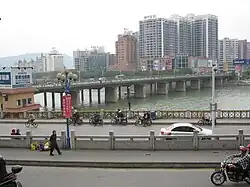
Kaiping (population ~700,000) sits on the Tanjiang River about 140 km southwest of Guangzhou, administered by Jiangmen City. The county is roughly question-mark shaped on the map, with the modern urban core on its eastern edge — a fairly standard mid-tier Chinese town of high-rises and shopping streets — and the diaolou villages scattered through the rural countryside around it. The climate is humid subtropical: summers (May–September) are hot, sticky, and very wet, with monthly rainfall peaking near 320 mm in June and highs around 32–33 °C. The best time to visit is late October through early April, when temperatures are mild (18–25 °C by day) and rainfall drops sharply. Avoid July–August unless you don't mind sweating through rural fieldwalks; typhoon remnants can pass through in late summer.
Planning Kaiping? Tell us your dates and we’ll tailor the trip.
Ask on WhatsAppHow to reach
By Plane
Kaiping has no airport of its own. The two practical options are:
- Guangzhou Baiyun International Airport (CAN) — China's third-busiest hub, ~170 km northeast. From the airport, take the metro/airport express to Guangzhou South Railway Station and connect to a high-speed train to Kaiping South (see below); total transit is around 3–3.5 hours.
- Zhuhai Jinwan Airport (ZUH) and Shenzhen Bao'an (SZX) are alternatives if you're routing via the eastern Pearl River Delta, both with onward bus or rail connections to Kaiping. Hong Kong (HKG) and Macau (MFM) are also feasible via the Zhuhai border crossing.
By Train
Kaiping South Station (开平�站) is the city's high-speed rail station, opened in 2018 on the Jiangmen–Zhanjiang line. It has direct service from Guangzhou (around 1 hr 10 min), Zhanjiang, Foshan, Shenzhen, and onward connections across Guangdong and the rest of China. The trains are fast enough to make Kaiping and its diaolou doable as a day trip from Guangzhou, or an overnight from anywhere in the Pearl River Delta.
Book tickets via the 12306 app/website, Trip.com, or Ctrip; passport-holders can collect at the station ticket window or scan an e-ticket through the gate using their passport. Taxi drivers cluster outside the arrivals hall — they're cheaper than Didi if you're willing to haggle in Mandarin or Cantonese, which you should.
By Car / Road
Kaiping has two long-distance bus stations: Yicizhan (ä¹‰ç¥ ç«™) and Changshazongzhan (长沙总站), both near the downtown bus terminal at the intersection of Xijiao Rd and Musha Rd. Yicizhan is the more useful one for onward trips into the surrounding diaolou villages.
- From Guangzhou: buses run from Fangcun bus station (芳�汽车站) at Kengkou Metro Station; the ride takes about 2 hours and costs around ¥57.
- From Zhanjiang: a daily 14:00 bus reaches Kaiping's central bus terminal in around 3 hours.
- From Macau: cross at the Zhuhai border, find the bus station ~100 m to the right of the border-control exit along the main road; the ride takes a little over 2 hours and costs around ¥70.
By car from Guangzhou, the G94 / G15 expressways get you to Kaiping in roughly 2 hours depending on traffic; road quality is good throughout. International driving permits are not recognised in mainland China, so most visitors hire a driver rather than self-drive.
The diaolou and Kaiping's other attractions are spread out across a large rural area, and the only really efficient way to see them is by hired car. Drivers wait at the train station looking for passengers; around ¥300 is a fair rate for a half day (about 5 hours) of sightseeing, and there's no need to offer more — that's already a good day's pay locally. Agree the route and price before getting in, and have the driver write down their phone number in case you wander off at a site.
Local buses connect to most of the major diaolou villages, though "connect" sometimes means dropping you a kilometre or two from the entrance. Tourist shuttles also run between some sites, but infrequently — fine for unhurried travellers, frustrating if you're trying to cram several villages into one day. Bus 106 is useful for reaching Chikan from central Kaiping in about 20 minutes.
Cycling is one of the loveliest ways to explore. The terrain is flat, the countryside is gorgeous, and many village lanes are too narrow for cars anyway. Wander down side roads to find half-empty hamlets, ageing farmers tending plots, and towers in various states of romantic decay. Use Baidu Maps (Google Maps is unreliable in mainland China and many smaller roads aren't on it anyway). Bike rentals are available from the youth hostel in Chikan, among other places.
On foot between nearby villages is feasible — the so-called "Kaiping Cultural Tourism Trail of the Hometown of Overseas Chinese" (ä¸å›½ä¾¨éƒ½æ¥è¡Œå¾„) links several clusters.
Ride-hailing: Didi works in Kaiping, but coverage thins out in the rural villages — don't count on it for the return trip.
Payment: bring some cash for small village entry-fees, ferries, and water. Most other things — taxis, hotels, restaurants — run on WeChat Pay / Alipay; foreign cards now link to both apps but expect occasional friction in small rural businesses.
Things to do
The Kaiping Diaolou (UNESCO World Heritage)
The five main ticketed sites are best done as a circuit by hired car. A joint ticket at ¥180 covers all five and is valid for two days; a smaller joint ticket covering only Liyuan and Zilicun runs ¥150. Children below the height threshold are free. The villages typically open from morning through ~17:30, with diaolou interiors starting to close around 17:00.
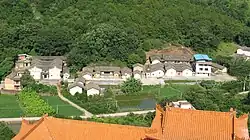
- Zilicun (自力�) — A village of beautifully maintained diaolou rising above rice fields and lotus ponds, with chickens scratching around and villagers tending vegetable gardens. The most photogenic of the clusters. ¥78 alone, or on the joint ticket. Closes 17:30; interiors close around 17:00.
- Liyuan (ç«‹å›) — A grand garden complex built by the Xie family, mixing neoclassical and baroque architecture with Chinese ornamental roofs. Beautifully restored — almost to the point of feeling polished and artificial — with a small museum on the family's overseas-Chinese history. Â¥100 alone, or on the joint ticket.
- Majianglong (马�龙) — Diaolou tucked among bamboo thickets. Very quiet, with only a handful of villagers and few tourists; the loveliest if you want atmosphere over spectacle. ¥60 alone, or on the joint ticket.
- Jinjiangli (锦江里) — Home to two of the most architecturally distinctive towers, with bulbous cantilevered upper storeys; you can climb one for lovely countryside views. The farthest of the four main villages from Kaiping town, but more alive than Majianglong — chickens, geese, peanuts drying in the sun, villagers chatting around tables. ¥50 alone, or on the joint ticket.
- South Tower / Nanlou (�楼) — A single 1912 tower where seven soldiers from Chikan died in a week-long stand against the Japanese in 1945. Designated a "patriotic education base"; the historical signage is Chinese-only, but the top of the 22-metre, 7-storey tower has fine views over the Tanjiang and Kaiping's skyline of new high-rises. ¥4 (free under 18 / over 70); included on the joint ticket. 08:30–17:30.
Each of the four main villages has roughly two diaolou you can actually climb. Many are furnished with period pieces — wedding photos, gramophones, sewing machines — to evoke how they would have looked when occupied. Signed "suggested routes" walk you through the highlights; most signage is bilingual Chinese/English, with Korean and Japanese at some sites. Free water-refill machines are at the village entrances.
Other historic areas (no ticket required)
- Chikan (赤�) — A historic market town with arcaded "qilou" shophouses in the same hybrid East–West style as the diaolou, plus a pleasant riverfront walk. Bike rentals are available across the river from the youth hostel. Note: Chikan old town has been under heavy renovation since 2017 and parts may still be closed or remade as a managed tourist zone — check the current state before going. Reach it on bus 106 in about 20 minutes from central Kaiping.
- Sanmenli village (三门里) — A lively old village (rather than a museum-piece) and home to Yinglong Lou (迎龙楼), a squat three-storey diaolou from the Ming Dynasty — the oldest in Kaiping. Wander past mahjong games, rice harvests, and old women sorting dried orange peels. Free.
- Leaning Diaolou (斜楼) — A genuinely tilted tower in Nanxing village (�兴�), Xiangang township (蚬冈镇), worth a brief stop if you're nearby.
- Xiangang township (蚬冈镇) — Whole short streets fitted with cast-concrete baroque facades; a good area to base yourself if you want to stay among the diaolou rather than in modern Kaiping town.
Other sites
Village without People (æ— äººæ?‘ / Wú Rén CÅ«n) — The ghost town of Dengbian Village (é‚“è¾¹æ?‘), gradually abandoned as residents moved to the cities. Atmospheric and free; check current accessibility before making a special trip.
Self-guided diaolou circuit by hired car or bike — The signature Kaiping experience. Pick two or three villages rather than trying to do all four in a day; you will get diaolou-fatigue faster than you expect.
Cycle the back lanes — Rent a bike in Chikan and ride the flat farm roads between villages, stopping at unticketed clusters of towers and abandoned hamlets. This is where Kaiping rewards slow travel.
Walk the "Hometown of Overseas Chinese" trail — The designated cultural footpath links several diaolou clusters; pleasant in the cool months.
Climb a diaolou at sunset — Zilicun and Jinjiangli both reward late-afternoon visits, when the towers throw long shadows across the rice fields.
Let the Bullets Fly film locations — Fans of Chow Yun-fat's 2010 blockbuster will recognise several Chikan and Zilicun backdrops; drivers in town know the spots.
Planning Kaiping? Want these on a customised itinerary?
Ask on WhatsAppFood & Dining
The local cuisine is Cantonese with a sze-yup (四邑, "four counties") accent — the cooking style of the emigrants who built the diaolou and carried this food to Chinatowns from Vancouver to Lima. Expect a lot of fresh river fish, slow-simmered soups, claypot rice, blanched leafy greens with oyster sauce, and roast meats. Two regional signatures are worth seeking out:
- Goose dishes — Kaiping and the surrounding sze-yup counties are known for roast and braised goose, often served with a sour plum or vinegar dip.
- Yellow eel rice (黄é³?é¥) — A claypot rice with eel and lap cheong (Chinese sausage); a regional specialty across Jiangmen and worth ordering wherever you see it.
- Bean-curd dishes, freshwater shrimp, and seasonal river fish from the Tanjiang.
Vegetarians can manage but should learn the phrase 我å?ƒç´ (wÇ’ chÄ« sù, "I eat vegetarian") and double-check that "vegetable" dishes haven't been cooked in chicken stock or topped with dried shrimp. Halal options are very limited outside central Kaiping town; expect to rely on noodle shops and self-catering. Tap water should not be drunk; use bottled or boiled.
Cafes & Nightlife
- Tea is the everyday drink — yum cha culture is alive here, with morning teahouses serving Pu'er, Tieguanyin, and chrysanthemum alongside dim sum. Ask for a teahouse (茶楼, chálóu) in town for the full experience.
- Sugarcane juice and fresh coconut are sold at roadside stalls.
- Local beer: Pearl River (ç? 江啤酒) and Tsingtao are the standard light lagers; both are cheap and widely available.
- Baijiu — the fierce sorghum spirit — turns up at any banquet meal; the toast is gÄ?nbÄ“i (å¹²æ?¯).
Tap water is not safe to drink — stick to bottled, boiled, or filtered. Hot water dispensers are standard in hotels and at the diaolou village entrances.
Planning Kaiping? We’ll book the stays and dining for you.
Ask on WhatsAppPlaces to Stay
Budget
- Chikan International Youth Hostel — Riverside in Chikan old town, with bike rentals on site; dorms and basic doubles. A favourite of backpackers because of its location among the qilou shophouses rather than amid Kaiping's high-rises. > TODO: current nightly rate and reservation channel.
- Local guesthouses (民宿) in Xiangang and around Zilicun offer simple rooms from roughly ¥150–250.
Mid-range
- Vienna Hotel Kaiping (维也纳酒店) and other domestic chains (Hanting, Jinjiang Inn) cluster in the city centre; rooms typically ¥250–450 and bookable via Trip.com.
- Boutique stays inside restored diaolou-style buildings have appeared in Chikan and around Liyuan in recent years — atmospheric, though variable in quality.
Upscale / heritage
What to buy
Kaiping isn't really a shopping destination — it's a countryside day-trip from the cities of the Pearl River Delta — but a few things are worth picking up:
- Tofu pudding and preserved goods from the village shops near the diaolou entrances.
- Local dried produce — orange peel (陈皮), dried longan, peanuts — sold by villagers, especially in Sanmenli and around Chikan market.
- Souvenir prints, postcards, and architectural books of the diaolou from the small shops at Liyuan and Zilicun's visitor centres.
Cash is useful in the villages; in town, WeChat Pay and Alipay are standard. Mild bargaining is normal at market stalls but not at fixed-price shops or ticket booths.
Go next
- Jiangmen (江门) — ~50 km / 1 hr by road or HSR. Kaiping's parent prefecture; has its own colonial-era waterfront and the qiaoxiang museum for context on the overseas-Chinese story.
- Taishan (�山) — ~40 km. Another sze-yup county with its own diaolou and former ancestral-village landscape; great seafood on the coast.
- Guangzhou (广州) — ~140 km / 1 hr 10 min by HSR. The provincial capital — dim sum, the Pearl River waterfront, Shamian Island, and one of China's great food cities.
- Macau (澳门) — ~150 km / ~2 hr by bus via Zhuhai. Portuguese colonial old town, baroque churches, and casinos; a striking architectural counterpoint to the diaolou.
- Hong Kong — ~3–4 hr door-to-door via HSR or bus + ferry. The other end of the overseas-Chinese story.
- Yangjiang and Hailing Island (海陵岛) — ~150 km west. Beaches and seafood if you want to add coast to a Guangdong loop.
Nearby in Guangdong Sheng
More places to explore around Kaiping.
Portions adapted from Wikivoyage, CC BY-SA 4.0.

Contact Us
Get in touch with us.
Get in touch
Contact Us
Tell us where you'd like to go and how you like to travel. A real Tripcuro planner — not a bot — will craft an itinerary around you.
- Personalised, hassle-free planning end-to-end
- Transparent pricing, no hidden costs
- 24/7 support for complete peace of mind