
Gansu Sheng
China · Province · 23 destinations with guides
Photography coming soonOverview
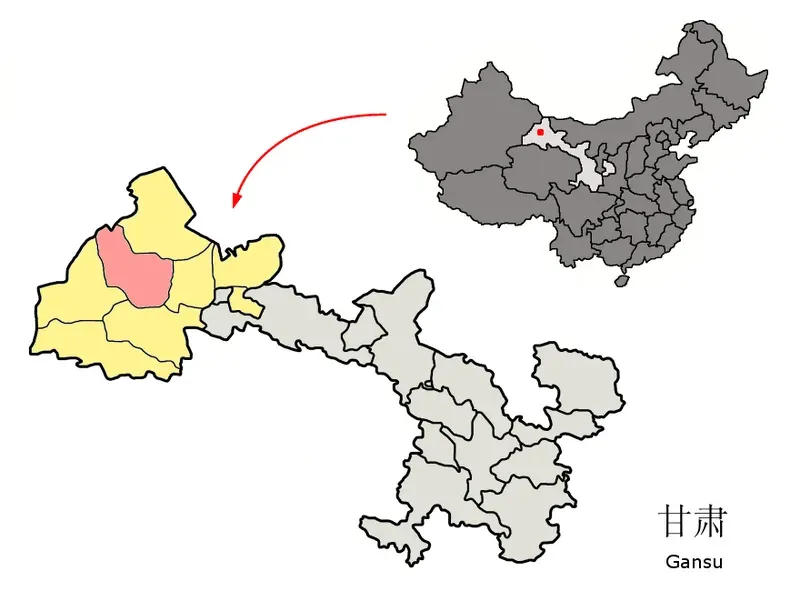
Gansu Sheng (甘肃省) is a long, narrow corridor of a province in northwest China, stretching roughly 1,600 km from the Loess Plateau in the southeast to the Gobi Desert and the foothills of the Qilian Mountains in the northwest. Its peculiar shape traces the Hexi Corridor — the historic spine of the Silk Road that funneled traders, monks, and armies between the Chinese heartland and Central Asia. Capital Lanzhou straddles the Yellow River; from there the province narrows westward through oasis towns, garrison forts, and Buddhist grotto sites before tapering toward the Xinjiang and Mongolian borders.
Geographically Gansu is a study in contrasts: fertile river valleys in the south give way to wind-scoured loess hills around Tianshui, then to genuine desert beyond Wuwei. The Qilian range that walls off Qinghai feeds glacial rivers into a string of oases — Wuwei, Zhangye, Jiuquan, Dunhuang — each anchoring a section of the corridor. The Tibetan plateau spills into the southwest at Xiahe and Langmusi, and the southeast hosts dramatic Danxia rock formations and ethnic Hui market towns.
For travellers, Gansu is the Silk Road in concentrated form: Mogao Caves, Jiayuguan Fort, the Zhangye rainbow mountains, Labrang Monastery, and a noodle-and-lamb food culture that anchors any itinerary. It rewards slow overland travel — the journey between sites is half the point.
When to Visit
May to early October is the practical window. The Hexi Corridor sits at altitude (Dunhuang ~1,100 m, Zhangye ~1,500 m, Xiahe ~2,900 m) and winters are brutally cold — Dunhuang routinely drops below −10 °C in January, and Xiahe can be snowed in.
- May–June: clear skies, wildflowers on the grasslands around Xiahe and Sangke, manageable crowds. Best month for the Danxia landform at Zhangye — light is sharper before summer haze.
- July–August: peak season, hot in the corridor (35 °C+ in Dunhuang), but the only window for high grassland trekking and the Shoton-style Buddhist festivals at Labrang. Book hotels in Dunhuang weeks ahead.
- September–mid October: arguably the sweet spot — cool nights, golden poplars on the Crescent Lake dunes, harvest in the oases.
- Winter (Nov–Mar): most agritourism shuts down; Mogao reduces visitor caps but the unheated caves are punishing. Go only for Lanzhou + Xiahe in winter dress, and check road status to Langmusi.
Festival quirks specific to Gansu: Labrang Monthly Prayer Festival (Monlam) falls in the first lunar month (Feb–Mar) — the unfurling of the giant thangka on the hillside is the headline event.
Tell us your dates and we'll shape a Gansu Sheng route around them.
WhatsAppGetting Around
The corridor is shaped like a string, and the Lanzhou–Xinjiang High-Speed Railway (Lan-Xin HSR) runs almost the whole length — this is the single most useful fact for planning Gansu.
- Rail (the default): Lanzhou West → Zhangye West (~3 hr), Zhangye → Jiayuguan South (~1 hr 15), Jiayuguan → Liuyuan South (for Dunhuang, ~2 hr). Tianshui sits on the Xi'an–Lanzhou HSR (Lanzhou ~1 hr). Tickets via 12306 app; passport required for foreigners.
- Dunhuang last mile: Liuyuan South station is ~130 km from Dunhuang town; shared shuttle vans run ¥50, taxis ¥250–300. A separate slower line goes directly into Dunhuang station — useful if your timing matches.
- Buses to the Tibetan southwest: no rail reaches Xiahe or Langmusi. From Lanzhou South Bus Station to Xiahe is 4–5 hr (¥80). Xiahe → Langmusi is ~4 hr on a minibus over a 3,300 m pass.
- Taxi / chartered car: essential for Mogao Caves outliers (Yulin, Western Thousand Buddha), the Jiayuguan Overhanging Wall, and the Zhangye Danxia park. Reckon ¥500–800/day for a driver-and-car.
- Distances at a glance: Lanzhou–Tianshui 320 km, Lanzhou–Zhangye 510 km, Zhangye–Jiayuguan 220 km, Jiayuguan–Dunhuang 380 km, Lanzhou–Xiahe 250 km.
Domestic flights from Lanzhou Zhongchuan (LHW) and Dunhuang (DNH) shortcut the long west-end haul if time is tight.
Top Destinations
- Lanzhou — the river-city capital, gateway and beef-noodle ground zero
- Tianshui — Maijishan Grottoes and Fuxi temple, the southeastern entry point
- Xiahe — home to Labrang Monastery, the largest Gelugpa institution outside Tibet proper
- Langmusi — Tibetan border village split between Gansu and Sichuan, sky-burial site
- Wuwei — historic Liangzhou, lighter-touch corridor stop with the Leitai Han tombs
- Zhangye — base for the Danxia rainbow landform park and the Giant Reclining Buddha
- Jiayuguan — westernmost Ming fort of the Great Wall, "First Pass Under Heaven"
- Dunhuang — the Mogao Caves, Crescent Lake, Mingsha sand dunes; the Silk Road's crown jewel
Want the scenic legs and stays booked for you? Just ask.
WhatsAppCuisine
Gansu cooking sits at the seam of Han, Hui Muslim, and Tibetan kitchens — wheat, lamb, and Yellow River beef dominate, with chillies and cumin pulling things westward as you go.
- Lanzhou beef noodles (兰州牛肉面 / Lanzhou niúròu miàn) — the dish, eaten for breakfast. Properly served with clear beef broth, hand-pulled noodles in your chosen gauge (毛细 hair-fine to 大宽 belt-wide), white radish, chilli oil, garlic sprouts, coriander. Try Magoulin (马子禄) or any busy halal stall before 11 am; ¥10–15.
- Niàngpí (酿皮) — cold wheat-gluten noodles in vinegar-sesame-chilli dressing, the corridor's summer staple.
- Hand-grasped lamb (手抓羊肉) — boiled mutton eaten with salt and garlic, signature of Linxia and Xiahe Hui country.
- Apricot-pit juice (杏皮水) — Dunhuang specialty, sour-sweet, served chilled in the night market.
- Donkey meat noodles (驴肉黄面) — Dunhuang's other oddity; better than it sounds.
- Tibetan tsampa and yak yoghurt in Xiahe and Langmusi.
Eating streets to know: Zhengning Lu night market in Lanzhou for grilled lamb skewers and stinky tofu; Shazhou Night Market in Dunhuang for apricot juice, donkey noodles, and roast lamb leg.
Dietary note: Gansu has a large Hui Muslim population, so halal (清真) food is genuinely abundant — easier than most Chinese provinces. Vegetarian options outside major cities are thinner; Buddhist canteens at Labrang are a reliable fallback in the southwest.
Culture & Festivals
Gansu's cultural identity is layered: Han Silk Road heritage, Hui Islamic communities (especially around Linxia, "China's little Mecca"), and Amdo Tibetan Buddhism in the southwest highlands.
- Labrang Monlam (Great Prayer Festival) — Tibetan New Year's first half-month (Feb–Mar). Days 13–16 feature the giant thangka unfurling, masked Cham dances, and butter-sculpture displays. The province's most photographed festival.
- Fuxi Temple Fair, Tianshui — held around the 13th day of the 5th lunar month (typically June), honouring the mythological emperor said to be born here.
- Dunhuang Silk Road International Cultural Expo — late summer, mixes academic conferences with public performances and bazaars.
- Eid al-Fitr and Eid al-Adha are felt in Linxia and Lanzhou's Hui quarters — mosque crowds, festival sweets, lamb feasts.
- Hua'er folk song festivals — late spring at Lianhua Shan and Songmingyan; antiphonal courtship songs sung by Hui, Dongxiang, Salar, and Tu communities, recognised by UNESCO.
Crafts to look for: Qingyang sachets (embroidered amulets from the southeast), Tianshui lacquerware, Linxia brick carvings, and Tibetan thangka painting around Xiahe.
Travelling during a festival? We'll plan around the crowds.
WhatsAppNotable Experiences
- Mogao Caves, Dunhuang — 492 painted Buddhist grottoes spanning the 4th–14th centuries. Standard tickets (¥238 peak season) include 8 caves with a guide; the special-tour ticket (¥288 add-on for a smaller selection of high-value caves like 045, 057, 158, 220) is worth the surcharge for serious visitors. Book on the official site days ahead — daily caps are tight.
- Camel ride and sand-board on Mingsha Shan + sunset at Crescent Lake (Yueyaquan) — touristy, undeniably, but the dunes really do hum in high wind, and sunset over the spring-fed crescent is the postcard image of the Silk Road.
- Zhangye Danxia Geopark at golden hour — striped sandstone hills in red, ochre, and turquoise. The 4th viewing platform catches the best evening light; shuttle buses link the platforms (¥75 entry + shuttle).
- Walking the ramparts of Jiayuguan Fortress — the Ming dynasty's "First and Greatest Pass Under Heaven," with the Overhanging Great Wall climbing the Black Mountain ridge 8 km north. Clear-day views into the Gobi from the corner tower.
- Kora circuit at Labrang Monastery, Xiahe — the 3 km outer pilgrimage route past the world's longest line of prayer wheels (>1,700 of them). Walk it at dawn behind Tibetan pilgrims; pair with the Mandarin- or English-led monastery interior tour (¥40).
- Overnight Z-train Lanzhou → Jiayuguan or Dunhuang — if HSR feels too quick, the legacy sleeper across the corridor is itself an experience: dawn over the Gobi from a hard-sleeper bunk, the original way travellers did this route.
Top Destinations
Every destination in Gansu Sheng with a guide — tap a place for the full guide.

Dunhuang
Dunhuang (敦煌) sits at the western edge of Gansu Province where th…
Guazhou
Guazhou (瓜州, GuÄ?zhÅ?u) is a sparsely populated desert county in…
Jiayuguan
Jiayuguan (嘉峪关) sits at the narrow western pinch of the Hexi Co…
Jiuquan
Jiuquan (酒泉; JiÇ”quán, literally "Wine Spring") is a prefecture-…
Lanzhou
Lanzhou (å…°å·ž) is the capital of Gansu province and one of northwes…
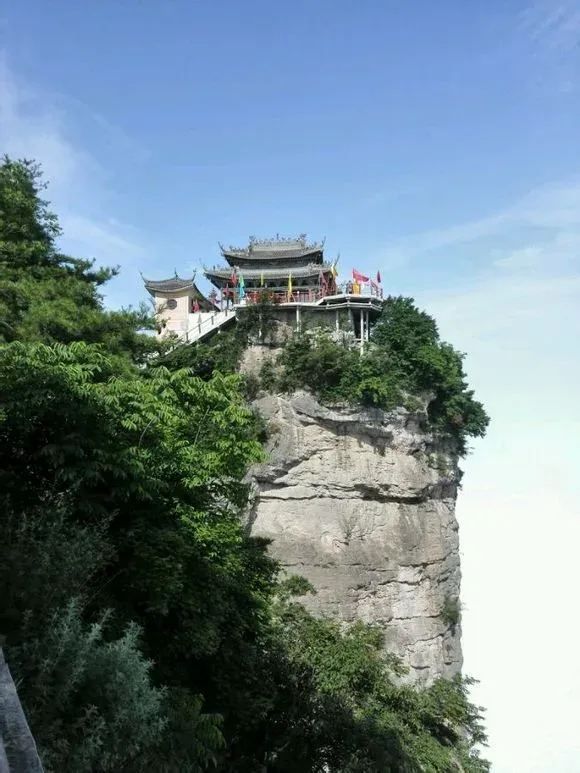
Longnan
Longnan (陇å?—) sprawls across the rugged southeastern corner of Gan…
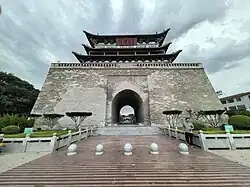
Longxi
Longxi (隴西) is a small county seat in the central uplands of Gans…
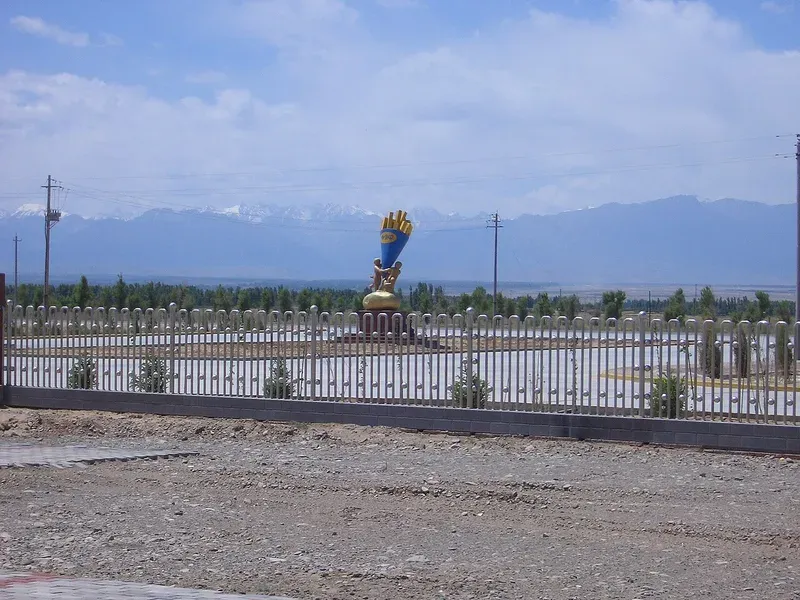
Minle
Minle sits at roughly 2,400 m on the Hexi Corridor, the historic Silk…
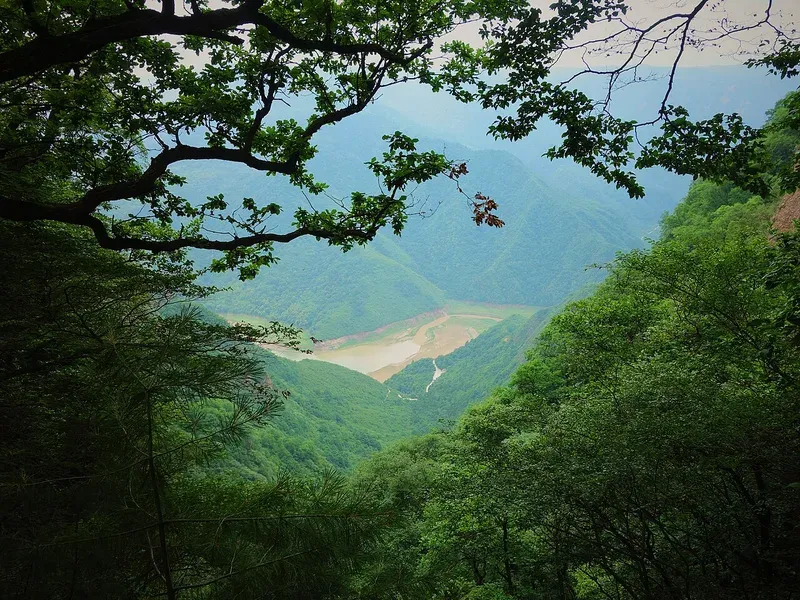
Pingliang
Pingliang (平凉) sits in eastern Gansu Province, tucked into the Li…
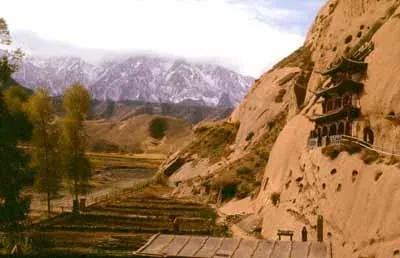
Subei Mongol Autonomous County
Subei Mongol Autonomous County (肃北蒙å?¤æ—?自治县) is a sparse…
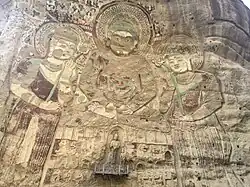
Tianshui
Tianshui (天水) sits in southeastern Gansu Province, draped across…

Xiahe
Xiahe (å¤?æ²³), known in Tibetan as Sangqu, is a small ethnically Tib…
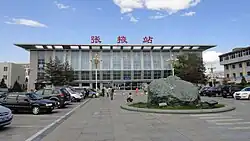
Zhangye
Zhangye is a mid-sized city in Gansu Province, straddling the norther…
Baiyin
Baiyin (白银) is a prefecture-level city in central Gansu Province, sit…
Dingxi
Dingxi (定西) is a prefecture-level city in central Gansu Province, loc…
Hezuo
Hezuo (合作, Hezuò) is a county-level city and the capital of the Ganna…
Jinchang
Jinchang (金昌) is a prefecture-level city in central Gansu Province, l…
Kongtongshan National Park
Kongtongshan (崆峒山) is one of the cradles of Chinese Daoism, a f…
Linxia
Linxia (临å¤?), capital of the Linxia Hui Autonomous Prefecture in s…
Maijishan National Park
Maijishan National Park (麦积山国家公å›), often called Maijish…
Mingshashan-Yueyaquan National Park
Mingshashan ("Echoing Sand Mountain") and Yueyaquan ("Crescent Moon L…
Qingyang
Qingyang sits in the eastern panhandle of Gansu Province, on the Loes…
Wuwei
Wuwei is a city that punches well above its weight in Chinese cultura…
Pair the highlights of Gansu Sheng into one easy trip — we'll plan the route.
WhatsApp
Contact Us
Get in touch with us.
Get in touch
Contact Us
Tell us where you'd like to go and how you like to travel. A real Tripcuro planner — not a bot — will craft an itinerary around you.
- Personalised, hassle-free planning end-to-end
- Transparent pricing, no hidden costs
- 24/7 support for complete peace of mind