
Quanzhou
Fujian Sheng, China
About Quanzhou
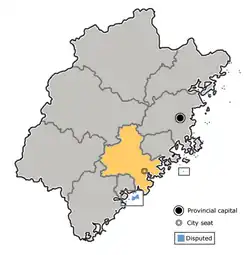
Quanzhou (泉州) is a coastal city in southern Fujian Province, sandwiched between Xiamen to the south and Fuzhou to the north. A thousand years ago this was one of the most important ports on Earth — Marco Polo, who sailed home from here around 1292, called it (by its Arabic-Persian name Zaiton) the busiest port in the world, with Alexandria a distant second. By the Song and Yuan dynasties, Quanzhou was the eastern terminus of the Maritime Silk Road, home to a cosmopolitan community of more than 100,000 Arab, Persian, Indian and Southeast Asian traders. The English word "satin" derives from Zaiton, and the tea dumped into Boston Harbour in 1773 was shipped from this port. In 2021, UNESCO inscribed 16 sites in and around the city under the title "Quanzhou: Emporium of the World in Song-Yuan China".
What makes the city distinctive today is how visible that history still is. Imperial decisions in the 1420s shut down China's great ocean voyages, the harbour silted up, and Quanzhou slipped into the shadow of Xiamen and Fuzhou — meaning it was spared much of the demolition that swept other Chinese cities. The result is an unusually walkable historic core dotted with Buddhist, Taoist, Confucian, Christian, Manichean, Hindu, Zoroastrian and Islamic monuments, plus a regulated downtown where new buildings carry traditional tile roofs and Islamic-arched windows. Quanzhou is also the cradle of Minnan culture: Gaojia opera, Liyuan opera, and Minnan string puppetry all originated here.
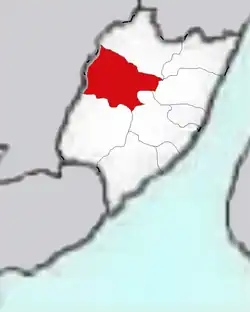
The climate is humid subtropical. Summers (Jun–Sep) are hot and very wet — averages of 30–33 °C with the heaviest rainfall and the risk of typhoons in July, August and September. Winters are mild (10–17 °C) and mostly dry. Best time to visit: late October to early December, or March to early May, when temperatures are pleasant and rainfall is moderate. The urban area is divided into four districts — Licheng (the historic core, where almost all sights are), Fengze (east, modern shopping and hotels), Luojiang (north) and Quangang (north coast) — with Jinjiang, technically a separate city across the river to the south, functioning as the airport-and-suburb zone.
Planning Quanzhou? Tell us your dates and we’ll tailor the trip.
Ask on WhatsAppHow to reach
By Plane
Quanzhou Jinjiang International Airport (JJN) sits about 12 km south of downtown, across the river in Jinjiang. It handles domestic flights to most major mainland cities and a handful of regional international routes (including Hong Kong and several Southeast Asian destinations). A taxi to the city centre runs ¥40–60 and takes 25–35 minutes; airport shuttle buses connect to downtown for around ¥10.
For more international connectivity, Xiamen Gaoqi International Airport (XMN), about 90 km south, is a far busier hub with long-haul flights — reachable by a 1–1½ hour high-speed train. Fuzhou Changle International Airport (FOC), about 170 km north, is another option.
By Train
Quanzhou Station (泉州站) is 12 km northwest of the city centre, off Highway S307. It is served by frequent high-speed (G/D series) trains on the Fujian coastal high-speed line, with very frequent services to Xiamen (~30–40 min) and Fuzhou (~1 hr 15 min), continuing north to Wenzhou, Hangzhou and Shanghai (~6–7 hrs), and south to Shantou and Shenzhen. A handful of trains run inland to Nanchang, Wuhan and beyond.
Book through the official 12306 app/website or via Trip.com; Chinese rail tickets are released up to 15 days ahead and popular routes sell out at peak holidays. Bring your passport — it is your ticket. The square outside the station has a city bus terminal with frequent connections to downtown, plus suburban routes to places like Chongwu. The old Quanzhou Railway Station off Chenghua South Road is closed; ignore older guidebooks pointing there.
By Car / Road
Quanzhou sits on the G15 Shenhai Expressway, which makes road access from Fujian's other major cities straightforward.
- From Xiamen: ~100 km / about 1½ hours by frequent intercity bus (¥27–35) or expressway.
- From Fuzhou: ~170 km / about 2½ hours by bus (¥46–65).
- Long-distance overnight buses also run from Hong Kong, Shenzhen and Zhuhai (around ¥300).
There are two main bus stations: a larger modern one toward the east of the city, and a more central, older-looking terminal — confusingly, the latter is the official "new bus station". A smaller terminal next to the Overseas Chinese Hotel runs services to Fuzhou and Shenzhen.
A daily ferry from Kinmen (Quemoy), Taiwan, lands at the port of Shijing about 50 km south of downtown; the crossing takes about an hour (Â¥150 / NT$750). More frequent ferries from Kinmen run to Xiamen between 09:00 and 17:30 daily.
Most of what visitors come to see — Kaiyuan Temple, Qingjing Mosque, the Confucian Temple, Tian Hou Gong, the rebuilt Zhongshan Road shopping street — is concentrated in Licheng District within a roughly 2-km radius, so walking is genuinely the best way to see central Quanzhou.
Taxis start at ¥8 and almost any trip within town comes in under ¥20; taxis are cheap, plentiful and largely metered. DiDi (滴滴出行) is the dominant ride-hailing app and works well, but the interface is in Chinese and you'll need a Chinese phone number or a foreign account through a partner app to register.
City buses are cheap (¥1–2 with a transit card) and cover the whole urban area, but route signs are in Chinese only — useful mainly for the train station and the airport.
Bike-share (Hello, Meituan) is widespread; scan-to-ride works through Alipay if you've got it set up. Note that Quanzhou's traffic is notoriously chaotic even by Chinese standards — locals from elsewhere in China complain about it. Pay full attention crossing roads, including at marked crossings, and don't assume electric scooters will stop.
Things to do
Religious sites
Quanzhou has been called a "museum of world religions"; the religious monuments are the city's standout draw.
- Kaiyuan Temple (开元寺) — Xi Jie, near Xinhuan Bei Lu, northwest of downtown. The largest and most famous Buddhist complex in the region, with two famous tall stone pagodas, an ancient stone turtle, and well-landscaped grounds. The Ancient Ships Pavilion of the Maritime Museum is on the grounds. Outside, Xi Jie (West Lane) is one of the city's best souvenir-and-snack streets. Open daily roughly 06:00–17:30. ¥10.
- Qingjing Mosque (清净寺) — Tumen Street. Built in 1009 CE, the only survivor of the seven mosques the medieval city once supported, and one of the oldest mosques in China. Restored in 2009 with the dome rebuilt after a 200-year absence. ¥3.
- Guan-Yue Temple (通淮关岳庙) — Tumen Jie 196, just east of the mosque. A large, smoky Taoist warrior temple to generals Guan Yu and Yue Fei, with a two-storey ritual furnace for burning joss paper that gets spectacularly busy at festivals like Yuanxiao. Free.
- Confucian Temple (å”庙) — A couple of blocks west of the Taoist temple, just off Tumen Street. The city's main Confucian temple, quieter and worth pairing with the cluster above.
- Chongfu Temple (崇�寺) — Chongfu Road, northeast of the centre near where Dong Road turns into Donghu Road. A small but beautiful active Buddhist temple.
- Tian Hou Gong (天�宫) — Tianhou Lu at Zhongshan Nan Lu, southern edge of downtown. Dedicated to Mazu, the sea goddess worshipped by sailors. Note the ancient bixi turtle steles in the courtyard.
- Statue of Lao Tse / "Old Saint" (崇�寺 / ��岩) — On Qingyuan Mountain (Mt Qingyuan) just outside town. A gigantic Song-dynasty stone statue of the founder of Taoism, a pilgrimage site that draws visitors from across China.
- Manichean Temple of Cao'an — In neighbouring Jinjiang. The world's only surviving Manichean temple; a short taxi/bus ride from central Quanzhou and worth the trip if the religious-history theme appeals.
Museums and historic streets
- Quanzhou Maritime Museum (泉州海外交通��物馆) — Dedicated to the city's role on the Maritime Silk Road, with relics of the medieval port and Zheng He–era voyages. The Ancient Ships annexe is on the Kaiyuan Temple grounds. Generally free; closed Mondays.
- Zhongshan Road (ä¸å±±è·¯) — The rebuilt north–south arcade street in the old town, awarded by UNESCO for heritage preservation. Walk it in the evening when it's lit and lively.
- Xi Jie (West Lane) — The shopping-and-snack lane outside Kaiyuan Temple, full of small bookshops, souvenir stalls and Buddhist supply shops.
Around Quanzhou
Chongwu Ancient Stone City (å´‡æ¦å?¤åŸŽ) — A Ming-dynasty walled fishing town on the coast about 50 km east, famous for its granite walls and the distinctive headscarves and floral aprons of Hui'an women. Reachable by suburban bus from the train station square.
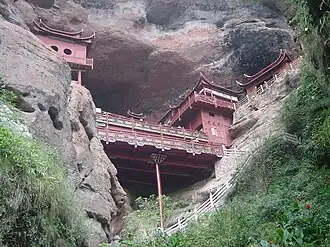
Mount Qingyuan (清�山) — Wooded scenic area on the city's northern edge, home to the Lao Tse statue and several Buddhist grottos and tombs.
Walk the world-religions trail — In a single afternoon you can take in a Tang-era Buddhist temple, an 11th-century mosque, a Confucian temple and a Taoist warrior shrine, all within easy walking distance through the old city. This is what Quanzhou does that no other Chinese city quite matches.
Catch a Liyuan or Gaojia opera performance — Quanzhou is the cradle of these Minnan opera traditions. Performances are staged at the Liyuan Theatre (梨å›å?¤å…¸å‰§é™¢) and at temple festivals.
See Minnan string puppetry — Another Quanzhou specialty; the Quanzhou Puppet Troupe is internationally renowned. Check listings for evening shows.
Day trip to Chongwu — Combine the Ming city walls with a seafood lunch in the fishing town and a stop at the Hui'an stone-carving area en route.
Hike Mount Qingyuan — Half a day of forest paths, grottos, tea pavilions, and sweeping views back over the city.
Tea-country day trip to Anxi — About 1½ hours inland, Anxi is the home of Tieguanyin oolong; tea-house tastings and plantation visits are easy to organise.
Photograph the Hui'an women's traditional dress — In Chongwu and Hui'an County coastal villages, the distinctive blue tops and floral headscarves are still everyday wear.
Planning Quanzhou? Want these on a customised itinerary?
Ask on WhatsAppFood & Dining
Quanzhou is the heartland of Minnan (southern Fujian) cuisine — distinct from the better-known Fuzhou style further north. Expect lots of seafood (clams, oysters, squid, fish balls), peanut and seaweed flavours, soupy noodle dishes, and snacks built around glutinous rice. Hallmarks to try:
- Oyster omelette (海蛎煎 / ô-á-tsi�) — The Minnan icon, with sweet potato starch giving it a distinctive chewy edge.
- Mian xian hu (�线糊) — Fine wheat-noodle "soup paste" eaten for breakfast, often with fried dough sticks; a Quanzhou speciality.
- Ginger duck (姜æ¯?é¸) — Slow-cooked duck stewed with old ginger and sesame oil; warming and richly aromatic.
- Tujian soup (土ç?冻) — A jellied broth made from sea worms; a textural local curiosity.
- Beef rolls (牛肉羹) and beef soup — Halal-friendly stalls cluster near the Qingjing Mosque on Tumen Street.
- Run bing (润饼) — Fresh spring-roll wraps stuffed with vegetables, peanuts and seaweed; a Minnan-Taiwanese shared tradition.
Where to eat
- Hou Cheng (�城) and Xi Jie food alleys — Cheap, authentic snack streets where ¥30–50 buys a full meal of oyster omelette, noodles and a soup. Best after dark.
- Lao Cheng Mian Xian Hu (�城�线糊) — Long-running local chain (multiple branches in Licheng) for the noodle paste and side dishes; ¥15–30 per person.
- An Ji Beef Shop (安记牛排店) and the cluster of beef-soup stalls around Tumen Street — Halal-style braised beef and clear soups; ¥30–60.
- Zai Jia Xiang (�家香) and similar mid-range Minnan restaurants in Fengze District — Sit-down family Minnan menus with ginger duck and seafood; ¥80–150 per person.
- Hotel restaurants at the Wanda Vista or the Sheraton — Upscale Cantonese, Minnan and international dining, ¥200–400+ per person.
Vegetarians do well around the Buddhist temples — both Kaiyuan Temple and Chongfu Temple have or are near simple vegetarian canteens. Halal options are clustered around Qingjing Mosque on Tumen Street. Strict gluten-free is difficult.
Cafes & Nightlife
- Tieguanyin and other Anxi oolongs are the local drink. A proper tasting at a teahouse — small gaiwan, multiple short infusions, polite conversation — is one of the most distinctive things to do in town. Many shops on Zhongshan Road and West Street offer free brewing demonstrations in the hope you'll buy.
- Coffee and Western-style cafés have spread through Fengze District; the area around Baozhou Road and Tian'an Road has the densest cluster of third-wave-style coffee shops.
- Local bars and clubs are concentrated in Fengze and around the major hotels rather than in the historic core; nightlife is modest by Xiamen or Shanghai standards.
- Beer: Tsingtao and the Fujian local Huiquan are the standard lagers; craft beer is uncommon.
Tap water is not safe to drink anywhere in mainland China. Use bottled or boiled water; hotels provide kettles and bottled water as standard, and any restaurant tea is brewed with boiled water and is fine.
Planning Quanzhou? We’ll book the stays and dining for you.
Ask on WhatsAppPlaces to Stay
Budget
- Quanzhou Old Town Youth Hostel (泉州�城�年旅�) — Dorm-style hostel near West Street and Kaiyuan Temple, dorms around ¥60–90, private rooms ¥150–220. Good location for the historic sights.
- Home Inn / Hanting / 7 Days Inn branches — Multiple Chinese chain budget hotels around the train station and Wenling Road, ¥150–250 for a clean en-suite double.
Mid-range
- Quanzhou Hotel (泉州酒店) — Long-running 4-star property in the centre, good base for walking the old town, doubles around ¥350–500.
- Atour Hotel Quanzhou (亚朵酒店) — Modern Chinese boutique-style chain, doubles ¥400–600.
Upscale / heritage
- Sheraton Quanzhou Hotel — Fengze District, full-service international 5-star with pool and spa, doubles from around ¥700–1,100.
- Wanda Vista Quanzhou (泉州万达文�酒店) — High-rise luxury hotel in the new business district, well-regarded restaurants and rooftop views, doubles from around ¥800–1,300.
What to buy
Quanzhou's shopping leans toward genuinely local specialities rather than mall brands.
- Tea, especially Tieguanyin oolong — Grown in nearby Anxi and sold all over the city. Quanzhou is one of the best places in China to buy this style; reputable shops will brew a tasting before you commit.
- Dehua porcelain (德化瓷) — The white blanc de chine porcelain produced in Dehua County (in Quanzhou Prefecture) has been exported worldwide for centuries; figurines of Guanyin are the classic souvenir.
- Hui'an stone carving — From small seals and brush rests to large garden lanterns; a regional craft tradition with workshops along the road to Chongwu.
- Zhongshan Road and Xi Jie — The two streets to wander for souvenirs, Minnan snacks, joss paper, and small antiques.
- Wenling Road / Baozhou Road area — Modern shopping, department stores and chain restaurants in Fengze District.
Bargaining is normal at street stalls and in tourist-oriented souvenir shops (start around 50–60% of the asking price); fixed-price stores, supermarkets and reputable tea houses do not bargain. WeChat Pay and Alipay are accepted essentially everywhere; cash and foreign cards are awkward, so set up a mobile wallet before you arrive.
Go next
- Xiamen — 100 km / 30–40 min by high-speed train. Coastal SEZ city, Gulangyu Island, colonial architecture and a strong café scene. The natural pairing with Quanzhou.
- Anxi (安溪) — 60 km / about 1½ hours by bus. Tea country, the home of Tieguanyin oolong; plantation visits and tasting rooms.
- Dehua (德化) — ~90 km / 2 hours by bus. The porcelain capital of southern Fujian, with kilns and workshops open to visitors.
- Chongwu (å´‡æ¦) — 50 km / 1 hour by suburban bus. Ming-dynasty walled stone town on the coast, Hui'an women's traditional dress, fresh seafood.
- Fuzhou — 170 km / ~1 hr 15 min by high-speed train. Fujian's provincial capital, Three Lanes and Seven Alleys historic quarter, hot springs.
- Kinmen (Quemoy), Taiwan — 1-hour ferry from Shijing port (50 km south). Cold-war history, Taiwanese island life and very different politics from the mainland (Taiwan entry rules apply).
Nearby in Fujian Sheng
More places to explore around Quanzhou.
Portions adapted from Wikivoyage, CC BY-SA 4.0.

Contact Us
Get in touch with us.
Get in touch
Contact Us
Tell us where you'd like to go and how you like to travel. A real Tripcuro planner — not a bot — will craft an itinerary around you.
- Personalised, hassle-free planning end-to-end
- Transparent pricing, no hidden costs
- 24/7 support for complete peace of mind