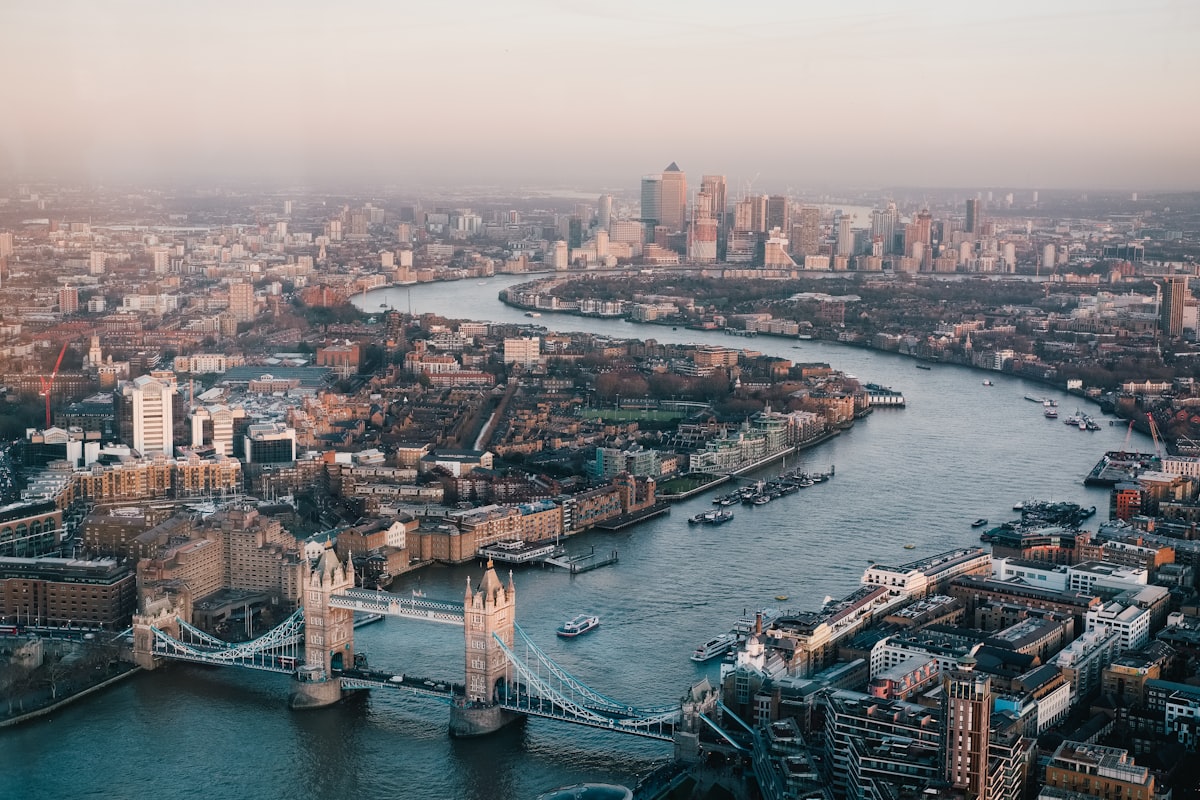
United Kingdom
Northern Europe · 219 destinations across 4 regions
Photography coming soonOverview
The United Kingdom — a constitutional monarchy comprising England, Scotland, Wales and Northern Ireland — packs an extraordinary range of experiences into a relatively compact island nation. From the pulsing energy of London's West End theatres and Edinburgh's cobbled Royal Mile to the mist-shrouded peaks of the Scottish Highlands and the wild Atlantic surf of Cornwall, the UK blends millennia of history with a fiercely contemporary culture. Visitors come for Roman walls, medieval castles, Georgian crescents, world-class museums, and a pub-and-tea-room tradition that still anchors everyday life.
The UK suits almost every kind of traveller: history buffs who want to walk Hadrian's Wall or tour Tower of London, literature lovers tracing Shakespeare or the Brontës, outdoor enthusiasts hiking the Lake District or Snowdonia, and city breakers drawn to Manchester's music scene or Belfast's revitalised waterfront. Each of the four home nations retains a distinct identity — marked by language (Welsh and Scottish Gaelic are very much alive), sport (rugby divides England and Wales; football unites and divides them), and a sometimes ferocious local pride that makes every region feel different.
Geography & Climate
The UK covers 243,610 km² across the island of Great Britain, the north-eastern portion of Ireland, and hundreds of smaller islands. The terrain ranges from the flat Fens of eastern England and the chalk downs of the south to the granite peaks of the Scottish Highlands (Ben Nevis, 1,345 m, is the highest point) and the volcanic basalt columns of Northern Ireland's Antrim coast. England's backbone is the Pennine range; Wales is dominated by the Cambrian Mountains and Snowdonia (Snowdon, 1,085 m). Scotland's Highlands are split by the Great Glen fault line, home to Loch Ness and the Caledonian Canal.
The climate is temperate maritime — mild, damp and famously changeable. Winters (December–February) average 2–8°C in lowlands, with snow common in the Highlands and on higher moors from November to April. Summers (June–August) range 15–22°C in the south, cooler in the north and west. The west coast (Wales, Cornwall, western Scotland) receives the most rainfall (1,200–2,500 mm/year); eastern and south-eastern England are driest (600–800 mm/year). The Gulf Stream keeps winters milder than much of continental Europe at the same latitude, but also fuels the notorious Atlantic cloud and drizzle.
Tell us your dates and we'll tailor your United Kingdom trip around them.
WhatsAppWhen to Visit
The best time depends heavily on region and activity. May–September offers the warmest weather and longest daylight (summer solstice brings nearly 17 hours of daylight in Edinburgh). Peak season (July–August) has the best chance of dry weather but also the biggest crowds and highest prices, especially in London, the Lake District, Cornwall and Edinburgh during the Fringe (August). Shoulder months (May–June, September–October) are ideal — fewer tourists, mild temperatures (10–20°C), and lower accommodation rates. Winter (November–February) sees short days and cold, damp weather but brings lower flight prices, cosy pub culture, and Christmas markets in cities like Manchester, Birmingham and Edinburgh. Ski season in the Cairngorms and Nevis Range runs December–April.
Key festivals worth planning around: Edinburgh Festival Fringe (August, the world's largest arts festival), Notting Hill Carnival (August bank holiday, London), Cheltenham Festival (March, horse racing), Glastonbury Festival (late June, music), and Bonfire Night (5 November, nationwide fireworks).
Visa & Entry
The UK operates a points-based immigration system outside the EU free-movement framework. Nationals of the European Union, EEA, Switzerland, Australia, Canada, Japan, New Zealand, Singapore, South Korea, and the United States can visit for up to 6 months without a visa for tourism. As of 2025, the Electronic Travel Authorisation (ETA) scheme covers visa-waiver nationals who previously entered without pre-clearance — a digital authorisation (cost ~£10), valid for multiple stays up to 6 months over 2 years, applied for online before travel. Citizens of many other countries require a Standard Visitor visa (typically £115, applied for at least 3 weeks before travel).
This is general guidance; travellers must verify entry requirements with the UK Home Office or their local British embassy before booking.
Want us to time your trip around a festival? We'll handle it.
WhatsAppMoney & Costs
The pound sterling (GBP, £) is the currency. Coins: 1p, 2p, 5p, 10p, 20p, 50p, £1, £2. Notes: £5, £10, £20, £50. Scotland and Northern Ireland issue their own banknotes (sterling, accepted everywhere in practice, though some English shops may balk at unfamiliar designs).
Daily budget estimates (per person, excluding accommodation):
- Budget: £35–50 ($45–65) — street food, supermarket meals, local buses, free museums
- Mid-range: £80–150 ($100–195) — pub lunches, casual restaurants, one attraction, short taxi rides
- Luxury: £200+ ($260+) — fine dining, theatre tickets, first-class rail, private tours
ATMs are widespread; debit/credit cards (Visa, Mastercard) are accepted nearly everywhere — contactless is the norm. American Express is less common in smaller shops and rural pubs. Tipping: 10–15% in restaurants if service is not already added (check the bill); rounding up for taxis and bar tabs is customary; tipping in pubs is not expected.
Getting In
The UK's main international gateway is London Heathrow (LHR) — the busiest airport in Europe, handling flights from every continent. Other major airports with extensive long-haul connections: London Gatwick (LGW), London Stansted (STN) (budget carriers), Manchester (MAN), Birmingham (BHX), Edinburgh (EDI), Glasgow (GLA), and Belfast International (BFS).
Ferry routes connect the UK with mainland Europe: Dover–Calais and Dover–Dunkirk (30–90 min, multiple daily sailings by P&O and DFDS), Newhaven–Dieppe, Portsmouth–Caen/Le Havre/Saint-Malo, Plymouth–Roscoff, Harwich–Hook of Holland, and Hull–Rotterdam. The Eurostar high-speed rail service runs from London St Pancras to Paris (2h15), Brussels (1h50), Amsterdam (3h40), and Lille (1h20). The Eurotunnel Le Shuttle carries vehicles through the Channel Tunnel from Folkestone to Calais in 35 minutes.
We handle the bookings and budgeting — you just travel.
WhatsAppGetting Around
Domestic flights connect London with most major cities — London–Edinburgh, London–Glasgow, and London–Belfast are the busiest routes, often cheaper than the train if booked in advance with carriers like easyJet, Ryanair, and British Airways. Flight time London–Edinburgh is about 1h20.
Rail: The National Rail network is extensive but expensive; advance-purchase tickets (£15–40 London–Edinburgh one way if booked 8–12 weeks ahead, versus £150+ on the day). Key operators: Avanti West Coast (London–Manchester–Glasgow), LNER (London–York–Edinburgh), Great Western Railway (London–Cardiff–Bristol–Penzance). The BritRail Pass (from £260 for 8 days) offers good value for multi-city itineraries.
Intercity buses: National Express and Megabus cover the entire country at a fraction of rail prices — London–Manchester from £5–15 if booked early, albeit in 4–5 hours versus 2 hours by train.
Local transport: London has the Underground (Tube), buses, and trams — contactless card tap-in/out caps at about £8.50/day (Zone 1–2). Most other cities have reliable bus networks; Edinburgh, Manchester, Birmingham, and Nottingham have tram systems. Ride-share apps (Uber, Bolt, Free Now) operate widely. Driving: left-hand side of the road; UK driving licence, EU/EEA licence, or International Driving Permit (IDP) required depending on origin. Congestion charges apply in central London (£15/day) and a Low Emission Zone (ULEZ) covers most of Greater London (£12.50/day).
Common scam to avoid: Unlicensed minicab drivers at airports and train stations — always use pre-booked or licensed black cabs/ride-share apps.
Culture & Etiquette
Britons are generally polite, reserved, and value personal space. A handshake is the standard greeting (first meeting or formal setting); "How do you do?" is increasingly old-fashioned — "Nice to meet you" is fine. Friends and younger people may hug or kiss on one cheek. Queuing (lining up) is a near-sacred institution — always join the back of a queue.
Dress: Smart-casual for restaurants and pubs; no specific dress code for most tourist attractions. Some high-end restaurants and clubs enforce "no trainers/jeans" policies. Modest dress (shoulders covered, no shorts) is expected in cathedrals, mosques, and other active places of worship.
Pubs: Order at the bar, not from your table. Tipping is not expected (a "round" is bought in rotation among friends). Opening hours are generally 11:00–23:00 (some with later licences). Tea: Afternoon tea (sandwiches, scones, cake) is a treat, not a daily habit — book ahead at hotels like The Ritz or Fortnum & Mason.
Dos: Say "please" and "thank you" constantly; apologise even for minor inconveniences ("sorry" is a reflex); use "cheers" for thanks; hold doors for the person behind you. Don'ts: Jump queues; talk loudly on public transport; refer to the whole UK as "England" when talking to Scots, Welsh or Northern Irish; make jokes about the Royal Family unless you know your audience well.
Prefer to talk it through? We're a WhatsApp message away.
WhatsAppSafety
The UK is generally safe for travellers. Violent crime against tourists is rare. Petty theft (pickpocketing, bag snatching) is the main concern in crowded areas: central London (particularly Oxford Street, Leicester Square, the Underground), Edinburgh's Royal Mile during festival season, and tourist-heavy spots like Stonehenge and the Tower of London. Keep valuables zipped and bags closed.
Regional cautions: Street drinking and antisocial behaviour can occur in city centres late at night, especially around clubs and bars. In Northern Ireland, sectarian tensions are dramatically reduced since the Good Friday Agreement (1998), but occasional flags and murals in working-class neighbourhoods of Belfast and Derry mark community divisions — avoid political photography there. Rural areas (Highlands, moors) have limited mobile reception; inform someone of your route if hill-walking.
Health: NHS emergency care is free for UK residents; visitors from non-reciprocal countries (including the US) should have comprehensive travel insurance. Tap water is safe everywhere. No compulsory vaccinations. Pharmacies (Boots, Lloyds) can advise on minor ailments. Emergency number: 999 (police, fire, ambulance) or 112 (EU standard, works in the UK too).
Top Regions
- England — The largest home nation, home to London's world-class museums, the rolling Cotswolds, the Lake District's dramatic fells, Cornwall's surfing beaches, and university cities Oxford and Cambridge.
- Scotland — Rugged Highlands, whisky distilleries, Edinburgh's medieval Old Town and August Festival, Glasgow's Victorian architecture and thriving arts scene, and the wild beauty of the Hebrides and Orkney.
- Wales — Ancient Celtic language and culture, dramatic coastline (Pembrokeshire Coast Path), Snowdonia's peaks for climbing and hiking, and more castles per square mile than any other European country.
- Northern Ireland — The Giant's Causeway's basalt columns, the vibrant Titanic Quarter in Belfast, the walled city of Derry (Londonderry), the Antrim Coast road, and the warm hospitality of rural pubs.
- Lake District — England's largest national park, with glacial lakes, England's highest mountain (Scafell Pike), Wordsworth's home, and superb walking and sailing.
- Scottish Highlands & Islands — Vast, sparsely populated landscapes of lochs, glens and mountains; the Isle of Skye's Cuillin Ridge; the Caledonian Canal; and the wildlife-rich Outer Hebrides.
- South West England — Cornish surfing beaches, the Eden Project, Dartmoor's granite tors, the Jurassic Coast's fossil cliffs, and the seaside culture of Devon and Cornwall.
Tell us your dates and we'll tailor your United Kingdom trip around them.
WhatsAppTop Destinations
- London — The capital and a truly global city, with the British Museum, Tower of London, Buckingham Palace, West End theatres, and markets from Borough to Camden.
- Edinburgh — Scotland's historic capital crowned by Edinburgh Castle, the Royal Mile, Arthur's Seat, and the world's biggest arts festival every August.
- Stonehenge — The 4,500-year-old standing stone circle in Wiltshire, a UNESCO World Heritage site and Britain's most iconic prehistoric monument.
- Lake District National Park — England's finest natural landscape of lakes and fells, beloved by hikers, boaters, and literary pilgrims following Wordsworth's trail.
- York — Walled city in northern England with the magnificent York Minster, the Shambles (a timber-framed medieval street), the Jorvik Viking Centre, and the National Railway Museum.
- Belfast — Capital of Northern Ireland, home to the Titanic Belfast museum, the revitalised Cathedral Quarter, St George's Market, and a gateway to the Giant's Causeway.
- Edinburgh Castle — Dominating the city skyline from Castle Rock, this fortress houses the Crown Jewels of Scotland, Mons Meg, and stunning panoramic views.
- Snowdonia National Park — Wales's premier outdoor destination, centred on Snowdon (Yr Wyddfa), with hiking trails, narrow-gauge railways, and medieval castles.
- Cardiff — Wales' capital, featuring Cardiff Castle, the National Museum Cardiff, the Wales Millennium Centre, and the regenerated Cardiff Bay waterfront.
Regions & States
United Kingdom has 4 regions with guides — pick one to drill into its destinations.
Not sure where to start in United Kingdom? Tell us how you like to travel and we'll shape the route.
WhatsAppTop Destinations
The places first-time and returning travellers ask for most.
Aberdeen
Aberdeen, the 'Granite City', is famous for its gleaming grey granite…
Abergavenny
Abergavenny Europe > Britain and Ireland > United Kingdom > Wales > S…
Aberystwyth
Aberystwyth Europe > Britain and Ireland > United Kingdom > Wales > M…
Ambleside
Ambleside is a destination in England, United Kingdom, offering visit…
Ammanford
Ammanford Europe > Britain and Ireland > United Kingdom > Wales > Sou…
Antrim
Antrim is a destination in Northern Ireland, United Kingdom, offering…
Arbroath
Arbroath Europe > Britain and Ireland > United Kingdom > Scotland > N…
Armagh
Armagh is a destination in Northern Ireland, United Kingdom, offering…
Aviemore
Aviemore Europe > Britain and Ireland > United Kingdom > Scotland > S…
Ayr
Ayr (Scotland) Europe > Britain and Ireland > United Kingdom > Scotla…
Balloch
Balloch Europe > Britain and Ireland > United Kingdom > Scotland > Ce…
Ballycastle
Ballycastle is a destination in Northern Ireland, United Kingdom, off…

Contact Us
Get in touch with us.
Get in touch
Contact Us
Tell us where you'd like to go and how you like to travel. A real Tripcuro planner — not a bot — will craft an itinerary around you.
- Personalised, hassle-free planning end-to-end
- Transparent pricing, no hidden costs
- 24/7 support for complete peace of mind