
Kinmen
Taiwan · County · 10 destinations with guides
Photography coming soonWhy visit?
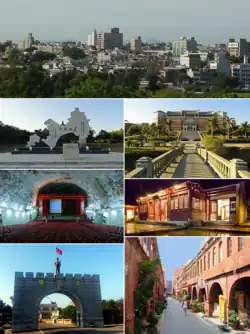
Kinmen (金門, "golden gate"; also known as Quemoy) is an outlying county of Taiwan made up of a cluster of small islands set just off the coast of mainland China — the skyline of Xiamen is clearly visible across the water, barely 10 km away. Although administered by Taiwan's Republic of China government, Kinmen lies far closer to the mainland than to the main island of Taiwan, and was never colonised by Japan; this gives it a history, architecture and identity quite distinct from Taiwan proper. The two main islands are Greater Kinmen and Lesser Kinmen (Lieyu), and roughly a quarter of the county — including inhabited areas — falls within Kinmen National Park.
Kinmen's character is shaped by its role as the front line of the China-Taiwan standoff. From 1949 into the 1970s the islands were repeatedly fought over, most famously during the 1958 "Artillery Battle of 823," and the legacy is everywhere: tunnels, bunkers, anti-landing spikes on the beaches and former military installations turned tourist sites. Layered over this are beautifully preserved southern Fujian villages of swallowtail-roofed courtyard houses and a scatter of grand "foreign-style" mansions built by returning overseas-Chinese merchants. The third pillar of Kinmen's appeal is its kaoliang (gaoliang) sorghum liquor, the island's most famous product.
For travellers, Kinmen offers a compact but unusually dense concentration of military history, traditional Chinese architecture and quiet rural scenery, all wrapped in a slightly surreal frontier atmosphere. It is largely flat, easy to cycle, and small enough to feel relaxed, yet rewarding enough to fill several days. Visitors should note that Kinmen remains a sensitive military area: avoid photographing military installations and infrastructure, and steer clear of political discussions.
When is the best time to visit?
Kinmen has a subtropical climate that is generally drier than Taiwan proper. The most pleasant months are autumn and spring — roughly October to December and March to May — with comfortable temperatures and lower humidity. Winter can be cool and is notably windy; high winds can strike at any time of year and are worth bearing in mind for scooter and cycle travel. Summer (June to September) is hot and humid and brings the typhoon season. Spring can be foggy, which occasionally disrupts flights to and from the islands, so allow buffer time around tight connections.
The islands are well set up for tourism year-round, and birdwatchers in particular value the autumn-to-spring window when migratory birds use Kinmen's wetlands.
Tell us your dates and we'll shape a Kinmen route around them.
WhatsAppHow do you get around?
Greater Kinmen is "butterfly-shaped," with its four townships forming the four wings; the main town, Kincheng (Jincheng), sits in the curve of the west coast, and the airport is on the southern coast. There is no ring road, and the network of interior roads, coastal spurs and village lanes is extensive and haphazardly laid out, so expect to miss turns and reroute. Roads are paved and signed in both Chinese and English.
The most popular way to get around is by rented scooter — roughly NT$550 per 24 hours for a 150 cc machine, with rental shops at the airport and in downtown Kincheng (a scooter or motorcycle licence is required). Public "K Bike" automated bicycle rental stations are dotted around and are free for the first hour; Lesser Kinmen in particular is excellent for cycling, with a path more or less ringing the island. There are taxis, concentrated in the town centre, with set fares such as NT$250 from Shuitou pier to Kincheng; you generally need Mandarin or Minnan to negotiate. Public buses exist but are infrequent and inconveniently spaced. Lesser Kinmen (Lieyu) is reached from Greater Kinmen by frequent ferries from Shuitou.
Where should you go?
- Kincheng — The county's main town and administrative centre; a walkable hub of old streets, the historic Mofan Street, scooter rental and visitor services.
- Kinmen National Park — The protected core of the islands, preserving battlefield sites, tunnels, traditional villages and natural areas across several units.
- Shanhou Folk Culture Village — A showcase cluster of immaculately preserved southern Fujian courtyard houses, the best place to see traditional Kinmen architecture.
- Lieyu (Lesser Kinmen) — The smaller main island, quieter and ideal for cycling, with its own tunnels, beaches and front-line viewpoints.
- Guningtou — The site of a decisive 1949 battle, with a battle museum and preserved military landscape on the island's northwest.
Want the scenic legs and stays booked for you? Just ask.
WhatsAppWhat should you eat?
Kinmen's food belongs to the southern Fujian (Minnan) tradition rather than that of Taiwan proper, with hearty home-style cooking and a few distinctive local products. The island's signature edible souvenir is its dried beef (貢糖-era trade aside, gongtang is the famous peanut candy) — both Kinmen gongtang (peanut brittle/candy) and dried beef jerky are sold widely and shipped back to Taiwan as gifts. Oyster dishes are a local staple, the small Kinmen oysters appearing in omelettes and noodle dishes. Wide noodle and broad rice-noodle soups, hearty stir-fries and seafood feature on most menus.
Kincheng has the densest concentration of restaurants and snack stalls, and the area around Mofan Street is a good place to eat. The county's most famous product of all is kaoliang liquor, distilled from sorghum and central to Kinmen's economy and identity.
What is the culture like?
Kinmen's culture is rooted in southern Fujian traditions and overseas-Chinese heritage, expressed most visibly in its swallowtail-roofed courtyard houses and the ornate "foreign-style" mansions built by emigrants who made fortunes in Southeast Asia. The Wind Lion God (風獅爺) — stone guardian figures placed to ward off the island's fierce winds and ill fortune — is an emblem of Kinmen, and spotting these statues around the villages is a popular pursuit.
The county is a Kuomintang stronghold with a strong sense of "Kinmenese" identity, distinct from "Taiwanese." Folk religion is central to community life, and temple festivals to Mazu and local deities punctuate the calendar. Military history is also a kind of living heritage here, commemorated at numerous museums and former battle sites.
Travelling during a festival? We'll plan around the crowds.
WhatsAppWhat are the standout experiences?
- Cycling Lesser Kinmen (Lieyu) — Take the ferry from Shuitou and ride the near-complete ring path around the quiet smaller island, passing tunnels, beaches and front-line viewpoints.
- Exploring military tunnels — Walk the great granite-cut tunnels such as Zhaishan Tunnel, vast wartime engineering works carved for naval craft and now open to visitors.
- Wandering preserved Fujian villages — Spend time at Shanhou Folk Culture Village and other traditional settlements admiring swallowtail roofs, courtyard houses and decorated gables.
- Following the battlefield trail — Visit Guningtou and the August 23 Artillery Battle sites to understand the islands' front-line history.
- Tasting kaoliang at the source — Tour the kaoliang distillery and learn how Kinmen's signature sorghum liquor is made, then pick up bottles and dried beef as souvenirs.
- Wind Lion God spotting — Hunt down the stone Wind Lion God guardians scattered through the villages, each with its own pose and personality.
Top Destinations
Every destination in Kinmen with a guide — tap a place for the full guide.
Kinmen National Park
Kinmen National Park (金門國家公園) covers roughly a quarter of Kinmen…
Guningtou
Guningtou (古寧頭) is a coastal area in the northwest of Greater Kinmen…
Jincheng
Jincheng (金城) is the historic capital of Kinmen County (Quemoy), an…
Jinhu
Jinhu (金湖) is a township in eastern Kinmen County, Taiwan, known for…
Jinning
Jinning (金寧) is a township in western Kinmen County, Taiwan, best…
Jinsha
Jinsha (金沙) is a coastal township in northeastern Kinmen County…
Kincheng
Kincheng (金城, also romanised Jincheng) is the main town and…
Lieyu
Lieyu (烈嶼), better known in English as Lesser Kinmen or Little…
Shanhou Folk Culture Village
Shanhou Folk Culture Village (山后民俗文化村) is one of the best-preserved…
Wuqiu
Wuqiu (烏坵) is a remote pair of small islands (Daqiu and Xiaoqiu)…
Pair the highlights of Kinmen into one easy trip — we'll plan the route.
WhatsApp
Contact Us
Get in touch with us.
Get in touch
Contact Us
Tell us where you'd like to go and how you like to travel. A real Tripcuro planner — not a bot — will craft an itinerary around you.
- Personalised, hassle-free planning end-to-end
- Transparent pricing, no hidden costs
- 24/7 support for complete peace of mind