
Hsinchu City
Hsinchu, Taiwan
Why visit Hsinchu City?
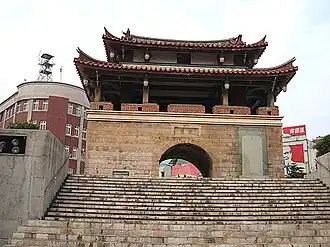
Hsinchu City (新竹; Xīnzhú) is a compact city on the north-western coast of Taiwan and, with a history of almost 400 years, the oldest city in northern Taiwan. It was first home to the Taokas, an aboriginal people who called the place "Chuchien"; the present name was adopted in the late 19th century under the Qing Emperor Guangxu, when the city walls were built — only the East Gate now survives. During the Japanese colonial era (1895–1945) Hsinchu was the main administrative centre between Taipei and Taichung, and it was then that glass-making was introduced, the craft for which the city later became famous.
Modern Hsinchu has two faces. It is a centre of decorative glass craft, and it is a centre of technology: the Hsinchu Science Park, founded in 1980, made the city the cradle of Taiwan's semiconductor industry. That industry has made Hsinchu wealthy — its residents earn among the highest average incomes in Taiwan — and given a relatively small city of around 350,000 people some surprisingly good hotels and shopping. Hsinchu is a pleasant, easy-going city rather than a marquee tourist destination; many overseas visitors come for business, but its temples, museums, surviving gateway and glass heritage reward a stay, and it is an excellent base for the mountains of Hsinchu County.
Constant strong winds off the Taiwan Strait give Hsinchu its nickname, the "Windy City". The wind keeps the air clean but makes winters feel cold, especially around Lunar New Year. Summers are hot, humid and rainy and overlap the typhoon season; spring and autumn are the most comfortable times to visit.
Planning Hsinchu City? Tell us your dates and we’ll tailor the trip.
Ask on WhatsAppHow do you get there?
By Plane
The nearest airport is Taoyuan International Airport, to the north — roughly a 30-minute drive in the dead of night with no traffic, but it is safer to allow about an hour from downtown Hsinchu (a little more from the Science Park). There are no direct buses from Taoyuan Airport to Hsinchu; the U-bus company offers a link with a change of buses at the Zhongli (Jhongli) Transit Station.
By Train
The conventional Taiwan Railways (TRA) station sits in the city centre on Zhonghua Road and is a major stop on the main line between Taipei and Taichung/Kaohsiung. An adult fare from Taipei Main Station costs roughly NT$114–180 and the trip takes about one to two hours depending on the train type. The Taiwan High Speed Rail (THSR) stop is in neighbouring Zhubei, about 30 minutes by taxi from the centre; the journey from Taipei takes about 30 minutes. A local rail line (the Liujia Line) connects the area, and the THSR runs a free shuttle to Hsinchu roughly every 20 minutes.
By Car / Road
Hsinchu is on the main Taipei–Kaohsiung freeway corridor; the drive from Taipei takes about one hour ten minutes via National Highway 1 or 3. There are two toll gates between Taipei and Hsinchu. Speed limits are around 100 km/h on Highway 1 and 110 km/h on Highway 3, with active speed cameras. By bus, the How-Tai Bus Company (豪泰客運) runs a fast, comfortable service from Taipei (around NT$110, departing about every 15 minutes from the Taipei Bus Terminal, journey 1 hr 20 min – 1 hr 30 min); buses arrive next to the Hsinchu Railway Station. Taichung Bus and Guoguang Bus connect Hsinchu with Taichung.
Hsinchu is large enough for a local bus service linking the suburbs with downtown, but not so large that taxis cruise the streets — pick one up at the railway station or a department store taxi rank, or call ahead (Mandarin helps). Ride-hailing apps operate in the city. The historic core around the East Gate is compact and very walkable. A rental car or scooter is useful mainly for exploring the wider county. There are no particular transport scams to watch for.
What are the things to do?
Landmarks and temples
- East Gate (東門 / Yingxi Gate) — the city's best-known landmark, a granite Qing-era gate with a distinctive arched entrance, at the junction of Dongmen and Zhongzheng Roads; striking when lit at night.
- City God Temple (城隍廟) — a colourful Taoist temple built in 1748 at the corner of Zhongshan Road and Dongmen Street, surrounded by the city's famous food stalls.
- Guan Di Temple (新竹關帝廟), No. 109-1, Nanmen Street — built in 1776, noted for refined ornamentation and pillar inscriptions carved by local scholars.
- Hsinchu Railway Station (新竹火車站), 445 Sec. 2 Zhonghua Road — built in 1913 in the Baroque style popular in early-20th-century Taiwan; a fine façade for photographs.
Museums and galleries
- Hsinchu City Glass Museum (near 2 Dongda Road), in the park directly behind the railway station — devoted to the city's long association with glass craft. Open Wed–Sun 09:00–17:00 (ticket office closes 16:30).
- Image Museum of Hsinchu City (新竹市影像博物館), No. 65, Zhongzheng Road — in a renovated former movie theatre, with film and theatre exhibits and an auditorium. Open 09:00–21:00.
- Hsinchu City Fire Museum (新竹市消防博物館), No. 4, Zhongshan Road — a small museum in a converted fire station. Open 09:00–17:00.
- Hsinchu City Art Gallery (新竹市美術館), No. 116, Zhongyang Road — open 09:00–17:00.
- Hsinchu Museum of Military Dependents' Village (新竹市眷村博物館), No. 105, Sec. 2, Dongda Road — open 09:00–17:00.
Parks and scenic sites
Eighteen Peaks Mountain (十八尖山) — a forested hill circling the eastern and southern suburbs, with well-maintained paths ideal for easy walks; busiest at weekends and best during flower festivals.
Hsinchu Botanical Garden, Baoshan Road, near Tsing Hua University — hiking trails and over 300 varieties of Taiwan's native flora.
Green Grass Lake (青草湖), off Minghu Road — parkland around a lake, a relaxing spot for watching waterfowl.
Hsinchu Zoo (新竹市立動物園), 279 Kungyung Road — the oldest and smallest zoo in Taiwan, founded by the Japanese in 1936 and tastefully renovated, with about 250 animals; admission NT$10. Open Tue–Sun 08:30–17:00, closed Lunar New Year's Eve.
Linear parks along Wenhua, Xinyi and Sanmin roads — converted road medians, with the Wenhua and Xinyi stretches incorporating the city's historic moat; pleasant and romantic at night.
Graze the celebrated street-food stalls around the City God Temple — some of Taiwan's best.
Explore Hsinchu's glass craft at the Glass Museum and around the city's glass art festival.
Walk the forested trails of Eighteen Peaks Mountain, especially during a flower festival.
Stroll the linear parks along the historic moat in the evening.
Catch a film or exhibition at the Image Museum, housed in an old theatre, or attend an event at the Hsinchu Playhouse and Gallery (17 Dongda Road).
Planning Hsinchu City? Want these on a customised itinerary?
Ask on WhatsAppWhere to eat?
Hsinchu's food culture is famous well beyond its size. The signature local products are rice noodles (米粉) and pork meatballs (貢丸, gongwan) — the dry winds are traditionally said to be perfect for drying rice noodles. The street-food cluster around the City God Temple is the essential eating experience, a dense court of stalls serving rice noodles, meatball soup and a wide range of Taiwanese snacks at very low prices. Hakka restaurants serve bold, salty country dishes, and the nearby fishing harbour supplies fresh seafood.
- City God Temple food court — the must-visit budget option, dozens of vendors of rice noodles, gongwan soup and snacks.
- Hakka restaurants around the city — mid-range, for stir-fries and salted pork.
- Hsinchu Fishing Harbor seafood restaurants — for fresh fish, at a range of prices.
Where to drink?
Hsinchu has plenty of teahouses and bubble-tea shops, plus contemporary cafés and bars serving the city's many technology-industry workers. Taiwan Beer is the standard local brew. Tap water is treated but most visitors drink bottled or boiled water.
Planning Hsinchu City? We’ll book the stays and dining for you.
Ask on WhatsAppWhere to stay?
The wealth generated by the Science Park has given Hsinchu a good supply of hotels.
What should you buy?
Hsinchu is the place to buy decorative glassware — vases, ornaments and craft pieces reflecting the city's glass heritage. Its famous edible specialities, rice noodles and pork meatballs (gongwan), are sold packaged for taking home. Department stores and modern shopping complexes carry the usual Taiwanese and international brands. Bargaining is not customary in shops.
Where to go next?
- Zhubei (about 30 min, free HSR shuttle) — the modern county seat and high-speed-rail gateway.
- Beipu (about 40 min by road) — a preserved Hakka old town famed for ground tea.
- Neiwan (branch railway via Zhudong) — a restored mining town with a popular old street.
- Hukou Old Street (about 30 min by road) — a street of early-20th-century shophouse arcades.
- Hsinchu Science Park (city edge) — Taiwan's pioneering technology hub.
- Taipei (about 30 min by HSR) — the national capital, an easy day trip.
Nearby in Hsinchu
More places to explore around Hsinchu City.
Guide content as of May 2026. Portions adapted from Wikivoyage, CC BY-SA 4.0.

Contact Us
Get in touch with us.
Get in touch
Contact Us
Tell us where you'd like to go and how you like to travel. A real Tripcuro planner — not a bot — will craft an itinerary around you.
- Personalised, hassle-free planning end-to-end
- Transparent pricing, no hidden costs
- 24/7 support for complete peace of mind