
Dadohaehaesang National Park
Jeollanam-do, South Korea
About Dadohaehaesang National Park
Dadohaehaesang National Park (다도해해상국립공원) is South Korea's largest national park by area, sprawling across roughly 2,300 km² of sea, islands, and coastline in Jeollanam-do. Established in 1981, it protects a vast archipelago of around 1,700 islands — many of them tiny, uninhabited, and fringed with tidal flats — along the country's southwestern coast. The park spans parts of Mokpo, Yeosu, Sinan County, and Wando County, making it uniquely fragmented: there is no single park entrance, but rather a constellation of island and coastal gateways.
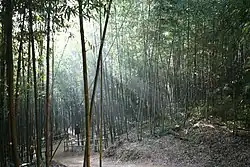
The landscape is defined by the interplay of sea and land. Jagged volcanic islands rise steeply from calm, island-sheltered waters. Between them, mudflats and salt marshes stretch for kilometres at low tide, supporting dense ecosystems of shellfish, crabs, and migratory birds. The islands themselves are clothed in subtropical and temperate vegetation — camellia groves, bamboo thickets, and pine forests that feel far more southern than the park's latitude suggests. The mild maritime climate keeps winters relatively gentle and summers humid; spring (April–May) and autumn (October–November) are the most comfortable seasons, with clear skies and moderate temperatures. Summer brings monsoon rains and occasional typhoon warnings; winter is cool and dry, with temperatures rarely dropping below freezing.
The archipelago has been inhabited for centuries by fishing communities whose way of life — shellfish gathering, seaweed farming, small-boat fishing — persists on many islands today. Tourism infrastructure varies enormously: some islands have guesthouses and restaurants, while others are reached only by irregular ferries and have no services at all. Planning ahead is essential.
Planning Dadohaehaesang National Park? Tell us your dates and we’ll tailor the trip.
Ask on WhatsAppHow to reach
By Plane
The nearest airports are Mokpo Airport (MPK, domestic only) and Yeosu Airport (RSU). Mokpo serves as the western gateway to the park, with flights from Seoul Gimpo (about 1 hour). Yeosu, the eastern gateway, also connects to Gimpo and Jeju. From either airport, ferries and local buses reach park islands. Gwangju Airport (KWJ), about 100 km inland, offers more frequent flights and connects to Mokpo or Yeosu by bus or train (1.5–2 hours).
By Train
KTX high-speed trains run from Seoul Yongsan to Mokpo in roughly 2 hours 30 minutes. Mokpo station is walking distance from the Mokpo ferry terminal, the main departure point for park islands in the western sector. Yeosu-Expo station (on the Jeolla Line) serves the eastern sector; from there, local buses reach the Yeosu ferry wharves in 15 minutes.
By Car / Road
From Seoul: drive south on the Seohaean Expressway (Expressway 15) to Mokpo — approximately 330 km, 3.5–4 hours. From Gwangju: take the Muan–Gwangju Expressway to Mokpo (about 100 km, 1.5 hours) or drive south to Yeosu via Suncheon (about 170 km, 2 hours). Ferries to most park islands depart from Mokpo, Wando, or Yeosu. Cars can be taken on some larger ferries (to Hongdo, Heuksando, and others) but most small islands are car-free. Intercity buses connect Mokpo and Yeosu to all major Korean cities.
Ferry is the primary means of reaching island destinations within the park. The main routes are:
- Mokpo → Hongdo (홍도) — approximately 1.5 hours by fast ferry, 2.5 hours by slow ferry. Multiple daily departures (weather permitting).
- Mokpo → Heuksando (흑산도) — about 1 hour fast ferry, 2 hours slow. Combined tickets with Hongdo are common.
- Wando → Bogildo (보길도) — 30–50 minutes by ferry.
- Yeosu → various islands — shorter hops to Sado, Geomundo, and others.
Ferry schedules are published by the Mokpo and Yeosu port authorities but change seasonally; check before travelling. Services are reduced or cancelled in rough seas, especially in winter and during typhoon warnings. On the islands themselves, walking is the norm. Some larger islands (Heuksando, Hongdo) have local bus loops; Bogildo and others have taxis or motorbike-taxi services. Rental bicycles are available on Heuksando and a few other islands (roughly ₩10,000–15,000/day). There are no ride-hailing apps on the islands.
Things to do
Hongdo Island (홍도) — The park's most famous destination: a small, steep-sided island of red rock cliffs plunging into turquoise water. The island is a designated Natural Monument. Sightseeing boats circle the island (about 1.5 hours, ₩15,000–20,000), passing sea caves, rock arches, and the iconic "flagpole rock." The island itself has walking trails through camellia forest.
Heuksando Island (흑산도) — Larger and more settled than Hongdo, with fishing villages, a historic exile site (the Joseon-era scholar Jeong Yak-jeon was banished here), and dramatic coastal cliffs. The island's camellia festival (February–March) draws visitors when the groves bloom pink and red.
Bogildo Island (보길도) — Known for the Wonseunggak (원선각), a thatched-roof pavilion built by the Joseon poet Yun Seon-do, set in a walled garden above a quiet cove. The island's interior is green and hilly, with walks through bamboo groves and mandarin orchards.
Geomundo Island (거문도) — A remote outpost closer to Japan than to mainland Korea, reached from Yeosu. A British naval cemetery from the 19th century sits on a hillside overlooking the harbour. The island has a wild, windswept character and few tourists.
Sinan Tidal Flats (신안 갯벌) — Vast mudflats exposed at low tide across the Sinan County island chain. Designated as a UNESCO tentative site for their ecological significance. Guided mudflat walks (barefoot wading through warm tidal flats to collect shells) are offered seasonally from several islands — typically ₩15,000–25,000 per person.
Samsan Mountain on Heuksando (흑산도 삼산) — A moderate hike to the 629 m summit (the highest point in the park's island chain) with panoramic views of the archipelago. About 2.5 hours round trip from the village.
Island-Hopping by Ferry — The quintessential park experience: take a multi-day ferry loop connecting Hongdo, Heuksando, and nearby islands. Slow ferries are cheaper and more atmospheric; fast ferries cover more ground. Allow 3–4 days for a relaxed circuit.
Sightseeing Boat Tours — Available at Hongdo (circling the island's sea cliffs), Heuksando (coastal circuit), and from Yeosu (routes past Sado and surrounding islets). Prices range from ₩15,000–30,000 per person. Tours run multiple times daily in season but are weather-dependent.
Mudflat Experiences (갯벌체험) — Guided tidal-flat walks are offered on several Sinan and Wando-area islands. Participants wade barefoot across the flats at low tide, digging for clams, catching crabs, and learning about the ecosystem. Wading boots are provided. Best in spring and autumn when water temperatures are comfortable.
Fishing — Shore fishing is widely practised from rocks and harbours. Boat fishing charters can be arranged through guesthouse owners on Heuksando and Wando. Common catches include rockfish, sea bass, and squid. No special permit is needed for recreational fishing from shore.
Hiking — Each inhabited island has at least one walking trail. Hongdo's coastal loop (1.5 hours), Heuksando's summit trail, and Bogildo's Yun Seon-do heritage walk are the most popular. Trails are generally well-maintained but steep in places; sturdy shoes are recommended.
Cycling — Heuksando and Wando have paved roads suitable for cycling, with rental bikes available. Heuksando's circum-island road (roughly 20 km) is a scenic half-day ride with minimal traffic outside summer.
Planning Dadohaehaesang National Park? Want these on a customised itinerary?
Ask on WhatsAppFood & Dining
Seafood is the backbone of every meal. Hoe (raw fish) platters featuring flatfish or rockfish are served at harbourside restaurants on every inhabited island — expect ₩30,000–50,000 for two. Haemul-tang (seafood stew) and jogaetang (clam soup) are warming staples, ₩20,000–35,000 per pot. Jeotgal (fermented shellfish) is a pungent regional accompaniment to rice.
- Hongdo Harbour Restaurants (홍도항 식당) — A handful of family-run restaurants near the Hongdo ferry dock. The set menu typically includes hoe, grilled fish, and multiple banchan (side dishes). ₩35,000–50,000 for two.
- Heuksando Sashimi Center (흑산도횟집) — Near the main harbour. Known for gulbi (salt-dried yellow corvina), a Jeollanam-do delicacy. Mid-range pricing.
- Bogildo Gamjatang House (보길도감자탕) — A local favourite serving pork bone stew with potatoes and perilla leaves. Hearty and cheap: ₩8,000–12,000 per serving.
- Mokpo Haenyeo Restaurant (해녀식당) — On the Mokpo waterfront, serving shellfish gathered by local haenyeo-style divers. Seasonal menu; ₩15,000–30,000.
Vegetarian options are limited; the islands are not set up for halal or gluten-free dining. Bring supplies if you have strict dietary needs. Most island guesthouses include breakfast in the room rate.
Cafes & Nightlife
Soju and makgeolli are the standard drinks everywhere. On the islands, there is little in the way of bars or nightlife — evenings are spent at guesthouses or on harbour-front benches with a bottle of soju and fresh shellfish. Mokpo and Yeosu have more developed drinking scenes: Mokpo's Haean-ro waterfront strip has pubs and cafés; Yeosu's Odong-dong district has seafood bars with sea views. Local rice wines from the Jeolla region are worth trying. Water is safe to drink from the tap on the mainland; on smaller islands, guests are typically offered boiled or bottled water.
Planning Dadohaehaesang National Park? We’ll book the stays and dining for you.
Ask on WhatsAppPlaces to Stay
- Budget: Island minbak (민박, family-run guesthouses) are the most common budget option, ₩30,000–50,000 per night for a room with shared or private bathroom. Facilities are basic but clean. Hongdo and Heuksando each have several. No online booking — call ahead or arrive by the morning ferry and walk in.
- Mid-range: Pension-style accommodation on Heuksando and Wando — self-contained units, some with sea views, ₩70,000–120,000 per night. A few on Hongdo are newer and better appointed.
- Upscale: Haevichi Hotel & Resort Yeosu (해비치 여수) on the mainland near Yeosu — a full-service resort with spa, pool, and harbour views. ₩200,000–350,000 per night. Not on an island but a comfortable base for eastern park excursions.
Camping is possible on a few islands (designated sites on Heuksando and Wando, ₩5,000–10,000) but facilities are basic. Bring your own gear. Booking is informal — arrive early in peak season.
What to buy
Seafood products dominate the island markets. Dried squid (오징어채), dried anchovies (멸치), and salted fermented seafood (젓갈) are specialties — buy directly from fishing cooperatives on Heuksando or at the Mokpo fish market for the best prices. Hongdo's gift shops sell dried seaweed and local honey. On Bogildo, mandarin oranges (감귤) are a seasonal crop (harvest November–January) sold fresh or as marmalade. Bargaining is expected at markets and small shops but not in fixed-price stores.
Go next
- Mokpo (목포) — The park's western gateway city, with a vibrant fish market, the National Maritime Museum, the Gatbawi rock formation, and excellent street food. Worth a day or two.
- Yeosu (여수) — Eastern gateway; known for Expo Ocean Park, Odongdo island (a short walk from the waterfront), and the nightly fireworks show in summer.
- Suncheon Bay (순천만) — About 70 km east of Mokpo; a famous wetland reserve with boardwalks through reed beds and a hilltop observatory. Best at sunset. One of Korea's most photographed landscapes.
- Wando (완도) — A small coastal town and ferry hub with its own beaches, a seafood market, and the Wando Tower observation deck. Gateway to Bogildo.
- Boseong Tea Fields (보성 녹차밭) — Rolling green tea plantations about 100 km east of Mokpo. Iconic scenery, a tea museum, and green tea ice cream. 1.5 hours by car.
Nearby in Jeollanam-do
More places to explore around Dadohaehaesang National Park.

Contact Us
Get in touch with us.
Get in touch
Contact Us
Tell us where you'd like to go and how you like to travel. A real Tripcuro planner — not a bot — will craft an itinerary around you.
- Personalised, hassle-free planning end-to-end
- Transparent pricing, no hidden costs
- 24/7 support for complete peace of mind