
Papua New Guinea
Melanesia · 133 destinations across 22 regions
Photography coming soonWhy visit?
Papua New Guinea is the last great frontier of adventure travel — a country where the central highlands weren't mapped until the 1930s, where over 800 languages are still spoken, and where the collision between Stone Age cultures and the smartphone era has produced one of the most idiosyncratic societies on Earth. It occupies the eastern half of New Guinea, the world's second-largest island, plus a constellation of volcanic islands stretching east into the Pacific. For divers, birdwatchers, anthropologists, and serious trekkers, nowhere else comes close.
This is not a country for casual sightseeing. Outside a handful of tourism enclaves — Madang, Tufi, Alotau, the Kokoda Track, the Goroka and Mount Hagen show circuits — infrastructure is thin, internal flights are essential and expensive, and law-and-order issues in Port Moresby and Lae require careful planning. In return, you get untouched coral reefs, World War II wrecks still in their wartime configuration, the Raggiana bird-of-paradise displaying in the wild, sing-sing festivals where 100+ tribes paint up in full traditional regalia, and a population that is — paradoxically given the country's reputation — among the most genuinely welcoming in the world.
PNG suits experienced travellers comfortable with logistical friction, charter flights, and the occasional cancelled boat. It rewards those who book through a specialist operator and travel with patience. It punishes those expecting a Pacific beach holiday.
What is the landscape and climate like?
PNG straddles the Pacific Ring of Fire and is geologically violent — active volcanoes (Tavurvur, Ulawun, Manam), frequent earthquakes, and occasional tsunamis. A central spine of mountains, the New Guinea Highlands, runs the length of the mainland, peaking at Mount Wilhelm (4,509 m / 14,793 ft). Around this spine lie dense tropical rainforests, vast wetland systems on the Sepik and Fly rivers, mangrove coasts, and offshore the country's prized fringing and barrier reefs.
The country splits naturally into the mainland (Southern, Western, Madang-Morobe, Highlands, Sepik regions) and the islands (New Britain, New Ireland, Manus, Bougainville, Milne Bay archipelagos). Each has distinct cultures, languages, and travel logistics — the islands are generally calmer and easier to visit than the mainland.
Climate is tropical and equatorial: hot and humid year-round on the coast (26–32°C), distinctly cooler in the highlands (Mount Hagen and Goroka can drop to 10°C at night). The wet season runs roughly December to March and brings heavy rain that closes trails and grounds bush flights. Dry season is May to October, with June to September the prime trekking window.
Tell us your dates and we'll tailor your Papua New Guinea trip around them.
WhatsAppWhen is the best time to visit?
May to October (dry season) is the overall best window — drier trails, more reliable domestic flights, calmer seas for diving on the north coast and around Milne Bay.
- Highlands trekking (Kokoda, Mount Wilhelm): June–September. Avoid December–March entirely.
- Diving: Madang, Kimbe Bay, and Milne Bay are excellent year-round, but May–November offers best visibility. Tufi peaks October–December.
- Sepik river travel: June–October when water levels and weather cooperate.
- Surfing (Vanimo, Kavieng, New Ireland): November–April for the north swell.
Festivals worth planning a trip around:
- Goroka Show (mid-September, Goroka) — the country's flagship sing-sing, ~100 tribal groups in full regalia.
- Mount Hagen Cultural Show (mid-August, Mount Hagen) — the original highlands sing-sing, slightly rawer than Goroka.
- Mask Festival (mid-July, Rabaul/Kokopo, East New Britain) — Tolai and Baining fire dancers.
- Kenu and Kundu Festival (early November, Alotau) — war canoes and drumming on Milne Bay.
- Independence Day (16 September) — celebrations countrywide.
Do you need a visa?
PNG requires most foreign visitors to hold a visa. The eVisa system (evisa.ica.gov.pg) is the primary route for tourists and issues a 60-day tourist visa for citizens of most Western, Asian, and Pacific countries, typically processed in a few business days. Visa-on-arrival at Port Moresby (Jacksons) is available for many nationalities but is less reliable than applying online in advance.
Passport must be valid for at least 6 months beyond entry. Onward ticket and proof of funds may be requested. Yellow fever certificate required if arriving from an infected area.
Want us to time your trip around a festival? We'll handle it.
WhatsAppHow much does it cost?
Currency is the Papua New Guinea kina (PGK, "K"), divided into 100 toea. Exchange rate hovers around 1 USD ≈ 3.7–4.0 PGK (verify before travel).
Typical daily budgets per person:
- Budget: K200–400 (~USD 50–100) — guesthouses, local PMV transport, market food. Realistic only in a handful of towns; bush travel is rarely cheap.
- Mid-range: K700–1,500 (~USD 175–375) — hotels in Port Moresby/Madang/Lae, domestic flights amortised, restaurant meals.
- Luxury / dive resort: K2,500–6,000+ (~USD 625–1,500+) — resorts like Tufi, Walindi (Kimbe Bay), Tawali, plus charter flights and dive packages.
Domestic flights are the single biggest cost: a one-way Port Moresby–Mount Hagen or POM–Rabaul ticket on Air Niugini typically runs K700–1,400 (USD 175–350).
ATMs (BSP, Kina Bank, Westpac, ANZ) are reliable in Port Moresby, Lae, Madang, Mount Hagen, Goroka, Kokopo, Alotau, and Kavieng. Outside these, carry cash. Cards (Visa, Mastercard) are accepted at hotels and larger restaurants in main centres only. Bring USD or AUD cash as backup.
Tipping is not customary and can cause confusion — wages are paid, service is service. Rounding up at upscale hotels or tipping a trekking porter/guide at the end of a Kokoda walk (K50–150 per day per porter is reasonable) is appreciated but not expected.
How do you get there?
Air is how essentially all visitors arrive.
- Port Moresby — Jacksons International Airport (POM) is the main gateway, with the bulk of international flights.
- Mount Hagen (HGU), Lae Nadzab (LAE), and Tokua/Kokopo (RAB) handle limited regional services.
International routes are dominated by Air Niugini and PNG Air, with Qantas (Brisbane), Virgin Australia (Brisbane), Philippine Airlines (Manila), Singapore Airlines via codeshare, and Solomon Airlines (Honiara) operating into POM. Brisbane is by far the most common entry point.
Land borders: only one practical crossing — Wutung on the north coast between Vanimo (PNG) and Jayapura (Indonesian Papua). It's open but bureaucratically tricky and generally only used by determined overlanders; arrange visas in advance for both countries.
Sea: occasional expedition cruises (Coral Expeditions, Heritage Expeditions, Ponant) call at Rabaul, Madang, Alotau, and the Trobriands. There is no scheduled passenger ferry from neighbouring countries.
We handle the bookings and budgeting — you just travel.
WhatsAppHow do you get around?
Domestic flights are the backbone of travel in PNG. Air Niugini and PNG Air connect Port Moresby to all provincial capitals; smaller carriers like MAF (Mission Aviation Fellowship) and tropicair serve bush airstrips. Schedules slip, weather cancellations are routine, and you should never plan an international connection on the same day as a domestic flight.
Roads: the Highlands Highway from Lae through Goroka to Mount Hagen and beyond is the country's only significant long-distance road. There is no road between Port Moresby and Lae or between Port Moresby and the Highlands — POM is roughly the most isolated capital city on Earth in road terms.
PMVs (Public Motor Vehicles) — minibuses and trucks — handle most local transport along existing roads. Cheap (K2–20 for most legs) and an experience, but not generally recommended for foreign tourists in Port Moresby or Lae.
Taxis: use only marked, hotel-arranged taxis in Port Moresby and Lae. There is no Uber/rideshare. Some hotels use Cabxi or arranged car services — book through your accommodation.
Boats: outboard "banana boats" connect Madang to its outer islands, Alotau to the Trobriands and Louisiades, and Kavieng around New Ireland. Charter is the norm; scheduled services are limited.
Rail: there is no passenger rail network.
Common pitfalls:
- Confidence tricks and bag-snatching around Port Moresby's markets and bus stops — don't carry valuables on PMVs.
- "Helpers" at Jacksons airport offering to carry bags for inflated fees — use only badged porters.
- Inflated charter fees agreed verbally — get every boat and bush-flight charter price in writing.
- Cash withdrawal skimming — use ATMs inside bank branches in business hours where possible.
What are the local customs?
PNG is overwhelmingly Christian (a mix of Catholic, Lutheran, Anglican, and Pentecostal/SDA), layered over more than 800 distinct indigenous cultures and languages. The lingua francas are Tok Pisin (English-based creole, the everyday language of national life), Hiri Motu (mainly Papuan coast), and English (government, business, education).
- Greetings: a handshake works everywhere; in villages, expect a long, soft handshake and gentle eye contact. Learn a few words of Tok Pisin — "apinun" (good afternoon), "tenkyu" (thank you), "yu orait?" (how are you?). It opens doors.
- Dress: modest by default. Women should cover shoulders and knees outside resorts, especially in highlands villages and churches. Men: long shorts or trousers in villages.
- Photography: always ask before photographing people. In some communities a small payment (K5–20) is expected for portraits, and at sing-sings a "camera fee" may be charged at the gate — pay it. Do not photograph haus tambaran (spirit houses) or ceremonies without explicit permission.
- Sing-sings and villages: it is customary to bring a small gift (rice, tinned fish, school supplies) when visiting a village, and to pay a "kastom" fee if the village hosts visitors. Your guide will advise.
- Tipping: not customary (see above). Do not tip PMV drivers or shopkeepers.
- Don'ts: do not refer to anyone as "Stone Age" or "primitive" — deeply offensive. Do not discuss tribal land disputes, payback violence, or sorcery accusations as conversation pieces. Do not point with your finger; use an open hand or chin lift. Do not enter a village uninvited.
- Betel nut (buai): chewed everywhere; you'll see red-stained pavements. Offered as a social gesture — politely decline if you don't want to try it.
Prefer to talk it through? We're a WhatsApp message away.
WhatsAppIs it safe?
PNG has a real and well-documented safety problem in Port Moresby and Lae, with armed robbery, carjacking, and opportunistic violence being the main risks. Most foreign visitors are not affected because they travel between airport, hotel, and arranged transfers, but the rules are non-negotiable:
- Do not walk in Port Moresby or Lae outside hotel grounds, especially after dark.
- Use hotel-arranged transport for every movement.
- Keep a low profile — no flashy jewellery, no obvious cameras on the street, no phones out at traffic lights.
- Settlements (informal urban areas) are off-limits without a trusted local escort.
Outside the two main cities, most tourist areas are calm: Madang, Tufi, Kokopo/Rabaul, Alotau, Kavieng, Goroka (during the show), and the dive resorts of Kimbe Bay are generally trouble-free. The Highlands have a reputation for tribal fighting (raskolism and inter-clan disputes); travel only with a reputable local operator and avoid road travel after dark anywhere in PNG.
Bougainville and parts of the Highlands border zones can have flare-ups; check current advisories.
Natural hazards: malaria is present countrywide below 1,800 m and is the single biggest health risk — take prophylaxis and use DEET. Dengue, Japanese encephalitis, and typhoid are present. Tap water is generally not safe — drink bottled or treated. Volcanic activity (Rabaul, Manam, Ulawun) and earthquakes are real risks; follow local guidance.
Recommended vaccinations: routine boosters, hepatitis A & B, typhoid, Japanese encephalitis (for rural travel), and yellow fever if arriving from an infected country. Consult a travel medicine clinic at least 6 weeks before departure. Comprehensive travel insurance with medical evacuation cover is essential — PNG has limited tertiary medical care and serious cases are usually evacuated to Cairns or Brisbane.
Which regions stand out?
- Southern Papua New Guinea — Port Moresby and the Central/Northern provinces; the country's main entry point and the start of the Kokoda Track.
- Highlands — Enga, Chimbu, and the Eastern, Southern, and Western Highlands; cool climate, sing-sings, coffee country, Mount Wilhelm.
- Madang-Morobe — north-coast diving, volcanic islands, and the start of the Highlands Highway out of Lae.
- Sepik — the mighty Sepik river, haus tambarans, and PNG's most celebrated wood carving traditions.
- Milne Bay — eastern islands and atolls including the Trobriands and Louisiade Archipelago; world-class diving and yachting.
- New Britain — Rabaul's volcano, Kokopo's WWII relics, and Kimbe Bay's reefs.
- New Ireland & Manus — laid-back island life, surfing, fishing, and the country's earliest archaeological sites.
- Bougainville — autonomous region, culturally Solomon Islands–leaning, expected independent state by 2027.
Tell us your dates and we'll tailor your Papua New Guinea trip around them.
WhatsAppWhere should you go?
- Port Moresby — the capital; Parliament Haus, the National Museum, Bomana War Cemetery, and the Nature Park, all best visited with arranged transport.
- Kokoda Track — 96 km hike across the Owen Stanley Range, a pilgrimage for Australian visitors and one of the world's great historical treks.
- Madang — pretty harbour town with bat-filled evening skies and superb shore and reef diving.
- Goroka — pleasant highland town and home of the September Goroka Show.
- Mount Hagen — frontier highlands hub and gateway to the August Hagen Show and onward Highlands travel.
- Rabaul & Kokopo — volcanic landscapes, the eerie buried town of old Rabaul, and extensive WWII Japanese tunnels and wrecks.
- Tufi — fjord-like rias, tapa cloth villages, and some of PNG's best muck and reef diving.
- Alotau — laid-back capital of Milne Bay and gateway to the Trobriands and Louisiades.
- Trobriand Islands — Malinowski's "Islands of Love," yam cult, and cricket reinvented as ritual.
- Sepik River (from Wewak) — multi-day boat trips to spirit houses and master-carver villages.
- Kavieng (New Ireland) — surfing, fishing, and sleepy island charm at the country's northern tip.
- Kimbe Bay (West New Britain) — Walindi Plantation Resort and some of the most biodiverse coral reefs on the planet.
Regions & States
Papua New Guinea has 22 regions with guides — pick one to drill into its destinations.
Bougainville
7 destinations
Central
7 destinations
Chimbu
6 destinations
East New Britain
5 destinations
East Sepik
5 destinations

Eastern Highlands
6 destinations
Enga
6 destinations
Gulf
6 destinations
Hela
5 destinations
Jiwaka
5 destinations
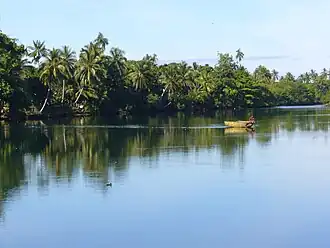
Madang
6 destinations

Manus
6 destinations
Milne Bay
9 destinations

Morobe
9 destinations
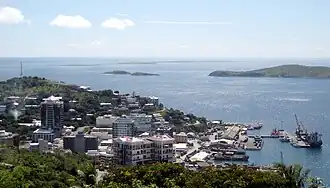
National Capital District (Port Moresby)
4 destinations

New Ireland
7 destinations
Northern
5 destinations

Southern Highlands
6 destinations
West New Britain
5 destinations
West Sepik
6 destinations
Western
7 destinations

Western Highlands
5 destinations
Not sure where to start in Papua New Guinea? Tell us how you like to travel and we'll shape the route.
WhatsAppTop Destinations
The places first-time and returning travellers ask for most.
Goroka
Goroka is the capital of Eastern Highlands Province and one of the…
Kainantu
Kainantu is a highlands town of roughly 6,700 residents in Papua New…
Kavieng
Kavieng is the capital of New Ireland Province and sits at the very…
Lae
Lae sits on the north shore of the Huon Gulf, where the Markham River…
Lorengau
Lorengau is the small, easygoing capital of Manus Province — Papua…
Madang
Madang is a small coastal town on Papua New Guinea's north coast…
Mendi
Mendi is the capital of Papua New Guinea's Southern Highlands…
Mount Hagen
Mount Hagen (Tok Pisin: Maun Hagen) is the provincial capital of…
Port Moresby
Port Moresby (Tok Pisin: Pot Mosbi) is the capital and largest city…
Afore
Afore is a remote station in Northern (Oro) Province, located on the…
Aitape
Aitape is a small coastal town in West Sepik (Sandaun) Province, on…
Alotau
Alotau is the capital of Milne Bay Province, at the far southeastern…

Contact Us
Get in touch with us.
Get in touch
Contact Us
Tell us where you'd like to go and how you like to travel. A real Tripcuro planner — not a bot — will craft an itinerary around you.
- Personalised, hassle-free planning end-to-end
- Transparent pricing, no hidden costs
- 24/7 support for complete peace of mind