
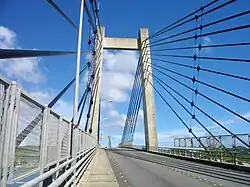
Melekeok
Ngaraard, Palau
Why visit Melekeok?
Melekeok is a state on the east coast of Babeldaob, Palau's largest island, and the location — though not the exact site — of the country's national capital. The seat of government sits in the small hamlet of Ngerulmud, which since 2006 has held the title of Palau's capital. With only a few hundred residents, Ngerulmud is the smallest national capital in the world by population, and the gleaming capitol complex set among green hills is, for many travellers, the single most striking sight in the state.
The wider state of Melekeok is a quiet, traditional part of Babeldaob — an island that remains one of the most underdeveloped populated islands in the Pacific. Unlike the low coral islands elsewhere in Palau, Babeldaob is mountainous and forested, and its eastern coast, running north from Melekeok toward Ngaraard, is lined with some of the country's finest sandy beaches. The state is rich in archaeology and tradition: ancient stone paths, carved stone gods, a traditional bai (meeting house) and old village sites speak to centuries of Palauan life long before the capitol was conceived. The capitol complex itself remains controversial among many Palauans, who note its grand scale and cost relative to the country's tiny population.
The climate is tropical — warm to hot and humid year-round, with heavy rainfall. The early months of the year are generally the driest and most comfortable for sightseeing and beach time, while the middle and later part of the year is wetter. Babeldaob's good roads and very light traffic make any time of year manageable for a driving visit.
Planning Melekeok? Tell us your dates and we’ll tailor the trip.
Ask on WhatsAppHow do you get there?
By Plane
The nearest airport is Roman Tmetuchl International Airport (ROR), Palau's only international airport, in the south of Babeldaob. It is the main gateway to the country for flights from Taipei, Manila, Brisbane, Guam and Tokyo. From the airport, Melekeok is reached overland by road across Babeldaob.
By Car / Road
Driving is the practical way to reach Melekeok. From Koror, cross the Koror–Babeldaob (Japan–Palau Friendship) Bridge and follow Babeldaob's compact road network up the island toward the east coast. The roads on Babeldaob are generally in very good condition and traffic is very light, making for an easy and scenic drive. A rental car arranged in Koror or at the airport is the usual approach.
Driving is by far the best way to get around Melekeok and Babeldaob generally: the area is sparsely populated, the roads are well-maintained and traffic is minimal. There is no metro, and no meaningful taxi, tuk-tuk or ride-hailing presence outside Koror, so visitors should arrange a rental car (or a driver) before leaving Koror. Distances within the state are modest, but a vehicle is essential to link the capitol complex, the archaeological sites and the beaches. Drive on the right.
What are the things to do?
The capital
- Palau's capitol complex — The reason most visitors come to Melekeok. The picturesque hilltop complex in Ngerulmud houses the judicial, legislative and executive buildings of the national government, set among landscaped grounds with sweeping views. Ngerulmud itself contains little else. The complex is grand and photogenic — and a subject of local debate over its size and cost.
Archaeology and tradition in Melekeok
- Bai el Melekeong / Euang el Chades (Ngerang) — Melekeok's traditional bai (meeting house) and its "platform of four," a window into Palauan village architecture and social life.
- Ngermecheluch Site — A historic site within the state; one of the area's cluster of archaeological points of interest.
- Lomech er Ngii el mora (Ngeremecheluch) — An ancient stone path, part of Palau's long tradition of stone-built village infrastructure.
- Did el Bad er a Beriber — An ancient dock with a stone bridge, a reminder of old Palauan engineering.
Elsewhere on Babeldaob
Odalmelech — Carved stone gods at Ngermelech, among the most evocative of Palau's ancient stone monuments.
Meteu el Klechem (Ngermelech Village) — A historic village site near the Odalmelech stones.
Badrulchau Stone Monoliths — Possibly Palau's largest archaeological site, a striking collection of 52 ancient stone monoliths on the northern part of Babeldaob, well worth the drive.
Visit the capitol — Touring and photographing the capitol complex and its grounds is the headline activity.
Beaches — The east coast of Babeldaob, running north from Melekeok toward Ngaraard, has many sandy beaches that are quiet, scenic and ideal for swimming and relaxing.
Archaeology trail — Linking Melekeok's bai, stone paths and old village sites with the Odalmelech stone gods and the Badrulchau monoliths makes for a rewarding self-drive history day.
Birdwatching — The central forested Middle Ridge of Babeldaob is a designated Important Bird Area supporting most of Palau's endemic birds; the forests of Melekeok are a fine place to look for them.
Nature walks — Babeldaob's freshwater lakes and watersheds, including the protected Lake Ngardok area, offer green, unhurried hiking away from the coast.
Planning Melekeok? Want these on a customised itinerary?
Ask on WhatsAppWhere to eat?
Melekeok is not a dining destination, and visitors should not expect a choice of restaurants. Eating here is local and simple, built on Palauan staples — reef fish, taro, tapioca, coconut and tropical fruit — supplemented by imported rice and tinned goods. Many travellers visit Melekeok as a day trip from Koror and either eat before they set out or carry a picnic, which pairs well with a stop at one of the east-coast beaches.
Where to drink?
There is little in the way of bars or cafés in Melekeok. Small village stores can supply bottled water, soft drinks and basic refreshments. Tap water quality is variable across rural Babeldaob, so bottled or boiled water is the safer choice; carry an adequate supply for a day's sightseeing. Fresh coconut water is the natural local drink where available.
Planning Melekeok? We’ll book the stays and dining for you.
Ask on WhatsAppWhere to stay?
- Upscale / heritage: The Airai Water Paradise Hotel & Spa, at the southern end of Babeldaob (☏ +680-587-3530), is the standout Babeldaob property, known for some of Palau's "largest" attractions — the largest history storyboard, the largest water park with two slides, and an Olympic-sized swimming pool. Standard rooms, honeymoon suites and ocean-view suites are available. Otherwise, most travellers visiting Melekeok stay in Koror and visit by car.
What should you buy?
Melekeok is rural and has no shopping district or craft market; everyday needs are met by small village stores selling basic groceries and supplies. There is no established bargaining culture for tourists here. For Palauan storyboards, carvings and other souvenirs — as well as for any serious shopping — stock up in Koror before driving to Melekeok.
Where to go next?
- Koror — Palau's main town and transport hub (a short drive south over the Japan–Palau Friendship Bridge); dive operators, museums, hotels and restaurants.
- Ngardmau — A neighbouring Babeldaob state, home to Palau's tallest waterfall.
- Ngaraard — Just up the east coast, with more of Babeldaob's beautiful sandy beaches.
- Badrulchau (northern Babeldaob) — The dramatic field of 52 ancient stone monoliths, an easy onward drive.
- Rock Islands — The UNESCO-listed limestone islands off Koror, the heart of Palau's diving and snorkelling.
Nearby in Ngaraard
More places to explore around Melekeok.
Guide content as of May 2026. Portions adapted from Wikivoyage, CC BY-SA 4.0.

Contact Us
Get in touch with us.
Get in touch
Contact Us
Tell us where you'd like to go and how you like to travel. A real Tripcuro planner — not a bot — will craft an itinerary around you.
- Personalised, hassle-free planning end-to-end
- Transparent pricing, no hidden costs
- 24/7 support for complete peace of mind