
Genghis Khan Equestrian Statue
Töv, Mongolia
Why visit Genghis Khan Equestrian Statue?
The Genghis Khan Equestrian Statue (Чингис хааны морьт хөшөө) is a colossal monument standing on the Mongolian steppe at Tsonjin Boldog, in Töv province about 54 km east of Ulaanbaatar. Completed in 2008, it depicts Chinggis Khaan (Genghis Khan) on horseback, sword in hand, and at roughly 40 m tall it ranks among the largest equestrian statues in the world. Sheathed in gleaming stainless steel and set on a circular building ringed by 36 columns — one for each of the khans from Chinggis to Ligden — it is one of Mongolia's most-photographed sights and a powerful expression of national pride in the founder of the Mongol Empire.
The location was chosen for legend as much as geography: tradition holds that this is where the young Temüjin found a golden whip, an omen of the destiny that would make him Chinggis Khaan. The statue faces east, toward his birthplace in the Khentii mountains. Inside the supporting building are exhibition halls covering Bronze Age and Xiongnu archaeology, the Mongol Empire and Mongolian history, plus a souvenir shop and restaurant. A lift and stairway lead up through the horse to a viewing platform on the horse's head, giving panoramic views across the steppe.
This is a roadside monument rather than a town, and most travellers visit on a half-day or day trip from Ulaanbaatar, very often combined with Gorkhi-Terelj National Park. The site is open year-round; the best conditions are late spring to early autumn (May–September), when the steppe is green and the weather mild, while winters are bitterly cold but the gleaming steel against snow is dramatic. Allow one to two hours to see the museum, climb to the viewpoint and walk the grounds.
Planning Genghis Khan Equestrian Statue? Tell us your dates and we’ll tailor the trip.
Ask on WhatsAppHow do you get there?
By Plane
The nearest airport is Chinggis Khaan International Airport (UBN), near Khöshig Valley south of Ulaanbaatar. From the airport it is roughly 70–80 km to the statue; there is no direct transport, so arrange a car or transfer, or travel via Ulaanbaatar.
By Car / Road
The statue is about 54 km east of Ulaanbaatar on the road toward Nalaikh and Terelj, and the drive takes roughly an hour on a paved road. The simplest way to visit is a hired car with driver or an organised tour, and it pairs naturally with a trip to Gorkhi-Terelj National Park further along the same road. Independent travellers can take a bus or shared transport toward Nalaikh and continue from there, but a direct car is far more convenient for reaching the site itself.
The site is compact and explored entirely on foot. A walkway leads from the car park to the monument building; inside, a lift and stairs climb up through the horse's body to the viewing platform on its head, and the surrounding grounds — sometimes featuring giant boot sculptures and other photo features — are easily strolled. There is no public transport at the site, so you will need your car and driver for the trip in and out. There are no ride-hailing apps operating here; if you arrive by shared transport, arrange your onward ride in advance, ideally keeping the same driver.
What are the things to do?
The Genghis Khan Equestrian Statue — The 40 m stainless-steel monument itself, with Chinggis Khaan astride his horse holding a golden whip; the centrepiece and main reason to visit.
Viewing platform on the horse's head — Reached by lift and stairway, offering a panorama of the Tsonjin Boldog steppe and a close view of the statue's craftsmanship.
Museum and exhibition halls — Displays in the base building covering the Bronze Age, the Xiongnu period, the Mongol Empire and Mongolian history, including archaeological finds.
The 36 columns — The ring of pillars around the base, each representing one of the khans from Chinggis to Ligden, the last of the line.
Climb to the viewpoint — The signature experience: riding up through the horse to look out from the platform on its head.
Tour the museum — Work through the exhibition halls on Mongol history and archaeology in the base building.
Photography — The scale of the monument against the open steppe makes it a prime spot for photographs; props such as giant boots and Mongol-costume hire are sometimes available.
Combine with Terelj — Many visitors continue from here to Gorkhi-Terelj National Park, making a full day of the eastern Töv route.
Cultural shows — During the tourist season, occasional eagle displays, costume photo ops or short performances are staged in the grounds.
Planning Genghis Khan Equestrian Statue? Want these on a customised itinerary?
Ask on WhatsAppWhere to eat?
There is a restaurant within the monument complex serving Mongolian and tourist-friendly dishes — convenient for lunch as part of a day trip, with typical national fare such as buuz (steamed dumplings), khuushuur (fried meat pasties) and mutton soups. Choice is limited and prices reflect the tourist setting. For more variety, eat in Ulaanbaatar before or after the visit, or stop at one of the ger camps along the Terelj road. Vegetarians should expect few options at the site and are better catered for in the capital.
- Statue complex restaurant (mid-range) — On-site dining for visitors; convenient but limited in choice.
Where to drink?
The on-site restaurant and souvenir shop sell soft drinks, water, tea and coffee; the traditional Mongolian hot drink is süütei tsai, salty milk tea. Airag — fermented mare's milk — and Mongolian vodka are part of the local culture and may be encountered on tours and at ger camps in the area. Bring or buy bottled water for the trip, especially in summer. There is no bar scene at the monument; for cafés and bars, look to Ulaanbaatar.
Planning Genghis Khan Equestrian Statue? We’ll book the stays and dining for you.
Ask on WhatsAppWhere to stay?
The statue is a day-trip sight; most visitors do not stay overnight here.
Budget — There is no budget accommodation at the monument itself; the nearest cheap beds are guesthouses and hostels in Ulaanbaatar or basic lodging in Nalaikh.
Mid-range — Some tourist ger camps operate in the surrounding steppe and along the route toward Terelj, offering ger accommodation in season.
Upscale — Upscale stays are concentrated in Ulaanbaatar and at the larger Terelj resorts; there is no luxury accommodation at the monument.
What should you buy?
There is a souvenir shop inside the monument building selling Genghis Khan-themed gifts, postcards, books and Mongolian crafts — convenient if you want a memento on the spot, though prices are tourist-oriented. For a wider and cheaper selection of cashmere, felt goods and Mongol artwork, shop in Ulaanbaatar. Prices at the on-site shop are generally fixed; bargaining is not expected there, though it is normal at open markets in the capital.
Where to go next?
- Gorkhi-Terelj National Park (~30–40 km northeast, under an hour) — Granite tors, forest and ger camps; the classic pairing with the statue.
- Ulaanbaatar (~54 km west, ~1 hour) — Mongolia's capital, with Gandan Monastery, Sükhbaatar Square and the National Museum.
- Nalaikh (~15–20 km) — A former coal-mining town on the route, useful as a transport hub.
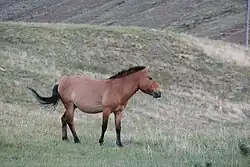
- Khustain Nuruu (Hustai) National Park (~150 km west via Ulaanbaatar, ~2.5–3 hours) — Steppe reserve home to the wild Przewalski's horse.
- Baganuur (~80 km east) — A mining town further along the eastern road, gateway to the eastern steppe.
Nearby in Töv
More places to explore around Genghis Khan Equestrian Statue.

Guide content as of May 2026. Portions adapted from Wikivoyage, CC BY-SA 4.0.

Contact Us
Get in touch with us.
Get in touch
Contact Us
Tell us where you'd like to go and how you like to travel. A real Tripcuro planner — not a bot — will craft an itinerary around you.
- Personalised, hassle-free planning end-to-end
- Transparent pricing, no hidden costs
- 24/7 support for complete peace of mind