
Uji
Kyoto, Japan
Why visit Uji?
Uji (宇治市) is a historic city in Kyoto prefecture, set on the river of the same name roughly halfway between the two ancient capitals of Kyoto and Nara. It is one of the oldest cities in Japan, and its roots reach almost as deep into Japanese history as those of its famous neighbours. Uji was the setting for many ancient stories, including the final chapters of The Tale of Genji, and the author Alex Kerr, in his book Lost Japan, praised it as a rare example of a historic Japanese city whose modern development has not destroyed its classical beauty.
Two of Uji's monuments — the Buddhist temple Byodo-in and the Shinto Ujigami Shrine — are inscribed as UNESCO World Heritage sites within the listing "Historic Monuments of Ancient Kyoto." But what Uji is best known for, and has been celebrated for over nearly a thousand years, is tea. Uji green tea, especially matcha, is among the most prized in Japan, and the city is dotted with tea houses and centuries-old shops. The compact historic core lies along both banks of the Uji River, an easy walk from either of the city's two stations, and during cherry-blossom season the bridge spanning the river makes for a breathtaking stroll.
Uji can be visited comfortably year-round and is small enough to cover in a day on foot. Spring brings cherry blossom along the river, early summer brings hydrangeas at Mimuroto-ji, and autumn brings colour to the temple approaches. Summer is hot and humid.
Planning Uji? Tell us your dates and we’ll tailor the trip.
Ask on WhatsAppHow do you get there?
By Train
Uji has two convenient stations. The JR Uji Station is on the JR Nara Line, with trains from Kyoto in about 20 minutes (¥240) and from Nara in about 35 minutes (¥500); the main riverside sights are a short walk away. The Keihan Uji Station sits on the opposite bank, slightly closer to most sights, and is a good option for a day trip from Osaka without a JR pass — trains from Osaka take about 55 minutes (¥410) with one change at Chushojima. Keihan's Kyoto–Osaka sightseeing pass (¥700 for one day, ¥1,000 for two) gives unlimited rides and is cheaper than a return ticket.
Uji is compact and almost entirely walkable. Most of the sights line both banks of the Uji River and are a short stroll from either JR Uji or Keihan Uji station, and it is easy to cover everything in one day simply by walking along the river — you will probably not need a map, though free maps are available at the tourist information centres beside the JR station and beside Byodo-in. Bridges link the two banks. There are no metros or tuk-tuks; for the few outlying sights, such as Sumiyama pottery village, a taxi is the practical choice. There are no scams to watch for.
What are the things to do?
Temples and shrines
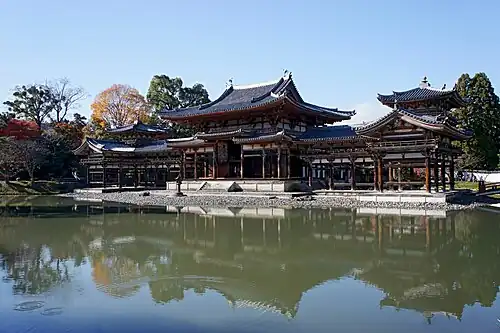
- Byodo-in — Uji's most famous monument, built in 1053; its Phoenix Hall (Hoo-do), which enshrines a statue of the Buddha Amida, is so iconic it appears on the ¥10 coin. A World Heritage site. Open Mar–Nov daily 08:30–17:30, Dec–Feb daily 09:00–16:30. Grounds and museum ¥600; entering the Phoenix Hall costs an extra ¥300 on a timed Japanese-language tour (the last tour is around 16:10).
- Ujigami Shrine — Said to be the oldest surviving Shinto shrine in Japan and a World Heritage site, just beside Uji Shrine. Free.
- Uji Shrine — Once part of the same complex as Ujigami Shrine; note its rabbit sculpture, said to have guided the deity. Free.
- Kosho-ji — A Zen temple famed for a long, tree-covered approach from the river, lovely in autumn; a working temple, so keep quiet.
- Mimuroto-ji — The 10th temple of the Saigoku Kannon pilgrimage, with hillside gardens of hydrangeas, rhododendrons and azaleas; best from mid-May to July. Admission ¥500.
- Mampuku-ji — Head temple of the Obaku Zen sect, with Chinese-influenced Ming-style architecture.
Museums
- The Tale of Genji Museum — Across the river from Byodo-in; exhibits on the classic novel, the final third of which is set in Uji. English audio guides available. ¥500, students ¥250. Open daily 09:00–17:00.
- Nintendo Museum — The video-game company's museum in a converted plant, with historical items and interactive experiences. Open daily except Tuesday, 10:00–18:00. Adults (18+) ¥3,300, youth (12–17) ¥2,200, children (6–11) ¥1,100, preschoolers free.
- Amagase Dam — South of the city; a scenic riverside walkway leads to the dam, which offers pleasant views.
Uji's tea heritage makes it a fine place to experience a traditional tea ceremony. The municipal Taiho-an tea house (1-5 Togawa, daily 10:00–16:00), run by the town beside Byodo-in, offers a ceremony with either sencha or matcha for ¥1,000; tickets are sold at the tourist office next door. A more elaborate option is the Tearoom Zuisho-an at Nakamura Tokichi Honten (10 Uji Ichiban; sessions at 11:00, 14:00 and 16:00), where the longer programme includes grinding matcha and tasting two kinds of tea for ¥4,320.
In summer, cormorant fishing can be watched on the Uji River at night, with boat tours running close to the action; tickets (around ¥1,800 per adult, ¥900 per child for an hour) are sold at the kiosk by the stone pagoda from around 18:00. Mt. Buttoko (also called Mt. Daikichi), east of the river near the Tale of Genji Museum, offers a short hike to an observatory with area views. Pottery lovers can visit studios such as Asahiyaki near Kosho-ji, or take a taxi to Sumiyama pottery village, where factory tours and design classes are offered. The Tea Festival is held on the first Sunday of October.
Planning Uji? Want these on a customised itinerary?
Ask on WhatsAppWhere to eat?
Uji's local food centres, naturally, on green tea and Kyoto cuisine. Look for cha-soba (soba noodles made with green tea) and cha-udon, green-tea ice cream and soft-serve, green-tea dango dumplings, and Kyoto specialities such as yuba (tofu skin) and kaiseki. Tea-flavoured sweets are everywhere. Vegetarians are well served by yuba, tofu and tea-based dishes.
- Budget — Tea houses and sweet shops along Renge and the Sankyu-an street for cha-soba, dango and matcha desserts.
- Mid-range — Restaurants near Byodo-in serving cha-soba, yuba and Kyoto cuisine; Renge Chaya, near the front gate of Byodo-in, is one option.
- Upscale — Kaiseki and yuba restaurants offer refined Kyoto dining; reservations advisable.
Where to drink?
Uji is, above all, a place to drink tea. Sencha and matcha from the city's historic tea houses are the local pride, and a tea ceremony or simply a bowl of matcha with a sweet is part of any visit. Cafés serve green-tea lattes, coffee and tea-flavoured drinks. Tap water throughout Uji is safe to drink, and the city has long taken its water seriously — the October Tea Festival even celebrates the ritual of drawing it.
Planning Uji? We’ll book the stays and dining for you.
Ask on WhatsAppWhere to stay?
Uji is often visited as a day trip from Kyoto, Nara or Osaka, all close by, but there are local options.
What should you buy?
The Sankyu-an shopping street, running from the Uji Bridge toward Byodo-in, is lined with old shops selling the city's famous green tea — leaf tea, matcha and tea sweets — and local Kyo pottery, a tradition here since the Muromachi period. Asahiyaki ware is a noted local ceramic. Prices are fixed and bargaining is not practised.
Where to go next?
- Kyoto — About 20 minutes by JR; Japan's cultural capital, with countless temples and gardens.
- Nara — About 35 minutes by JR; Japan's first permanent capital, with Todai-ji and tame deer.
- Fushimi — Between Uji and Kyoto; the torii-lined Fushimi Inari shrine and sake breweries.
- Osaka — Around 55 minutes via Keihan; a lively food-and-nightlife city.
- Daigo-ji — A World Heritage temple complex north of Uji, famous for cherry blossom.
- Higashiyama — Eastern Kyoto; Kiyomizu-dera, Gion and the Philosopher's Path.
Nearby in Kyoto
More places to explore around Uji.


Guide content as of May 2026. Portions adapted from Wikivoyage, CC BY-SA 4.0.

Contact Us
Get in touch with us.
Get in touch
Contact Us
Tell us where you'd like to go and how you like to travel. A real Tripcuro planner — not a bot — will craft an itinerary around you.
- Personalised, hassle-free planning end-to-end
- Transparent pricing, no hidden costs
- 24/7 support for complete peace of mind