

Gion
Kyoto, Japan
Why visit Gion?
Gion (祇園) is Kyoto's most famous geisha district, a compact quarter in the eastern Higashiyama area that grew up in the medieval period to serve travellers and pilgrims visiting Yasaka Shrine. Over the centuries it developed into the city's premier entertainment quarter, and it remains the place most associated with Kyoto's living geisha culture — though in Kyoto the performers are properly called geiko, and their apprentices maiko. They still train in the traditional arts of dance, music and conversation, and entertain guests in the district's exclusive teahouses (ochaya).
Gion's appeal lies in its preserved townscape as much as its culture. The lanes are lined with wooden machiya townhouses and teahouses fronted by lattice screens, hanging lanterns and willow trees. The atmospheric north–south lane of Hanami-koji is the district's best-known street, while the canal-side Shirakawa area, with its stone bridges and weeping cherry trees, is widely considered the prettiest corner of Kyoto. The district sits between the Kamo River and the temple-covered slopes of Higashiyama, with Yasaka Shrine anchoring its eastern end and the theatre and shopping street of Shijo running through its centre.
Gion is at its most beautiful, and most crowded, during cherry-blossom season in spring and the autumn foliage period. Summer is hot and humid but brings the great Gion Matsuri festival in July; winter is cold but quiet. The district is best appreciated in the early evening, when lanterns glow and the streets take on their characteristic mood.
Planning Gion? Tell us your dates and we’ll tailor the trip.
Ask on WhatsAppHow do you get there?
By Train
Gion is easily reached from within Kyoto. The Keihan Main Line stops at Gion-Shijo Station, on the western edge of the district by the Kamo River. Kyoto's Tozai subway line stops at Higashiyama Station, a short walk north. From Kyoto Station, frequent city buses run to the Gion stop on Shijo Street.
Gion is small and entirely walkable — exploring it on foot is the only sensible way, and the pleasure is in wandering its preserved lanes. The Keihan and Tozai lines and city buses connect it quickly to the rest of Kyoto, and IC cards (ICOCA, Suica) are accepted everywhere. Taxis are easy to find along Shijo Street. One important point of etiquette: Gion is a real residential and working neighbourhood, and visitors must not chase, touch or block the path of geiko and maiko, or photograph them without consent — private lanes have signs to this effect, and fines apply on some streets. Treat the district with respect rather than as a film set.
What are the things to do?
- Hanami-koji — Gion's signature lane, lined with traditional wooden teahouses and restaurants; the most photographed street in the district.
- Shirakawa — A canal-side lane with stone bridges, willows and weeping cherry trees, often called the prettiest spot in Kyoto, especially in blossom season.
- Yasaka Shrine — A vermilion Shinto shrine at the eastern end of Shijo Street, the spiritual home of the Gion Matsuri; free to enter and open at all hours.
- Kennin-ji — Kyoto's oldest Zen temple, founded in 1202, tucked into the southern edge of Gion, with painted screens and a dragon ceiling.
- Gion Corner — A theatre offering short, accessible introductory performances of traditional Japanese arts for visitors.
- Maruyama Park — A spacious park behind Yasaka Shrine, famous for its great weeping cherry tree and a popular spot for blossom viewing.
The classic Gion experience is to stroll the district in the early evening, when the lanterns are lit and the streets are at their most atmospheric — Hanami-koji and Shirakawa are the routes to walk. For an accessible taste of traditional arts, the Gion Corner theatre presents short performances covering tea ceremony, court music, kyogen comic theatre and kyomai dance. Once a year, in spring, the geiko and maiko of the district stage the Miyako Odori, a celebrated public dance performance. Joining a guided evening walking tour can add context to the district's history and culture. Visitors with the right connections — or a reservation through a hotel or specialist agency — can arrange a dinner with maiko, though authentic ochaya traditionally admit guests only by introduction. Gion is also the focal point of the Gion Matsuri in July, one of Japan's greatest festivals.
Planning Gion? Want these on a customised itinerary?
Ask on WhatsAppWhere to eat?
Gion is one of the great centres of refined Kyoto dining. The district is renowned for kaiseki haute cuisine served in exclusive ryotei, as well as obanzai (Kyoto home-style cooking), kappo counter dining, and an abundance of matcha sweets and traditional confections.
- Budget — Casual noodle shops and matcha-dessert cafés along and around Shijo Street.
- Mid-range — Obanzai restaurants and izakaya in the lanes off Hanami-koji; kappo counters offer seasonal Kyoto cooking at moderate cost.
- Upscale — Gion is home to some of Kyoto's most celebrated kaiseki ryotei; reservations are essential and the most exclusive require an introduction.
Where to drink?
Gion has an elegant after-dark scene. Refined bars and lounges occupy converted machiya, and the riverside lane of Pontocho, just across the Kamo River, is within a few minutes' walk for izakaya and cocktails. Tea houses across the district serve matcha and sencha green tea with sweets during the day. In summer, restaurants along the Kamo River set up kawadoko dining platforms over the water. Tap water throughout Kyoto is safe to drink.
Planning Gion? We’ll book the stays and dining for you.
Ask on WhatsAppWhere to stay?
- Budget — Guesthouses and small hostels in machiya around Higashiyama and the wider area offer simple rooms from roughly ¥4,000–8,000 per person.
- Mid-range — Boutique hotels and ryokan near Gion and the Kamo River typically run from around ¥18,000–35,000 per night.
- Upscale / heritage — Gion and its surroundings include prestigious luxury ryokan and high-end hotels set among the historic streets; rates frequently exceed ¥60,000 per night.
What should you buy?
Gion's shops and the adjoining Shijo shopping street sell elegant, traditional goods: Kyo-wagashi sweets from long-established confectioners, Kyo-yaki pottery, fans, hair ornaments, cosmetics, incense and high-quality textiles. Several venerable shops here have traded for generations. Prices are fixed and bargaining is not practised.
Where to go next?
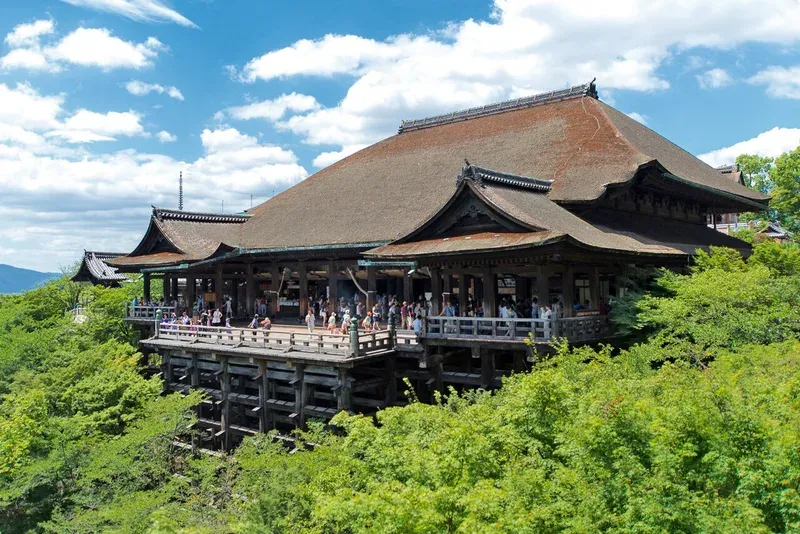
- Higashiyama — The wider district Gion belongs to; Kiyomizu-dera and the Philosopher's Path.
- Central Kyoto — A short ride west; Nijo Castle, the Imperial Palace and Nishiki Market.
- Fushimi — South Kyoto; the torii-lined Fushimi Inari shrine and sake breweries.
- Arashiyama — Western Kyoto; bamboo groves and riverside scenery.
- Uji — About 20–30 minutes south; a historic tea town with World Heritage temples.
- Nara — Roughly 45 minutes away; Japan's first permanent capital, with Todai-ji and tame deer.
Nearby in Kyoto
More places to explore around Gion.
Guide content as of May 2026. Portions adapted from Wikivoyage, CC BY-SA 4.0.

Contact Us
Get in touch with us.
Get in touch
Contact Us
Tell us where you'd like to go and how you like to travel. A real Tripcuro planner — not a bot — will craft an itinerary around you.
- Personalised, hassle-free planning end-to-end
- Transparent pricing, no hidden costs
- 24/7 support for complete peace of mind