
Kiyomizu-dera
Kyoto, Japan
Why visit Kiyomizu-dera?
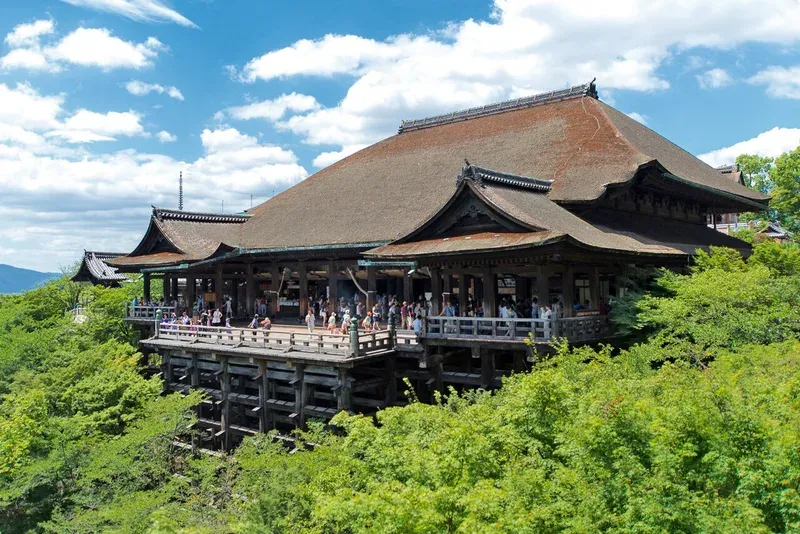
Kiyomizu-dera (清水寺, the "Pure Water Temple") is one of Kyoto's most celebrated temples, set on a wooded hillside in the eastern Higashiyama district. Founded in 778, before Kyoto itself became the capital, it is dedicated to the bodhisattva Kannon and takes its name from the Otowa waterfall that springs from the hillside within its grounds. The temple has long been a destination for pilgrims, and its great wooden Main Hall — built without a single nail and supported by a forest of tall pillars — projects out over the slope on a vast veranda that has become the temple's defining image. From this stage there are sweeping views over the cherry and maple trees below and across to the city of Kyoto.
The temple is part of the UNESCO World Heritage listing of the Historic Monuments of Ancient Kyoto. It is not a single building but a hillside complex of halls, gates, a striking three-storey pagoda and the small Jishu Shrine, all reached by the steep, shop-lined approach roads of Sannenzaka and Ninenzaka. The Main Hall underwent a major multi-year restoration of its roof and structure, completed in recent years, so visitors today see the great stage refreshed.
Kiyomizu-dera is spectacular in cherry-blossom season and during the autumn foliage, when special evening illuminations transform the hillside. These are also the busiest times; early morning offers the calmest visit. Summer is hot and humid, winter cold but usually snow-free. Comfortable shoes are essential for the steep approach and the temple's own slopes.
Planning Kiyomizu-dera? Tell us your dates and we’ll tailor the trip.
Ask on WhatsAppHow do you get there?
By Train
There is no station directly at the temple. The nearest rail access is the Keihan Main Line's Kiyomizu-Gojo Station by the Kamo River, from which it is roughly a 20–25 minute uphill walk through the historic streets. Most visitors reach the temple by city bus from Kyoto Station.
Kiyomizu-dera is reached from central Kyoto by city bus to the Kiyomizu-michi or Goj-zaka stops, followed by an uphill walk along Matsubara-dori, or by Keihan train and a longer climb through Sannenzaka and Ninenzaka. The temple grounds and the approach streets are explored entirely on foot; the slopes are steep and the stone paving uneven, so good footwear matters. City-bus fares are flat-rate within the central zone, and IC cards (ICOCA, Suica) are accepted. Taxis can drop visitors near the foot of the approach. There are no particular scams; the main practical issue is the dense crowding on the approach streets during peak seasons.
What are the things to do?
- The Main Hall and stage (Hondo) — The temple's centrepiece: a great wooden hall whose wide veranda juts out over the hillside on tall pillars, offering panoramic views over Kyoto. It enshrines an image of Kannon. Recently restored.
- Otowa Waterfall — The spring that gave the temple its name; three channels of water fall into a pool, and visitors drink from one using long-handled cups, each stream said to grant a different blessing.
- Three-Storey Pagoda (Sanjunoto) — A vivid vermilion pagoda near the entrance, one of the largest of its kind in Japan and a striking sight against the hillside.
- Jishu Shrine — A small shrine within the grounds dedicated to matchmaking and love, known for a pair of "love stones."
- Koyasu Pagoda and lower grounds — A smaller pagoda set among the trees below the Main Hall, from where the classic photograph of the stage is taken.
- Niomon Gate and Sai-mon Gate — The grand entrance gates that begin the temple complex.
The essential thing to do is to walk the full temple circuit: cross the great stage for the views, descend to the lower grounds for the classic photograph looking back up at the hall, and drink from the Otowa Waterfall. Visiting at opening time, or during a seasonal evening illumination in spring or autumn, gives the most memorable experience. The approach is part of the visit — stroll the preserved slopes of Sannenzaka and Ninenzaka, browsing the craft and sweet shops. Many visitors rent a kimono to wear among the historic streets, and Kiyomizu-dera links naturally into a longer walk through Higashiyama toward Gion.
Planning Kiyomizu-dera? Want these on a customised itinerary?
Ask on WhatsAppWhere to eat?
The streets leading up to the temple are lined with places to eat, mostly casual: noodle shops, snack stalls and tea houses serving matcha sweets, soft-serve, yatsuhashi (Kyoto's cinnamon-and-rice sweet), grilled rice crackers and seasonal treats. Sit-down restaurants serving Kyoto cuisine, including yudofu (simmered tofu), are found nearby in Higashiyama. Vegetarians are well served by tofu dishes and matcha sweets; shojin-ryori is available at some temple-linked venues.
- Budget — Snack stalls and tea houses along Sannenzaka and Ninenzaka.
- Mid-range — Kyoto-cuisine and yudofu restaurants in the surrounding Higashiyama streets.
- Upscale — Refined kaiseki dining is available a short walk away in Gion and elsewhere in Higashiyama; reservations recommended.
Where to drink?
Tea houses along the approach serve matcha and sencha green tea with seasonal sweets, and matcha soft-serve is everywhere. The local Otowa spring water gave the temple its name, and various stalls offer refreshments along the climb. Cafés in the surrounding district serve coffee and light drinks. Tap water throughout Kyoto is safe to drink.
Planning Kiyomizu-dera? We’ll book the stays and dining for you.
Ask on WhatsAppWhere to stay?
Kiyomizu-dera is a sightseeing stop rather than a base; most visitors stay in central or eastern Kyoto, where accommodation is plentiful across all tiers.
What should you buy?
The approach streets — Matsubara-dori, Sannenzaka and Ninenzaka — are among the best places in Kyoto to shop for traditional goods. Look for Kiyomizu-yaki and Kyo-yaki pottery (the local ceramic style takes its name from this very hill), fans, incense, hair ornaments, washi paper and an abundance of Kyoto sweets sold by long-established confectioners. Prices are fixed and bargaining is not practised.
Where to go next?
- Higashiyama — The wider district around the temple; the Philosopher's Path and Ginkaku-ji.
- Gion — A short walk down through the historic streets; Kyoto's famous geisha quarter.
- Central Kyoto — A bus ride away; Nijo Castle, the Imperial Palace and Nishiki Market.
- Fushimi — South Kyoto; the torii-lined Fushimi Inari shrine and sake breweries.
- Arashiyama — Western Kyoto; bamboo groves and riverside scenery.
- Nara — Roughly 45 minutes away; Japan's first permanent capital, with Todai-ji and tame deer.
Nearby in Kyoto
More places to explore around Kiyomizu-dera.
Guide content as of May 2026. Portions adapted from Wikivoyage, CC BY-SA 4.0.

Contact Us
Get in touch with us.
Get in touch
Contact Us
Tell us where you'd like to go and how you like to travel. A real Tripcuro planner — not a bot — will craft an itinerary around you.
- Personalised, hassle-free planning end-to-end
- Transparent pricing, no hidden costs
- 24/7 support for complete peace of mind