
Kurama
Kyoto, Japan
Why visit Kurama?
Kurama (鞍馬) is a small mountain village in the forested hills north of central Kyoto, within Kyoto Prefecture. Despite being only a short train ride from the city, it feels a world apart: a quiet settlement of cedar slopes, mountain streams and one celebrated temple, Kurama-dera. The village is steeped in legend. It is said to be where the young warrior Minamoto no Yoshitsune was trained in swordsmanship by the tengu, the long-nosed mountain spirits of Japanese folklore, and the tengu remains the village's emblem, its image appearing around the station and shops.
Kurama is best known for two things. The first is Kurama-dera, a temple set high on the mountainside, reached by a steep wooded path or a small cable car, with a mystical atmosphere and good views. The second is the onsen — Kurama is a hot-spring village, and a soak in its baths, particularly the open-air bath looking out over the forest, is a classic reason to come. A walking trail leads over the mountain from Kurama-dera to the neighbouring village of Kibune, famous for its riverside dining, making the two an ideal pair for a day out from Kyoto.
The village is rewarding year-round: fresh green in spring, cool forest air in summer, brilliant maple colour in autumn, and a quiet, sometimes snowy stillness in winter. Kurama also hosts the dramatic Kurama Fire Festival in October. As a small mountain village, services are limited, so plan transport timings with care.
Planning Kurama? Tell us your dates and we’ll tailor the trip.
Ask on WhatsAppHow do you get there?
By Train
Kurama is the terminus of the Eizan Electric Railway's Kurama Line, reached from Demachiyanagi Station in northeastern Kyoto in roughly 30 minutes. Demachiyanagi connects with the Keihan Main Line, making the village an easy trip from central Kyoto. The ride itself is scenic, passing through forest — especially lovely in the autumn "maple tunnel" stretch.
By Car / Road
Kurama can be reached by road on mountain routes north of Kyoto, but parking in the small village is very limited, and the Eizan Railway is the simplest and most pleasant way to arrive.
Kurama is a small village, and everything is covered on foot. From Kurama Station, the approach to Kurama-dera leads up through the village; from the temple's lower precinct, visitors can either climb the steep wooded path or take the short cable car partway up the mountain. The signature walk is the trail that continues over the top from Kurama-dera, descending through the forest to Kibune on the other side — a hike of roughly an hour through atmospheric cedar woods. There is no metro, bus network or ride-hailing within the village; comfortable walking shoes are essential. There are no scams to watch for.
What are the things to do?
- Kurama-dera — The village's great temple, founded over a thousand years ago, set on the mountainside amid towering cedars. The Main Hall sits on a terrace with views over the surrounding hills, and the precinct has a powerful, mystical atmosphere. Reached by a steep walking path or a short cable car.
- Yuki Shrine — A Shinto shrine on the slope below Kurama-dera, on the path up from the village; the focal point of the Kurama Fire Festival.
- The mountain trail to Kibune — The forested walking route over the ridge from Kurama-dera, passing roots-and-rock paths and small halls, descending to the riverside village of Kibune.
- The "maple tunnel" — A stretch of the Eizan Railway line, just before Kurama, where the trees arch over the track and are spectacular in autumn.
The two defining activities in Kurama are the temple hike and the hot springs. Walk up to Kurama-dera and continue over the mountain to Kibune, a classic Kyoto-area day hike through beautiful cedar forest, ideally taken in fresh spring green or autumn colour. Afterwards — or instead — relax in the village onsen, where an open-air bath looks out over the wooded hillside; soaking here after the hike is a quintessential Kurama experience. Visiting in early October allows you to witness the Kurama Fire Festival, when villagers carry blazing torches through the streets in one of Kyoto's most striking festivals.
Planning Kurama? Want these on a customised itinerary?
Ask on WhatsAppWhere to eat?
Kurama's food is rustic mountain fare. Small restaurants and tea houses along the village street serve soba and udon noodles, simmered mountain-vegetable dishes and the local kurama-ni preserves. The neighbouring village of Kibune is renowned for kawadoko dining — restaurants set tables on platforms over the river in summer — and many visitors cross the mountain to eat there. Mountain-vegetable and tofu dishes suit vegetarians; choices in Kurama itself are limited, so check opening days.
- Budget — Noodle shops and casual tea houses along the village street.
- Mid-range / Upscale — Restaurants in nearby Kibune offer refined kaiseki-style mountain cuisine, especially the riverside kawadoko dining in summer.
Where to drink?
Tea houses in the village serve green tea and coffee, a welcome stop before or after the climb. The hot-spring complex has refreshment facilities. There is no significant nightlife in this quiet village. Tap water throughout Kurama is safe to drink, and carrying water is sensible for the mountain trail.
Planning Kurama? We’ll book the stays and dining for you.
Ask on WhatsAppWhere to stay?
Most visitors see Kurama as a day trip from Kyoto, but the village and nearby Kibune have some traditional accommodation.
What should you buy?
Kurama's shops are few and centre on the village's identity. Look for tengu-themed souvenirs, and the village is also known for kurama-ni, a style of preserved food made by simmering ingredients such as small fish or sansho pepper — a regional speciality sold by local shops. Temple amulets and charms are available at Kurama-dera. Prices are fixed and bargaining is not practised.
Where to go next?
- Kibune — Over the mountain, an hour's hike from Kurama-dera; a riverside village famous for summer kawadoko dining.
- Central Kyoto — About 30 minutes south by the Eizan Railway; Japan's cultural capital.
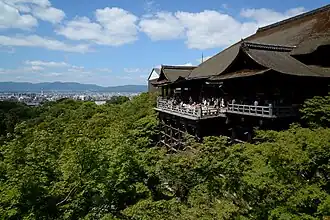
- Higashiyama and Gion — Eastern Kyoto; Kiyomizu-dera, the geisha quarter and the Philosopher's Path.
- Ohara — Northeast of Kyoto; a rural valley of tranquil temples and gardens.
- Mount Hiei (Hieizan) — East of Kyoto; the great Tendai monastery of Enryaku-ji and mountain views.
- Arashiyama — Western Kyoto; bamboo groves and riverside scenery.
Nearby in Kyoto
More places to explore around Kurama.
Guide content as of May 2026. Portions adapted from Wikivoyage, CC BY-SA 4.0.

Contact Us
Get in touch with us.
Get in touch
Contact Us
Tell us where you'd like to go and how you like to travel. A real Tripcuro planner — not a bot — will craft an itinerary around you.
- Personalised, hassle-free planning end-to-end
- Transparent pricing, no hidden costs
- 24/7 support for complete peace of mind