
Miyama
Kyoto, Japan
Why visit Miyama?
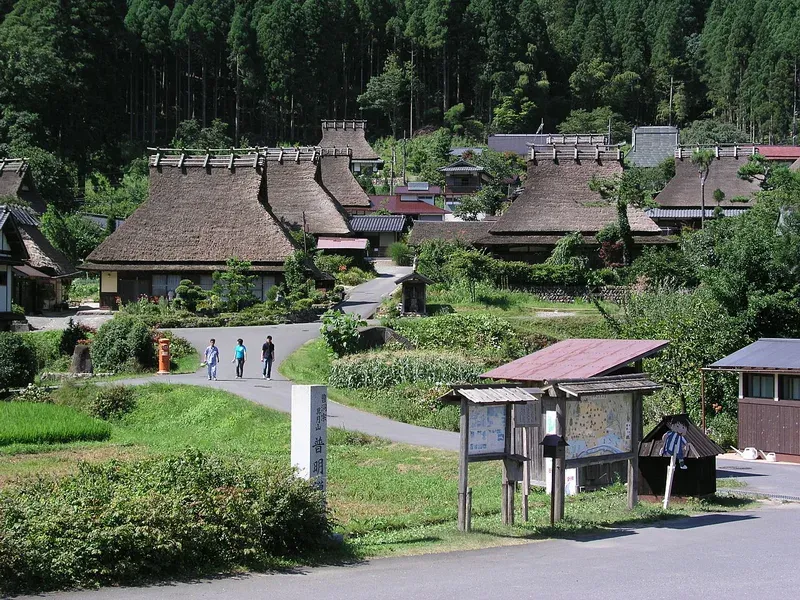
Miyama (美山) is a rural mountain area in the north of Kyoto Prefecture, part of the city of Nantan, set among forested hills, rice terraces and clear rivers. It is best known for Kayabuki no Sato — the "thatched village" of Kita — a hamlet where dozens of traditional farmhouses with steep, thickly thatched roofs (kayabuki) stand together in one of the best-preserved collections of rural architecture in Japan. The village is designated an Important Preservation District for Groups of Traditional Buildings, and walking among its thatched houses, with the mountains rising behind, offers a vivid picture of old country life.
Miyama is a counterpoint to the temples and crowds of Kyoto city: a place of farms, woodland and slow rural rhythms, sometimes called part of Kyoto's "country" or satoyama landscape. Beyond the thatched village, the area is scattered with small farming hamlets, shrines and walking routes, and the surrounding nature — rivers good for fishing, hills good for hiking — is as much the attraction as any single sight.
Each season transforms the area. Spring brings fresh green and cherry blossom, summer brings cool mountain air and lush rice paddies, autumn brings vivid foliage, and winter blankets the thatched roofs in snow — the snow-covered village, often lit up during a special evening event, is one of Miyama's most photographed scenes. As a remote rural destination, public transport is limited and infrequent, so careful planning is essential.
Planning Miyama? Tell us your dates and we’ll tailor the trip.
Ask on WhatsAppHow do you get there?
By Train
Miyama has no railway station. The usual rail-and-bus approach is to take a train to a gateway station on the JR Sagano (San-in) Line — such as Hiyoshi Station in Nantan — and then transfer to a local bus for the journey into the Miyama valleys.
By Car / Road
Driving is the most practical way to reach and explore Miyama, given the scattered hamlets and the sparse public transport. The area is reached on mountain roads from Kyoto and Nantan; the drive from central Kyoto takes roughly 1.5 to 2 hours through the hills.
Within the thatched village of Kayabuki no Sato, everything is covered easily on foot — the hamlet is small and walkable. The wider Miyama area, however, is spread across several valleys and hamlets, and a car is strongly recommended for moving between them; local buses exist but run infrequently. Cycling is pleasant on the quieter rural roads in fair weather. There are no metros, tuk-tuks or ride-hailing services in this rural area, and no scams to watch for — the chief practical issue is simply the limited transport, which means timing the buses carefully if you do not drive.
What are the things to do?
- Kayabuki no Sato (Kita thatched village) — Miyama's signature sight: a hamlet of traditional thatched-roof farmhouses set against the mountains, beautifully preserved and designated a national Important Preservation District. The houses are walked among; remember that many are still lived-in homes.
- Miyama Folk Museum — A traditional thatched farmhouse open as a museum within the village, showing the tools, rooms and daily life of a rural household.
- Thatched-roof sights — A small shrine and other buildings within and around the village, including a thatched-roof structure used in local life.
- The wider satoyama landscape — Rice terraces, rivers, woodland and outlying farming hamlets across the Miyama valleys, attractions in their own right.
The main thing to do in Miyama is to walk among the thatched farmhouses of Kayabuki no Sato, taking in the architecture, the village shrine and the surrounding mountain scenery, and to visit a thatched house opened as a museum to understand traditional rural life. Beyond the village, the area rewards cycling and walking through the rice terraces and hamlets, and the rivers are known for fishing. Miyama is also a place for rural craft and food experiences — some farmhouses and workshops offer hands-on activities. A highlight of the calendar is the winter thatched village light-up event, when the snow-covered roofs are illuminated in the evening, a celebrated seasonal spectacle.
Planning Miyama? Want these on a customised itinerary?
Ask on WhatsAppWhere to eat?
Miyama's food is hearty country cooking, built on local rice, mountain vegetables, river fish and farm ingredients. Small restaurants, farmhouse cafés and minshuku in and around the thatched village serve set meals of this rural fare, and soba is widely available. Mountain-vegetable and rice-based dishes suit vegetarians, though choices overall are limited and many places keep modest hours, so check ahead.
- Budget — Casual cafés and noodle shops in and near Kayabuki no Sato.
- Mid-range / Upscale — Farmhouse restaurants and minshuku dining rooms serve fuller multi-dish meals of local produce, often as part of a stay.
Where to drink?
Farmhouse cafés in the area serve green tea, coffee and light refreshments, often in atmospheric thatched buildings. Shops may stock locally brewed sake from the wider region. There is little nightlife in this quiet rural area. Tap water throughout Miyama is safe to drink, and the local river water is part of the area's appeal.
Planning Miyama? We’ll book the stays and dining for you.
Ask on WhatsAppWhere to stay?
Staying overnight in Miyama — particularly in a thatched-roof farmhouse minshuku — is a memorable experience and lets you see the village quiet of an early morning.
What should you buy?
Miyama's products reflect its rural character: local farm produce, preserved mountain foods, rice and handmade crafts. Shops in and around Kayabuki no Sato sell regional foodstuffs and souvenirs, and roadside stands may offer seasonal produce. Prices are fixed and bargaining is not practised.
Where to go next?
- Nantan — The wider city Miyama belongs to; rural Kyoto countryside and the Hiyoshi area.
- Kyoto — About 1.5–2 hours south; Japan's cultural capital, with countless temples and gardens.
- Kurama and Kibune — North of Kyoto city; mountain villages with a temple, hot springs and riverside dining.
- Ohara — Northeast of Kyoto; a tranquil valley of rural temples and gardens.
- Amanohashidate — Further north on the coast; a pine-covered sand bar, one of Japan's three most scenic views.
- Fukuchiyama — Northwest; a rail junction town with a castle.
Nearby in Kyoto
More places to explore around Miyama.


Guide content as of May 2026. Portions adapted from Wikivoyage, CC BY-SA 4.0.

Contact Us
Get in touch with us.
Get in touch
Contact Us
Tell us where you'd like to go and how you like to travel. A real Tripcuro planner — not a bot — will craft an itinerary around you.
- Personalised, hassle-free planning end-to-end
- Transparent pricing, no hidden costs
- 24/7 support for complete peace of mind