
Wakkanai
Hokkaido, Japan
Why visit Wakkanai?
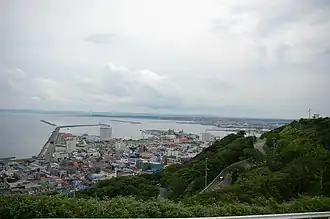
Wakkanai (稚内) is the northernmost city in Japan, a windswept port of about 34,000 people in the Sōya subdistrict of northern Hokkaido. It is best known as the gateway to Rishiri-Rebun-Sarobetsu National Park, Japan's northernmost national park, and to the offshore islands of Rishiri and Rebun.
The city began in the 17th century as a frontier trading post serving the indigenous Ainu, prospering as a strategic outpost in the far north. After Japan gained part of Sakhalin in the 1905 Russo-Japanese War, Wakkanai became the main transit point to the Karafuto prefecture established there, a role cemented when the Sōya railway reached the city in 1926. The loss of Sakhalin after World War II faded the town's fortunes, leaving it largely a Cold War military post. A ferry route to Sakhalin reopened in the 1990s, though it has been indefinitely suspended since 2019.
Wakkanai's climate is moderated by the sea: summers average around 20°C, though nights can be cool, and winters, while cold, rarely reach the -20°C of the inland or of Russia across the bay — but the fierce winds can make it feel like Siberia. Come in summer for the national park, the islands and the wildflowers; winter brings drift ice (ryūhyō) and very strong winds. The compact town is easily walked, with most sights within 10–15 minutes of each other. (A linguistic curiosity: "Wakkanai" sounds like wakannai, colloquial Japanese for "I don't know" — expect some good-natured ribbing.)
Planning Wakkanai? Tell us your dates and we’ll tailor the trip.
Ask on WhatsAppHow do you get there?
By Plane
Wakkanai Airport (WKJ) lies 10 km southeast of the city. It has regular flights from Sapporo and Tokyo-Haneda, with summer-only services from Nagoya and Kansai; all flights are operated by ANA. The airport is about 20 minutes from Wakkanai Station by bus.
By Train
The JR Sōya Main Line connects Wakkanai to Asahikawa. There are two stations within the city: Wakkanai (station code W80) and Minami-Wakkanai (W79) to the south. Service is limited — only about six arrivals and seven departures per day. Three round-trips are limited express services: the once-daily Soya runs directly to and from Sapporo (5 hours 10 minutes, ¥10,450), and the twice-daily Sarobetsu to and from Asahikawa (3 hours 45 minutes, ¥8,300, changing to a Lilac or Kamui at Asahikawa for Sapporo). There are no extra charges for these trains with the Japan Rail Pass or Hokkaido Rail Pass.
By Car / Road
Several Sōya Bus services run between Wakkanai and Sapporo daily — about 6 hours for ¥6,000, with advance reservation needed; one departure is an overnight red-eye. There is also a single daily round trip to Asahikawa. Buses are cheap and convenient in summer, but in winter, snowstorms frequently cause delays, suspensions or full highway closures.
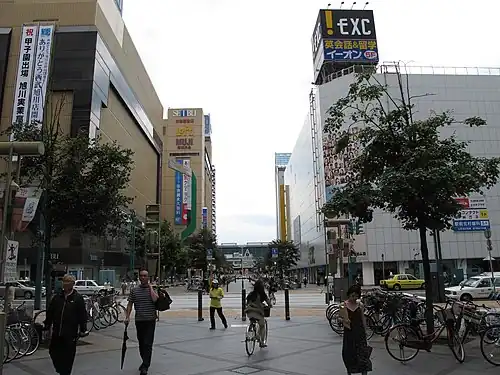
The compact town is easily covered on foot, with most sights within 10–15 minutes of each other. A Sōya Bus city service runs every 10–15 minutes. It is even possible to walk to Cape Noshappu — about 4 km, around 40–50 minutes. For sights further afield, such as Cape Sōya, there are only about four buses per day; be careful not to miss the last one, as the alternative is a 30-km walk back. Ferries to Rebun and Rishiri leave from the ferry terminal directly east of the train station, all operated by the Heartland Ferry Company. There are no autorickshaws or notable scams.
What are the things to do?
Wakkanai Park
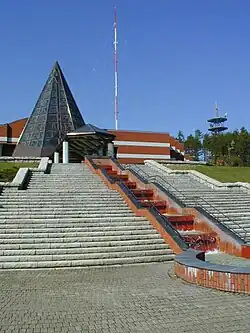
- Wakkanai Kōen (稚内公園) — A large hilltop park west of town with commanding views, over 4,000 wild cherry trees (in bloom mid-May), and an eclectic collection of monuments. The 70-m Motoe Hiraku Centennial Memorial Tower gives a 360° panorama of the cape, the Sarobetsu Plain, the Rishiri volcano and sometimes Sakhalin (09:00–17:00, until 21:00 Jul–Sep); the Northern Memorial Hall below holds documents on the area and Sakhalin. The poignant Statue of Nine Women commemorates telegraph workers on Sakhalin who took their own lives in 1945, and the Monument to Taro and Jiro honours two huskies that survived an Antarctic winter.
Cape Sōya
- Sōya Misaki (宗谷岬) — About 30 km northeast of Wakkanai, the northernmost point of mainland Japan, marked by the Northernmost Point Monument. Nearby stand a statue of Edo-period explorer Mamiya Rinzō, an old naval watchtower from the Russo-Japanese War, the Tower of Prayer (a memorial to those lost on Korean Air flight KE007 in 1983) and the Bell for World Peace.
Other attractions
Breakwater Dome (港北防波堤ドーム) — A striking 1930s arched breakwater, 427 m long and supported by 70 Roman-style pillars, near the North Wharf, 5 minutes from the station. Free; occasionally a summer market with BBQ and karaoke.
Bakkai Port Seal Observatory (抜海港) — Around 300 wintering seals make their home among the concrete boulders of this small fishing port. Open roughly Feb and Nov–Mar 09:00–16:00; reach it by local train to the Bakkai halt (W78), then a 15–20 minute walk.
Cape Noshappu — A coastal cape walkable from town, with a lighthouse and views.
Take the ferry to Rishiri and Rebun islands — The main reason to come this far north: Rishiri's near-perfect volcanic cone and Rebun's famous summer wildflowers.
Watch drift ice — In February or March, pack ice drifts in from the sea along the coast.
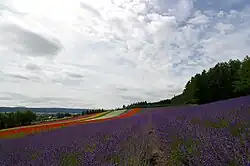
See wildflowers — In spring, the Meguma Wilderness Garden near the airport blooms with around 300 species; the national park is famed for its alpine flowers.
Visit Cape Sōya — Standing at the northern end of mainland Japan is a classic photo stop.
Planning Wakkanai? Want these on a customised itinerary?
Ask on WhatsAppWhere to eat?
As a northern fishing port, Wakkanai's food culture revolves around seafood — crab, sea urchin, scallops and locally caught fish — and the area is also known for dairy and beef.
Seafood dominates; vegetarian, halal and gluten-free travellers should check menus carefully.
Where to drink?
The ferry terminal and town centre have a scattering of cafes and bars, and Hokkaido craft beer and dairy-based drinks are widely available. Tap water is safe to drink.
Planning Wakkanai? We’ll book the stays and dining for you.
Ask on WhatsAppWhere to stay?
- Budget: Hostels and guesthouses near the station offer simple, low-cost rooms.
- Mid-range: Business hotels cluster near Wakkanai Station and the ferry terminal.
- Upscale: A small number of higher-end hotels serve the city.
What should you buy?
Wakkanai's souvenirs lean toward the sea — local seafood and crab products — and "northernmost point" memorabilia from Cape Sōya. The town also has shops in the ferry terminal building. Prices are fixed; bargaining is not practised.
Where to go next?
- Rishiri Island (by Heartland Ferry from Wakkanai) — A volcanic island dominated by the conical Mt. Rishiri.
- Rebun Island (by Heartland Ferry from Wakkanai) — Famed for its summer alpine wildflowers and coastal hiking.
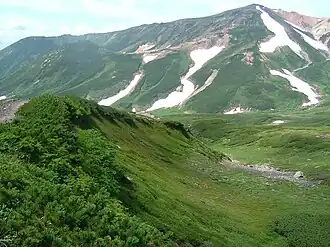
- Sarobetsu Plain (south of the city) — A vast wetland of the national park, rich in flowers and birdlife.
- Asahikawa (about 3 hours 45 minutes by limited express) — Hokkaido's second city.
- Sapporo (about 5 hours 10 minutes by the Soya limited express) — Hokkaido's capital.
Nearby in Hokkaido
More places to explore around Wakkanai.
Guide content as of May 2026. Portions adapted from Wikivoyage, CC BY-SA 4.0.

Contact Us
Get in touch with us.
Get in touch
Contact Us
Tell us where you'd like to go and how you like to travel. A real Tripcuro planner — not a bot — will craft an itinerary around you.
- Personalised, hassle-free planning end-to-end
- Transparent pricing, no hidden costs
- 24/7 support for complete peace of mind