
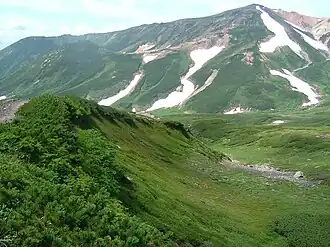
Daisetsuzan National Park
Hokkaido, Japan
Why visit Daisetsuzan National Park?
Daisetsuzan National Park (大雪山国立公園, also pronounced Taisetsuzan) occupies the mountainous heart of Hokkaido. Formed by a great number of volcanoes that lie under snow for much of the year, it is a true land of ice and fire — and at 2,267.64 km², the largest national park in Japan. The name means "Great Snowy Mountains", an apt description of peaks that include 15 summits over 2,000 metres and some of the most rugged hiking in the country. Its Ainu name, kamui-mintara, translates as "playground of the gods".
The park is often confused with the "Daisetsuzan Mountains" — actually only the northernmost of three volcanic groups within it, though the most famous and most visited. The southwestern group is the Tokachi Mountains and the southeastern group the Shikaribetsu Mountains. The park rewards many styles of traveller: multi-day mountain traverses, gentler day hikes, leisurely walks, flower- and autumn-foliage viewing, and skiing.
The climate is severe. The mean annual temperature recorded at the top of Mt. Kurodake is around -2.3°C, with snow lying until early May and patches surviving year-round. October to June is a harsh season of cold and snowfall. Summer (July–August) is the top hiking season and the time for alpine flowers; the second half of September brings peak autumn colour in the high mountains, the first half of October at lower elevations. There is no park entry fee, and free parking is available.
Planning Daisetsuzan National Park? Tell us your dates and we’ll tailor the trip.
Ask on WhatsAppHow do you get there?
By Plane
The nearest airport is Asahikawa Airport (AKJ), the usual air gateway for the western side of the park, with onward bus connections via Asahikawa.
By Train
There are no train lines within the park. The nearest stations are at Asahikawa (west), Furano (south) and Rubeshibe (east).
By Car / Road
A car is generally the best way to visit if you plan multiple activities, as many attractions — such as Ginsendai — are inaccessible by public transport, or served by buses only in peak season. Note that roads circle the park rather than crossing it, so driving distances between places that look close on a map (such as Asahidake and Kurodake) can be long.
By bus, the simplest access is the 09:10 bus from in front of Asahikawa Station to the Asahidake Ropeway (¥1,300) or to Sounkyo Onsen. There is also a bus from Kami-Furano Station to the Tokachi-dake and Furano-dake trailheads. Some onsen offer a bus discount or even a shuttle from Asahikawa Station — enquire before travelling.
There are basically two effective ways to move around the park: by car or by hiking. A few buses serve certain attractions during peak periods, and some onsen hotels provide transfers. If you do not plan to drive or undertake multi-day hikes, the best base is Sounkyo, which has direct access to Kuro-dake, convenience stores and a good range of walking trails.
What are the things to do?
Daisetsuzan Mountains (northern group)
A ring of volcanoes surrounds the vast Ohachi caldera; a classic multi-day hike climbs one peak, circles the caldera and descends via another.
- Asahi-dake (旭岳) — At 2,290 m, the tallest mountain in Hokkaido. Reach it by bus from Asahikawa, then the ropeway (¥2,000 return); the upper station leads to a fumarole walk and a longer hike (1.5–3 hours each way) to the summit.
- Kuro-dake (黒岳) — The most accessible of the group, with the ropeway just inside Sounkyo; a ropeway-and-chairlift combination leaves you 1–2 hours from the top. Easy walking trails and observation platforms suit those not climbing.
- Daisetsu Kogen Onsen (大雪高原温泉) — A nature area with an onsen hotel and two trails (a 5-hour pond circuit and the climb to Midori-dake), extremely popular for autumn colour from late September; access then is by shuttle bus from a Taisetsu Lake parking lot.
- Midori-dake (緑岳) — A 2,019-m peak with a 2–4 hour climb from Daisetsu Kogen Onsen, prized for alpine flowers in July–August and mid-September colour.
- Ginsendai (銀泉台) — A renowned autumn-colour viewpoint, with a roughly 3-hour hike to the 2,078-m Aka-dake.
Tokachi Mountains (southwestern group)
- Tokachi-dake (十勝岳) and Furano-dake (富良野岳) — A long line of volcanoes explored by day hikes from Biei or Furano, or by multi-day traverse.
Shikaribetsu Mountains (southeastern group) — The least visited group, practically accessible only by multi-day hiking, though viewable from the Mikuni Pass; Lake Shikaribetsu at the southern end is a popular attraction close to Obihiro.
- Hiking — Summer is the top hiking season for alpine flowers and multi-day routes; day hikes are also extremely popular in the autumn colour seasons, though the mountain-top weather can be unpredictable.
- Autumn foliage viewing — The second half of September is best for the high mountains, the first half of October for the lower slopes.
- Skiing and snowboarding — Furano on the southern side is a major ski resort; Asahidake and Sounkyo Onsen also have ski slopes, with Asahidake especially popular for snowboarding.
- Snow-shoe walking — Guided tours descend from the top of the Asahidake ropeway on snow shoes, crossing deep powder snow; enquire at the Asahikawa visitor centre.
- Onsen — Soaking in the park's many hot springs is a reward in itself after a day on the trails.
Planning Daisetsuzan National Park? Want these on a customised itinerary?
Ask on WhatsAppWhere to eat?
Small eateries and snack bars operate at the top of the Asahidake and Kurodake ropeways. Sounkyo has a Seicomart and a 7-Eleven for bento boxes, plus a few restaurants, mostly curry or ramen shops. Most hotels inside the park provide breakfast and dinner.
There is no food for sale on the hiking trails, so carry your own, keep your trash until you return to a town, and avoid eating in forested areas so as not to attract bears.
Where to drink?
Refreshments inside the park are limited to ropeway eateries, Sounkyo's convenience stores and onsen hotels. Carry plenty of water on hikes. Tap water in the towns and lodgings is safe to drink.
Planning Daisetsuzan National Park? We’ll book the stays and dining for you.
Ask on WhatsAppWhere to stay?
The main bases inside the park are Sounkyo Onsen at the foot of Kuro-dake and Asahidake Onsen at the foot of Asahi-dake. Sounkyo is generally preferable for longer stays, with easier access to more of the park and a much wider range of accommodation, restaurants and supply stores. Asahidake Onsen hotels must be booked far in advance for the autumn-colour peak. Other scattered onsen hotels include Aizankei, Daisetsu Kogen, Tenninkyo, Tokachidake and Tomarauchi.
- Budget: Hakuginsō, at the Tokachi-dake trailhead in Kamifurano, has dormitory bunk rooms and Japanese-style private rooms, plus onsen, outdoor baths and a shared kitchen; from around ¥2,600–2,750 per night. Camping is available in summer.
- Mid-range / upscale: Onsen hotels and ryokan in Sounkyo and Asahidake Onsen offer comfortable hot spring stays.
Budget travellers, or those who cannot find park lodging in peak season, can base themselves outside the park — Asahikawa (about 1 hour by car from Asahidake) for the western mountains, and Furano, Kamifurano or Biei for the Tokachi Mountains.
What should you buy?
Shopping options inside the park are minimal — Sounkyo has convenience stores and a few supply shops, and onsen hotels sell basic souvenirs. Stock up on food and supplies before heading to the trails, as nothing is sold along the hiking paths.
Where to go next?
- Asahikawa (about 1 hour from Asahidake) — Hokkaido's second city and the park's main gateway.
- Sounkyo Onsen — The hot spring village at the base of Kuro-dake, with gorges and waterfalls nearby.
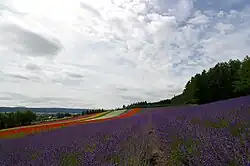
- Furano (south of the park) — Lavender fields, vineyards and a major ski resort.
- Biei — Famous patchwork hills and the Blue Pond.
- Obihiro — Tokachi-region city near Lake Shikaribetsu.
- Sapporo (about 1 hour 30 minutes from Asahikawa) — Hokkaido's capital.
Nearby in Hokkaido
More places to explore around Daisetsuzan National Park.
Guide content as of May 2026. Portions adapted from Wikivoyage, CC BY-SA 4.0.

Contact Us
Get in touch with us.
Get in touch
Contact Us
Tell us where you'd like to go and how you like to travel. A real Tripcuro planner — not a bot — will craft an itinerary around you.
- Personalised, hassle-free planning end-to-end
- Transparent pricing, no hidden costs
- 24/7 support for complete peace of mind