
Sestri Levante
Liguria, Italy
Why visit Sestri Levante?
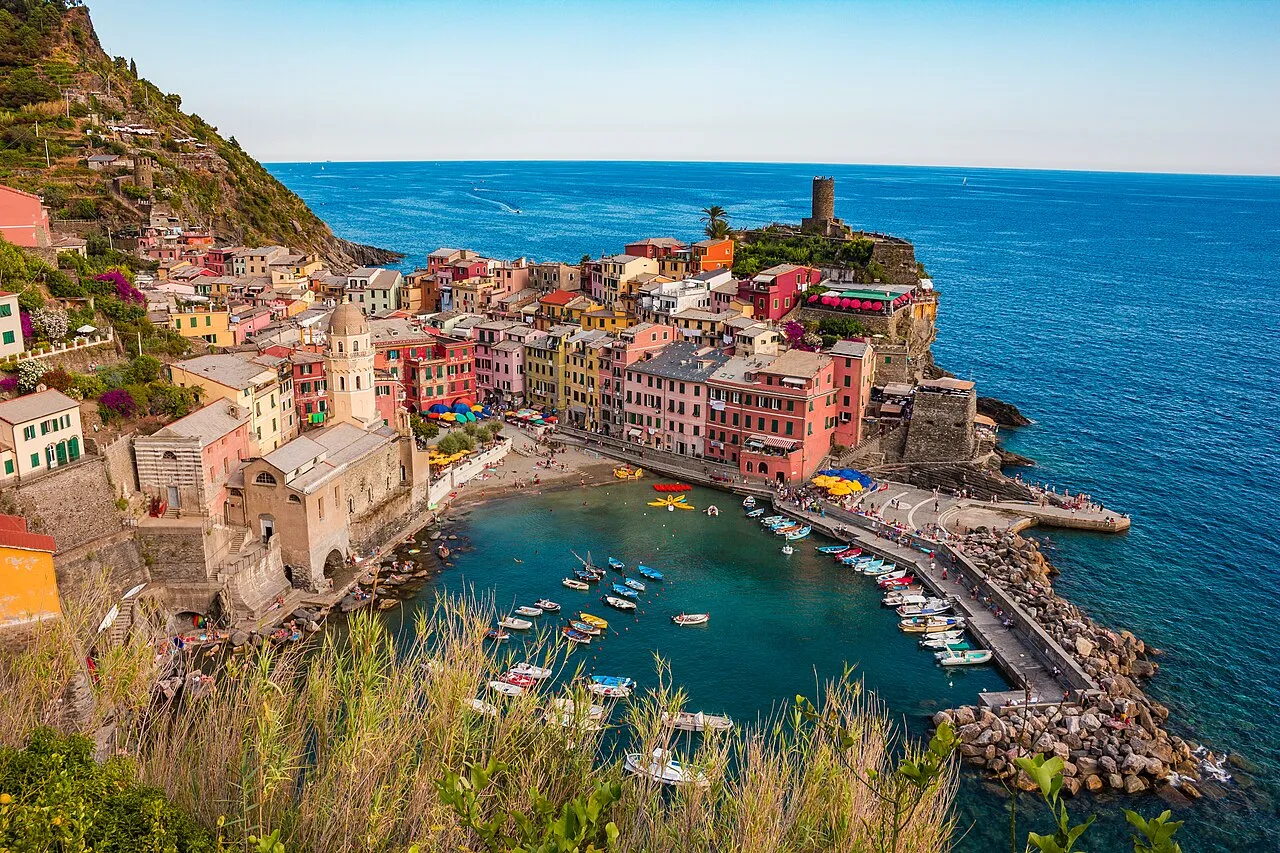
Sestri Levante is a coastal town of roughly 18,000 inhabitants on the Italian Riviera, tucked between the more famous resort towns of Portofino and the Cinque Terre in Liguria. The town straddles a narrow peninsula that juts into the Ligurian Sea, dividing the shoreline into two celebrated bays: the Baia del Silenzio (Bay of Silence) on the east side, a crescent of pastel-coloured houses and fishing boats sheltered beneath the old town, and the Baia delle Favole (Bay of Fables) on the west, a longer sandy beach named in honour of Hans Christian Andersen, who once visited. That literary connection lives on in the annual Premio Andersen, a prestigious Italian children's literature prize awarded each June in Sestri Levante. The town's atmosphere is noticeably more relaxed and authentically Italian than its flashier Ligurian neighbours — a place where locals still gather for the evening passeggiata along the waterfront promenade that links the two bays.
The historic centre sits on the peninsula itself, a maze of narrow caruggi (alleyways) climbing between slate-fronted palazzi, small piazzas, and Romanesque churches. The main pedestrian artery, Via XXV Aprile, runs the length of the peninsula and is lined with gelaterie, boutiques, and cafés. The town expanded onto the flatter mainland to the north in the 19th and 20th centuries, and the area around the train station and Corso Colombo is more modern and less scenic but convenient for transit and everyday shopping.
The climate is classic Ligurian Mediterranean: mild and damp in winter (rarely below 5 °C), warm and sunny from late spring through early autumn, and occasionally hit by heavy rain and rough seas in autumn when Atlantic storms sweep in. Summer highs hover around 27–30 °C with pleasant sea breezes, while the surrounding hills shelter the town from cold northerly winds. July and August are the hottest and busiest months; late September and early October offer warm seas with far fewer crowds.
Planning Sestri Levante? Tell us your dates and we’ll tailor the trip.
Ask on WhatsAppHow do you get there?
By Plane
The nearest airport is Genoa Cristoforo Colombo (IATA: GOA), approximately 50 km west along the A12 motorway. It is a small airport with direct flights from London, Munich, Madrid, and other Western European cities plus frequent domestic connections to Rome Fiumicino, Naples, and Bari. From the airport, take the Volabus shuttle to Genoa Brignole or Genoa Principe train stations (about 30 minutes, €6) and then a regional train to Sestri Levante (roughly 50 minutes). A taxi from Genoa airport to Sestri Levante costs around €100–130. Alternatively, Pisa Galileo Galilei (PSA), about 110 km southeast, has a wider range of low-cost carriers; from Pisa Centrale station a direct regional train reaches Sestri Levante in about 1 hour 40 minutes.
By Train
Sestri Levante station (Piazza Nuova Stazione 7) sits just north of the historic centre, a 5-minute walk to Via XXV Aprile. It is on the Genoa–La Spezia–Pisa main line, served by Trenitalia regional trains (Regionale and Regionale Veloce) roughly every 30 minutes. Journey times: Genoa Brignole 50–60 min (€5–7), La Spezia Centrale 40–50 min (€5–6), Milan Centrale 2–2.5 hr by InterCity (€15–25) or roughly 3 hr by Regionale (€10–12). Some Intercity and Frecciabianca services also stop here. Book Intercity/Freccia tickets on trenitalia.com for the best fares; regional tickets are fixed-price and can be bought at the station or via the Trenitalia app (validate before boarding).
By Car / Road
Sestri Levante is on the SS1 Via Aurelia coastal road and has an exit on the A12 Genoa–Livorno motorway (toll road). Driving distances: Genoa 55 km, about 1 hour (traffic can be heavy on the A12 and through Rapallo); La Spezia 50 km, about 50 minutes; Milan 180 km, about 2 hours via the A7/A12. Parking in the historic centre is extremely limited — use the pay car parks near the station or along the lungomare (€1–1.50/hr). Some hotels offer private parking. Long-distance buses run by FlixBus connect Sestri Levante with Milan (3 hr), Florence (3 hr), and Rome (5 hr), stopping at Piazza Nuova Stazione.
Sestri Levante is highly walkable: the entire peninsula, both bays, the train station, and most restaurants and hotels are within a 15-minute walk of each other. The old town's caruggi are pedestrian-only. For reaching neighbouring towns along the Tigullio gulf — Chiavari, Lavagna, Zoagli, Rapallo, Santa Margherita Ligure, and Portofino — frequent Trenitalia regional trains run every 15–30 minutes (€2–4, 5–20 min depending on distance). AMT buses serve local routes to hillside villages and beaches. Taxis are available at the station rank; expect €8–10 for a short hop within town. Ride-hailing apps like Uber have limited presence; the Free Now app works better in Liguria for booking licensed taxis. Renting a car is not necessary for the town itself but useful for exploring inland Ligurian villages.
What are the things to do?
Baia del Silenzio (Bay of Silence) — The iconic crescent bay on the east side of the peninsula, framed by pastel fishermen's houses, small boats drawn up on the sand, and the rocky promontory. One of the most photogenic spots on the Italian Riviera. Free access year-round; the beach is small and fills up quickly in summer (arrive before 9:00).
Baia delle Favole (Bay of Fables) — The larger, west-facing bay with a long sandy beach and a broad promenade. Named after Hans Christian Andersen. The beach is partly free (spiaggia libera) and partly managed by stabilimenti balneari (beach clubs, €15–25/day for a sunbed and umbrella in peak season).
Chiesa di San Nicolò dell'Isola (Via Penisola) — A Romanesque church dating to around 1151, perched at the tip of the peninsula. Simple stone interior with medieval frescoes. Open daily; free entry.
Convento dei Cappuccini / Chiesa dell'Immacolata (Via Cappuccini) — A 17th-century Capuchin convent and church with an exceptional panoramic terrace overlooking the Baia del Silenzio. The convent cloister is peaceful and free to visit; check posted hours as it closes midday.
Galleria Rizzi (Via Cappuccini 8, ☎ +39 0185 41300) — A private museum in a villa above the Bay of Silence housing a valuable collection of Ligurian (Genovese school) paintings from the 15th to 18th century. Open by appointment or during special exhibitions; admission around €5–8.
Palazzo Negretto Cambiaso & Palazzo Comunale — Stately historic palazzi along the peninsula, notable for their ornate slate doorways and Renaissance facades. The Palazzo Comunale (town hall) sometimes hosts art exhibitions. Exterior viewing is always possible.
Via XXV Aprile — The main pedestrian street running the length of the peninsula, lined with colourful buildings, shops, cafés, and gelaterie. Lively in the evenings, especially on summer weekends.
Walk the peninsula loop — A gentle 30-minute circuit from Baia delle Favole, up Via XXV Aprile, around the tip past San Nicolò church, and down to the Baia del Silenzio. Best done in the late afternoon when the light gilds the colourful facades.
Beach days — Swim and sunbathe on either bay. Baia delle Favole has the sandier, more family-friendly beach with facilities; Baia del Silenzio is smaller and more atmospheric but pebbly in parts.
Day trip to Portofino and Santa Margherita Ligure — Take the train to Santa Margherita Ligure (15 min) and walk or bus to Portofino (about 45 min on foot or 15 min by bus/boat). A classic Ligurian excursion.
Day trip to the Cinque Terre — Five cliffside villages about 30 km south, reachable by train in 20–30 minutes. Hike the coastal trails between villages (the Monterosso–Vernazza segment is the most popular) or explore by boat in summer.
Kayaking and paddleboarding — Rent kayaks or stand-up paddleboards from operators on Baia delle Favole (seasonal, roughly €10–15/hr) to explore the coastline and sea caves.
Hike the hills — Trails lead up from the town into the Ligurian hinterland through olive groves and chestnut forests. The path to Santuario di Montallegro above Rapallo (reachable via Zoagli) is a rewarding full-day hike.
Festa di San Nicolò (around 6 December) — The town's patron saint festival with a religious procession, fireworks over the bay, and stalls selling local food.
Planning Sestri Levante? Want these on a customised itinerary?
Ask on WhatsAppWhere to eat?
Ligurian cuisine is simple and ingredient-driven: fresh seafood, fragrant basil pesto, focaccia, farinata (chickpea flatbread), and trofie or trenette pasta. Sestri Levante's waterfront and old-town restaurants lean heavily on the day's catch. Budget around €12–18 for a primo, €14–20 for a secondo. A full meal with wine runs €30–50 per person at mid-range spots.
Osteria Gioitta (Via Nazionale 377, ☎ +39 0185 022860) — A small, romantic restaurant serving Ligurian and international dishes with an emphasis on fresh vegetables, meat, and homemade desserts. Open W–M 12:00–15:00, 19:30–22:00; closed Tu. Reservations recommended. Mains €14–22.
Ristorante La Cambusa (Via XXV Aprile) — Seafood-focused trattoria in the pedestrian old town. Try the mixed fried seafood platter (fritto misto) or spaghetti with clams and bottarga. Mid-range pricing; mains €12–20.
Bar Pasticceria Ferraro (Corso Colombo) — Classic Italian pasticceria for breakfast (cornetto and cappuccino, €3–4) and afternoon pastries. Good selection of local focaccia di Recco (thin, cheese-filled focaccia).
Focacceria Gennaro — A no-frills takeaway near the station for slices of focaccia col formaggio and farinata, the quintessential Ligurian street food. Under €5 for a filling snack.
Ristorante Nettuno (lungomare, Baia delle Favole) — Waterfront dining with sea views and a menu of grilled fish, seafood risotto, and Ligurian classics. Higher end; mains €18–28.
Vegetarian options are generally good in Ligurian cuisine — pesto dishes, vegetable tarts (torta pasqualina), and chickpea-based farinata are all naturally meat-free. Vegan and gluten-free options are less common but increasingly offered in tourist-facing restaurants; ask in advance.
Where to drink?
Liguria produces crisp, light white wines — look for Pigato, Vermentino, and Rossese from local vineyards, available by the glass (€4–6) or bottle (€12–20) in restaurants. The classic Ligurian aperitivo is a glass of Sciacchetrà, a rare sweet wine from the Cinque Terre, though it is pricey (€8–12 for a small glass). For a casual drink, the bars along Via XXV Aprile and the lungomare serve Spritz Aperol (€5–7), local craft beers, and freshly squeezed citrus juices.
Water safety: Tap water in Sestri Levante is safe to drink. Public fountains in the old town dispense potable water. Still or sparkling bottled water is cheap (€1–2 at restaurants).
Caffè del Porto (Baia del Silenzio waterfront) — Popular café-bar right on the Bay of Silence, ideal for a morning espresso or evening aperitivo with a view of the colourful houses reflecting in the water.
Gelateria Margherita (Via XXV Aprile) — Well-regarded gelateria with seasonal flavours using local ingredients (basil, lemon, chestnut).
Planning Sestri Levante? We’ll book the stays and dining for you.
Ask on WhatsAppWhere to stay?
Budget:
Albergo Minerva (Via Costantino Maccari) — Simple, clean family-run hotel near the train station with basic rooms. Doubles from €60–80/night including breakfast.
Hostel Sestri Levante — Seasonal hostel accommodation; look for current listings on booking platforms. Dorm beds from €25–35/night in peak season.
Mid-range:
Locanda del Borgo (Via Aurelia 249, ☎ +39 0185 485229) — Charming guesthouse on the main coastal road with well-appointed rooms and a garden. Doubles from €90–130/night.
Hotel La Grotta (Corso Colombo) — Comfortable hotel a short walk from both the station and the old town. Doubles from €80–120/night in peak season.
Upscale:
Hotel Helvetia (Via Cappuccini 43, ☎ +39 0185 41175) — Elegant hillside hotel above the Bay of Silence with panoramic terraces, lush gardens, and refined rooms. Doubles from €150–250/night.
Hotel Miramare (Via Vincenzo Cappellini 9, ☎ +39 0185 480855, [email protected]) — Waterfront hotel on the Baia delle Favole with sea-view rooms and a private beach area. Doubles from €160–280/night in summer.
What should you buy?
Sestri Levante's shopping is concentrated on Via XXV Aprile and the surrounding caruggi, with boutiques selling leather goods, linen clothing, and jewellery. The weekly open-air market (Wednesday mornings near Piazza Matteotti) sells local produce, cheese, olives, clothing, and household goods — good for picking up Ligurian delicacies to take home. Look for:
- Ligurian olive oil — The local taggiasca olives produce a delicate, fruity extra-virgin oil. Sold in alimentari (delis) and at the market.
- Pesto alla Genovese — Liguria's signature basil pesto, sold fresh in jars at delis.
- Lavender products and local honey — From producers in the inland hills.
- Slate (ardesia) handicrafts — The local grey slate has been used in Ligurian architecture for centuries; small workshops sell carved slate items.
Bargaining is not expected in shops or markets in Italy; prices are generally fixed.
Where to go next?
Portofino (20 km west, 30 min by train + bus/boat) — The iconic pastel-coloured fishing village and playground of the rich and famous. Reachable by boat from Santa Margherita Ligure in season.
Cinque Terre (30 km southeast, 20–30 min by train) — Five dramatic cliffside villages (Monterosso, Vernazza, Corniglia, Manarola, Riomaggiore) connected by coastal hiking trails and the railway. A UNESCO World Heritage Site.
Genoa (55 km west, 50–60 min by train) — Liguria's capital: a sprawling port city with a magnificent medieval centre (the largest in Europe), the Aquarium of Genoa, world-class art collections, and legendary pesto and focaccia.
Rapallo (15 km west, 10 min by train) — Elegant seaside resort with a medieval castle on the waterfront, a long promenade, and a cable car to the hilltop Santuario di Montallegro.
Chiavari and Lavagna (5–7 km west, 5 min by train) — Twin towns with long sandy beaches, historic centres, and excellent seafood restaurants — a quieter and more affordable alternative to the big-name resorts.
Portovenere (55 km southeast, ~1.5 hr by train + bus or by boat from La Spezia) — Dramatic seaside village at the gateway to the Cinque Terre, with a medieval church perched on a rocky promontory and boat trips to the islands of Palmaria, Tino, and Tinetto.
Nearby in Liguria
More places to explore around Sestri Levante.
Guide content as of July 2026. Portions adapted from Wikivoyage, CC BY-SA 4.0.

Contact Us
Get in touch with us.
Get in touch
Contact Us
Tell us where you'd like to go and how you like to travel. A real Tripcuro planner — not a bot — will craft an itinerary around you.
- Personalised, hassle-free planning end-to-end
- Transparent pricing, no hidden costs
- 24/7 support for complete peace of mind