
Kapurthala
Punjab, India
Why visit Kapurthala?
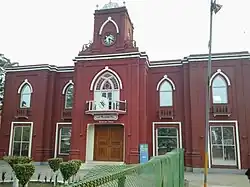
Kapurthala, the "City of Palaces," is a small but architecturally remarkable town in the Doaba region of Punjab. As the seat of a princely state ruled by the Ahluwalia dynasty, it was shaped above all by Maharaja Jagatjit Singh, an enthusiastic Francophile whose early-20th-century building programme gave the town an unexpected European and Indo-Saracenic character. The result is a clutch of palaces, gardens and monuments that feel transplanted from France and North Africa — earning Kapurthala comparisons with Paris on a Punjabi scale.
Today Kapurthala is also a major industrial centre as the home of the Rail Coach Factory, one of Indian Railways' principal coach-manufacturing units, producing some 1,500 coaches a year. For travellers, though, the draw is its heritage: the Jagatjit Palace, the Moorish Mosque and the surrounding gardens make it one of Punjab's most charming day-trip destinations.
The climate is typical of the Doaba plains: hot summers (April–June), a monsoon (July–September), and pleasant, cool winters. October to March is the best time to visit.
Planning Kapurthala? Tell us your dates and we’ll tailor the trip.
Ask on WhatsAppHow do you get there?
By Plane
The nearest airport is Sri Guru Ram Dass Jee International Airport at Amritsar (ATQ), about 75 km away, with domestic and some international flights. From there, taxis and buses reach Kapurthala in roughly 1.5–2 hours. Delhi (DEL) is the main long-haul gateway.
By Train
Kapurthala lies on the Jalandhar–Firozpur section of the rail network, and Kapurthala railway station handles regional services. For more frequent and long-distance connections, Jalandhar Junction (about 20 km) is the main railhead. Reserve seats through IRCTC for longer journeys.
By Car / Road
Road is the easiest way in. Frequent buses run between Kapurthala and Jalandhar, about 20 km away, and buses and taxis are available from Amritsar (about 75 km). Punjab Roadways and private buses serve the town's bus stand, and the surrounding Doaba road network is good.
Kapurthala is compact, and its main monuments are within a short distance of the centre. Auto-rickshaws and cycle rickshaws cover trips between the palace, mosque and gardens; agree the fare first. Much of the heritage core can be enjoyed on foot, and taxis can be hired for the Kanjli Wetlands and outlying sights.
What are the things to do?
Jagatjit Palace — the grandest building in town, built in 1906 for Maharaja Jagatjit Singh and modelled on French palaces such as Versailles and Fontainebleau; it now houses Sainik School. The exterior and grounds are the highlight.
Moorish Mosque — a National Monument of India completed in 1930, a replica of the Grand Mosque of Marrakesh, designed by a French architect for the Maharaja; its tiled courtyard and minaret are unique in Punjab.
Panch Mandir — a distinctive temple complex housing five small shrines together.
Gurudwara Ber Sahib (at nearby Sultanpur Lodhi) — a revered shrine where Guru Nanak is said to have entered the Bein rivulet and spent three days in the water.
Mazar of Mir Nasir Ahmed — a tomb that is a pilgrimage site for Indian classical musicians.
Kanjli Wetlands — a man-made wetland created in 1870 around the Kanjli Lake on the Bein River, designated a Ramsar site of international importance in 2002; an excellent spot for birdwatching and boating amid rich aquatic and terrestrial flora and fauna.
Take a self-guided heritage walk between the Jagatjit Palace, Moorish Mosque and the town's gardens to appreciate Kapurthala's European-inspired architecture.
Make a short side trip to Sultanpur Lodhi, an ancient town of historic Sikh shrines closely associated with Guru Nanak.
Planning Kapurthala? Want these on a customised itinerary?
Ask on WhatsAppWhere to eat?
Kapurthala offers hearty Doaba-style Punjabi food at its dhabas and sweet shops, with the usual repertoire of chole bhature, parathas, tandoori dishes and rich milk sweets. Restaurants cluster around the town centre and the bus stand, and nearby Jalandhar offers a much wider dining choice for those wanting more variety. Vegetarian food is plentiful.
Where to drink?
As across Punjab, the everyday drinks are lassi, chai and seasonal sweet-shop beverages. Bazaar sweet shops serve cold milk-based drinks and falooda. Drink bottled or filtered water rather than tap water.
Planning Kapurthala? We’ll book the stays and dining for you.
Ask on WhatsAppWhere to stay?
Kapurthala has a modest selection of hotels and guesthouses around the town centre suitable for an overnight stay, though many visitors treat it as a day trip from Jalandhar, which has a far wider range of accommodation about 20 km away.
What should you buy?
Kapurthala's markets sell the everyday Punjabi staples — traditional clothing, embroidered juttis and local handicrafts — in the bazaars around the town centre. As a small heritage town it is more about sightseeing than shopping, but it makes a pleasant place to pick up Punjabi textiles and footwear. Bargaining is normal in the bazaars.
Where to go next?
- Sultanpur Lodhi (about 30 km) — an ancient town with historic Sikh shrines tied to Guru Nanak.
- Jalandhar (about 20 km) — the largest city in the Doaba, famed for sports-goods manufacturing.
- Amritsar (about 75 km) — the Golden Temple and Wagah border.
- Phagwara (about 30 km) — a busy market and university town on the GT Road.
- Hoshiarpur (about 60 km) — a cooler upland Doaba town.
Nearby in Punjab
More places to explore around Kapurthala.
Guide content as of June 2026. Portions adapted from Wikivoyage, CC BY-SA 4.0.

Contact Us
Get in touch with us.
Get in touch
Contact Us
Tell us where you'd like to go and how you like to travel. A real Tripcuro planner — not a bot — will craft an itinerary around you.
- Personalised, hassle-free planning end-to-end
- Transparent pricing, no hidden costs
- 24/7 support for complete peace of mind