

Araku Valley
Andhra Pradesh, India
Why visit Araku Valley?
Araku Valley is a hill station in the Eastern Ghats of northern Andhra Pradesh, about 110 km inland from Visakhapatnam. It is a green, mist-laced valley of coffee plantations, streams and rivulets, set among hills inhabited by several tribal communities — and it is often called "the Ooty of Andhra." The morning fog drifting through the hills is one of its signature pleasures. Coffee is the valley's defining industry, grown here for over a century, and there is a honey industry alongside it; Araku coffee has built a reputation well beyond the state.
Most travellers reach Araku as an extension of a Visakhapatnam trip, but it genuinely rewards an overnight stay rather than a rushed day visit — the scenic journey, the caves, the tribal culture and the cool air are best savoured slowly. The town itself is small, with a handful of resorts, a bus stand, the tribal and coffee museums, and not much sprawl.
The best months are November to February, when the valley is cool and the skies clear. Summer is milder than the coast but still warm, and the monsoon (June to September) brings heavy rain, leeches on trails and slippery roads, though the greenery is at its lushest. Lodging is limited, so book well ahead in the peak season.
Planning Araku Valley? Tell us your dates and we’ll tailor the trip.
Ask on WhatsAppHow do you get there?
By Plane
The nearest airport is Visakhapatnam Airport (VTZ IATA), roughly 110–115 km away by road. From the airport, hire a taxi or join a tour for the three-to-four-hour climb into the hills; there is no airport closer to Araku itself.
By Train
Araku has its own railway station, reached by one of India's most scenic rail journeys. A slow passenger train leaves Visakhapatnam early in the morning (around 6:50 AM) and winds through small mountains and tunnels; arrive at least an hour ahead to get a seat. The route passes Shimiliguda, the highest broad-gauge railway station in India. The train ride itself is a highlight of any Araku trip.
By Car / Road
Araku is reached from Visakhapatnam by a winding ghat road of about 110 km, taking three to four hours, often combined with a stop at the Borra Caves. A round-trip taxi with an overnight stay can cost in the region of ₹2,500. APSRTC runs regular buses as well as a packaged daily tour from Visakhapatnam.
Araku is small and best explored on foot, especially in the early morning when the fog still hangs over the hills — a walk around town then is the quintessential hill-station experience. Public bus service within the valley is limited, so for excursions, the practical option is to hire a cab, which can be arranged at the APTDC (Andhra Pradesh Tourism) lodge for a day trip out to the Borra Caves and around the valley. There are no app-based cabs; agree fares with drivers in advance.
What are the things to do?
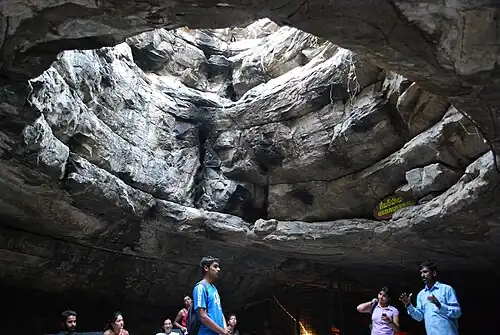
Borra Caves — vast million-year-old limestone caverns on the Araku–Visakhapatnam road, modernised and lit by APTDC, with dramatic stalactite and stalagmite formations. Entry around ₹30, with separate charges for still and video cameras. A must-see; carry your own drinking water.
Araku Tribal Museum — a museum dedicated to the art, dress, tools and daily life of the valley's tribal communities, the best single introduction to local culture.
Coffee Museum — just outside the Mayuri Resort (Andhra Pradesh Tourism) and a one-minute walk from the Araku bus stand; it traces the history of coffee planting in the valley and sells local coffee.
Coffee plantations and viewpoints — the valley is ringed by terraced coffee estates and lookout points; the drive through them, particularly toward Borra, is itself a sight.
Ride the hill railway from Visakhapatnam through tunnels and the Eastern Ghats — for many visitors the single best experience of the trip.
Walk the town at dawn to catch the fog and the cool stillness that define an Araku morning.
Take a coffee-estate visit and tasting, learning how the valley's beans are grown and processed.
Explore the Borra Caves on a guided day trip from the APTDC lodge.
Spend time with tribal culture at the Tribal Museum and, if your visit coincides, watch a Dhimsa folk dance performance.
Planning Araku Valley? Want these on a customised itinerary?
Ask on WhatsAppWhere to eat?
Araku's best-known local dish is bamboo chicken — chicken marinated and cooked inside a hollow bamboo stem over a wood fire, sold at roadside stalls around the valley and worth seeking out. Beyond that, the small town's resorts and eateries serve standard Indian, Chinese and Continental food as well as South Indian staples; the choice is limited, so most visitors eat at their resort or at the cluster of places near the bus stand.
Where to drink?
Coffee is the obvious thing to drink in Araku — this is plantation country, and the Araku Valley coffee house near the bus stand serves the local brew, while the Coffee Museum lets you taste and buy it. Tea and fresh juices are available at resorts and stalls. As in the rest of the region, drink bottled or filtered water rather than tap or stream water, and carry your own supply on day trips.
Planning Araku Valley? We’ll book the stays and dining for you.
Ask on WhatsAppWhere to stay?
Lodging in Araku is limited, so reserve well in advance, especially November to February. APTDC (Andhra Pradesh Tourism) accommodation is the most reliable option.
- Budget / mid-range: Haritha Valley Resort (phones 089362 49202) offers rooms with free breakfast and Wi-Fi; RRK Resort (phone 086883 09090) is another mid-range choice.
- Mid-range: Dhimsa Resorts (phones 08936-249555 / 08936-249786) and Hill Park Resorts are established options in and around the town.
- Tourism-run: APTDC operates the Mayuri / Andhra Tourism resort in Araku, and a resort at Tyada on the Araku–Visakhapatnam road, useful as a scenic stop.
What should you buy?
The thing to buy in Araku is its coffee — sold at the Coffee Museum and at shops around the bus stand, freshly roasted and a genuine local product. Forest honey is the other valley specialty. Tribal handicrafts — bamboo work, beadwork and woven items — are sold by local communities and at the Tribal Museum. Prices at museum and tourism-run shops are generally fixed; light bargaining is acceptable at informal stalls.
Where to go next?
- Borra Caves (about 35 km toward Visakhapatnam) — spectacular limestone caverns, the natural pairing with an Araku trip.
- Visakhapatnam (about 110 km, 3–4 hr) — the coastal city, beaches and museums; most Araku trips start and end here.
- Tyada (on the Araku–Visakhapatnam road) — a quiet stop with an AP Tourism resort and forest scenery.
- Lambasingi (a few hours away) — another Eastern Ghats hill spot, known as one of the coldest places in the state.
- Paderu — a tribal-belt town deeper in the hills, for those wanting to explore the highland interior further.
Nearby in Andhra Pradesh
More places to explore around Araku Valley.
Guide content as of May 2026. Portions adapted from Wikivoyage, CC BY-SA 4.0.

Contact Us
Get in touch with us.
Get in touch
Contact Us
Tell us where you'd like to go and how you like to travel. A real Tripcuro planner — not a bot — will craft an itinerary around you.
- Personalised, hassle-free planning end-to-end
- Transparent pricing, no hidden costs
- 24/7 support for complete peace of mind