
Geelong
Victoria, Australia
Why visit Geelong?
Geelong is Victoria's second largest city, a bustling port on Corio Bay about 75 km southwest of Melbourne. Settled only a few years after Melbourne in the 1830s, it grew rich on wool — once handling much of the colony's clip — and that heritage is still legible in the bluestone warehouses, ornate banks and Victorian-era civic buildings around Little Malop and Moorabool Streets. The city has reinvented itself over the past two decades: the working waterfront has been transformed into a promenade of cafés, a heritage carousel and the famous "Baywalk Bollards" (104 painted wooden figures by Jan Mitchell celebrating local characters), while the cultural precinct around the GPAC and the striking geodesic Library and Heritage Centre ("The Dome") gives the centre a contemporary edge.
Most visitors treat Geelong as the gateway to the Bellarine Peninsula and the Great Ocean Road, but it deserves at least a day on its own merits — for the waterfront, the National Wool Museum, the Botanic Gardens above Eastern Beach, and the increasingly good eating scene around Pakington Street in Geelong West. The city is also fiercely proud of its AFL team, the Geelong Cats, who play at GMHBA Stadium in Kardinia Park; matchdays transform the city.
Climate is mild maritime: summers (Dec–Feb) average highs around 25 °C and are the best time for the bay and beaches, though heatwaves and bushfire-smoke days do occur. Autumn (Mar–May) is settled and pleasant. Winters (Jun–Aug) are cool, grey and windy with daytime highs around 13 °C; spring (Sep–Nov) is changeable. Geelong is windier than Melbourne — pack a layer year-round.
Planning Geelong? Tell us your dates and we’ll tailor the trip.
Ask on WhatsAppHow do you get there?
By Plane
Avalon Airport (AVV) is Geelong's own international airport, about 22 km north of the CBD off the Princes Freeway and roughly 20 minutes by road. Jetstar flies domestically to Sydney, the Gold Coast and Adelaide; AirAsia X operates to Kuala Lumpur, with onward connections across Asia. Fares are often cheaper than Melbourne Airport because the airport is smaller and slot-constrained. The Avalon City Express shuttle meets every Jetstar flight and runs to Geelong and South Geelong railway stations.
Melbourne Airport (MEL), Victoria's main international gateway, is around 90 km / 1 hr 15 min away via the Western Ring Road and Princes Freeway. Gull Airport Service runs pre-booked shuttles directly between Melbourne Airport and central Geelong daily. Alternatively, take the SkyBus to Southern Cross Station and continue on the Geelong V/Line train.
By Train
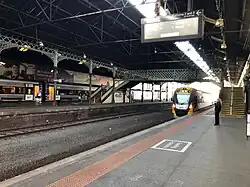
V/Line's Geelong Line is the workhorse, running from Southern Cross Station in Melbourne to seven Geelong stations: Corio, North Shore, North Geelong, Geelong (the grand main station, a five-minute walk from the CBD), South Geelong, Marshall and Waurn Ponds. Trains run every 20 minutes on weekdays and every 40 minutes on weekends, with a journey time of about an hour. A myki smartcard is required; the standard adult off-peak one-way fare is around $9.24 (check PTV for current pricing). Long-distance Warrnambool Line trains also call at Geelong, with reservations required beyond Waurn Ponds. The twice-weekly Overland (Melbourne–Adelaide) stops at North Shore.
By Car / Road
Geelong sits on the Princes Freeway (M1), an easy 75 km / ~1 hour drive from central Melbourne. Westwards the same road continues through Colac and Warrnambool toward Adelaide. The Geelong Ring Road bypasses the urban area along its western edge — useful for through-traffic to the Surf Coast and Great Ocean Road, which begins at Torquay just south of the city. The Midland Highway (A300) terminates in Geelong and connects to Ballarat and Bendigo.
Bus: McHarry's Buslines runs to Geelong from Queenscliff (about 30 km) and other Bellarine Peninsula towns. V/Line coaches connect to Apollo Bay (via Lorne) and Ballarat among other destinations.
Ferry: The Spirit of Tasmania (to Devonport) has departed from Corio Quay in Geelong since October 2022 — a major change from its old Station Pier base in Melbourne. Port Phillip Ferries runs a passenger service from Cunningham Pier (and from Portarlington on the Bellarine) to Melbourne's Docklands; one-way fare around $14.50 from Portarlington. The classic Queenscliff–Sorrento car-and-passenger ferry across the heads of Port Phillip Bay runs hourly 7AM–6PM (with later sailings in summer).
The CBD is compact and easily walked — the waterfront, Moorabool Street and Little Malop Street are all within 10–15 minutes of each other and of the railway station.
Bus: Geelong has a reasonable network run jointly by McHarry's and CDC Geelong, all using myki within fare zone 4. The central interchange is on Moorabool Street; most routes terminate at Geelong railway station. Some northern-suburbs routes interchange instead at Corio Central, North Shore or Lara stations.
Train: The Geelong line itself works as urban transport with seven city stations; combine with a bus for the last leg. Same myki, no extra charges for mode changes within the city.
Taxi: Two regulated operators — 13CABS and the Geelong Taxi Network — charge identical fares. Hail on the street, use ranks at major shopping centres and stations, or book by phone/app.
Rideshare: Both Uber (UberX, Assist) and DiDi operate. Uber uses surge pricing; DiDi does not — checking both apps can save money at busy times.
Car: Traffic is generally light. Metered street parking in the city costs around $2.90/hour Mon–Fri 9AM–5:30PM (excl. public holidays) and is often time-limited; off-street car parks are a safer bet at peak times. Outside the centre and waterfront, parking is free.
Bike: Limited. Casual bike hire operates on the waterfront on weekend afternoons and during school holidays (no reservations); Future Rentals offers longer-term rentals.
What are the things to do?
Geelong Waterfront — the city's signature stroll: a working maritime precinct linking Cunningham Pier, Eastern Beach, the heritage Carousel (a beautifully restored 1892 Armitage-Herschell carousel in a glass pavilion), the Baywalk Bollards and Steampacket Gardens. Free to wander.
National Wool Museum, 26 Moorabool St (cnr Brougham St) — three floors inside an 1872 bluestone wool store telling the story of the industry that built the city; allow 90 minutes. Open daily 9:30AM–5PM (closed Good Friday and Christmas Day). Adult $7.30, concession $5.90, child $3.65.
Geelong Maritime Museum — small but enthusiast-run, focused on local shipping, the port, and Corio Bay.
Geelong Library and Heritage Centre ("The Dome"), 51 Little Malop St — a striking geodesic-domed public library; free public access to the upper-floor balcony in daylight (weather permitting) for sweeping CBD views. Mon–Fri 8AM–8PM, Sat–Sun 10AM–5PM. ☎ +61 3 4201 0600.
Geelong Performing Arts Centre (GPAC), 50 Little Malop St — the regional centre for theatre, dance and music; worth checking the programme even on a short visit.
Geelong Botanic Gardens, atop Eastern Beach — established 1857, with a fine collection of mature trees, a 21st-century dry-climate garden, and the Tea House Cafe. Open daily 8AM–5PM (to 7PM during daylight saving). Free entry.
Eastern Beach Reserve — Art Deco swimming enclosure (1939) with a tidal pool, lawns and a children's pool; iconic Geelong sunbathing real estate in summer.
You Yangs Regional Park, Branch Rd, Little River — a granite range about 22 km north of Geelong with four main walking tracks. The 3.2-km return walk to Flinders Peak (348 m) takes about 90 minutes and rewards with views back over Geelong, Corio Bay and across to the You Yangs plains. Gates Mon–Fri 8AM–4:30PM, Sat–Sun 8AM–6PM.
Barwon Heads — at the mouth of the Barwon River where it enters Bass Strait; the setting of the ABC TV series SeaChange. Sheltered estuary beach for families, plus the rugged 13th Beach nearby for surfing and ocean swimming.
Walk the Waterfront and find the Bollards — Jan Mitchell's 104 painted timber figures, each based on a real Geelong character (from Matthew Flinders to the local lifesavers), are scattered along the foreshore. A free, very Geelong way to spend an hour.
Ride the Carousel — even adults are allowed; the 36 horses date from 1892.
Catch the Cats — Geelong's AFL side plays home games at GMHBA Stadium (Kardinia Park) from March to September. Tickets via Ticketmaster; matchday atmosphere in the city is unmatched.
Swim at Eastern Beach — the heritage tidal enclosure is safe, sheltered and free.
Cycle or walk the Barwon River trail — a sealed shared-use path links the city to Fyansford and beyond through bushland and parks.
Day-trip the Great Ocean Road — Geelong is the official starting point; drive (or coach) to Torquay (Surf Coast capital, home of Bells Beach and the Australian National Surfing Museum) and on through Anglesea, Aireys Inlet and Lorne.
Bellarine Peninsula wine tour — the region has a respected cool-climate wine scene (Pinot Noir, Chardonnay, Shiraz); cellar doors cluster around Bellarine, Drysdale and Portarlington.
Theatre at GPAC, music at The Pier — the city centre has a steady programme of touring shows year-round.
Planning Geelong? Want these on a customised itinerary?
Ask on WhatsAppWhere to eat?
Geelong's food scene has come a long way from its pub-counter-meal roots. The waterfront has the views; Little Malop Street and Pakington Street ("Pako") have the better cooking. Most cafés open from 7AM for breakfast; many close by 3PM. Dinner bookings are wise on Friday and Saturday nights, especially after Cats matchdays. Vegetarian options are easy to find; vegan and gluten-free are widely catered for. Halal and kosher are less common — call ahead.
- Budget — Pako Street pies and bakeries. Try classic Australian meat pies and sausage rolls from neighbourhood bakeries along Pakington Street; expect $6–10 for a generous lunch.
- Budget — Fish & chips on the waterfront. Multiple kiosks around Cunningham Pier and Eastern Beach do flake and chips; eat them on the grass and watch the seagulls plot. $15–20.
- Mid-range — Pakington Street cafés and bistros. Geelong West has a deep bench of all-day cafés; expect $18–28 for brunch mains, $30–40 for dinner mains at the bistros.
- Mid-range — Little Malop Street restaurants. The cultural-precinct end of Little Malop has a cluster of contemporary restaurants and wine bars; mains typically $30–40.
- Upscale — Waterfront dining at Cunningham Pier. Several restaurants occupy the pier itself, with full bay views; degustation and steak-and-seafood menus in the $80–150 per head range without wine.
- Day-trip eat — Barwon Heads. Hitchcock Avenue in Barwon Heads (25 minutes south) has a strip of beachside cafés and bistros that locals will detour for; mains $25–40.
Signature regional dishes: anything with Bellarine Peninsula seafood (King George whiting, flathead, mussels from Portarlington), Otway-region cheeses, and Western District lamb.
Where to drink?
Geelong sits in the middle of one of Victoria's best cool-climate wine regions, so Bellarine wines dominate good wine lists — look for Pinot Noir, Chardonnay and Shiraz from producers like Scotchmans Hill, Jack Rabbit, Leura Park and Bellarine Estate (many have cellar doors a short drive from the city).
For a coffee scene, Pakington Street in Geelong West is the heart of it — strong specialty roasters, all-day cafés, brunch culture. The CBD around Little Malop Street has a similar density of cafés geared to office workers and theatregoers.
For nightlife, expect pubs and bars rather than clubs: the CBD has historic pubs along Moorabool and Malop Streets, plus several waterfront cocktail bars. Things wind down earlier than in Melbourne — by midnight on most weeknights.
Tap water is safe and pleasant-tasting throughout Geelong and the Bellarine; there is no need to buy bottled water for health reasons.
Planning Geelong? We’ll book the stays and dining for you.
Ask on WhatsAppWhere to stay?
- Budget — Irish Murphy's (30 Aberdeen St): central pub with basic backpacker-style rooms above the bar; rates from around $40 per dorm bed / $90 private.
- Budget — National Hotel Backpackers (191 Moorabool St): heritage pub with simple budget rooms in the heart of the CBD; from around $40 dorm / $100 private.
- Mid-range — Novotel Geelong (Gheringhap St): the city's largest waterfront hotel, with bay views from upper floors; rates typically $200–300 a night.
- Mid-range — Quest Geelong Central (15 Yarra St): serviced apartments a short walk from the CBD and waterfront, useful for families and longer stays; from around $200.
- **Upscale — The Pier Geelong / Cunningham Pier accommodation.
- Upscale / boutique — Vue Apartments Geelong and similar serviced-apartment towers around Yarra Street offer high-floor bay views from around $280–400. Heritage boutique stays are easier to find in nearby Queenscliff (e.g. the Queenscliff Hotel and Vue Grand) if you have a car.
What should you buy?
The CBD shopping spine runs along Moorabool Street and the pedestrianised Little Malop Street, anchored by Westfield Geelong (mainstream chains and department stores). For independents — homewares, fashion, books, vinyl, specialty grocers — head north to Pakington Street in Geelong West, the city's most enjoyable strip shopping precinct.
Markets worth timing your visit around:
- Geelong Showgrounds Farmers' Market, 1st & 3rd Saturday of the month, ~8AM–noon — Bellarine produce, cheese, wine and prepared food.
- Pako Festa (late February) — Pakington Street's multicultural street festival, more cultural event than market but with strong food and craft components.
Local specialities to take home: Bellarine wines and olive oils, Otway cheese, woollen blankets and knitwear (a nod to the city's wool heritage), and surf-brand gear from Torquay just down the road. Bargaining is not the norm — prices are fixed in shops and markets.
Where to go next?
- Torquay (~22 km / 25 min south) — the start of the Great Ocean Road and Australia's surf capital; Bells Beach and the National Surfing Museum.
- Queenscliff (~30 km / 35 min southeast) — historic fortified seaside town on the Bellarine, with the Queenscliff–Sorrento ferry and a fine cluster of Victorian-era hotels.
- Bellarine Peninsula wineries (~20–40 km east) — Portarlington, Drysdale and Bellarine cellar doors; combine with mussel farms at Portarlington.
- Great Ocean Road & the Twelve Apostles (~190 km / 3 hr to the Apostles) — Australia's most famous coastal drive, best done as an overnight in Lorne or Apollo Bay rather than a return day trip.
- You Yangs Regional Park (~22 km north) — granite peaks, walking tracks and koalas; an easy half-day from the city.
- Melbourne (~75 km / 1 hr northeast) — Victoria's capital, easily reached by train or freeway; a full city break in its own right.
Nearby in Victoria
More places to explore around Geelong.
Guide content as of May 2026. Portions adapted from Wikivoyage, CC BY-SA 4.0.

Contact Us
Get in touch with us.
Get in touch
Contact Us
Tell us where you'd like to go and how you like to travel. A real Tripcuro planner — not a bot — will craft an itinerary around you.
- Personalised, hassle-free planning end-to-end
- Transparent pricing, no hidden costs
- 24/7 support for complete peace of mind