
Mount Field National Park
Tasmania, Australia
Why visit Mount Field National Park?
Mount Field National Park sits in the Derwent Valley of southern Tasmania, about 75 km (a little over an hour by car) northwest of Hobart. Gazetted in 1916, it is — alongside Freycinet — Tasmania's oldest national park, though the area around Russell Falls had already been set aside as the state's first nature reserve back in 1885. The park forms part of the Tasmanian Wilderness World Heritage Area, one of only two sites on Earth that satisfy seven of UNESCO's ten World Heritage criteria, and the last known wild thylacine (Tasmanian tiger) was captured in this region in 1933. The park's character is two-fold: a lush temperate-rainforest lowland threaded with three signature waterfalls and some of the tallest flowering plants on the planet, rising abruptly to a glacier-sculpted alpine plateau studded with tarns, dolerite peaks, and Tasmania's southernmost ski field.
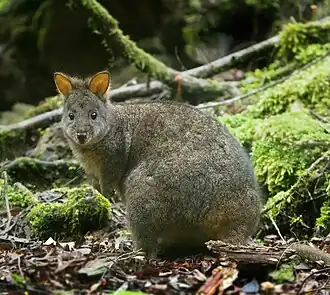
The park's draws are unusually varied for somewhere this compact: Russell Falls and the Tall Trees Walk near the entrance are easy strolls suitable for any visitor, while the high country around Lake Dobson and Mt Mawson rewards more committed walkers with cirques, tarn shelves, and pencil-pine forests. Wildlife — wombats, pademelons, echidnas, platypuses in the streams, and (with luck) a Tasmanian devil after dark — is genuinely visible rather than promised. The Pleistocene glaciation that shaped the upper plateau left behind Lakes Seal, Belcher, Nelton and Hayes, plus the dramatic tarn shelf above Lake Dobson.
Climate is cool-temperate and damp: westerly weather rolls in off the Southern Ocean year-round, so rain is routine and conditions on the plateau can be wintry in any month. Summer (December–February) generally stays in the mid-teens to low 20s °C at the visitor centre and is the most reliable hiking window; autumn (April–May) brings the spectacular gold-and-orange turn of the deciduous beech (fagus) around Tarn Shelf — Tasmania's only native deciduous tree and a major draw in late April. Winter (June–August) regularly drops below zero on the plateau and is when Mt Mawson operates — snow is dependable enough to ski but variable enough that you should check conditions before driving up. The park has no real "districts": everything is organised along the single sealed/gravel road (Lake Dobson Road) that runs from the visitor centre at the entrance up to Lake Dobson, with the small settlement of National Park immediately outside the gate.
Planning Mount Field National Park? Tell us your dates and we’ll tailor the trip.
Ask on WhatsAppHow do you get there?
By Plane
The nearest airport is Hobart International (HBA), about 90 km southeast of the park entrance — roughly 1 hr 20 min by car. There is no direct public transport from the airport to Mount Field; either pick up a rental car at the terminal (all major agencies are represented) or take the SkyBus airport shuttle into central Hobart (around AUD 22 one-way) and rent or join a tour from there. A taxi from the airport to central Hobart runs roughly AUD 50–60; a direct taxi or rideshare to Mount Field is possible but expensive (expect AUD 200+).
By Car / Road
Driving is by far the easiest way in. From Hobart, take the Brooker Highway (National Highway 1) north to the end of the freeway, then the roundabout onto the A10 Lyell Highway to New Norfolk (about 35 km). At New Norfolk, do not cross the Derwent — continue straight onto the B62 Glenora Road, then bear left onto the B61 Gordon River Road and follow it for about 38 km (24 mi). Turn right onto the B609 at the signposted junction and the park entrance is immediately ahead. Total drive from Hobart is roughly 75 km / 1 hr 15 min on sealed, well-maintained two-lane roads.
From Launceston, allow about 2 hr 45 min (210 km) via the Midland Highway and Hobart bypass, or a slightly longer but scenic route via the Lyell Highway through the central highlands.
Buses: There is no scheduled public bus to the park. Several Hobart-based operators (Tours Tasmania, Gray Line, Under Down Under and similar) run full-day Mount Field/Bonorong combination day trips from Hobart in the AUD 130–180 range; these are the only realistic option without your own vehicle.
Once you are in the park, the only road is the C609 Lake Dobson Road, which runs about 16 km from the visitor centre up to the Lake Dobson car park at around 1,000 m elevation. The lower section to the Russell Falls/Tall Trees car park is sealed; above that the road becomes gravel and narrows considerably — passable in a 2WD car in good conditions, but slow, and chains may be required in winter (check at the visitor centre). There is no shuttle and no taxi service inside the park.
Everything beyond the road is on foot. Distances on the upper plateau look short on the map but the going is rocky, often wet, and weather-exposed — allow more time than the kilometre count suggests. Mobile coverage is patchy to non-existent above the visitor centre, so download offline maps before you set out and always sign in at the visitor centre before attempting longer walks (Lake Belton/Belcher, Tarn Shelf, K Col).
There are no real scams to watch for; the main practical risks are weather (changes fast and severely on the plateau), slippery boardwalks after rain, and wildlife on the road at dawn and dusk — drive slowly.
What are the things to do?
Waterfalls
- Russell Falls — Russell Falls Nature Walk. The park's icon, a three-tier cascade reached by a near-flat, wheelchair-accessible 25-minute return walk from the visitor centre through tree-fern gully. Lit at night for glow-worm viewing. Always open; included in park entry.
- Horseshoe Falls — A short, steep climb of stone steps above Russell Falls leads to this curved drop over horizontal Permian siltstone benches with vertical sandstone faces. Far quieter than Russell. Always open; included in park entry.
- Lady Barron Falls — On the far loop of the Three Falls Circuit. Named for Lady Clara Barron, wife of former Tasmanian Governor Sir Harry Barron. The least visited of the three and a good spot to see pademelons. Always open; included in park entry.
- Three Falls Circuit — Combines all three waterfalls plus the Tall Trees Walk into a Grade 3, 7.5 km loop from the visitor centre (about 2.5–3 hours). Anticlockwise direction recommended. Note: at least 439 stair steps, slippery when wet.
Lakes and alpine viewpoints
- Lake Dobson — End of Lake Dobson Road, about 16 km from the visitor centre. A small glacial lake ringed by pencil pines and pandani; the easy ~1.5 km Pandani Grove circuit hugs the shore (30–40 min) and is one of the best places in the park to spot platypus at dawn/dusk. Trailhead for almost all upper-plateau walks.
- Lake Fenton — Roadside, about 12 km up Lake Dobson Road. The largest lake reachable without walking, with a small car park a minute or two from the water. Supplies Hobart's drinking water, so no swimming or fishing.
- Seagers Lookout — Off Seagers Lookout Route. Panoramic outlook over Lake Fenton and the surrounding peaks, and the start point for several plateau walks.
- Lake Newdegate — Reached via the Lake Newdegate Track from Lake Dobson (around 2–3 hours one way as part of the Tarn Shelf circuit). A small, well-preserved glacial lake; the small Newdegate Hut beside it is a classic photograph subject.
- Platypus Tarn — Off the Platypus Tarn Track from Lake Dobson. A glacial tarn rimmed by mountains; the name is descriptive — sightings are possible if you sit quietly at dawn.
- Tarn Shelf — The high glacial bench above Lake Dobson, dotted with small lakes and famous nationwide in late April for the gold-orange colour change of Nothofagus gunnii ("the turning of the fagus"). The full Tarn Shelf–Lake Newdegate–Twilight Tarn circuit is around 12 km / 5–7 hours, Grade 4.
Tall trees
Tall Trees Walk — A flat 1 km loop a short drive from the entrance, through a stand of Eucalyptus regnans (swamp gum), among the tallest flowering plants on Earth — individual trees here top 80 m. About 30 minutes return. Can be combined into the Three Falls Circuit.
Walk the Three Falls Circuit — The signature half-day experience: Russell, Horseshoe and Lady Barron Falls plus the Tall Trees, all in one 7.5 km loop.
Tackle the Tarn Shelf circuit — A full-day, Grade 4 alpine walk from Lake Dobson over the glacial shelf, past Twilight Tarn and Lake Newdegate, returning via K Col or Rodway Range. Best done November–April; check in at the visitor centre before setting out.
Walk to Lakes Belton and Belcher — A demanding 13 km / 5–6 hour return route for experienced walkers only. Boardwalk, scree and exposed rock; sign in and out at the visitor centre.
Pandani Grove walk — Easy 1.5 km loop at Lake Dobson through some of the tallest heath plants in the world; good chance of platypus.
Ski and snowboard at Mount Mawson — Urquhart Track, off Lake Dobson Road. A small community-run field with a 70 m vertical drop (1,300 m down to 1,230 m), suited to beginners and intermediates, plus cross-country terrain. One of only two ski areas in Tasmania (the other is Ben Lomond). Operates only when snow is sufficient — typically a handful of weekends between late June and early September. Day tickets are inexpensive by mainland-Australian standards; check ski.mtmawson.info before driving up.
Glow-worm viewing — Take a torch (or join a guided tour) and walk the easy Russell Falls track after dark to see the colonies of glow-worms in the banks. Best on still, moonless nights.
Spotlight for wildlife — The road verges around the visitor centre and campground are excellent for after-dusk sightings of wombats, pademelons, brushtail possums, and occasionally Tasmanian devils. Drive slowly or walk with a head torch.
Trout fishing — Lake Dobson and several of the upper tarns hold brown and rainbow trout. A Tasmanian Inland Fisheries licence is required (purchase online via ifs.tas.gov.au); check the Anglers Access Program for current rules on each water. Lake Fenton is closed to fishing as a drinking-water catchment.
Photograph the fagus — Late April to early May, on the Tarn Shelf, for the deciduous beech colour change — a uniquely Tasmanian spectacle.
Planning Mount Field National Park? Want these on a customised itinerary?
Ask on WhatsAppWhere to eat?
The park is poorly served for food — plan to either bring a picnic or eat in the gateway villages. Inside the park there is one cafe; immediately outside the gate, the small settlement of National Park has a handful of options, and New Norfolk (40 km) is the nearest town with real choice. New Norfolk is also locally famous for its oysters. Vegetarian options are easy to find at Tasmanian cafes; strict vegan, halal and gluten-free choices are limited outside Hobart, so phone ahead if it matters.
- Waterfalls Cafe and Gallery (budget) — 90 Lake Dobson Rd, Mount Field, +61 3 6288 1526. Daily 9 AM–5 PM. The only cafe inside the park, serving sandwiches, scones, soups and basic hot meals in the Australian/American comfort-food register, plus a small attached gallery. Mains roughly AUD 15–25.
- National Park Hotel (budget–mid) — Gordon River Rd, National Park (just outside the park gate). Classic Tasmanian country pub with hearty counter meals (steak, fish and chips, parmas), a fireplace in winter, and beer on tap. Mains around AUD 25–35.
- Possum Shed Cafe (mid) — 1654 Glenora Rd, Westerway, about 7 km from the park. Riverside cafe set in a former timber shed beside the Tyenna River; light lunches, good coffee, and platypus often visible from the deck. Lunch around AUD 20–30. Hours seasonal — check before going.
- The Agrarian Kitchen Eatery (upscale) — 11A The Avenue, New Norfolk, +61 3 6262 0011. Lunch and dinner Wed–Sun. A nationally celebrated farm-to-table restaurant occupying the former Willow Court asylum laundry; produce-driven, wood-fired, and one of Tasmania's finest dining rooms. Mains roughly AUD 38–48; the set menu is the way to do it.
Where to drink?
The park itself has no bar; Waterfalls Cafe serves coffee, tea, and soft drinks during the day. For a proper drink, the National Park Hotel just outside the gate pours Tasmanian beers (Cascade, James Boag's) and a short local wine list, and is the natural place to end a day's walking. The Possum Shed at Westerway does good coffee.
The wider Derwent Valley is one of Tasmania's significant wine regions — cool-climate Pinot Noir, Chardonnay and Riesling are the regional strengths — and several cellar doors lie within 30–45 minutes of the park, including Stefano Lubiana Wines at Granton and Two Metre Tall at Hayes. Westerway Raspberry Farm (seasonal, Dec–April) is a worthwhile stop for fresh berries, juices and ice cream on the drive in.
Water safety: Tap water at the visitor centre, the campground and the government huts is potable. Stream and tarn water on the plateau should be treated (boil, filter, or chemical) before drinking — Tasmanian wilderness streams can carry giardia.
Planning Mount Field National Park? We’ll book the stays and dining for you.
Ask on WhatsAppWhere to stay?
Accommodation inside the park is limited. Most visitors either camp at the gate, take one of the government huts on the plateau, or — most commonly — base themselves at one of the small lodges in the village of National Park or in the Tyenna/Westerway valley just outside.
Budget
- Mount Field Campground — at the park entrance, run by Parks Tasmania. Powered and unpowered sites, hot showers, camp kitchen, and easy walking distance to Russell Falls. From around AUD 16 per person unpowered / AUD 25 powered, per night. Book via the Parks Tasmania website in peak season.
- National Park Hotel — Gordon River Rd, National Park. Simple pub-style rooms with shared bathrooms, immediately outside the park gate. From around AUD 90–120 per double.
Mid-range
- Mount Field Government Huts (Lake Dobson) — Lake Dobson Rd, +61 3 6491 1179. Check-in 2 PM (keys from 1:30 PM at the visitor centre), check-out 10 AM. A row of three plain timber huts at the end of the road in the alpine zone — bunks, wood heater, basic kitchen, no electricity, BYO everything including bedding. Brilliant base for the Tarn Shelf or for skiers. From around AUD 110 per hut per night.
- Hamlet Downs Country Accommodation — Glenfern, about 10 km from the park entrance. Restored 1860s farmhouse and self-contained cottages set in a working farm and garden. From around AUD 200 per double.
Upscale / heritage
- Tyenna Valley Lodge — Westerway, on the road to the park. A small, high-end lodge popular with bushwalkers and fly-fishers, with views over the Tyenna River. From around AUD 280 per double.
- The Stackings at Salmon Ponds — Plenty, about 25 km from the park near the historic Salmon Ponds hatchery. Contemporary architect-designed villas in pasture; the most polished option within easy striking distance. From around AUD 350 per villa per night.
What should you buy?
There is essentially no shopping inside the park. The visitor centre stocks the usual range of national-park souvenirs — field guides, maps, postcards, T-shirts, plush wildlife — and is the only retail outlet between the entrance and Lake Dobson. Park passes are sold here if you haven't bought one online.
For anything else — groceries, fuel, outdoor gear, pharmacy — stock up in New Norfolk (about 40 km back toward Hobart), which has a small supermarket, a service station, and several galleries and antique shops worth browsing on the way through. Hobart is the nearest serious shopping. Bargaining is not a thing in Tasmania; prices are fixed.
Where to go next?
- New Norfolk (40 km / 35 min) — Historic Derwent Valley town with antique shops, the Willow Court asylum complex, and the Agrarian Kitchen — an obvious lunch or overnight stop on the way back to Hobart.
- Hobart (75 km / 1 hr 15 min) — Tasmania's capital: MONA, Salamanca Market (Saturdays), Battery Point, and the harbour seafood scene.
- Lake Pedder and Strathgordon (130 km / 2 hr) — Drive deeper west into the Southwest National Park for the vast hydro-impounded lake, the Gordon Dam, and some of the most remote road-accessible scenery in Australia.
- Hartz Mountains National Park (110 km / 2 hr via Hobart) — Another small alpine park with tarns and short walks, much less visited than Mount Field — a good follow-up if you've caught the highland-Tasmania bug.
- Bruny Island (115 km + ferry from Kettering / 2 hr 30 min total) — Day-trip or overnight: oysters, cheese, the iconic Neck isthmus, and white-bellied sea eagles.
- Maria Island National Park (180 km / 2 hr 30 min + ferry from Triabunna) — Car-free island with wombats on the lawns, Painted Cliffs, and convict ruins — Tasmania's most photogenic day trip on the east coast.
Nearby in Tasmania
More places to explore around Mount Field National Park.
Guide content as of May 2026. Portions adapted from Wikivoyage, CC BY-SA 4.0.

Contact Us
Get in touch with us.
Get in touch
Contact Us
Tell us where you'd like to go and how you like to travel. A real Tripcuro planner — not a bot — will craft an itinerary around you.
- Personalised, hassle-free planning end-to-end
- Transparent pricing, no hidden costs
- 24/7 support for complete peace of mind