
Afghanistan
Southern Asia · 353 destinations across 34 regions
Photography coming soonOverview
Afghanistan is a land of extraordinary history and dramatic landscape — a mountainous, landlocked country at the crossroads of Central, South and West Asia that has been a meeting point of civilisations for thousands of years. It was a heartland of the ancient Silk Road, a centre of Gandharan Buddhist art, the seat of the great Timurid culture of Herat, and a country whose mountains, oases and bazaars have drawn travellers and conquerors alike across the centuries.
Its cultural legacy is immense: the empty cliff niches of the Bamyan Buddhas, the blue-tiled splendour of Herat, the lakes of Band-e Amir, the minaret of Jam, and a tradition of poetry, hospitality and craft that runs deep. For a brief period in the 1960s and 1970s, Afghanistan was a celebrated stop on the overland "hippie trail" between Europe and Asia.
It is essential to be clear, however, that Afghanistan is not at present a viable tourist destination for most travellers. The security and political situation makes travel inadvisable, and governments worldwide advise against all travel to the country. This guide describes Afghanistan's geography, history and culture; it is not an encouragement to visit under current conditions.
Geography & Climate
Afghanistan is a rugged, landlocked country dominated by the Hindu Kush, the great mountain range that runs from the northeast toward the centre of the country, separating the northern plains from the rest. In the far northeast, the narrow Wakhan Corridor reaches toward the Pamirs and the borders of Tajikistan, Pakistan and China. The mountains give way to high central plateaus, to the northern plains along the Amu Darya, and to the arid deserts and lowlands of the south and southwest around Helmand and Kandahar.
The country is largely arid and semi-arid, with agriculture concentrated in river valleys and irrigated oases. Rivers such as the Helmand, the Kabul and the Amu Darya are vital lifelines.
The climate is continental and marked by extremes. Summers are hot and dry in the lowlands; winters are bitterly cold, with heavy snow in the mountains that closes high passes for months. Spring and autumn are the most temperate seasons. The high mountains see deep snowpack, while the southern deserts can be searingly hot.
Tell us your dates and we'll tailor your Afghanistan trip around them.
WhatsAppWhen to Visit
In climatic terms, spring (April–May) and autumn (September–October) are the most temperate seasons, with moderate temperatures across much of the country and, in spring, green valleys and blossom. Summer (June–August) is very hot in the southern and western lowlands, while the high mountains and the central highlands remain cooler. Winter (November–March) is severe, with heavy snow closing high passes — including the routes through the Hindu Kush — and bitterly cold conditions across the highlands.
The Islamic calendar shapes the year, and Nowruz, the Persian new year at the spring equinox, is historically the country's great seasonal festival.
Visa & Entry
Afghanistan historically required a visa arranged in advance for virtually all nationalities, obtained from an Afghan embassy or consulate. A passport with significant remaining validity is required. The practical situation regarding visas, registration on arrival, and permitted points of entry has been highly changeable.
Governments worldwide currently advise against all travel to Afghanistan, and many have no diplomatic presence in the country, which severely limits any consular assistance.
Want us to time your trip around a festival? We'll handle it.
WhatsAppMoney & Costs
The currency is the Afghani (AFN). Afghanistan is an overwhelmingly cash-based economy, and the banking and financial system has been under severe strain. International cards, ATMs and electronic payment are not reliably usable, and access to cash — including for any visitor — cannot be assumed.
Historically, Afghanistan was an inexpensive country by international standards, with low costs for food, transport and simple lodging. Bargaining is customary in bazaars, and hospitality toward guests is a deep cultural value.
Getting In
Afghanistan's principal international gateway is Hamid Karzai International Airport in Kabul (KBL), with further airports at Herat, Mazar-i-Sharif, Kandahar and elsewhere. International air service has been limited and variable, operated by a small number of regional carriers.
Afghanistan is landlocked, and its land borders — with Pakistan (notably the Torkham and Spin Boldak/Chaman crossings), Iran (Islam Qala), Tajikistan, Uzbekistan (the "Friendship Bridge" at Hairatan), Turkmenistan and, via the Wakhan, China — have historically been used for overland travel and trade, but crossing them is subject to the current security and political situation.
We handle the bookings and budgeting — you just travel.
WhatsAppGetting Around
Travel within Afghanistan is overwhelmingly by road, and the country's distances and terrain make journeys long. The Ring Road (Highway 1), a national highway, was built to connect the major cities — Kabul, Kandahar, Herat, Mazar-i-Sharif and others — in a great loop, and it remains the backbone of overland movement. Mountain roads, including the high Salang Pass tunnel through the Hindu Kush, link the regions but are subject to snow closure in winter.
Domestic flights have historically connected the main cities. Within cities, taxis and shared vehicles are the usual means of getting around. Road conditions, distances and the mountainous terrain all make internal travel slow and demanding.
Culture & Etiquette
Afghanistan is a deeply Islamic and traditional society, and respect for local custom and religious observance is essential. Modest dress is required — for men, long trousers and sleeves; for women, very modest and covering clothing, with a headscarf, and in practice considerably more conservative dress than in many neighbouring countries. Norms around women's dress, movement and public presence are strict, and have become more so.
Hospitality is one of the most powerful values in Afghan culture — the tradition of melmastia, the honouring and protection of guests, is profound, and Afghans are renowned for their generosity toward visitors. Greetings are warm and unhurried; the right hand is used for eating and greeting. Photography of people — especially women — of officials, of military or government sites, and of checkpoints should be avoided entirely, and permission sought before photographing anyone.
Afghan culture is rich in poetry, music, carpet-weaving and craft, and the country's many ethnic communities — Pashtun, Tajik, Hazara, Uzbek, Turkmen and others — each bring their own traditions, languages and customs.
Prefer to talk it through? We're a WhatsApp message away.
WhatsAppSafety
Afghanistan is, at present, one of the most dangerous countries in the world for travellers, and governments worldwide advise against all travel to it. This is the single most important point in this guide, and it cannot be overstated.
The risks are severe and varied: armed conflict and the threat of terrorism, including attacks targeting civilians; the danger of kidnapping of foreign nationals; the presence of landmines and unexploded ordnance across much of the country, a legacy of decades of war; crime; and the near-absence, for citizens of many countries, of any diplomatic or consular presence able to provide assistance or emergency evacuation. Medical facilities are very limited.
Beyond the security situation, Afghanistan faces serious humanitarian and natural hazards, including a high risk of earthquakes, harsh winters, and recurrent drought and flooding.
Top Regions
- Kabul & the central region — the capital and its surrounding provinces in the Hindu Kush foothills.
- The central highlands (Bamyan & Daykundi) — high valleys, the Bamyan cliffs and the lakes of Band-e Amir.
- The north (Balkh, Kunduz, Badakhshan) — historic Mazar-i-Sharif, the northern plains and the remote Wakhan Corridor.
- Herat & the west — the great Timurid city and the western provinces toward the Iranian border.
- The south (Kandahar, Helmand) — the historic Pashtun heartland and the southern lowlands.
- The east (Nangarhar & the frontier provinces) — Jalalabad and the mountainous border country toward Pakistan.
Tell us your dates and we'll tailor your Afghanistan trip around them.
WhatsAppTop Destinations
- Kabul — the capital, an ancient city in a high valley of the Hindu Kush.
- Bamyan — the valley of the destroyed colossal Buddhas, with Band-e Amir's lakes nearby.
- Band-e Amir — a chain of deep-blue natural lakes, Afghanistan's first national park.
- Herat — a celebrated centre of Timurid art and architecture, with its great citadel and minarets.
- Mazar-i-Sharif — home of the magnificent blue-tiled Shrine of Hazrat Ali.
- The Minaret of Jam — a soaring 12th-century minaret in a remote mountain valley, a UNESCO site.
- The Wakhan Corridor — a remote high-mountain valley reaching toward the Pamirs.
- Kandahar — the historic Pashtun heartland city of the south.
- Balkh — the ancient "Mother of Cities", once a great centre of antiquity.
Regions & States
Afghanistan has 34 regions with guides — pick one to drill into its destinations.
Badakhshān
12 destinations
Bādghīs
7 destinations
Baghlān
10 destinations
Balkh
15 destinations
Bāmyān
8 destinations
Dāykundī
8 destinations
Farāh
10 destinations
Fāryāb
11 destinations
Ghaznī
11 destinations
Ghōr
10 destinations

Helmand
14 destinations
Herāt
15 destinations
Jowzjān
11 destinations
Kābul
15 destinations
Kandahār
14 destinations
Kāpīsā
7 destinations
Khōst
13 destinations
Kunaṟ
14 destinations
Kunduz
8 destinations
Laghmān
5 destinations
Lōgar
7 destinations
Nangarhār
19 destinations
Nīmrōz
5 destinations
Nūristān
8 destinations
Paktīkā
11 destinations
Paktiyā
11 destinations
Panjshayr
8 destinations
Parwān
10 destinations
Samangān
7 destinations
Sar-e Pul
7 destinations
Takhār
16 destinations
Uruzgān
6 destinations
Wardak
8 destinations
Zābul
12 destinations
Not sure where to start in Afghanistan? Tell us how you like to travel and we'll shape the route.
WhatsAppTop Destinations
The places first-time and returning travellers ask for most.
Kandahar
> Safety caveat: Foreign governments advise against all travel to Afg…
Lashkargah
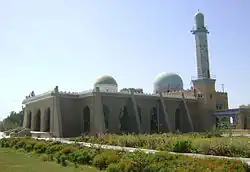
Lashkargah is a settlement in Helmand province, Afghanistan.
Ab Band
Ab Band (آببند) is a district in northern Ghazni Province, Afghanista…
Ab Kamari
Ab Kamari (آب کماری) is a district in southern Badghis Province, Afgh…
Abshar
Abshar is a district in Panjshayr Province, located in the Panjshir V…
Achin
Achin is a district in eastern Nangarhār Province, located near the b…
Adraskan
Adraskan is a settlement in Herāt province, Afghanistan.
Ahmadabad
Ahmadabad is a district in eastern Paktiyā Province, located near the…
Ajristan
Ajristan (اجرستان) is a district in western Ghazni Province, Afghanis…
Alasay
Alasay is a settlement in Kāpīsā province, Afghanistan.
Ali Abad
Ali Abad is a district in southern Kunduz Province, bordering Baghlan…
Alingar
Alingar is a district centre in Laghmān Province, eastern Afghanistan…
Contact Us
Get in touch with us.
Get in touch
Contact Us
Tell us where you'd like to go and how you like to travel. A real Tripcuro planner — not a bot — will craft an itinerary around you.
- Personalised, hassle-free planning end-to-end
- Transparent pricing, no hidden costs
- 24/7 support for complete peace of mind