When you think of grand Hindu temples, your mind probably goes to India. But the largest Hindu temple complex in the world isn’t in India at all. It’s in Cambodia, in the city of Siem Reap, home to Angkor Wat, a landmark of ancient architecture and spiritual devotion.
For many Indian travelers, Cambodia and its ancient sites remain largely undiscovered. For those drawn to a shared cultural heritage, a journey to Angkor Archaeological Park is well worth it.
The Angkor Kingdom
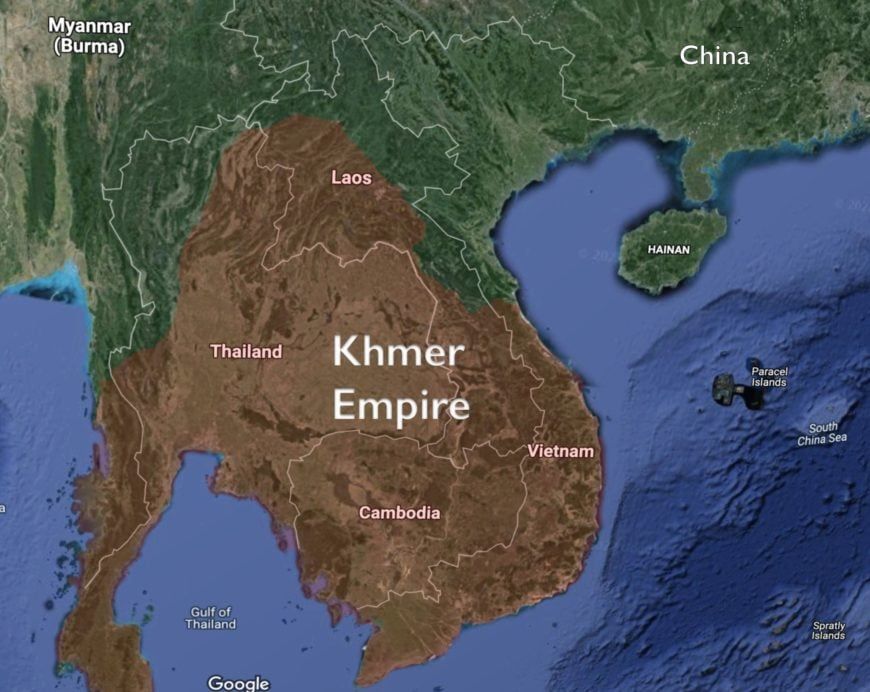
The Angkor Kingdom, also known as the Khmer Empire, was a powerful and sophisticated civilization that flourished from the 9th to the 15th centuries. At its zenith in the 13th century, the greater Angkor region was home to an estimated 700,000 to 900,000 people, making it one of the largest pre-industrial urban centers in the world, comparable to ancient Rome.
The empire’s influence extended across much of mainland Southeast Asia, shaping the political history and artistic traditions of modern-day Thailand and Laos. Heavily influenced by Indian customs in political organization, culture, and religion, the Khmer Empire initially practiced Hinduism, with a focus on the worship of Shiva and later Vishnu. Over time, Mahayana Buddhism also gained prominence, leading to a fascinating blend of religious iconography and architectural styles in their temples.
The Sacred Stones: Temples of the Angkor Kingdom
The Angkor Kingdom was a period of immense construction, with its rulers striving to outdo their predecessors in the scale and ambition of their religious structures. The area around Angkor, near modern Siem Reap, served as the royal center and capital for most of the empire’s history. The temples served as places of worship and as symbolic representations of Mount Meru, the mythical abode of the gods in Hindu cosmology.
Over 300 years, between 900 and 1200 CE, the Khmer Empire produced some of the world’s most remarkable architecture. While many are concentrated in an area approximately 15 miles (24 km) east to west and 5 miles (8.0 km) north to south, the Angkor Archaeological Park, a UNESCO World Heritage site, includes hundreds of temple sites scattered throughout the landscape.
Angkor Archaeological Park: The Temples around Siem Reap
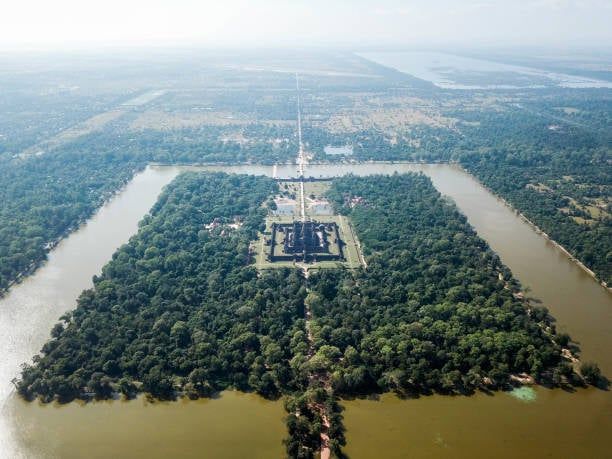
The Angkor Archaeological Park, spanning approximately 400 square kilometers, is a sprawling record of the Khmer Empire’s ingenuity and devotion. Located in Cambodia’s northern province of Siem Reap, it encompasses scores of temples, hydraulic structures (basins, dykes, reservoirs, canals), and communication routes.
Beyond the iconic Angkor Wat, some of the most famous temples within the park include:
- Angkor Thom: A fortified city-within-a-city, built by King Jayavarman VII in the late 12th century.
- Bayon Temple: Located at the center of Angkor Thom, famous for its 54 gothic towers adorned with over 200 huge, serene stone faces.
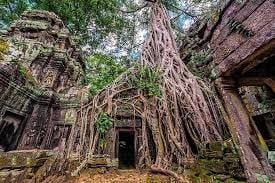
- Ta Prohm: Often called the “Tomb Raider Temple,” it’s known for the massive tree roots that intertwine with its crumbling stone walls, creating a mystical atmosphere.
- Banteay Srei: A smaller, exquisite temple located further afield, renowned for its finely detailed, well-preserved carvings in pink sandstone.
- Preah Khan: A large monastic complex with vaulted corridors and fine carvings.
- Phnom Bakheng: One of Angkor’s oldest temples, offering a popular spot for sunset views over Angkor Wat.
Angkor Wat: The Centrepiece
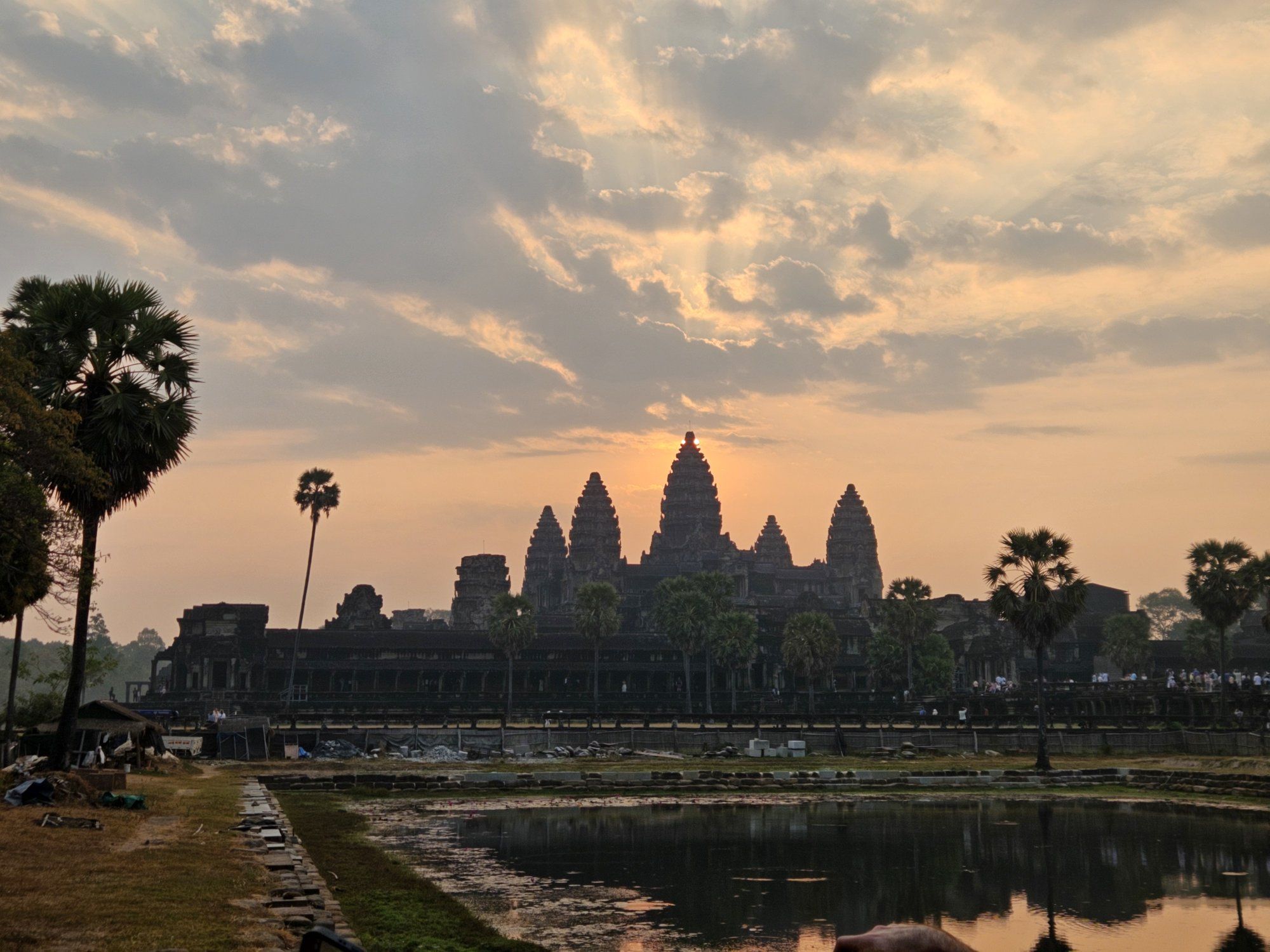
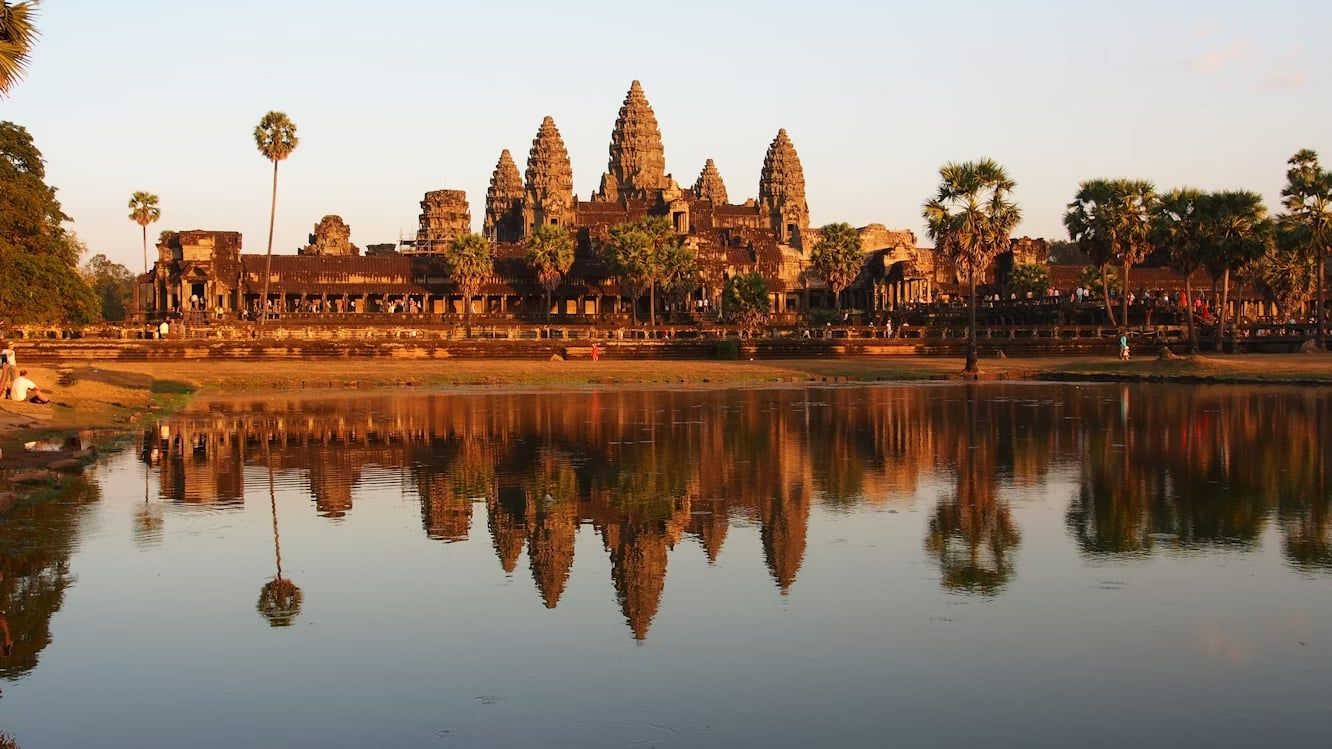
Angkor Wat, meaning “City of Temples,” is the centrepiece of the Angkor complex and the world’s largest religious structure, covering over 400 acres (160 hectares). Built in the 12th century by King Suryavarman II, it was originally dedicated to the Hindu god Vishnu and served as his funerary temple. Its design, with five central towers symbolizing the peaks of Mount Meru and an enormous moat representing the cosmic ocean, embodies the splendour and legacy of the Khmer Empire.
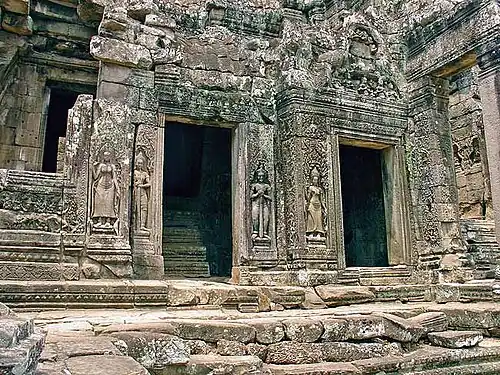
The temple’s walls are covered with exquisite bas-relief sculptures depicting scenes from Hindu epics like the Mahabharata and the Ramayana, as well as historical events from Suryavarman II’s reign. The carvings of apsaras (heavenly nymphs) are a highlight, with over 2,000 unique figures adorning the walls. While initially a Hindu temple, Angkor Wat later transitioned into a Buddhist shrine in the 14th century, and many of its Hindu deity carvings were replaced with Buddhist art. It remains a significant religious center to this day.
Why Indians Should Visit Angkor Archaeological Park
- Deep Hindu Roots: Angkor Wat, originally a Hindu temple dedicated to Vishnu, shows how far Hinduism’s influence reached into Southeast Asia. Walking through its galleries, you’ll meet familiar deities, scenes from the Ramayana and Mahabharata, and carvings that echo Indian mythology and art. It’s a direct link to a shared heritage.
- Architecture and Engineering: The scale and precision of Angkor Wat’s construction, along with the sophisticated hydraulic systems of the Angkor Kingdom, show a high level of architectural and engineering skill. For anyone interested in ancient civilizations, Angkor is a striking display of human ingenuity.
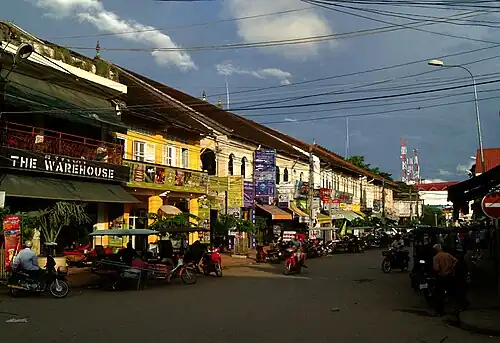
- Cultural Immersion: Beyond the temples, Siem Reap offers plenty. Explore local markets, watch traditional Apsara dance performances, and meet Cambodian people whose culture still carries echoes of the ancient Khmer Empire.
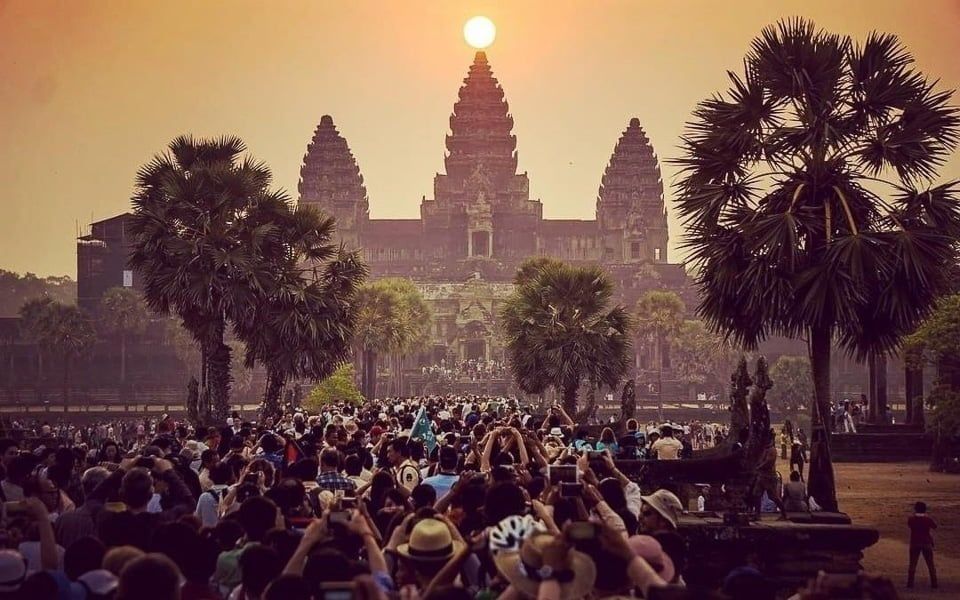
- For Photographers: From the sunrise over Angkor Wat reflected in the pools to the tree roots wrapped around Ta Prohm, Angkor rewards a camera. The light and shadow on the ancient stones shift through the day.
- A Different Angle on History: While India has countless historical sites, Angkor shows how Indian cultural and religious influences spread and evolved elsewhere in Asia, creating distinct yet connected civilizations.
Let Tripcuro Enhance Your Siem Reap Journey
Planning a trip to a destination as vast and historically rich as Angkor Archaeological Park can be overwhelming. This is where Tripcuro comes in. We specialize in crafting custom itineraries that go beyond the usual tourist routes, so you see the best of Siem Reap and its surroundings.
Whether you’re a history enthusiast keen to explore the Khmer Empire’s past, a spiritual seeker drawn to its ancient Hindu roots, or simply someone who wants to take in the architecture, Tripcuro will design a personalized journey for you. We can arrange:
- Expert Local Guides: To provide insightful narratives and bring the history of the temples to life.
- Optimized Itineraries: To help you navigate the vast park efficiently, ensuring you see the key sites and quieter corners, all at your preferred pace.
- Seamless Logistics: From comfortable accommodations in Siem Reap to transportation within the park, we handle all the details so you can focus on the experience.
- Cultural Experiences: Beyond the temples, we can arrange unique cultural immersions, such as traditional cooking classes, Apsara dance shows, or visits to local villages.