
Siem Reap
Siem Reab, Cambodia
Why visit Siem Reap?
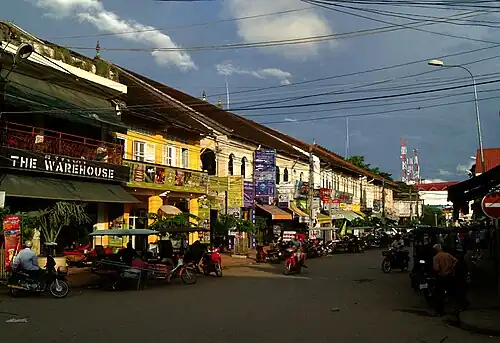
Siem Reap (សៀមរាប) is northwestern Cambodia's gateway to the Angkor Archaeological Park, the vast complex of 9th–15th century Khmer temples that draws millions of visitors a year. The town's name translates loosely as "Siam Defeated," commemorating a (possibly apocryphal) 16th-century victory over invading Thai forces. Once a sleepy provincial settlement, it has transformed in the past two decades into Cambodia's most cosmopolitan tourist hub — but unlike Phnom Penh, it has retained a low-rise, leafy character. Wide paved sidewalks, shaded boulevards along the Siem Reap River, and a building boom that has now largely cooled make it an unusually pleasant base for temple-touring.
The town centre is compact and easily walkable. The action concentrates around Pub Street and the Old Market (Psar Chas) area, with a dense weave of restaurants, bars, spas and boutiques. Wat Bo village to the east is quieter and increasingly home to mid-range guesthouses and craft shops, while the Kandal Village lane has emerged as a hipster pocket of independent cafés and design stores. The river divides the city north–south; most temples lie 6–8 km north of town.
Climate is tropical monsoon. The dry, cool season (November–February) is the most comfortable time to visit, with daytime highs around 30–32°C and very little rain — this is also peak tourist season. March–May is brutally hot (35–36°C and humid). The rainy season (June–October) brings afternoon downpours but lush green landscapes, dramatic skies over the temples, and full moats at Angkor Wat — September and October are the wettest months but offer the year's most photogenic light.
Planning Siem Reap? Tell us your dates and we’ll tailor the trip.
Ask on WhatsAppHow do you get there?
By Plane
🌍 Siem Reap–Angkor International Airport (SAI) opened in October 2023 and replaced the old in-town airport. It is Cambodia's largest airport but sits ~50 km southeast of the city, so transfers take longer and cost more than they used to. Direct international flights connect Siem Reap with Bangkok (both airports), Kuala Lumpur, Singapore, Luang Prabang, Hanoi, Ho Chi Minh City, Da Nang, and (from December 2025) Phu Quoc on AirAsia. Routes from Seoul, Kunming and Shanghai were due to launch in 2024. Cambodia Angkor Air operates domestic flights from Phnom Penh and Sihanoukville.
Airport transfers: US$8 per seat on the airport minibus, US$40 for a private minivan. Many hotels include complimentary transfers — confirm in advance.
By Car / Road
Bus is the workhorse of overland travel in Cambodia. Premium operators include Giant Ibis and VET Air Bus Express; budget operators include Larryta, Seila Angkor Express, E-Booking and Mey Hong. Book online via BookMeBus or Camboticket (e-tickets accepted on board); travel agents and guesthouses charge a US$1–2 fee per ticket. Many buses terminate at the eastern out-of-town bus station — a tuk-tuk into the centre should cost no more than US$2–3.
Approximate routes and fares:
- Phnom Penh (314 km): 5–8 hr; standard buses US$7–12, Giant Ibis Wi-Fi minibus US$15, Mekong Express minibus US$12 (4–5 hr).
- Battambang: ~3 hr, US$6–8.
- Sisophon / Poipet (Thai border via Aranyaprathet): regular services.
- Sihanoukville: 10–12 hr overnight sleeper, US$15–25, book a day ahead.
- Banlung (Ratanakiri): US$24. Mondulkiri: US$18–24.50. Stung Treng: US$20. Kratie: US$24. Preah Vihear: US$12.
International: from Bangkok, the scam-free direct Nattakan/government bus costs US$28; Giant Ibis runs a daily 07:45 service to Bangkok for US$43. Buses from Ho Chi Minh City take ~12 hr (US$18–27). From Laos there are services from Don Det (US$25–29) and Pakse (US$30).
⚠️ Border warning (Feb 2026): Avoid travelling within 50 km of the Thai border due to ongoing skirmishes. Many overland Thailand routes remain disrupted — check your government's travel advisory.
Shared taxi from the Poipet border is the fastest option: US$25–45 for a 4-seater, 2–3 hr. Walk past the roundabout to negotiate outside the police-controlled pricing zone. Private transfers from Poipet run US$65–75. Boat from Battambang across Tonle Sap (US$20–25, ~5 hr) is scenic in good weather but weather-dependent; the Phnom Penh ferry remains suspended since COVID.
The city centre is flat, compact and walkable, though sidewalks sometimes double as motorbike parking. For longer trips:
- Tuk-tuks (remorks): the default for tourists. In-town hops US$2–3; half-day around the city US$10–15. Always agree a price first.
- Motodops (motorbike taxis): cheapest option — US$0.50 (2,000 riel) for short hops, doubling at night or in bad weather. Helmets are not always provided.
- PassApp and Grab: both ride-hailing apps work well in Siem Reap with metered pricing and tuk-tuk/car options. Strongly preferred over street negotiation for fairness and convenience.
- Bicycle rental: US$1–8/day depending on bike quality; rent the day before if you want a pre-dawn Angkor ride, as shops typically open around 07:00. A green-painted cycle path runs along the river from the Hard Rock Cafe northwards.
- Electric mountain bike tours: pedal-assist guided rides for Angkor and surrounding jungle trails — useful in the heat.
Scam watch: Tuk-tuk drivers may insist a temple, restaurant or guesthouse is "closed" to steer you to a commission-paying alternative; politely decline and verify yourself. Avoid drivers who quote in riel and then demand dollars at an inflated rate.
What are the things to do?
The headline attraction is of course Angkor Archaeological Park (covered in its own dedicated guide), but Siem Reap and its immediate surroundings have plenty of their own draws.
Temples & archaeology (in town and nearby)
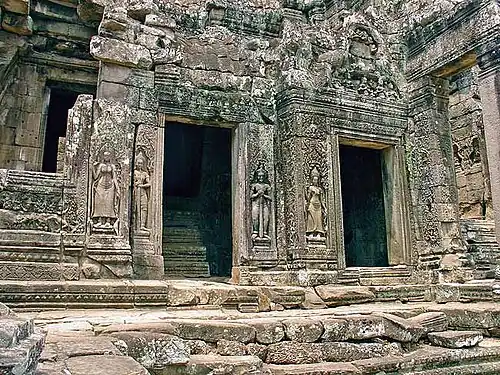
- Angkor Wat — the 12th-century Khmer state temple and symbol of Cambodia, 6 km north. Iconic at sunrise. Single-day pass US$37, 3-day US$62, 7-day US$72, sold only at the official ticket centre.
- Angkor Thom & the Bayon — the walled royal city with its unforgettable face-towers; included in the Angkor pass.
- Ta Prohm — the "jungle temple" entwined by silk-cotton roots; included in the Angkor pass.
- Banteay Srei — exquisite pink-sandstone carvings, 35 km northeast; included in the Angkor pass.
- Wat Thmey (Killing Fields Memorial) — sobering Khmer Rouge memorial stupa with a glass case of skulls, on the road to Angkor. Free; donations welcomed.
- Wat Bo — one of Siem Reap's oldest pagodas (18th century) with rare 19th-century Reamker murals, in town. Free.
- Wat Preah Prom Rath — riverfront monastery with a striking reclining Buddha, central. Free.
Museums
- Angkor National Museum — an excellent primer on Khmer civilisation before you tackle the temples. Adult US$12 (US$3 audio guide). Daily 09:00–18:00. Charles de Gaulle Boulevard.
- Cambodia Landmine Museum — founded by former child soldier Aki Ra, 25 km from town near Banteay Srei. Adult US$5. Daily 07:30–17:30.
- Angkor Panorama Museum — 360° painted panorama of the Khmer empire by North Korean artists. Adult US$15.
Lakes, villages & nature
Tonle Sap Lake — Southeast Asia's largest freshwater lake. Visit the floating villages of Kompong Phluk (stilt houses, flooded forest), Kompong Khleang (least touristed) or Chong Khneas (closest but most commercialised). Half-day tours from US$20–35.
Phnom Kulen National Park — the sacred mountain where the Khmer empire was founded in 802 CE; waterfalls, the river of 1,000 lingas, and a giant reclining Buddha. Entrance US$20; allow a full day, 50 km from town.
Beng Mealea — vast jungle-shrouded temple ruin, 60 km east. US$5 separate ticket.
Sunrise at Angkor Wat — the obligatory pilgrimage. Arrive by 05:00 to claim a spot at the reflecting pool.
Cooking class — learn fish amok, lok lak and beef loc lac at schools like Lily's Secret Garden Cooking School, Champey Cooking Class or The Sugar Palm; typically US$25–35 including market visit.
Phare, The Cambodian Circus — one of the most rewarding evenings in Cambodia: contemporary circus by graduates of the Phare Ponleu Selpak arts school in Battambang, with proceeds funding arts education. Nightly 20:00 at the Phare Big Top, west of town. US$18–38.
Apsara dance performance — classical Khmer court dance; respectable dinner-show venues include Apsara Theatre at Angkor Village and Rosana Broadway. US$25–40 with dinner.
Khmer massage and spa — spas range from US$8 street massages to Bodia Spa, Frangipani and the upscale Sokkhak River Spa (US$30–60).
Quad-biking and buggy tours through rice paddies and rural villages at sunset (US$45–70/half-day).
Hot-air balloon ride at Angkor — captive balloon south of Angkor Wat for sunrise/sunset; US$20.
Floating-village boat trip — combine with sunset over Tonle Sap.
Cycling the Angkor "small circuit" (17 km) at your own pace — possible early or late in the day.
Pub Street nightlife — central, neon-lit, unapologetically touristy; 50¢ draught beer specials are standard.
Volunteering and responsible tourism: contact the ConCERT office for vetted local NGO opportunities — avoid orphanage tourism, which is widely discouraged.
Planning Siem Reap? Want these on a customised itinerary?
Ask on WhatsAppWhere to eat?
Khmer cuisine is milder and more aromatic than its Thai or Vietnamese neighbours, leaning on fresh herbs, palm sugar, prahok (fermented fish paste), kroeung (lemongrass-based curry paste) and freshwater fish from the Tonle Sap. Don't miss fish amok (steamed coconut fish curry), lok lak (peppered stir-fried beef with lime-pepper dip), nom banh chok (rice noodles with green fish curry — a breakfast classic), kuy teav (pork-broth noodle soup), and grilled river fish. Vegetarian, vegan and gluten-free options are widely available; the larger Western-oriented restaurants cater well to dietary needs.
- Sister Srey Café (riverside) — beloved Aussie-run brunch spot supporting local students; smoothie bowls, Khmer breakfasts and excellent coffee. Mains US$5–8.
- Pou Restaurant (Wat Bo area) — modern Khmer in a stylish wooden house; a refined take on amok and lok lak. Mains US$7–12.
- Marum — TREE Alliance training restaurant for vulnerable young people; creative tapas-style Khmer dishes. Mains US$5–9.
- Cuisine Wat Damnak — chef Joannès Rivière's contemplative seasonal Khmer tasting menu; widely considered Cambodia's best restaurant. 5-course US$33, 6-course US$39 (Tue–Sat dinner; reserve).
- Embassy Restaurant — twin-sister-chef tasting menu showcasing Cambodian terroir, in the Kandal Village area. Tasting menu ~US$45.
- Malis Siem Reap — upscale modern Khmer in a garden setting; the Phnom Penh original is a national institution. Mains US$10–22.
- Pub Street is fine for a cheap beer and a 75¢ baguette but rarely for serious eating; venture two streets away for better food.
Where to drink?
Cambodia's national tipple is Angkor Beer, and Pub Street is famous for its 50¢ draught happy hours. The local rice wine (sraa) is potent and best approached with caution. Fresh sugarcane juice from street carts (1,000–2,000 riel) is excellent in the heat, as are coconuts straight from the husk. Iced Khmer coffee with sweetened condensed milk is a national addiction.
- Miss Wong — long-running 1920s Shanghai-style cocktail bar in The Lane; lychee martinis are the signature. Cocktails US$5–7.
- Asana Old Wooden House — cocktail bar in a traditional Khmer stilt house with a rice-wine tasting flight; centrally located.
- Picasso Tapas Bar — tiny standing-only Spanish bar in The Lane; convivial.
- Little Red Fox Espresso — quality third-wave coffee, Hap Guan Street.
- Sombai Liqueur — visit the Sombai distillery for tastings of infused rice liqueurs (ginger-chilli, anise-coffee, banana-cinnamon).
- Bouchon Wine Bar — a quiet riverside French-leaning wine list, a refuge from Pub Street's noise.
Water safety: drink only bottled or filtered water; reusable bottles can be refilled at many guesthouses and at Refill Not Landfill stations around town. Tap water is not potable. Ice in reputable establishments is generally safe (cylindrical ice with a hole through it is factory-made).
Planning Siem Reap? We’ll book the stays and dining for you.
Ask on WhatsAppWhere to stay?
Budget
- Onederz Hostel Siem Reap — modern pod-bed hostel with rooftop pool, central. Dorms from US$8, privates from US$20.
- Mad Monkey Siem Reap — sociable backpacker institution with a pool and lively bar. Dorms from US$7, privates from US$25.
Mid-range
- Golden Temple Hotel — long-running boutique near Pub Street with a famously generous welcome (free foot massage on arrival, free tuk-tuk rides). Doubles US$60–90.
- Viroth's Hotel — sleek modernist boutique in Wat Bo with a fine pool. Doubles US$120–160.
- Shinta Mani Angkor — Bensley-designed colonial-style boutique with strong social-enterprise credentials. Doubles US$180–250.
Upscale / heritage
- Raffles Grand Hotel d'Angkor — the city's grande dame, opened 1932; saltwater pool, Elephant Bar, and walking distance to the river. Doubles from US$350.
- Amansara — discreet Aman property in the former 1960s royal guest villa of King Sihanouk; 24 suites, private pools, in-house Angkor guides. From US$1,200/night (all-inclusive).
- Park Hyatt Siem Reap — refined city-centre option with a quiet courtyard pool. Doubles from US$280.
What should you buy?
Siem Reap is a strong shopping town for crafts and souvenirs.
- Old Market (Psar Chas) — central, busy day market for souvenirs, scarves, krama (the chequered Khmer scarf), spices and silver. Bargain hard — expect to pay 40–60% of the opening price.
- Angkor Night Market — the original tourist night market off Sivatha Boulevard; open ~16:00–midnight.
- Made in Cambodia Market — vetted local artisans, Saturdays at King's Road; better quality, fixed prices.
- Artisans Angkor (Les Chantiers Écoles) — workshop and showroom of a respected social enterprise reviving traditional silk weaving, stone and wood carving, and lacquerwork. Free workshop tours; high-quality (and pricier) goods. Stung Thmey Street.
- Senteurs d'Angkor — Khmer-inspired soaps, candles, teas and spice blends; central showroom.
- Kandal Village — a single lane of independent boutiques (Trunkh, Louise Loubatières, Sirivan) for design, ceramics and clothing.
- Theam's Gallery — workshop-gallery of designer Lim Muy Theam, on the western edge of town; lacquerware, textiles and contemporary Khmer art.
What to look for: silk scarves and clothing, krama, palm sugar, Kampot pepper, lacquerware, sandstone and soapstone carvings, shadow puppets, recycled-material handicrafts (Smateria, Saomao). Bargaining is expected at markets but inappropriate at fixed-price boutiques and social enterprises.
Where to go next?
- Angkor Archaeological Park (6–35 km north) — needs no introduction; allow 2–3 days minimum.
- Battambang (~170 km southwest, 3 hr by bus) — Cambodia's most charming colonial-era town, the bamboo train, circus school and street art.
- Phnom Penh (314 km southeast, 5–8 hr by bus or 45 min by air) — the capital, with the Royal Palace, National Museum and the sobering Tuol Sleng/Choeung Ek sites.
- Preah Vihear (~210 km northeast, ~4–5 hr) — clifftop 11th-century temple on the Thai border with one of the most dramatic settings in Southeast Asia (verify border-area security before going).
- Koh Ker (~120 km northeast, ~2.5 hr) — the briefly-imperial 10th-century capital, with its seven-tiered pyramid Prasat Thom rising from the jungle.
- Kampong Thom (~150 km southeast, ~2.5 hr) — a stopover for the pre-Angkorian 7th-century brick temples of Sambor Prei Kuk, a UNESCO site and atmospheric counterpoint to Angkor.
Nearby in Siem Reab
More places to explore around Siem Reap.
Guide content as of May 2026. Portions adapted from Wikivoyage, CC BY-SA 4.0.

Contact Us
Get in touch with us.
Get in touch
Contact Us
Tell us where you'd like to go and how you like to travel. A real Tripcuro planner — not a bot — will craft an itinerary around you.
- Personalised, hassle-free planning end-to-end
- Transparent pricing, no hidden costs
- 24/7 support for complete peace of mind