
This is Part 3 of our 13-part Angkor series. Read Part 1: Where is the Largest Hindu Temple in the World? | Part 2: The Walls Speak: Ramayana and Mahabharata at Angkor Wat
The outer gallery of Angkor Wat tells the epics in stone. The inner temple does something more personal: it changes religion in front of your eyes. Inside the central sanctuary of the largest Hindu temple on Earth sits a Buddha. And at the outer gates of that same temple, Vishnu is still worshipped daily. The two facts are not contradictory. They are the story of Cambodia.
Mount Meru in stone
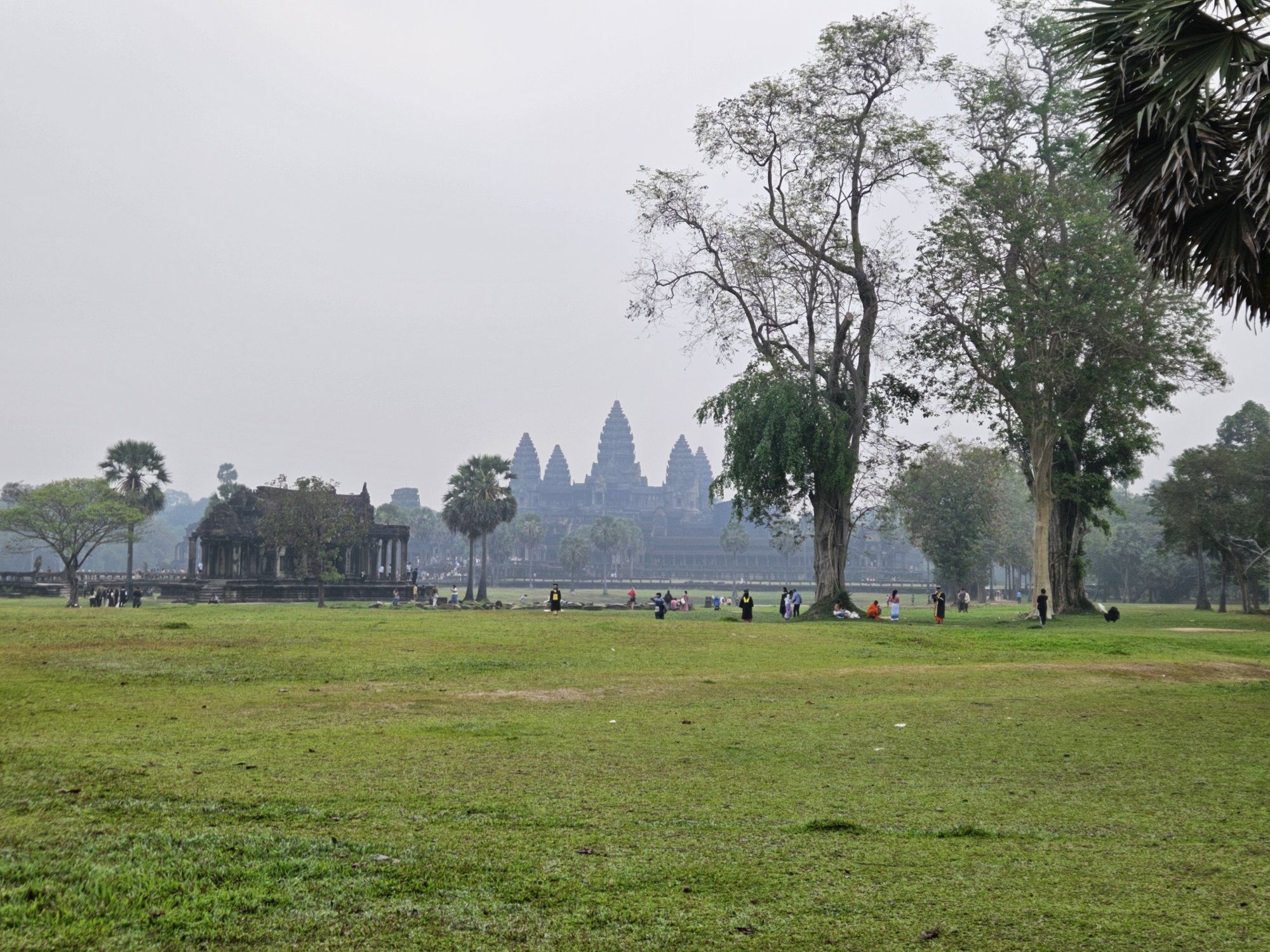
Angkor Wat was designed as a physical representation of Mount Meru, the axis of the universe in Hindu cosmology. The five central towers are the five peaks of Meru. The enclosing walls are the mountain ranges that ring the cosmic mountain. The moat is the cosmic ocean. The entire temple is a mandala in three dimensions: every measurement, every alignment, every level is symbolic.
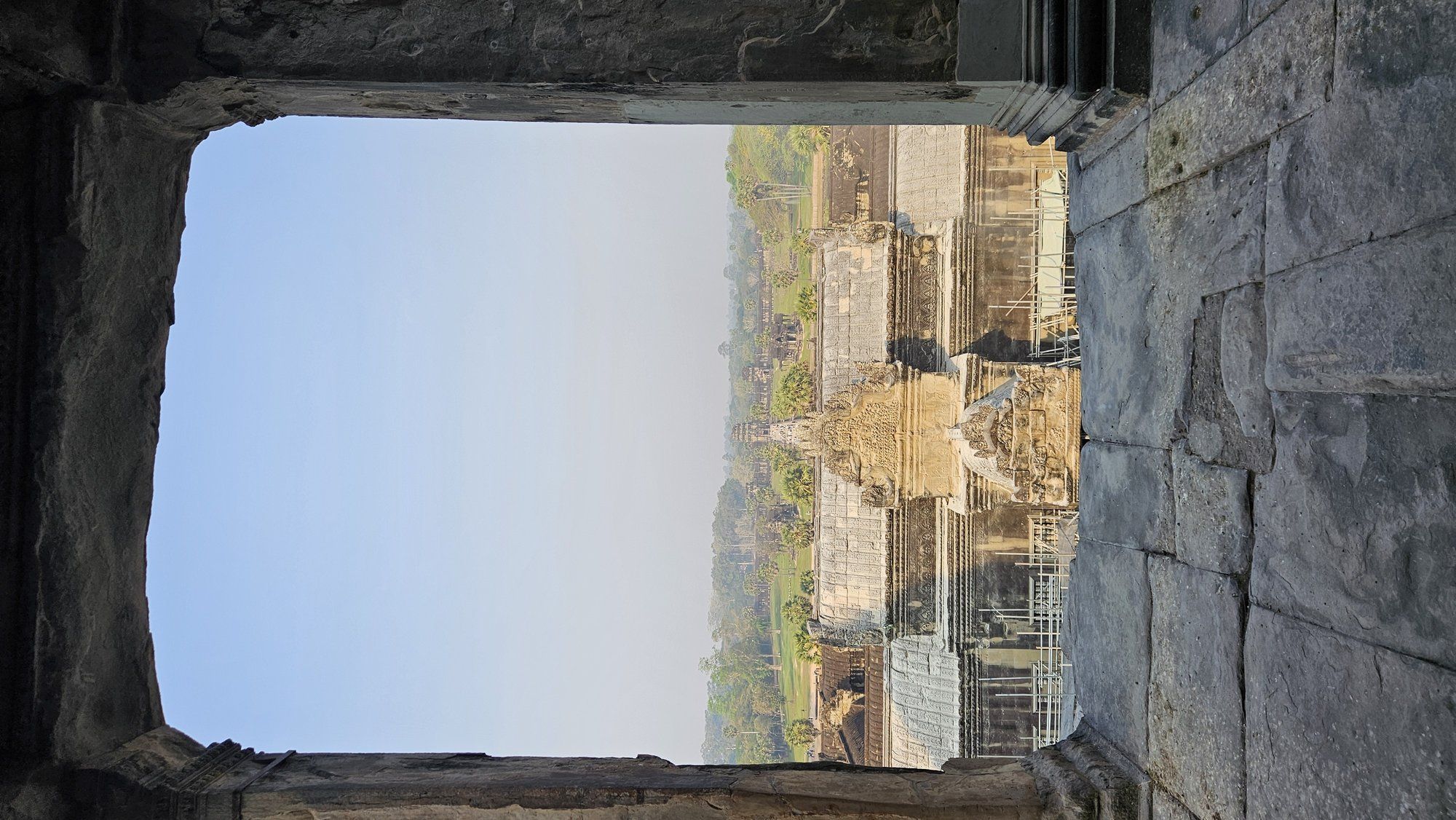
You feel this most acutely climbing toward the central sanctuary. The approach is axial: you cross the moat on a long causeway, pass through three progressively narrower galleries, and climb three steep terraces. Each level brings you physically higher and spiritually closer to the centre. The climb is the meaning. The central sanctuary, 65 metres above the ground, is the apex of both architecture and metaphor, the exact point where heaven was meant to meet earth.
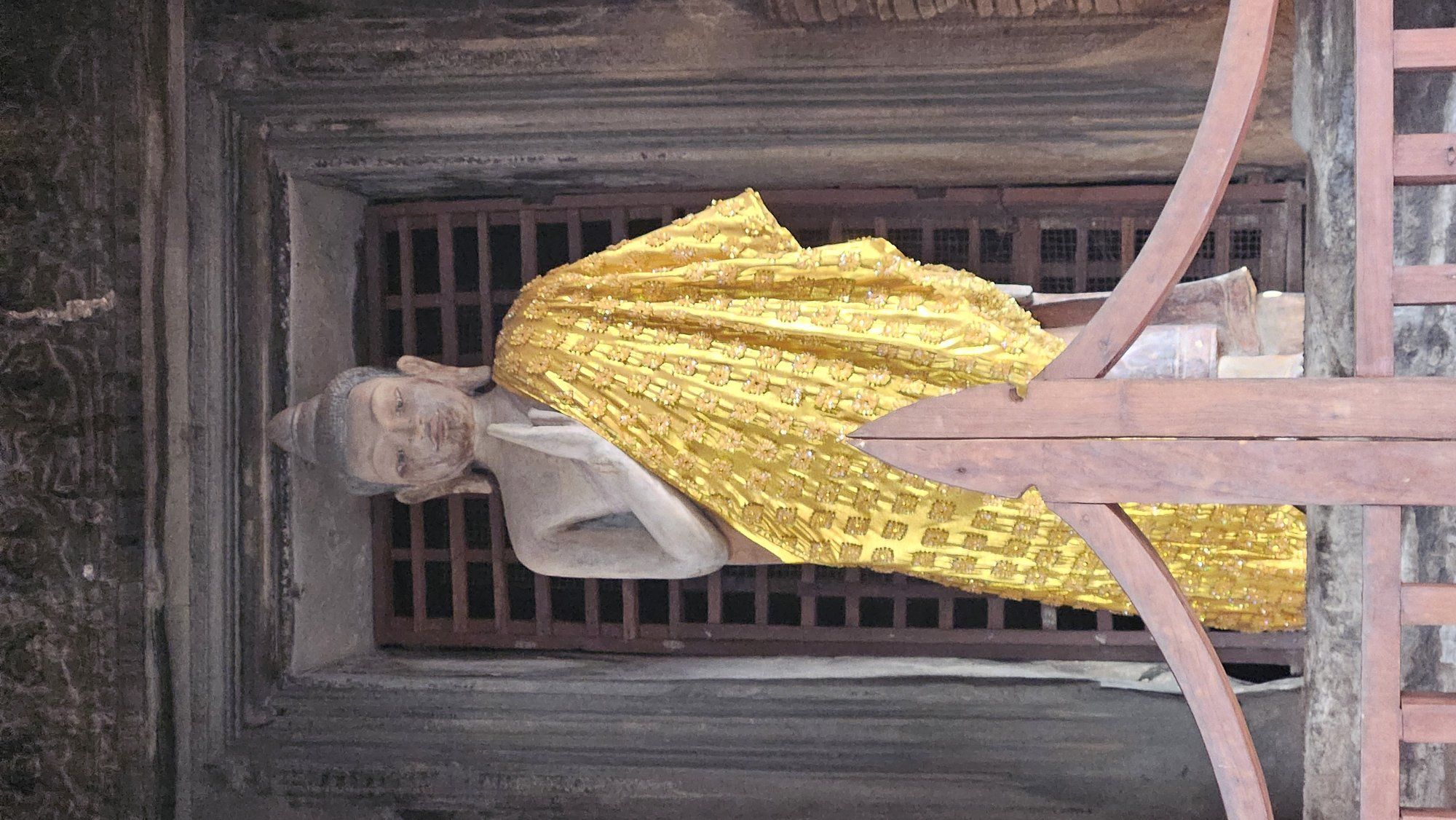
Aditya climbed to the top during his February 2025 visit. “There were four Buddhas, one in each direction,” he said. “Looked more recent compared to the temple.” The Buddhas are indeed later additions, placed there after Angkor Wat made its quiet transition from Hindu temple to Buddhist shrine.
The Vishnu that became Buddha
Angkor Wat was built in the early 12th century by King Suryavarman II and dedicated to Vishnu. The central sanctuary once held a statue of Vishnu, the king’s patron deity and his posthumous identity as a god.
A few decades later, King Jayavarman VII took the throne. He changed everything.
Jayavarman VII converted to Mahayana Buddhism. The reasons are specific and human. Aditya’s guide explained three: first, Jayavarman felt betrayed by the Hindu gods. The Cham kingdom had invaded and sacked Angkor in 1177, and he believed the gods had abandoned his people. Second, his wives were Buddhist. The influence was personal and intimate. Third, he genuinely found peace in Mahayana teachings and wanted to alleviate the suffering of his people, a core tenet of the bodhisattva path.
Under Jayavarman VII, the state religion shifted. But Angkor Wat was not destroyed or abandoned. Instead, the Buddha was simply placed where Vishnu had been. The temple kept its name, its structure, its orientation, and its carvings. The Vishnu imagery stayed on the walls. The new faith was layered over the old one, adding meaning rather than erasing it. This is the Khmer way: each layer of belief sits on top of the last, and both remain visible.
Vishnu still worshipped at the gates
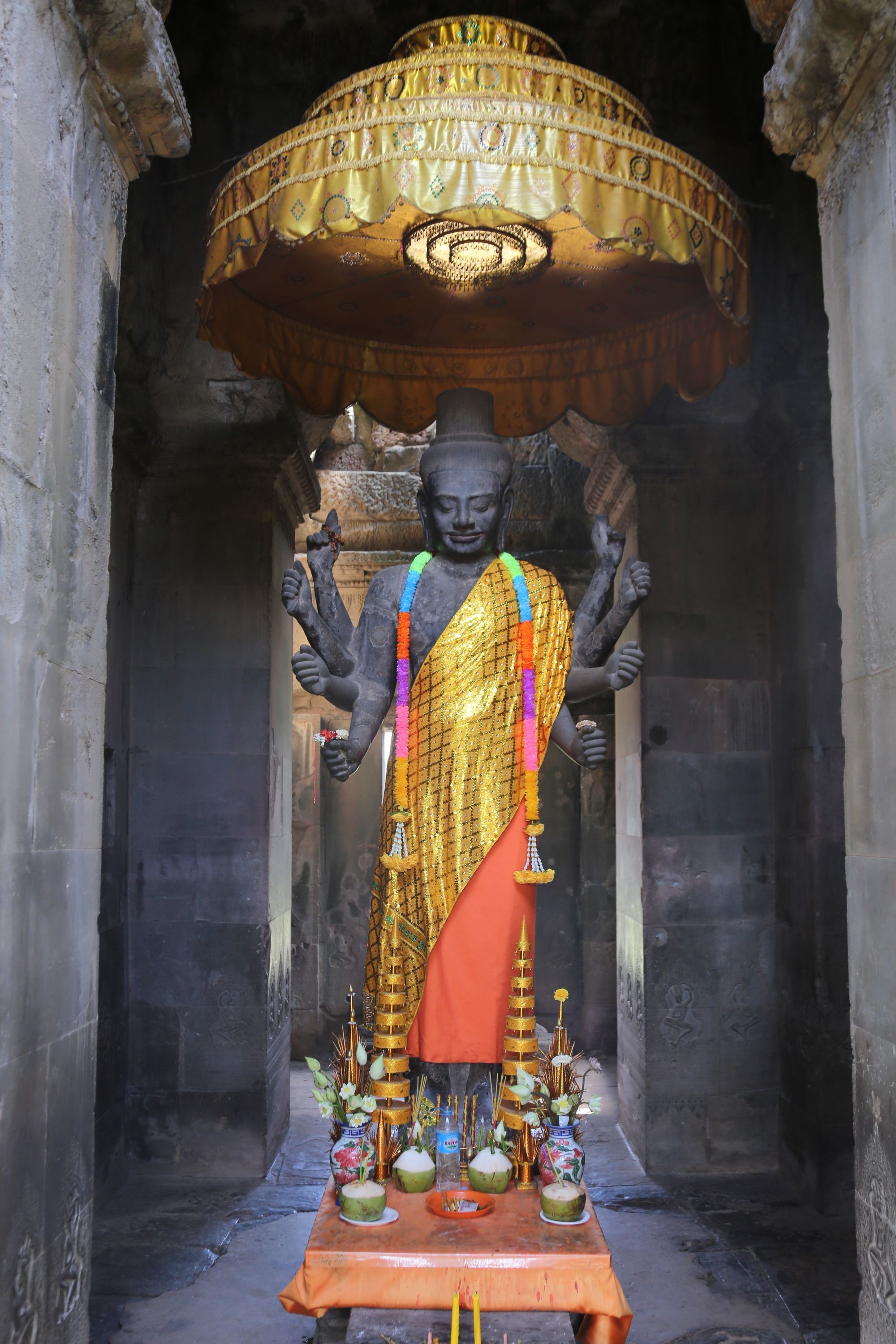
The transition was not complete. Walk to the outer gates of Angkor Wat today, and you will still see Vishnu being worshipped.
Aditya saw this firsthand: “Yes, some people were there worshipping, with incense and robe. The Vishnu for Khmers looks very different from Indian Vishnu.” The Khmer Vishnu has four arms holding his attributes, but the features, the crown, and the posture reflect local artistic traditions. It is recognizably Vishnu and recognizably Khmer, a Cambodian take on a Hindu god who never left.
The image stands in the western entrance pavilion, which is the only side of Angkor Wat that faces west. Most Khmer temples face east. Angkor Wat’s west-facing orientation is one of the clues that convinced scholars it was built as a funerary temple for Suryavarman II, since the west is associated with death in Hindu tradition. The same orientation now makes the Vishnu at the gates the first and last deity a visitor encounters.
The libraries
Between the third gallery and the central sanctuary sit two buildings sometimes called “libraries” by guides, though their exact purpose remains uncertain. They are rectangular structures with windows on both long sides, unusual in Khmer temple architecture, where windows typically face only one way. They may have held manuscripts or ritual objects. They may have been halls for chanting. What is certain is their elegance: the pillars, the balustrades, the false doors, and the stepped roof profiles make them among the most photographed structures in the complex after the towers themselves.
Three sunrises
Aditya watched sunrise at Angkor Wat for three consecutive mornings. Each day he found a spot along the reflecting pool west of the temple, where the five towers line up in the water. “The crowd was there, but not heavy,” he said. “I could get a great place every day for a look.”
The January-to-February window is the sweet spot. The weather is dry and cool, the crowds are manageable, and the sun rises at an angle that puts the towers in silhouette against a warm sky. Aditya spent three mornings there and never felt squeezed. By March the heat mounts and by December the peak-season crowds arrive. February is the month where everything lines up.
The still centre
The central sanctuary itself, in its current form, is a small chamber about four metres square, with four doors facing the cardinal directions. Four Buddha images sit facing outward. The ceiling is dark, lit only by the light that enters through the doors. The silence is complete: the sounds of the park, the guides, the other visitors, fall away at the threshold. It is the quietest place in the entire Angkor Archaeological Park. It has been a holy space for nine hundred years, and it feels like a holy space: contained, still, alive.
The climb is steep, the steps are high, and the heat is real. Everyone who makes it arrives sweating and breathing hard. That is the point. The architects designed the approach to cost you something. When you stand inside the centre of Mount Meru, they wanted you to feel that you had earned it.
Let Tripcuro Plan Your Angkor Journey
Tripcuro designs your Cambodia journey end to end — from flights out of your city and the Angkor temple pass to a Siem Reap stay with perks at Raffles Grand Hotel d’Angkor or Anantara Angkor. We time your sunrise, secure a guide who knows the Vishnu-to-Buddha story, and handle the vegetarian dining so you eat well without the guesswork. Tell us your dates and we will build a bespoke itinerary around them.