
Honiara
Capital Territory (Honiara), Solomon Islands
Why visit Honiara?
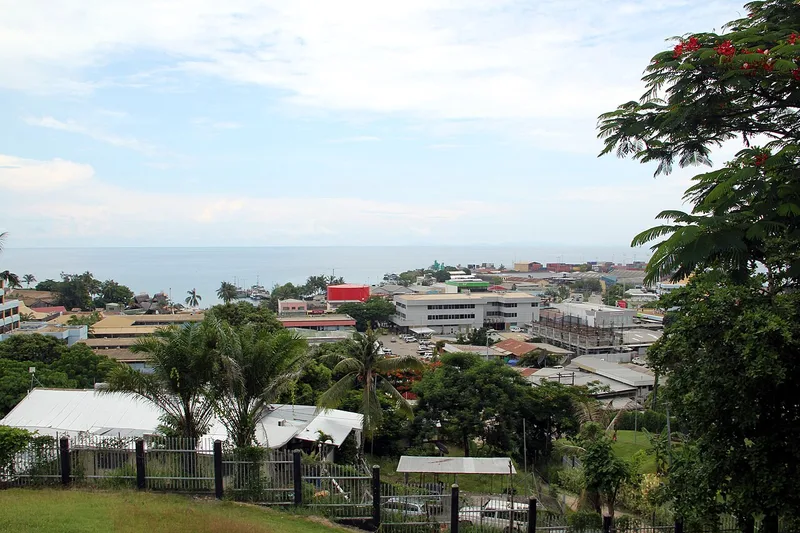
Honiara is the capital and largest city of the Solomon Islands, strung along the north coast of Guadalcanal between the foothills and the sea. It grew up almost by accident: after the brutal six-month Guadalcanal Campaign of 1942–43, the wartime infrastructure left behind by US forces around Henderson Field made the area more practical as an administrative centre than the pre-war capital of Tulagi, and the protectorate government moved here in 1952. The result is a city with two layers — a low-rise, slightly chaotic Melanesian port town of corrugated-iron rooflines, betel-stained sidewalks and roadside markets, sitting on top of one of the Pacific's most consequential battlefields. Rusting tanks, anti-aircraft guns and ship hulks are still scattered across the hills and the seabed of Iron Bottom Sound just offshore.
For most visitors Honiara is a base rather than a destination in itself: a place to organise dive trips to WWII wrecks, treks to jungle waterfalls, or onward flights to the Western Province lagoons. But it rewards a couple of days of slow exploration — the National Museum, the American and Japanese memorials on the ridges above town, the Central Market on a Saturday morning, and the expat-favourite Point Cruz Yacht Club at sunset. The city is small enough to walk end-to-end along Mendana Avenue (the single main coastal road) but spread out enough that you'll want a taxi or minibus for most trips.
Climate is hot, humid and tropical year-round, with daytime temperatures around 28–32°C. The drier, slightly cooler season runs roughly May to October and is the most comfortable time to visit; the wet season (November to April) brings heavy downpours, occasional cyclones and rough seas that close some dive sites. Honiara has seen periodic civil unrest — notably the 2006 and 2021 riots that damaged parts of Chinatown — so check current Australian (Smartraveller) or New Zealand (SafeTravel) advisories before booking.
Planning Honiara? Tell us your dates and we’ll tailor the trip.
Ask on WhatsAppHow do you get there?
By Plane
Honiara International Airport (HIR), still informally known as Henderson Field after its WWII namesake, is 11 km (6.8 mi) east of the city centre and is the only international airport in the country. Routes are limited and schedules thin:
- Solomon Airlines — the national carrier, with the most frequent international service, principally to Brisbane (4–5 times weekly) plus Nadi, Port Vila and Port Moresby.
- Fiji Airways — weekly service from Nadi.
- Air Niugini — twice weekly to Port Moresby and twice weekly to Nadi.
- Virgin Australia — flights to Brisbane on Tuesdays and Thursdays.
Solomon Airlines also operates the entire domestic network from HIR's adjacent terminal, with turboprop service to Munda, Gizo, Auki, Seghe and other provincial airstrips.
Taxis are the practical option from the airport into town; agree on the fare before getting in (typically SBD$150–250 / roughly USD$18–30 for the 20-minute drive, more after dark). Most mid-range and upscale hotels will arrange a pickup if you ask in advance — recommended if you're arriving on an evening flight. Public minibuses run along the main coast road past the airport gate (SBD$3 flat fare) but are awkward with luggage.
By Train
There is no rail network in the Solomon Islands.
By Car / Road
Honiara is on Guadalcanal and has no road or ferry connection to other islands. Within Guadalcanal, the single sealed coastal road (Kukum Highway / Mendana Avenue) runs roughly 50 km east–west through the city; inter-island transport is by plane or, for the adventurous, by overnight passenger/cargo ship from the main wharf to provincial centres such as Auki (Malaita) and Gizo (Western Province).
Minibuses are the backbone of local transport. They run constantly along the coastal strip from Henderson (near the airport) west to White River, stopping anywhere on request. The flat fare is SBD$3 regardless of distance. To board, flag one down; to get off, tap a coin on the metal handrail or call out "stop bas". They're crowded, hot, and easily the cheapest way around.
Taxis are plentiful, unmetered, and concentrated around Point Cruz, the Central Market, and the major hotels. Always agree on the fare before setting off. Rough guide: SBD$30–50 for short hops within the centre, SBD$80–150 for cross-town trips, SBD$150–250 to the airport. There's no Uber or equivalent ride-hailing app — phone bookings are arranged directly with drivers or through your hotel.
Walking works for the compact strip between Point Cruz, the Central Market and the National Museum, but pavements are patchy and the tropical heat is punishing by mid-morning. Avoid walking after dark, particularly on the back streets away from Mendana Avenue.
Scams and hassles are limited but pickpocketing at the Central Market is common — carry minimal cash and keep bags zipped and to the front. Watch for inflated "tourist" taxi fares at the airport and at the Mendana Hotel rank.
What are the things to do?
National Museum of the Solomon Islands — Located on Mendana Avenue across from the Mendana Hotel. Small but worthwhile collection on traditional Melanesian culture, shell money, custom dances and the WWII campaign. The grounds contain reconstructed traditional houses from different provinces. A good first stop to orient yourself. Modest entry fee (around SBD$30).
Guadalcanal American Memorial — On Skyline Ridge above Honiara. Four marble pylons commemorating the US and allied forces who fought the Guadalcanal Campaign, with sweeping views over Iron Bottom Sound and the airfield. Best visited in the early morning or late afternoon for the light. Free; taxi up and walk back down.
Japanese Peace Memorial — Atop Mount Austen, south of the city. Marks the Japanese dead of the campaign and looks across the same battlefield from the opposite ridgeline. Combine with the American Memorial for the full perspective. The road up is rough; arrange a taxi to wait.
Vilu War Museum — An open-air collection of WWII aircraft wrecks, artillery and tanks recovered from the jungle, about 25 km west of Honiara along the coast road. Privately run by a local family; entry around SBD$50. Plan a half-day trip with a taxi or hired driver.
Central Market — On Mendana Avenue, the social heart of the city. Best on Saturday mornings when villagers come in from across Guadalcanal with flowers, fruit, fish, shell jewellery and lavalavas. Worth visiting even if you buy nothing.
Point Cruz — The downtown harbour and commercial core, with the main wharf, banks, and the Yacht Club. The waterfront promenade is short but pleasant at sunset.
Tenaru Falls — A 60 m (200 ft) waterfall in dense rainforest east of the city. Reached by a guided trek (roughly 2–3 hours each way); arrange through a local operator or your hotel. Bring sturdy shoes, water and insect repellent.
Matanikau River and Falls — The river mouth, 20.5 km of palm-fringed tropical forest, sits right in town; the falls upstream are about a two-hour walk from the trailhead, itself a short bus ride from the centre. A popular half-day hike.
Aola Bay — On the north coast east of Honiara, a key landing point during the 1942 campaign and a quieter spot for swimming. Day-trip distance by car.
Iron Bottom Sound — Not a sight you visit so much as one you cross — the stretch of water between Guadalcanal and the Florida Islands holds dozens of WWII wrecks, both Japanese and Allied. For divers, this is the reason to come to Honiara.
Dive Iron Bottom Sound. Honiara is one of the world's great wreck-diving destinations. Accessible dives include the Bonegi I and Bonegi II (Japanese transports beached west of town, suitable from shore), the destroyer USS Aaron Ward, the submarine I-1, and a B-17 bomber. Tulagi Dive and Solomon Dive Adventures are the established operators; full-day two-tank trips typically run SBD$1,200–1,800.
Trek to a waterfall. Matanikau Falls (half-day) and Tenaru Falls (full-day) are the standards; both are best done with a local guide who can sort the landowner kastom fees that apply when crossing village land.
Tour the WWII battlefield. Engage a guide for a half-day circuit of Bloody Ridge (Edson's Ridge), the Alligator Creek battlefield, Henderson Field, and the American and Japanese memorials. Several local operators run dedicated battlefield tours; expect SBD$600–1,000 per person for a half-day.
Saturday morning at the Central Market. A short walking circuit through the market, the adjacent fish market, and the craft stalls fills a couple of hours and is the most reliable way to see daily Honiara life.
Sunday church service. South Seas Evangelical Church, next to the Central Market, has its main Sunday service at 9:30am and a smaller evening service at 5pm. The hymn-singing — in close, unaccompanied harmony — is one of the most striking things you'll hear in the Pacific. Visitors are welcome; dress modestly.
Snorkel Bonegi Beach. The shoreline west of the city has good shore snorkelling over the shallow ends of the Bonegi wrecks; bring your own gear or rent from a dive shop.
Sundowner at Point Cruz Yacht Club. Not really a "yacht club" in any exclusive sense — it's the long-standing expat watering hole, with cheap beer, simple meals and a deck over the harbour.
Planning Honiara? Want these on a customised itinerary?
Ask on WhatsAppWhere to eat?
Honiara's food scene is small but more varied than its size suggests, thanks to a sizeable Chinese trading community, a long-running Indian presence, and a steady flow of Australian and Kiwi expats. Local Solomon Islander cuisine centres on root crops (cassava, taro, sweet potato, yam), reef fish, and coconut — often baked together in an earth-oven motu. Imported food is expensive; eating local is both cheaper and more interesting. Vegetarian options exist but are limited outside the Indian restaurants and hotel dining rooms.
- Central Market (budget) — Fresh fish and cassava chips, green drinking coconuts, banana fritters, and fruit. The cheapest lunch in town; SBD$20–40 will fill you up. Open daily, busiest Saturday morning.
- Eateries near the National Museum (budget) — A row of small cafés to the left of the museum (facing it from Mendana Avenue) serve fish 'n' cassava chips, sandwiches, instant coffee and cold drinks. Reliable lunch stop.
- Point Cruz Yacht Club (budget–mid) — Simple, generous plates — burgers, fish and chips, curries, steaks — at expat-friendly prices (mains SBD$80–150). Open most evenings; the deck is the social hub.
- The Taj Mahal (mid) — Downtown. Good Indian and Sri Lankan cooking, a bit pricey by local standards (mains SBD$120–200) and only open at certain times of day — call ahead.
- Honiara Hotel restaurants (mid–upscale) — The hotel overlooking Chinatown runs several outlets including a long-standing French-leaning restaurant and a more casual sandwich-and-burger room. Reliable when other options are closed.
- Heritage Park Hotel — Capitana Restaurant (upscale) — Waterfront setting in the centre of town, the most polished sit-down dining in Honiara. Pacific-Asian menu with good fresh fish; mains SBD$180–280.
Where to drink?
The local beer is SolBrew, brewed in Honiara and sold in green-labelled bottles almost everywhere; expect SBD$25–40 at a bar, less at supermarkets. Imported beers, Australian wines and basic spirits are available at hotel bars at substantial markups. Kava (locally called waka) is occasionally served at expat gatherings but is less culturally central here than in Fiji or Vanuatu.
Non-alcoholic options worth knowing: green coconuts (kulau) sold from market trolleys for SBD$5–10 are the local thirst-quencher; freshly pressed noni and tropical fruit juices appear at hotel breakfasts. Coffee is mostly instant; for proper espresso, head to a hotel café (Heritage Park, Mendana) or to one of the Chinatown cafés.
Bars are concentrated in the hotels and at Point Cruz:
- Point Cruz Yacht Club — the default after-work venue, cheap beer, harbour breeze.
- Lime Lounge (Heritage Park Hotel) — cocktails and wine, the closest thing to a "smart" bar.
- Honiara Hotel — multiple bars across the property, popular with longer-term expats.
Be aware that Honiara has a sometimes-enforced liquor curfew (typically alcohol sales stop late evening and on Sundays in shops, though licensed restaurants serve later); rules have shifted over the years, so check locally.
Water safety: tap water in Honiara is not reliably safe for visitors. Drink bottled or filtered water; reputable hotels filter their supply but ask if unsure. Ice in established restaurants is generally fine.
Planning Honiara? We’ll book the stays and dining for you.
Ask on WhatsAppWhere to stay?
Budget
- United Church Resthouse, Lower Vavaya Ridge Road, ☎ +677 20028 — Simple, church-run accommodation, basic rooms, fans, communal bathrooms. From around SBD$200/night.
- Chester Resthouse — Long-running budget guesthouse popular with backpackers and missionaries. From around SBD$250/night.
Mid-range
- Honiara Hotel, Chinatown — Sprawling, slightly dated complex overlooking Chinatown with multiple restaurants, a pool, and the city's best-known bar scene. Doubles from around SBD$1,200/night.
- King Solomon Hotel — On the hillside above the centre with views over Iron Bottom Sound, a pool, and easy taxi access to town. Doubles from around SBD$1,300/night.
Upscale / heritage
- Heritage Park Hotel, Mendana Avenue — The newest and best-equipped property in town, on the waterfront in the centre, with the smartest restaurant and bar in Honiara, a pool, gym and conference facilities. Doubles from around SBD$2,200/night.
- Mendana Hotel (Solomon Kitano Mendana) — The grande dame of Honiara hotels, dating from the 1970s, on the seafront with a pool, two restaurants, and the most central location. Doubles from around SBD$2,000/night.
- Iron Bottom Sound Hotel — Smaller boutique-style property with views over the namesake water.
What should you buy?
Shopping in Honiara is small-scale and crafts-focused — don't come expecting malls.
- Central Market — Beyond the produce, the covered section sells lavalavas (sarongs) in brightly dip-dyed designs, shell-money necklaces, woven bilum bags, and handmade children's clothing. Prices are generally fixed and low; light bargaining (10–15%) is accepted but not expected.
- Panatina Plaza carpark — The covered area frequently hosts handicraft sellers offering wooden carvings, particularly the dark ebony and kerosene-wood carvings the Solomons are known for (nguzunguzu canoe-prow figures, bowls inlaid with nautilus shell, fish and dolphin sculptures). Quality and price both vary; inspect carefully.
- Coastal-strip craft shops — A scattering of dedicated shops along Mendana Avenue sell similar carvings, plus tapa cloth, woven baskets and shell jewellery. Prices are higher than the market but quality is generally curated.
- Secondhand-clothing shops ("Bale shops") — Numerous along the main street; popular with locals, of limited interest to most visitors.
- Supermarkets — Bulk Shop, Frangipani and similar stores along Mendana Avenue stock imported groceries, sunscreen, batteries and basic toiletries at noticeably higher prices than in Australia.
What to take home: a nguzunguzu carving, a length of bright lavalava cloth, and a strand of shell money — the three things you'll see nowhere else.
Where to go next?
- Tulagi & the Florida Islands (40 km / ~2 hr by boat) — The pre-war capital, now a sleepy outpost with WWII wrecks (the USS Kanawha, Japanese subs), good diving, and a glimpse of small-island Solomons life.
- Marau Sound (eastern Guadalcanal, ~2.5 hr drive + boat) — Sheltered lagoon with a scattering of small islands, good for swimming, kayaking and a low-key resort stay at Tavanipupu.
- Auki, Malaita (~30 min flight) — The "real" Solomons: traditional shell-money making villages, the Langa Langa Lagoon's man-made artificial islands, and Kwaio mountain culture inland.
- Munda, Western Province (~1 hr 15 min flight) — Gateway to some of the best diving and snorkelling in the Pacific, with Skull Island, WWII relics, and resort options at Agnes Lodge and Munda Cove.
- Gizo, Western Province (~1 hr 30 min flight) — The country's second town and the main hub for the Western Province lagoons, including Kennedy Island (where JFK's PT-109 crew swam ashore) and outstanding reef diving.
- Tetepare Island (~1 hr flight to Munda + boat) — The largest uninhabited island in the South Pacific, community-run as a conservation area with rustic eco-lodge stays, leatherback turtles, and dugongs.
Guide content as of May 2026. Portions adapted from Wikivoyage, CC BY-SA 4.0.

Contact Us
Get in touch with us.
Get in touch
Contact Us
Tell us where you'd like to go and how you like to travel. A real Tripcuro planner — not a bot — will craft an itinerary around you.
- Personalised, hassle-free planning end-to-end
- Transparent pricing, no hidden costs
- 24/7 support for complete peace of mind