
Capital Territory (Honiara)
Solomon Islands · Capital territory · 1 destination with guides
Photography coming soonWhy visit?
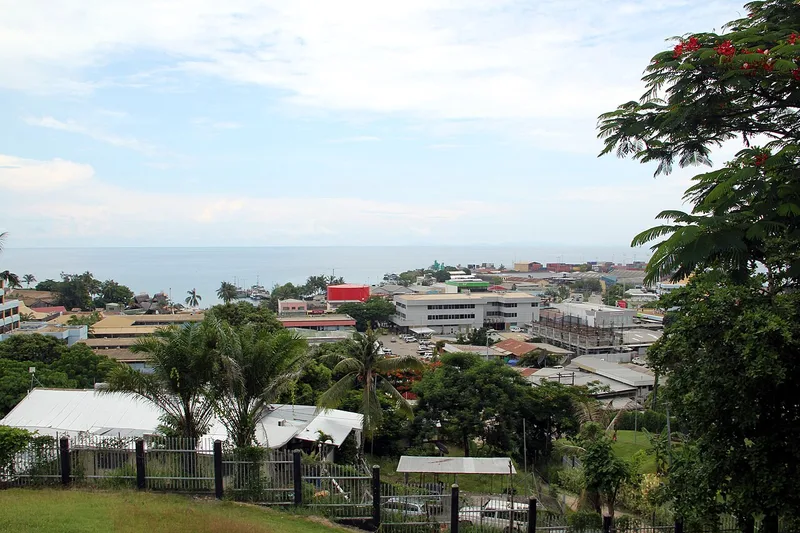
The Capital Territory is a small administrative zone on the northwestern coast of Guadalcanal Island, encompassing the Solomon Islands' capital and largest city, Honiara. The territory stretches along the shores of Iron Bottom Sound — named for the dozens of World War II shipwrecks lying on the seabed — and rises into the rugged, jungle-covered hills of Guadalcanal's interior. It is the political, economic, and transport hub of the Solomon Islands, home to the national government, the country's main international airport, and the vast majority of its commercial activity.
Honiara itself is a modest, low-rise city of around 85,000 people, spread thinly along the Kukum Highway and clustered around Point Cruz, the main harbour area. The city lacks the polished infrastructure of many Pacific capitals but compensates with extraordinary WWII history, vibrant open-air markets, and a gateway position to the natural wonders of the Solomon Islands archipelago. The surrounding territory takes in coastal villages, the Tenaru and Mataniko rivers, and the battlefield ridges where some of the Pacific War's fiercest fighting took place in 1942–43.
The Capital Territory is where most visitors to the Solomon Islands arrive, acclimatise, and provision before heading to outer islands. It is not a resort destination in itself, but its history, markets, and dive sites make it a compelling stop for at least two or three days.
When is the best time to visit?
The Capital Territory has a tropical climate with consistent warmth year-round (27–32°C) and high humidity. The drier season runs from April to November, with May through September offering the most comfortable conditions — lower rainfall, lighter humidity, and calmer seas ideal for diving and boat travel. The wetter season from December to March brings heavier rains, occasional cyclones, and rougher seas, though the territory is less affected by cyclones than islands further east. The Solomon Islands Cultural Festival (typically held in July) is a major draw if your visit coincides with it.
Tell us your dates and we'll shape a Capital Territory (Honiara) route around them.
WhatsAppHow do you get around?
Honiara is the only significant urban centre in the Capital Territory, and most movement within the territory takes place along the single main road — the Kukum Highway — which runs eastward from Henderson Airport (about 10 km east of Point Cruz) through the city centre and onward to the eastern coast of Guadalcanal.
Within Honiara, minibuses (locally called buses) are the primary form of public transport, running frequent routes along the main highway and into suburbs. Fares are typically 5–10 Solomon Islands dollars (SBD). Taxis are available and inexpensive for short trips within town (20–50 SBD); negotiate the fare before boarding as meters are not used. There is no rail system. Walking is practical in the compact Point Cruz / Mendana Avenue area but distances between suburbs require motor transport. For excursions to WWII battlefields east of the city, hire a taxi or arrange a tour through your hotel.
Where should you go?
- Honiara — The capital city and sole urban centre, home to the Central Market, the National Museum, WWII memorials, and the country's main waterfront at Point Cruz.
Want the scenic legs and stays booked for you? Just ask.
WhatsAppWhat should you eat?
The Capital Territory's food culture blends Solomon Islands staples with influences from Chinese, Southeast Asian, and expatriate communities. The Central Market in Honiara is the culinary heart: vendors sell fresh tropical fruit (pawpaw, pineapple, mango, banana), vegetables, reef fish, and kavu (a local leafy green cooked in coconut cream). Staples include root crops (cassava, taro, sweet potato), reef fish and shellfish, and dishes cooked in coconut milk. Rice is widely eaten.
For prepared food, the market area has small food stalls selling rice with fish or chicken for 15–30 SBD. The Heritage Park Hotel and King Solomon Hotel both have restaurants offering international and local cuisine at higher prices (80–200 SBD for a main). Chinese-run restaurants along Mendana Avenue serve affordable stir-fries and noodle dishes (30–60 SBD). Fresh coconut water is sold everywhere. Vegetarian options are limited outside of fruit and root crops — most traditional dishes involve fish or meat.
What is the culture like?
The Solomon Islands Cultural Festival, typically held in July, brings together traditional dance, music, crafts, and canoe racing from across the archipelago, with Honiara's Lawson Tama stadium as the main venue. The event showcases the extraordinary cultural diversity of the country's nine provinces and is the best single opportunity to experience Solomon Islands traditional culture.
Local arts include woodcarving (particularly from Malaita and the western provinces), shell-money production, and intricate woven baskets and mats. The National Museum on Mendana Avenue has a small but worthwhile collection of traditional artefacts and WWII relics. Sunday is observed as a rest day throughout the territory — most shops close and church services (primarily Anglican, Catholic, and South Sea Evangelical) are well attended.
Travelling during a festival? We'll plan around the crowds.
WhatsAppWhat are the standout experiences?
- WWII Battlefield Tour — Visit Bloody Ridge, the US War Memorial, and the Japanese memorial along the ridgelines east of Honiara, where some of the Pacific War's most intense ground combat took place during the Guadalcanal Campaign (August 1942 – February 1943). Guided tours can be arranged through hotels.
- Diving Iron Bottom Sound — The waters off Honiara harbour contain dozens of WWII-era shipwrecks, including Japanese and American vessels, making it one of the world's most significant wreck-diving destinations. Operators such as Tulagi Dive offer guided dives.
- Central Market Experience — Spend a morning at Honiara's bustling Central Market, where vendors from across Guadalcanal sell produce, betel nut, shell money, and fresh fish in a vibrant, colourful atmosphere.
- Mataniko River Cave — A short drive and hike from Honiara leads to this limestone cave system with a river flowing through it, offering an accessible caving and swimming adventure.
- Vilu War Museum — An outdoor museum about 25 km west of Honiara displaying WWII relics including aircraft remains, artillery, and weapons recovered from the Guadalcanal battlefields.
Top Destinations
Every destination in Capital Territory (Honiara) with a guide — tap a place for the full guide.
Pair the highlights of Capital Territory (Honiara) into one easy trip — we'll plan the route.
WhatsApp
Contact Us
Get in touch with us.
Get in touch
Contact Us
Tell us where you'd like to go and how you like to travel. A real Tripcuro planner — not a bot — will craft an itinerary around you.
- Personalised, hassle-free planning end-to-end
- Transparent pricing, no hidden costs
- 24/7 support for complete peace of mind