
Otgontenger Uul
Dzavhan, Mongolia
Why visit Otgontenger Uul?
Otgontenger Uul (Mongolian: Отгонтэнгэр уул, meaning "Youngest Sky Mountain") is the highest peak of the Khangai mountain range in western Mongolia, rising to 4,021 metres above sea level. Located in the Otgontenger Strictly Protected Area within Dzavhan Province (MN-057), it is one of Mongolia's most sacred mountains, revered in both shamanic and Buddhist traditions. The mountain supports small glaciers and permanent snowfields — a rare feature in Mongolia — and its summit area is one of the few places in the country where true alpine conditions prevail.
The Otgontenger Strictly Protected Area covers approximately 95,000 hectares of the surrounding Khangai highlands, encompassing alpine meadows, larch forests, glacial valleys, and several small lakes. The area is home to endangered species including the snow leopard, ibex, and argali sheep. The ecosystem transitions from forest-steppe at lower elevations through subalpine meadows to bare rock and ice at the summit.
The mountain is not a "destination" in the conventional sense — there is no village, no permanent settlement, and no tourist infrastructure at its base. Access is through the nearby district centre of Aldarkhaan (roughly 30–40 km to the northeast) or from Uliastai, the provincial capital approximately 100 km to the west. The area is accessible only from late June through September; heavy snow closes all approaches for the remainder of the year. A permit from the protected area administration is required for entry.
Planning Otgontenger Uul? Tell us your dates and we’ll tailor the trip.
Ask on WhatsAppHow do you get there?
By Car / Road
Access to Otgontenger Uul is entirely by road, and only by 4×4 vehicle. From Uliastai, the drive to Aldarkhaan and onward toward the protected area boundary takes approximately 3–5 hours depending on road conditions, covering roughly 100 km on unpaved tracks. From Tosontsengel (to the east), Aldarkhaan is roughly 80 km via rough tracks. The final approach to the mountain base requires off-road driving or horseback travel, as there are no maintained roads within the protected area itself.
There are no bus services to the Otgontenger area. Hiring a private 4×4 with driver in Uliastai is the most practical option. Arrange permits in advance through the Dzavhan Province environmental office in Uliastai. Carry extra fuel — there are no fuel stations between Uliastai and the mountain.
There is no local transport infrastructure. Movement within the protected area is on foot, horseback, or by the same 4×4 that brought you in. Horse hire can sometimes be arranged through herder families in the Aldarkhaan area. Hiking trails are informal — marked routes exist in the main valley approaches, but navigation beyond the lower valleys requires local knowledge or a guide. A local guide is strongly recommended, both for route-finding and for arranging the necessary permits and herder camp stays.
What are the things to do?
Otgontenger Uul summit and glaciers — The main attraction. Even without summiting (which requires mountaineering equipment and experience), the views of the glaciated peak from the upper valleys are spectacular. The mountain's north face holds permanent ice and several small glaciers, increasingly rare in Mongolia as climate change accelerates glacial retreat.
Alpine valleys and meadows — The valley systems feeding into the Otgontenger massif feature pristine subalpine meadows carpeted with wildflowers in July and August, backed by larch forest. The primary approach valley runs roughly east from the mountain toward Aldarkhaan.
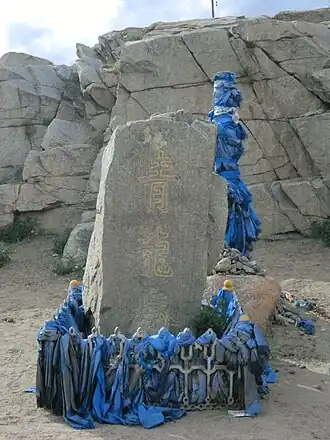
Ovoo (sacred cairns) — Stone cairns marking sacred sites are found throughout the approach routes. These are active places of worship; visitors should walk clockwise around them, adding a stone or a blue silk scarf (khadag) as an offering.
Wildlife — The protected area harbours ibex, argali sheep, marmots, and (rarely) snow leopard sign. Birdlife includes golden eagles, lammergeiers (bearded vultures), and various alpine species.
Multi-day trek to the glacier base — The signature experience. A 3–5 day horse or foot trek from Aldarkhaan through the primary valley to the base of the Otgontenger glaciers. The route passes through forest, subalpine meadow, and moraine fields. Arrangements for horses, guide, and food must be made in advance through Aldarkhaan or Uliastai.
Peak ascents — Otgontenger's main summit (4,021 m) is a serious mountaineering objective requiring crampons, ice axes, and glacier travel experience. Permits from the protected area administration are mandatory. A few lower sub-peaks (3,200–3,600 m) are accessible to experienced hikers without technical equipment.
Ovoo worship and spiritual practice — Visitors with an interest in Mongolian spiritual traditions can observe or participate (if invited) in ovoo ceremonies. These are informal and seasonal — more common during summer Naadam-related rituals and the autumn herding season.
Wildlife observation — With patience and a good pair of binoculars, ibex can be spotted on the upper slopes; golden eagles and lammergeiers soar above the valleys. Snow leopard sightings are extremely rare but tracks and scrapes are occasionally found.
Planning Otgontenger Uul? Want these on a customised itinerary?
Ask on WhatsAppWhere to eat?
Food in the Otgontenger area comes from two sources: what you carry in and what herder families offer. Staple herder hospitality includes suutei tsai (milk tea), aaruul (dried curd), öröm (clotted cream), and sometimes borts (air-dried meat). If staying with a herder family, expect mutton or goat prepared simply — boiled, or in a khorkhog if stones and a metal container are available.
There are no restaurants or cafés. Carry a portable stove, cooking fuel, and provisions (rice, noodles, canned meat, instant soup, dried fruit, nuts) for the duration of your trek. Water from streams is generally clean in the upper valleys but should be treated as a precaution.
Where to drink?
Suutei tsai (salted milk tea) is the universal beverage offered by herder hosts. Airag (fermented mare's milk) may be available in summer from herders with milking mares. For everything else, bring your own. Carry at least 2–3 litres of water per person per day for trekking. Stream water in the upper valleys is generally potable after basic treatment (filter or purification tablets).
Planning Otgontenger Uul? We’ll book the stays and dining for you.
Ask on WhatsAppWhere to stay?
There is no formal accommodation in the Otgontenger area.
- Budget: Camping is the standard option. Bring a four-season tent rated for high winds and sub-zero temperatures — even in July, overnight temperatures at altitude can drop below freezing. Campsites are available on flat ground in the main valley approaches.
- Herder ger stays: Local herder families near Aldarkhaan and along the approach routes sometimes host visitors in their gers for a modest payment or gift (cash, supplies, or fuel). These arrangements are informal and depend on finding families willing to host; a local guide or driver can facilitate.
What should you buy?
There are no shops, markets, or commercial establishments in the Otgontenger area itself. All supplies — trekking provisions, camping fuel, and emergency supplies — must be purchased in Uliastai or Tosontsengel before departing. Herder families along the approach routes may offer dairy products (aaruul, öröm) and dried meat for sale or barter, typically for modest cash payments or trade in goods like fuel or cigarettes. Handmade felt items or small woven goods are occasionally available from herders as informal souvenirs.
Where to go next?
- Uliastai (~100 km west, 3–5 hours by 4×4): The Dzavhan provincial capital, with basic hotels, restaurants, and a local museum. The logical base before and after visiting Otgontenger.
- Aldarkhaan (~30–40 km northeast, 1–2 hours by 4×4): The nearest district centre, with a small market and the closest accommodation to the protected area boundary.
- Tosontsengel (~80 km east via rough tracks, 3–4 hours by 4×4): A small town on the Khangai steppe, and a waypoint on the long overland route east toward Kharkhorin and Ulaanbaatar.
- Khyargas Nuur (~300 km west of Uliastai, full day's drive): A large saltwater lake in western Dzavhan known for hot springs and migratory birdlife.
- Kharkhorin / Erdene Zuu (~400 km southeast via Tosontsengel, 8–10 hours by 4×4): The site of the ancient Mongol capital Karakorum, with the Erdene Zuu monastery — one of Mongolia's most important cultural heritage sites.
Nearby in Dzavhan
More places to explore around Otgontenger Uul.

Guide content as of June 2026.

Contact Us
Get in touch with us.
Get in touch
Contact Us
Tell us where you'd like to go and how you like to travel. A real Tripcuro planner — not a bot — will craft an itinerary around you.
- Personalised, hassle-free planning end-to-end
- Transparent pricing, no hidden costs
- 24/7 support for complete peace of mind