
Fuji
Shizuoka, Japan
Why visit Fuji?
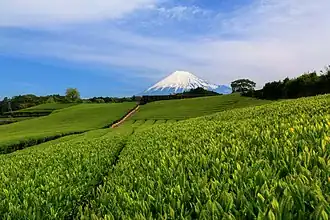
Fuji (富士市) is a mid-sized industrial city in eastern Shizuoka Prefecture, stretching from the Pacific coast at Ōbu Port inland to the southern foothills of Mount Fuji. The city takes its name from the sacred mountain that dominates the northern skyline, though Fuji city itself sits on the lowland plain of the Fuji River and is not a base for climbing. Its economy centres on paper manufacturing — the Fuji Paper Mill complex is one of Japan's largest — and a thriving port that handles timber, oil, and general cargo.
Despite its industrial character, Fuji offers genuine appeal for travellers. The Shiraito Falls (白糸の滝), a wide curtain of spring-fed water cascading over volcanic rock, lie within the city's northern wards and are among Japan's most celebrated waterfalls. The coastline, while not a resort destination, provides broad views across Suruga Bay to the Izu Peninsula. The city is a convenient stop on the Tōkaidō corridor between Shizuoka and Numazu, with easy rail and road access to both Mount Fuji climbing routes and the Izu Peninsula.
The climate is mild year-round: winters rarely drop below 5°C and summers are warm but tempered by sea breezes from Suruga Bay. The rainy season (mid-June to mid-July) brings persistent drizzle, and typhoon risk peaks in September. Autumn is the clearest season, with the best Fuji views from September through November.
Planning Fuji? Tell us your dates and we’ll tailor the trip.
Ask on WhatsAppHow do you get there?
By Plane
The nearest airport is Mt. Fuji Shizuoka Airport (FSZ), about 40 km southwest in Makinohara/Shimada. Fuji Dream Airlines and ANA operate domestic flights to Sapporo, Fukuoka, Kagoshima, and Okinawa. International routes serve China, Hong Kong, and South Korea. Airport limousine buses reach Shizuoka Station in about 1 hour (¥1,000); from there, transfer to JR for Fuji. Chubu Centrair (NGO) near Nagoya and Tokyo Haneda (HND) are the closest major international gateways, each about 1.5–2 hours by Shinkansen.
By Train
Fuji Station (富士駅) sits on the JR Tōkaidō Main Line, with frequent Tokaido Line services. The JR Minobu Line also terminates here, connecting northward to Kōfu via Minobu.
- Shizuoka: ~20 min by Shinkansen (¥2,340) or ~25 min by local train (¥490)
- Numazu: ~15 min, ¥330
- Mishima: ~20 min, ¥490
- Shizuoka to Fuji is also served by Kodama Shinkansen (Shin-Fuji Station, 10 min walk from Fuji Station on some routes)
The Puratto Kodama discount ticket (advance purchase) offers reduced Shinkansen fares from Tokyo (¥4,600) and Nagoya (¥4,600). Local trains from Tokyo take about 3 hours at ¥3,350, requiring a change at Atami or Numazu. JR Pass holders can use any Tōkaidō Line service without surcharge.
By Car / Road
Fuji is served by the Tōmei Expressway (E1) and the Shin-Tōmei Expressway (E1A). The Tōmei Fuji Interchange is in the city's south; the Shin-Tōmei Fuji Interchange lies to the north. From Shizuoka: ~30 min, 30 km. From Nagoya: ~2 hrs, 160 km. From Tokyo: ~2.5 hrs, 170 km. National Route 1 (coastal) and Route 139 (inland, towards Fuji's northern slopes) provide toll-free alternatives. Long-distance highway buses from Tokyo (Busta Shinjuku) reach Shizuoka or Numazu in 3 hours; transfer to local trains for the final hop.
Fuji Station is the city's transport hub. Local buses radiate from the station to the port area, residential neighbourhoods, and the northern wards where Shiraito Falls and other natural sites lie. Bus fares start at ¥200–300 per ride. The city is moderately walkable around the station and commercial district, but the northern waterfall area and port zone require a car or bus.
Taxis queue at the station (flag fall ~¥500–600). Car rental is available at the station and along Route 1; a car is the most practical way to reach Shiraito Falls, Tanuki Lake, and the rural northern areas. The JR Minobu Line provides rail access to inland stations but runs infrequently (roughly hourly).
What are the things to do?
Shiraito Falls (白糸の滝) — A 20-metre-high, 150-metre-wide curtain of spring-fed water cascading over a mossy volcanic cliff at the base of Mount Fuji's southern slopes. One of Japan's top 100 waterfalls and a UNESCO-recognized site as part of the Fujisan Cultural Landscape. Free. Best in spring snowmelt and after autumn rains. Accessible by bus from Fuji Station (~40 min) or car (Route 139 north, then local road).
Ōtōdome Falls (音止の滝) — A taller, narrower waterfall a few hundred metres from Shiraito Falls. Less visited but equally dramatic, especially in early summer. Free. Combine with Shiraito Falls for a half-day outing.
Tagonoura Port and Coastal Park — The city's main port area, with a waterfront promenade, fishing boats, and views across Suruga Bay. The adjacent park has picnic areas and playgrounds.
Sunpu Castle Park — Not in Fuji city itself, but nearby Shizuoka's Sunpu Castle ruins (30 min by train) are an easy day trip for Tokugawa history enthusiasts.
Fuji Sengen Shrine (富士浅間神社) — A local Shinto shrine at the base of the mountain, part of the network of Sengen shrines dedicated to the worship of Mount Fuji. Atmospheric setting among cedar trees.
Shiraito Falls walking trails — Short, well-maintained paths wind around the falls and up to viewpoints on the cliff above. Allow 1–2 hours for the full circuit. Autumn foliage (November) is spectacular.
Suruga Bay fishing and seafood tours — Tagonoura Port offers occasional boat tours and fishing experiences; inquire at the port authority or tourist office for seasonal availability.
Minobu Line scenic rail ride — The JR Minobu Line from Fuji Station runs through mountain valleys and rural villages toward Kōfu, offering a slow-paced alternative to the Shinkansen. Useful as a half-day excursion.
Cycle touring — The flat terrain between Fuji Station and the coast is suitable for cycling; rental bicycles are available at some hotels near the station.
Lake Tanuki (田貫湖) — A reservoir lake about 30 km north of Fuji Station, popular for camping, canoeing, and sunrise views of Mount Fuji reflected in the water. Accessible by car or infrequent local bus.
Planning Fuji? Want these on a customised itinerary?
Ask on WhatsAppWhere to eat?
Fuji's food culture reflects its port and agricultural hinterland. Fresh seafood from Tagonoura and nearby Yaizu is excellent, especially tuna, bonito, and sakura ebi (tiny pink shrimp unique to Suruga Bay).
- Sushi and sashimi restaurants near Fuji Station — Several small establishments serve maguro-don and seasonal sashimi sets for ¥1,000–2,000.
- Tagonoura seafood stalls — Casual eateries at the port serving grilled fish, oden, and kaisendon (seafood bowls) for ¥800–1,500.
- Shizuoka oden shops — Fuji has its share of oden-ya serving the prefecture's signature dark soy-braised stew with beef sinew. Look for small shops with red lanterns near the station.
- Udon and soba — Traditional noodle shops serving local tororo-jiru (mountain yam soup) with soba, a Shizuoka specialty. Lunch sets from ¥700–1,000.
- Fujisancho sweets at Tagonotsuki — Pick up the city's namesake confection as a souvenir or with afternoon tea.
Vegetarian options are limited; most dashi-based dishes use fish stock. Convenience stores (konbini) near the station offer onigiri and salads for budget meals.
Where to drink?
Land of OZ (ランド・オブ・オズ), just south of Fuji Station, is the city's main foreigner-friendly bar, serving international beers (including Guinness), Australian wines, and bar food like chicken wings and nachos. It's a good place to meet other travellers. Shizuoka's locally produced Shizuoka Cola — a tea-flavoured cola — is worth trying and available at some shops. Tap water throughout the city is safe to drink. The port area has a few izakaya with local sake and beer.
Planning Fuji? We’ll book the stays and dining for you.
Ask on WhatsAppWhere to stay?
Budget
- Business hotels near Fuji Station — Simple singles from ¥4,500–6,000. Clean, functional rooms; a handful of options within walking distance of the station.
- Guesthouses in the countryside — A few minshuku and guesthouses in the northern wards (near Shiraito Falls) offer rooms from ¥4,000–5,000.
Mid-range
- Hotel Route-Inn Fuji — Business hotel with breakfast included and public bath. Doubles from ¥6,000–8,000.
- Fuji View Hotel / Lakeside hotels near Tanuki — Accommodation with Mount Fuji views and access to the lake. Doubles from ¥8,000–12,000.
Upscale / Heritage
- Ryokan in the Fuji foothills — Traditional inns near Shiraito Falls with kaiseki dinner, private baths, and mountain views. Rates from ¥18,000–30,000 per person with two meals.
What should you buy?
Fuji city's signature confectionery is Fujisancho (富士山頂), a Japanese sweet shaped like Mount Fuji with a coffee-bean top, sold at the Tagonotsuki shop near the station. Sakurabo is a traditional cheap sweet sold at local festivals and sweet shops — it is a Shizuoka specialty not found elsewhere. The station-front commercial district has convenience stores, a 100-yen shop, and several small gift shops stocking Shizuoka tea and local crafts. There is no large-scale shopping district; for extensive retail, head to Shizuoka or Numazu.
Where to go next?
- Numazu (15 min by train) — Gateway to the Izu Peninsula with an excellent fish market and views of Suruga Bay.
- Mishima (20 min by train) — Clean castle town with Mishima Taisha shrine and the dramatic Mishima Skywalk suspension bridge.
- Fujinomiya (20 min by train or car) — Home to Fujisan Hongū Sengen Taisha Shrine, Shiraito Falls (shared with Fuji city), and the most popular Mount Fuji climbing route.
- Shizuoka (25 min by train) — Prefectural capital with Sunpu Castle, Kunōzan Tōshō-gū, and the Tōkaidō Hiroshige Museum.
- Gotemba (40 min by car) — Gateway to Mount Fuji's eastern slopes and the Gotemba Premium Outlets shopping complex.
- Izu Peninsula (1–1.5 hrs by car or train via Numazu) — Hot-spring resorts, surfing beaches, and coastal hiking in Atami, Ito, and Shimoda.
Nearby in Shizuoka
More places to explore around Fuji.
Guide content as of June 2026. Portions adapted from Wikivoyage, CC BY-SA 4.0.

Contact Us
Get in touch with us.
Get in touch
Contact Us
Tell us where you'd like to go and how you like to travel. A real Tripcuro planner — not a bot — will craft an itinerary around you.
- Personalised, hassle-free planning end-to-end
- Transparent pricing, no hidden costs
- 24/7 support for complete peace of mind