
Okayama
Japan · Prefecture · 15 destinations with guides
Photography coming soonWhy visit?
Okayama Prefecture sits on the southern coast of western Honshu, wedged between Hyogo to the east and Hiroshima to the west, with a long shoreline along the Seto Inland Sea and a mountainous spine rising toward the Chugoku range in the north. The prefecture's geography splits cleanly into three bands: a sun-drenched coastal plain dotted with castle towns and citrus groves, a fertile central belt threaded by the Asahi and Takahashi rivers, and rugged interior highlands where karst plateaus and gorges hide some of Japan's least-visited countryside.
Okayama markets itself as the "Land of Sunshine" (Hare no Kuni), and the claim is grounded in real meteorology — the surrounding mountains catch precipitation before it reaches the plain, giving the prefecture among the fewest rainy days of any in Japan. That sun produces the prefecture's signature exports: white peaches (hakuto), Muscat of Alexandria grapes, and Pione grapes, all of which command premium prices in Tokyo department stores.
For travelers, Okayama is best understood as a layered destination. The capital city anchors the visit with Korakuen — one of Japan's three great gardens — and a black-walled castle nicknamed Crow Castle. Beyond it lie Kurashiki's white-walled merchant quarter, the unspoiled island of Naoshima with its contemporary art museums, and the Kibi Plain, where the Momotaro (Peach Boy) folktale is said to have originated. It is a prefecture that rewards travelers who skip the bullet-train pass-through and stay two or three nights.
When is the best time to visit?
Spring (late March to mid-April) is the headline season. Cherry blossoms line the moat of Okayama Castle and fill Tsuyama Castle's grounds — Tsuyama is one of the top hanami spots in western Japan, with roughly a thousand trees. Daytime highs sit around 15–20°C.
Early summer (June) is the wettest month with around 169 mm of rain, though Okayama still gets noticeably more sun than Hiroshima or Shimane. July and August are hot and humid, with highs of 32–33°C; this is peach and grape season, and farm-stand fruit is at its best.
Autumn (late October to late November) brings clear skies and brilliant foliage in the northern gorges of Okutsukei and Hiruzen, plus around the Bitchu Matsuyama Castle ramparts. Daytime temperatures of 17–23°C make it the most comfortable time to cycle the Kibi Plain.
Winter is mild on the coastal plain — snow is uncommon in Okayama City — but the Hiruzen and Daisen-Oki area in the north gets reliable snowfall and operates small ski resorts. December through February highs hover around 10–12°C in the south.
Festival timing to plan around: Saidai-ji Eyo (Naked Festival) on the third Saturday of February, Setouchi Triennale art festival across the Inland Sea islands (next editions are held every three years; check current dates), and Okayama Momotaro Festival in early August.
Tell us your dates and we'll shape a Okayama route around them.
WhatsAppHow do you get around?
Okayama City is the transit hub for the entire prefecture and most of western Honshu. The San'yo Shinkansen runs east–west through Okayama Station, with Nozomi, Hikari, and Sakura services. From Okayama Station you have three useful local rail lines:
- JR San'yo Line — the coastal workhorse, running west to Kurashiki (16 min, ¥330) and east toward Bizen and Hyogo.
- JR Seto-Ohashi Line / Marine Liner — south across the Seto Ohashi Bridge to Shikoku (Takamatsu in about 55 min, ¥1,550).
- JR Tsuyama Line — north into the interior to Tsuyama (about 70 min by limited express, ¥1,170).
For the deeper countryside, the Hakubi Line runs northwest through Soja and Bitchu-Takahashi (gateway to Bitchu Matsuyama Castle) toward Tottori, and the Kibi Line crosses the Kibi Plain — the standard way to reach the cycling trail between Bizen-Ichinomiya and Soja.
Within Okayama City, the Okaden tram (¥120 flat fare) loops the central shopping district and Korakuen approach. Buses fill in gaps to the airport (¥780, 30 min) and to less-served towns. Rental cars are worth considering for Hiruzen, the northern highlands, and Bizen pottery villages, where bus frequency drops to a handful of services per day. Allow 90 min Okayama–Tsuyama by car, 2 hr Okayama–Hiruzen, and 40 min Okayama–Kurashiki.
For the islands, ferries depart from Uno Port (south of Okayama, reached by the Uno Line) for Naoshima (20 min, ¥300) and Teshima.
Where should you go?
- Okayama City — the prefectural capital, home to Korakuen Garden, the black-lacquered Okayama Castle, and the Momotaro folklore trail.
- Kurashiki — the white-walled Bikan canal quarter and the Ohara Museum of Art, Japan's first museum of Western art.
- Naoshima — the contemporary-art island, with Tadao Ando-designed museums and Yayoi Kusama's pumpkins on the pier.
- Bitchu-Takahashi — gateway to Bitchu Matsuyama Castle, the highest original castle in Japan and famous for its "castle in the clouds" sea-of-fog views.
- Tsuyama — castle town in the northern interior, prized for cherry blossoms and a preserved samurai district.
- Bizen — pottery town producing the rust-toned, unglazed Bizen-yaki, one of Japan's six ancient kilns.
- Hiruzen Highlands — alpine plateau in the far north, known for jersey-cow dairy farms, autumn foliage, and modest skiing.
- Soja and the Kibi Plain — flat farmland linking ancient Kibi-Kingdom shrines and burial mounds, best explored by rental bicycle.
Want the scenic legs and stays booked for you? Just ask.
WhatsAppWhat should you eat?
The prefecture's signature snack is kibi-dango (吉備団子), small mochi sweets made from millet flour and tied to the Momotaro legend; the most famous maker is Koeido, founded in 1856 and sold throughout Okayama Station.
Bara-zushi (Okayama-zushi) is the local take on chirashi-zushi, a colourful scatter of seasonal fish, shrimp, mamakari sardines, and vegetables over vinegared rice — the dish has roots in a 17th-century edict by Lord Ikeda Mitsumasa restricting commoners to "one soup and one side", which residents skirted by burying lavish ingredients under the rice.
Mamakari (a sardine-like fish in the herring family) is the local specialty, typically pickled in vinegar or grilled. Demi-katsu-don — pork cutlet on rice, smothered in demi-glace sauce instead of egg — is a 1930s Okayama City invention you can still order at Nomura, the original restaurant near the station.
In fruit, the prefecture is unrivalled in Japan: white peaches in July–August, Muscat and Pione grapes from August through October. Look for kakuni manju in Kurashiki and Hiruzen yakisoba — a soy-and-miso-sauced version using local jersey beef — in the northern highlands. Bizen towns serve kaki-oko, oyster-stuffed okonomiyaki, particularly in Hinase.
For drinking, Okayama has a long sake-brewing tradition centered on Omachi rice, an heirloom variety that other prefectures' breweries import. Try Tsuji Honten or Gozenshu 9 if you spot them on a menu.
Vegetarian and halal options are limited outside Okayama City and Kurashiki; the Momotaro Tourist Information Center keeps an updated list.
What is the culture like?
- Saidai-ji Eyo (Naked Festival) — third Saturday of February, at Saidai-ji Kannon-in temple east of Okayama City. Roughly 9,000 men in loincloths compete to grab two sacred lucky sticks (shingi) thrown into the crowd at 22:00. One of Japan's three great "strange festivals" and over 500 years old.
- Okayama Momotaro Festival — early August in central Okayama, with parades down Momotaro-Odori, fireworks over the Asahi River, and a traditional Uraja dance contest.
- Kurashiki Tenryo Summer Festival — late July, with parades through the Bikan quarter recreating the town's Edo-era status as a shogunate-administered "tenryo" district.
- Bizen Pottery Festival (Bizen-yaki Matsuri) — third weekend of October in Imbe, Bizen City, when kilns open to visitors and prices drop sharply.
- Setouchi Triennale — held every three years across Inland Sea islands including Naoshima, Teshima, and Inujima; transforms the prefecture into one of Asia's most ambitious contemporary art exhibits.
Local crafts to watch for: Bizen-yaki pottery (rust- and amber-toned, never glazed, fired for two weeks in wood-fueled noborigama kilns); igusa rush mat weaving around Kurashiki; and denim — the town of Kojima, south of Kurashiki, produced Japan's first domestic jeans in 1965 and now hosts the "Kojima Jeans Street" of independent denim brands.
Travelling during a festival? We'll plan around the crowds.
WhatsAppWhat are the standout experiences?
Cycle the Kibi Plain — rent a bike at Bizen-Ichinomiya Station and follow the 17 km flat route west through Kibitsu Shrine, Bitchu Kokubun-ji's five-storey pagoda, and the ruins of Kino-jo (Demon's Castle) of Momotaro fame, ending at Soja Station. Half a day, roughly ¥1,000–1,500 for a one-way bike rental.
Catch the sea of clouds at Bitchu Matsuyama Castle — Japan's highest original castle (430 m) regularly floats above an autumn fog bank between late September and early December. Drive or shuttle to the Unkai Observation Deck before dawn for the iconic view, then visit the castle keep itself.
Island-hop the Setouchi art islands — a two-day loop combining Naoshima's Chichu Art Museum and Benesse House, Teshima's serene Teshima Art Museum, and the smaller Inujima Seirensho Art Museum built into a derelict copper refinery.
Stroll Korakuen at dawn or after dark — opened in 1700 by the Ikeda lords and ranked among Japan's three great gardens. Summer "Genso Teien" evening illuminations (early August) and autumn moon-viewing nights show the garden at its most theatrical, with Okayama Castle floodlit across the Asahi River.
Stay in a Bizen-yaki potter's town — Imbe village, 40 minutes east of Okayama by JR Ako Line, lets you watch firings at working kilns, throw a piece at a workshop (around ¥3,000–5,000), and eat at the kiln-side restaurants where the chefs serve on local pieces.
Top Destinations
Every destination in Okayama with a guide — tap a place for the full guide.

Bizen
Bizen (備前市) is an ancient province in the eastern part of Okayama…

Kurashiki
Kurashiki (倉敷市) is one of Japan's great old merchant towns, a city of…
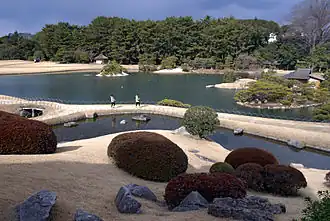
Okayama
Okayama (岡山市, Okayama-shi) is the capital of Okayama Prefecture and a…
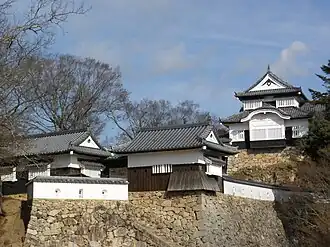
Takahashi
Takahashi (高梁市) is a city in Okayama Prefecture, set in the mountains…

Tsuyama
Tsuyama (津山市) is a city of around 100,000 people in northern Okayama…
Bitchu-Matsuyama Castle
Bitchu-Matsuyama Castle (備中松山城) is the crowning sight of the city of…
Kasaoka
Kasaoka is a city in western Okayama Prefecture, located on the coast…
Korakuen
Korakuen (後楽園) is one of the "Three Great Gardens of Japan", a…
Maniwa
Maniwa is a city in northern Okayama Prefecture, located in the…
Niimi
Niimi is a city in northern Okayama Prefecture, located in the…
Okayama Castle
Okayama Castle (岡山城) is the black-walled feudal castle that gives…
Setouchi
Setouchi is a city in eastern Okayama Prefecture, located on the…
Soja
Soja is a city in southern Okayama Prefecture, located in the Kibi…
Tamano
Tamano is a port city in southern Okayama Prefecture, located on the…
Washuzan
Washuzan (鷲羽山) is a low coastal hill at the southern tip of Okayama…
Pair the highlights of Okayama into one easy trip — we'll plan the route.
WhatsApp
Contact Us
Get in touch with us.
Get in touch
Contact Us
Tell us where you'd like to go and how you like to travel. A real Tripcuro planner — not a bot — will craft an itinerary around you.
- Personalised, hassle-free planning end-to-end
- Transparent pricing, no hidden costs
- 24/7 support for complete peace of mind