
Kagawa
Japan · Prefecture · 14 destinations with guides
Photography coming soonWhy visit?
Kagawa Prefecture occupies the northeastern corner of Shikoku, Japan's smallest main island, and is itself the smallest of Japan's 47 prefectures. Despite its modest size, Kagawa packs an outsized cultural punch. The prefecture faces the Seto Inland Sea to the north, a calm, island-studded body of water that has shaped the region's identity as a crossroads between Shikoku and Honshu. The Great Seto Bridge, a dramatic series of double-deck spans connecting Kagawa to Okayama Prefecture, made the prefecture Shikoku's gateway to the rest of Japan when it opened in 1988.
The prefectural capital, Takamatsu, serves as the administrative and transportation hub of eastern Shikoku. Beyond the city, Kagawa's landscape is gentle — rolling hills, fertile plains, and a coastline dotted with fishing villages and small islands. In recent years, the prefecture has gained international attention as the heart of the Setouchi Triennale art festival, which has transformed islands like Naoshima and Teshima into world-renowned destinations for contemporary art. The combination of art, food, pilgrimage heritage, and Inland Sea scenery makes Kagawa a compact but deeply rewarding destination.
Kagawa was historically known as Sanuki Province, and that old name lives on most famously in Sanuki udon — the thick, chewy wheat noodles that the prefecture has elevated to a near-religious obsession. In 2011, Kagawa officially adopted "Udon Prefecture" as its nickname, a testament to how deeply these noodles are woven into local identity.
When is the best time to visit?
Spring (March to May) and autumn (October to November) are the most pleasant seasons. Cherry blossoms appear in late March through early April, and the mild weather is ideal for exploring the art islands on foot or cycling through the countryside. The Setouchi Triennale art festival takes place across three seasonal sessions — spring, summer, and autumn — in years when it is held (every three years, most recently 2022 and next in 2025), drawing large international crowds.
Summer (June–August) is hot and humid, with a rainy season (tsuyu) that typically runs through late June to mid-July. The Inland Sea islands can be busy in August with beachgoers. Winter (December–February) is relatively mild thanks to the Inland Sea's moderating influence, though it can be cool and occasionally windy. Sanuki udon tastes best on a chilly winter day, and many visitors use this season for a quieter art island experience. The Marugame Castle cherry blossom festival in early April and various udon-related events throughout the year add local color.
Tell us your dates and we'll shape a Kagawa route around them.
WhatsAppHow do you get around?
Takamatsu is the central hub for all transportation in Kagawa. The JR Yosan Line and Kotoku Line connect Takamatsu to western Shikoku (Matsuyama, Kochi) and eastern Shikoku (Tokushima) respectively. For travel within the prefecture, the JR Yosan Line runs along the coast to Marugame, Sakaide, and beyond, while the private Kotoden railway connects Takamatsu to Kotohira (home of Konpira-san shrine) in about an hour.
Ferries from Takamatsu Port connect to the art islands — Naoshima (about 50 minutes), Teshima, Shodoshima, and others — with frequent daily services. Buses fill gaps in rural areas and connect smaller towns not served by rail. The islands themselves are best explored by bicycle (rentals widely available at ferry terminals) or by local bus. For reaching Kotohira, the Kotoden line is the most scenic option, winding through the countryside from central Takamatsu.
Where should you go?
- Takamatsu — The prefectural capital and Shikoku's main gateway, home to the stunning Ritsurin Garden and the Isamu Noguchi Garden Museum
- Marugame — One of Japan's 12 remaining original castles perched on a dramatic hilltop, and the nation's largest producer of traditional uchiwa fans
- Kotohira — A pilgrimage town built around Kotohira-gu (Konpira-san), the most revered shrine in Shikoku, approached up a long stone staircase
- Shodoshima — The largest island in the Inland Sea, famous for its olive groves, dramatic Kankakei Gorge, and the Angel Road sandbar
- Naoshima — A world-famous art island with architect-designed museums including the Chichu Art Museum and Benesse House, plus outdoor installations
- Teshima — A quieter art island with the extraordinary Teshima Art Museum and Les Archives du Cœur sound installation
- Sakaide — A port city with the Seto Ohashi Commemorative Park offering views of the Great Seto Bridge
- Zentsuji — Home to Zentsuji Temple, the 75th stop on the Shikoku Pilgrimage and birthplace of the Buddhist saint Kukai
- Kanonji — Known for the Zenigata Sunae, a giant sand-sculpted coin in Kotohiki Park said to bring wealth to those who view it
- Mitoyo — A coastal city with the Chichibugahama beach, famous for its mirror-like tidal flats and stunning sunsets
- Sanuki — Home to Okubo-ji, the 88th and final temple of the Shikoku Pilgrimage, marking the circuit's completion
- Higashikagawa — Features the ruins of Hiketa Castle and a charming historic district along the old Sanuki highway
- Setonaikai National Park — Japan's oldest national park, encompassing the Inland Sea and many of Kagawa's islands with their scenic coastlines
Want the scenic legs and stays booked for you? Just ask.
WhatsAppWhat should you eat?
Sanuki udon is the undisputed star of Kagawa's culinary scene. These thick, square-cut wheat noodles are prized for their firm, chewy texture (known as koshi) and are served in a simple dashi-based broth or with various toppings. Kagawa is home to hundreds of udon shops — from sit-down restaurants to self-serve stands where you grab noodles from a counter, add your own broth and toppings, and eat at outdoor tables. The city of Takamatsu and the Sanuki area are dotted with udon schools where visitors can learn to make the noodles from scratch.
Beyond udon, Kagawa's Inland Sea coastline provides excellent seafood — tai (sea bream), octopus, and sardines are local specialties. Shodoshima produces olive oil, soy sauce, and somen noodles, all using traditional methods. The prefecture's small size belies its agricultural richness: Sanuki olives, Kagawa mandarins, and local sake from small breweries round out the dining experience. Olive-fed Wagyu beef from Shodoshima is a rare local delicacy.
What is the culture like?
Kagawa's most significant cultural event is the Setouchi Triennale, a contemporary art festival held every three years across multiple islands in the Inland Sea. The festival has transformed Naoshima, Teshima, and surrounding islands into an open-air gallery of site-specific installations, drawing art lovers from around the world. Even outside Triennale years, the permanent museums and installations remain major attractions.
The Konpira-san Grand Festival at Kotohira-gu shrine (October) is one of Shikoku's largest shrine festivals, featuring processions, traditional performances, and ceremonial events. Marugame's Uchiwa Matsuri (August) celebrates the city's fan-making heritage with lively parades. Kagawa also has deep connections to the Shikoku Pilgrimage (Shikoku Henro), the 88-temple circuit that begins and ends in the prefecture — Zentsuji Temple (temple 75, birthplace of Kukai) and Okubo-ji (temple 88, the final stop) are particularly significant. Traditional crafts include Marugame uchiwa fans, Shodoshima somen noodles, and Mure pottery.
Travelling during a festival? We'll plan around the crowds.
WhatsAppWhat are the standout experiences?
- Art island hopping — Spend two to three days ferrying between Naoshima, Teshima, and Inujima, experiencing world-class contemporary art in settings that blur the line between gallery and landscape
- Sanuki udon pilgrimage — Tour the prefecture's best udon shops in a self-guided "udon pilgrimage," visiting stand-and-slurp counters from Takamatsu to Marugame to Zentsuji
- Konpira-san ascent — Climb the 785 stone steps to the main shrine of Kotohira-gu, one of Shikoku's most sacred sites, rewarded with sweeping views over the Inland Sea plain
- Kankakei Gorge ropeway — Ride the cable car through Shodoshima's dramatic Kankakei Gorge, considered one of Japan's three most beautiful ravines, especially spectacular during autumn foliage
- Shikoku Pilgrimage circuit's bookends — Visit Zentsuji Temple, birthplace of Kobo Daishi (Kukai), and then Okubo-ji, the 88th and final temple, to experience the spiritual arc of Japan's most famous walking pilgrimage
Top Destinations
Every destination in Kagawa with a guide — tap a place for the full guide.

Naoshima
Naoshima (直島) is a small island and town in the Seto Inland Sea…
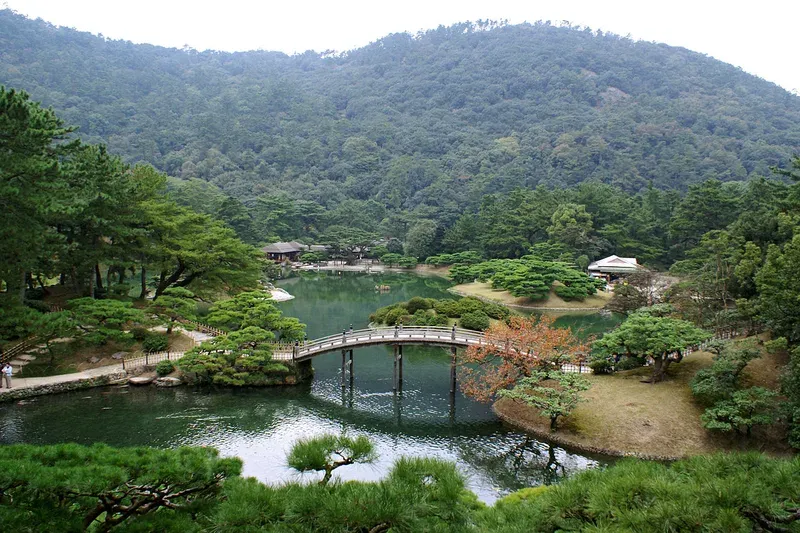
Ritsurin Garden
Ritsurin Garden (栗林公園, Ritsurin Kōen) is one of Japan's most…

Shodoshima
Shodoshima (小豆島, Shōdo-shima) is the second-largest island in the…
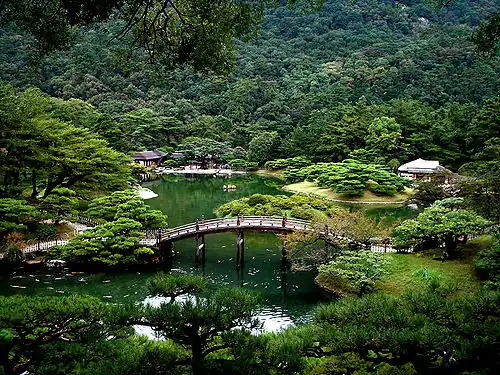
Takamatsu
Takamatsu is the largest city and prefectural capital of Kagawa…

Teshima
Teshima is a small island in the Seto Inland Sea, part of Marugame…
Higashikagawa
Higashikagawa (東かがわ) is a city in eastern Kagawa Prefecture…
Kanonji
Kanonji (観音寺) is a city in western Kagawa Prefecture, located on the…
Kotohira
Kotohira (琴平) is a historic town in western Kagawa Prefecture, famous…
Marugame
Marugame (丸亀) is a city in western Kagawa Prefecture on Shikoku…
Mitoyo
Mitoyo (三豊) is a city in western Kagawa Prefecture formed by the 2006…
Sakaide
Sakaide (坂出) is a city on the northern coast of Kagawa Prefecture…
Sanuki
Sanuki (さぬき) is a city in eastern Kagawa Prefecture, named after the…
Setonaikai National Park
Setonaikai National Park (瀬戸内海国立公園) is Japan's first and largest…
Zentsuji
Zentsuji (善通寺) is a city in west-central Kagawa Prefecture, best…
Pair the highlights of Kagawa into one easy trip — we'll plan the route.
WhatsApp
Contact Us
Get in touch with us.
Get in touch
Contact Us
Tell us where you'd like to go and how you like to travel. A real Tripcuro planner — not a bot — will craft an itinerary around you.
- Personalised, hassle-free planning end-to-end
- Transparent pricing, no hidden costs
- 24/7 support for complete peace of mind