
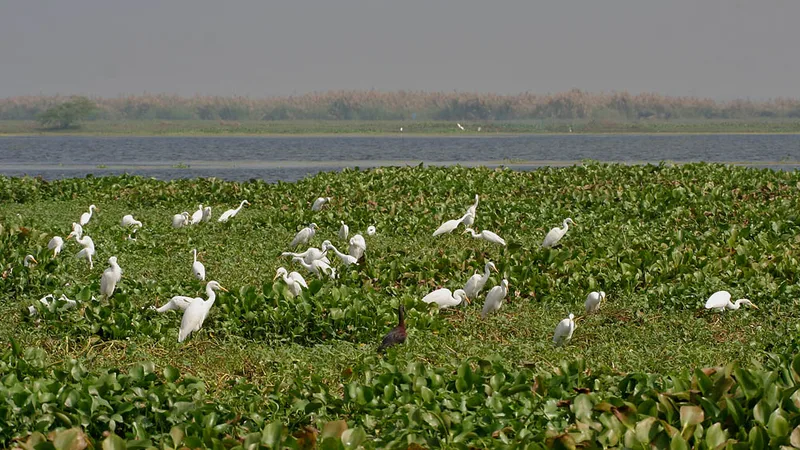
Kolleru Bird Sanctuary
Andhra Pradesh, India
Why visit Kolleru Bird Sanctuary?
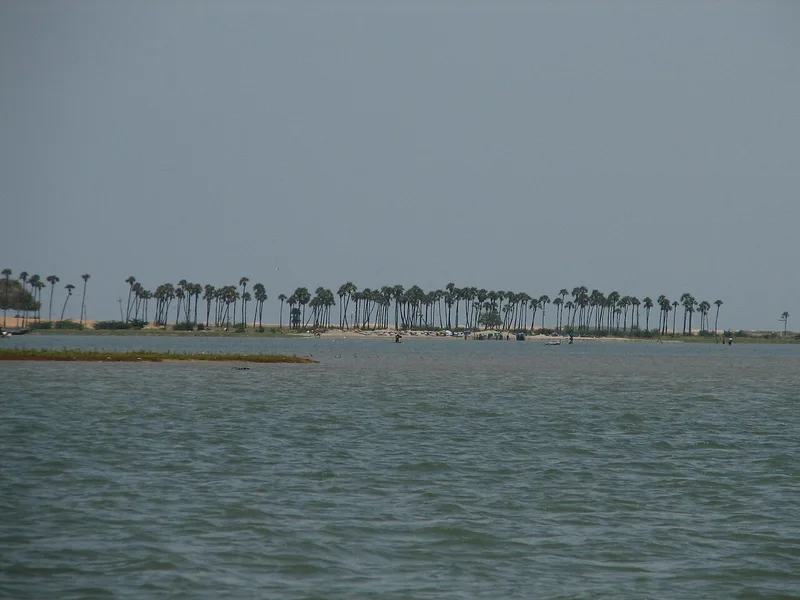
Kolleru Bird Sanctuary protects one of India's largest freshwater lakes, a vast shallow wetland sitting between the deltas of the Krishna and Godavari rivers in the West Godavari and Eluru districts of Andhra Pradesh. The lake acts as a natural flood-balancing reservoir for the two river systems and, in the cooler months, becomes a staging ground for huge concentrations of resident and migratory waterbirds. It was designated a wildlife sanctuary in 1999 and declared a Ramsar wetland of international importance in 2002.
The sanctuary's signature spectacle is its breeding colonies — open-billed storks, painted storks, herons, egrets, ibises, cormorants and pelicans nest in the reed beds and fringing trees, while in winter the open water fills with ducks, teal, godwits and other migrants from northern Asia. The lake has long been under pressure from aquaculture: thousands of fish tanks were built within the lake bed, and government "Operation Kolleru" drives have worked to restore the natural wetland. As a visitor you will see a working agrarian landscape — paddy fields, fishing hamlets and aqua tanks — wrapped around shrinking but still birdrich open water.
The best time to visit is November to March, when migratory birds are present, temperatures are mild and water levels are stable; the peak nesting and birding window is roughly December to February. Avoid the monsoon (June–September), when the lake floods and access tracks become impassable, and the hot pre-monsoon months of April–May, when birdlife thins and the heat is punishing. There is no town inside the sanctuary; the lake spreads across many villages, with Kolletikota and Atapaka the names most often associated with birdwatching access.
Planning Kolleru Bird Sanctuary? Tell us your dates and we’ll tailor the trip.
Ask on WhatsAppHow do you get there?
By Plane
The nearest airport is Vijayawada International Airport (VGA) at Gannavaram, roughly 60–70 km from the lake depending on the access point used. It has domestic flights to Hyderabad, Bengaluru, Chennai, Delhi and other metros. Pre-paid taxis and app cabs from the airport to the Kolleru area cost roughly ₹1,500–2,500; there is no direct bus, so most visitors hire a car for the day.
By Train
The closest convenient railheads are Eluru and Bhimavaram, both on the busy Howrah–Chennai trunk route with frequent express and passenger services. Vijayawada Junction, a major hub about 60 km away, has the widest connectivity nationwide and is the easiest place to break a long-distance journey. From any of these stations, hire a taxi or auto for the final leg to the lakeside; book trains in advance through IRCTC as delta-route trains fill up.
By Car / Road
Kolleru lies off the Vijayawada–Eluru–Bhimavaram road network. Eluru is about 30–40 km away (under an hour), Vijayawada around 60–70 km (1.5–2 hours) and Bhimavaram roughly 40 km. State and district roads are generally tarred but narrow near the lake, with the final stretches running on bunds between paddy fields. APSRTC buses connect Eluru and Bhimavaram with villages on the lake's edge such as Kaikalur; from the bus stop you will need an auto for the last few kilometres.
There is no formal public transport inside the sanctuary. Most visitors arrive by hired car or auto and explore on foot along the bunds, or by boat. Shared autos link the larger villages, and fares are low (₹20–50 for short hops), but services are infrequent and stop early. The single most rewarding way to see the lake is by country boat or punt: local boatmen at the recognised birdwatching points take small groups out into the reed channels for roughly ₹500–1,500 depending on duration and group size — agree the price, route and time before setting off. Carry your own water, sun protection and binoculars, as nothing is sold on the water.
What are the things to do?
- Atapaka Bird Sanctuary (Kolletikota) — the best-known viewing area on the lake, near Kaikalur, with a watchtower and boat access into the nesting colonies. Painted storks, open-billed storks, pelicans, ibises and herons gather here in large numbers; winter mornings are best. Generally open daylight hours; a modest entry/boat fee applies, payable locally.
- Pelican and stork nesting colonies — seasonal breeding congregations in the reed beds and partially submerged trees, at their fullest roughly December to February. Spot-billed pelicans and grey pelicans are a highlight.
- Open-water migrant flocks — the deeper stretches of the lake fill in winter with ducks, teal, garganey, godwits, sandpipers and other long-distance migrants. A boat is needed to reach them.
- Watchtower viewpoints — raised observation towers at the main access points give elevated views over the colonies; arrive at first light for the best activity and photography.
The reason to come is birdwatching and wildlife photography, ideally on an early-morning boat trip into the reed channels when nesting colonies are active and light is soft. Hire a local boatman-guide who knows where the colonies are sitting that week. Beyond birding, the lake rewards slow exploration: walk or cycle the bunds between paddy fields and aqua tanks to watch delta village life, fishing and rice cultivation up close. Sunrise and sunset over the open water are quietly spectacular. Photographers should bring a long lens and a beanbag for the boat; serious birders should allow two mornings to cover different parts of the lake.
Planning Kolleru Bird Sanctuary? Want these on a customised itinerary?
Ask on WhatsAppWhere to eat?
This is the heart of the Godavari–Krishna delta, and the local food is famous across Andhra: fiery, rice-based and seafood-rich. Freshwater fish and prawn curries, prawn fry, gongura (sorrel-leaf) dishes and tangy achar are the signatures, alongside generous vegetarian thalis. There are no notable restaurants on the lake shore itself, so plan to eat in the surrounding towns.
- Roadside and village tiffin stalls (budget) — idli, dosa, vada and chai near the bus stops in Kaikalur and lakeside villages; a filling meal for ₹40–100.
- Eluru meals hotels (budget–mid) — classic Andhra "meals" restaurants serving unlimited rice thalis with multiple curries, around ₹120–250.
- Bhimavaram and Eluru seafood restaurants (mid-range) — the place to try delta prawn and fish preparations done well, roughly ₹300–600 per head.
Vegetarian food is abundant everywhere; for halal or gluten-free needs, ask in larger towns rather than at village stalls.
Where to drink?
Tender coconut water, sweet and salt lassi, fresh lime soda and strong filter coffee or tea are the everyday drinks; buttermilk is welcome in the delta heat. Carry plenty of bottled or filtered water, especially for boat trips — do not drink lake or tap water untreated. Licensed alcohol is sold through government and permit-room outlets in the towns; there is no bar or café culture at the lake itself, so any drinks should be picked up in Eluru or Bhimavaram.
Planning Kolleru Bird Sanctuary? We’ll book the stays and dining for you.
Ask on WhatsAppWhere to stay?
Accommodation at the lake edge is very limited; most visitors base themselves in Eluru, Bhimavaram or Vijayawada and make a day trip.
- Budget: Basic lodges and guesthouses in Eluru and Kaikalur offer simple rooms for roughly ₹600–1,200 a night; standards are modest, so inspect the room first.
- Mid-range: Eluru and Bhimavaram have a handful of business-class hotels with air-conditioned rooms and restaurants in the ₹1,500–3,000 range.
- Upscale / heritage: For more comfortable hotels, base yourself in Vijayawada, which has the region's best mid-to-upscale properties (roughly ₹3,500–7,000+), an easy 1.5–2 hour drive from the lake.
What should you buy?
There is little organised shopping at the lake itself. The surrounding delta is fish-and-prawn country, and the nearby towns of Eluru and Bhimavaram have busy markets for fresh produce, aquaculture goods and everyday items. Eluru is historically known for its hand-woven woollen "Eluru carpets", sold through local emporiums. Stock up on snacks, water and any supplies in Eluru or Kaikalur before heading to the lake. Bargaining is normal in markets and with auto drivers but not in fixed-price shops.
Where to go next?
- Eluru (~30–40 km, under 1 hour) — the district town and practical base, known for its handwoven carpets and Buddhist heritage nearby.
- Bhimavaram (~40 km, ~1 hour) — busy delta town and aquaculture centre with the well-known Somarama temple.
- Vijayawada (~60–70 km, 1.5–2 hours) — major city on the Krishna River with Kanaka Durga temple, Prakasam Barrage and Undavalli caves.
- Rajahmundry (~120–140 km, ~3 hours) — gateway to the Godavari, river cruises and the Papikonda hills.
- Machilipatnam / Manginapudi Beach (~90–100 km, ~2.5 hours) — historic coastal town and beach on the Bay of Bengal.
Nearby in Andhra Pradesh
More places to explore around Kolleru Bird Sanctuary.
Guide content as of May 2026. Portions adapted from Wikivoyage, CC BY-SA 4.0.

Contact Us
Get in touch with us.
Get in touch
Contact Us
Tell us where you'd like to go and how you like to travel. A real Tripcuro planner — not a bot — will craft an itinerary around you.
- Personalised, hassle-free planning end-to-end
- Transparent pricing, no hidden costs
- 24/7 support for complete peace of mind