
Libo
Guizhou Sheng, China
Why visit Libo?
Libo County lies in the far south of Guizhou Province, in the Qiannan Buyi and Miao Autonomous Prefecture, on the transition zone where the Yunnan–Guizhou Plateau gives way to the hills of Guangxi. Covering some 2,400 km² with a population of around 186,000, the county is overwhelmingly home to ethnic minorities — roughly nine in ten residents are Buyi, Shui, Miao or Yao — and minority villages, festivals and cuisine are a defining part of its character.
Libo's fame rests on its karst landscape. Dubbed the "Emerald of the Earth", the county is a patchwork of clear streams, plunging waterfalls, an emerald lake and forested limestone country so lush that the air quality is remarkably clean for eastern China. Its centrepiece, the Xiaoqikong (Small Seven Holes) Scenic Area, is part of the South China Karst UNESCO World Heritage Site. This is a destination for nature lovers and photographers, paired with the cultural draw of the surrounding ethnic-minority countryside.
Most of Libo's main sights — the streams, lakes and waterfalls — are outdoors, so the experience is best in clear, dry weather. Spring through autumn generally offers the most pleasant conditions; summer brings lush greenery but also crowds during Chinese public holidays, and weekends around the scenic areas can be congested. Aim for early mornings to enjoy the parks before the tour groups arrive.
Planning Libo? Tell us your dates and we’ll tailor the trip.
Ask on WhatsAppHow do you get there?
By Plane
Libo Zhangjiang Airport (LLB), on Zhangjiang Avenue about 12 km from the county town, is a small regional airport with flights to cities including Guiyang and Guangzhou (Panyu). Airport buses and taxis run into town; from the Libo Ancient Town Mengtueli Service Center an airport bus costs around RMB 20 per person and takes about 30 minutes.
By Train
A high-speed railway reached Libo in 2023, sharply cutting journey times. From Guiyang the trip is about 1.5 hours by high-speed train; Guilin/Xing'an is roughly 1.5–2 hours, and Nanning around 2.5–3 hours. Trains from cities such as Guiyang and Chongqing make Libo far easier to reach than in the past. Book seats in advance, especially around public holidays.
By Car / Road
Libo is connected by expressway to the rest of Guizhou and to Guangxi. By car, Guiyang is about 4 hours away, Guilin/Xing'an roughly 3.5 hours, and Nanning around 5 hours. Libo Bus Station, at the County Mansion Intersection on Yuping Street near the east gate of Xiaoqikong, is the main hub, with coaches to Guiyang, Kaili, Dushan and other cities, plus shuttles to the scenic areas. A separate Libo Xiaoqikong Bus Station sits at the east gate of Xiaoqikong. Weekend and holiday traffic around the scenic areas can be heavy, so allow extra time.
Public transport within the county is mainly buses and coaches. The No. 11 bus runs from the bus station to the Big and Small Seven Holes Tourist Distribution Center, passing through Libo Ancient Town and other major stops; it departs from 7:00 am, runs roughly every 15 minutes, and costs about RMB 7. Taxis are available in the county town, and ride-hailing via apps such as Didi works in the main areas. Within the scenic areas, sightseeing buses (purchased as a separate ticket) shuttle visitors between attractions. If driving, check routes ahead, as roads near the scenic spots get congested on weekends and holidays.
What are the things to do?
Xiaoqikong (Small Seven Holes) Scenic Area — one of Libo's most famous attractions and a World Natural Heritage site, with picture-perfect karst scenery. Arrive early and wear comfortable walking shoes.
- Xiaoqikong Ancient Bridge — a seven-arched stone bridge on the Zhangjiang River near the scenic area entrance, built during the Qing dynasty's Daoguang reign and framed by green hills and water. Open roughly 07:00–18:00. Scenic Area Pass around RMB 110 per person, plus a sightseeing-bus ticket of about RMB 40 per person.
- The three waterfalls — Broken Bridge Falls, Raya Falls (a roughly 40-metre drop forming a wide curtain of water) and the 68-step plunge waterfall, linked together along the main scenic road. Covered by the scenic area pass.
- Water Forest — about 1.5 km east of the ancient bridge, a striking karst landscape where trees grow in flowing water; excellent for ecological photography and birdwatching. Covered by the scenic area pass.
- Wolong Lake (Wolong Pool) — downstream of the Water Forest, around 2 km from the ancient bridge, a mirror-calm pool reflecting the surrounding mountains. Covered by the scenic area pass.
Daqikong (Big Seven Holes) Scenic Area — upstream of Xiaoqikong, with grander scenery; a bamboo-raft ride is a good way to take it in.
- Tianzhong Cave — about 3 km from the Daqikong Bridge, a wide cave full of stalactites and stalagmites with an underground river. Covered by the scenic area pass (around RMB 100 per person).
- Tiansheng Bridge (natural bridge) — a naturally formed stone arch southeast of the Daqikong Bridge, reached by a scenic-area trail. Covered by the scenic area pass.
Shui Chun River Canyon — a classic karst gorge of winding river and cliffs.
- Canyon trail — follows the Shui Chun River from the Shui Chun River Bridge, passing viewpoints and rest areas with views of cliffs and primary forest. Open roughly 07:00–18:00; covered by the scenic area pass (around RMB 70 per person).
Ethnic villages — the Buyi, Shui, Miao and Yao communities of the county preserve traditional architecture and lifestyles; Yaoshan Yao Ethnic Township and Shuiyao Shui Ethnic Township are good places to experience local culture.
- Walk the karst trails of Xiaoqikong and Daqikong — the streams, waterfalls and water forest are best appreciated on foot in good weather.
- Bamboo rafting in the Daqikong Scenic Area, drifting past the gorge scenery.
- Boating on Yuanyang Lake — rent a transparent rowing boat with a clear bottom to see fish and water plants below; boating typically runs 8:00 am–5:00 pm.
- Caving at Maolan (Mawlam) Forest National Park — the park's karst peaks and funnel landscapes offer guided caving routes through stalactite caves and underground rivers.
- Tree Adventure at Xiaoqikong — a high-ropes-style course of obstacles set in the forest canopy.
- River rafting on the Shui Chun River — a more adventurous way to experience the canyon.
- Visit ethnic-minority villages to see traditional houses and folk culture and to sample local food.
Planning Libo? Want these on a customised itinerary?
Ask on WhatsAppWhere to eat?
Libo's food reflects its mix of Buyi, Shui, Miao and Yao traditions alongside broader Guizhou cooking, which favours sour, spicy and fermented flavours — sour-soup fish hotpot is a regional signature, along with glutinous rice, river fish, smoked and cured meats and abundant wild greens.
- Budget: street stalls and small noodle and rice shops in Libo county town and around the bus station serve cheap, filling local fare.
- Mid-range: restaurants in Libo Ancient Town offer Guizhou specialities such as sour-soup fish and local stir-fries at moderate prices.
- Local / ethnic dining: the "Yao Kitchen" near the Xiaoqikong east gate and eateries in the Yao and Shui townships serve authentic ethnic-minority dishes.
Where to drink?
Tea is the everyday drink, and the county's clean-air hills produce local leaf worth trying. Guizhou is also famous as the home of baijiu (Chinese white spirit) — Maotai is produced elsewhere in the province — and locally brewed rice wines feature at village gatherings and festivals. Treat tap water as unsafe to drink untreated; stick to boiled or bottled water, both widely available.
Planning Libo? We’ll book the stays and dining for you.
Ask on WhatsAppWhere to stay?
- Budget: guesthouses and small inns in Libo county town and Libo Ancient Town offer simple rooms at low rates.
- Mid-range: tourist-oriented hotels in the county town and near the scenic-area entrances provide comfortable rooms with modern facilities.
- Upscale / heritage: a small number of higher-end resorts and themed hotels operate near the Xiaoqikong scenic area; village homestays in the ethnic townships offer a more local, characterful stay.
What should you buy?
Libo's best buys reflect its minority cultures and natural surroundings. Look for Shui, Buyi, Miao and Yao handicrafts — embroidery, batik textiles, woven items and silver ornaments — sold in Libo Ancient Town and at village markets. Local agricultural produce, including teas, wild honey, dried mushrooms and bamboo products, makes for good edible souvenirs. Bargaining is normal at markets and street stalls but not at fixed-price shops. Buy crafts directly from artisans in the ethnic townships where possible.
Where to go next?
- Guiyang — Guizhou's provincial capital, about 1.5 hours by high-speed train, with city sights, parks and good transport links.
- Kaili — a gateway to Miao and Dong minority villages in southeast Guizhou, reachable by bus.
- Guilin / Xing'an — over the border in Guangxi, about 1.5–2 hours by high-speed train, famous for its karst peaks and the Li River.
- Nanning — Guangxi's capital, around 2.5–3 hours by high-speed train.
- Dushan — a neighbouring county in Qiannan Prefecture, easily reached by road or rail.
- Maolan National Nature Reserve — adjoining Libo, one of the best-preserved karst forests in the world, for caving and nature walks.
Nearby in Guizhou Sheng
More places to explore around Libo.
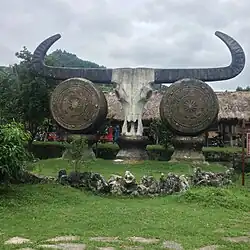
Libo County
Guizhou Sheng, China

Liupanshui
Guizhou Sheng, China
p Tongren Wanfeng Forest: this place is famous for its strange Karst landform
Guizhou Sheng, China
Qianhu Miao Village in southeastern Guizhou: this is a large Miao settlement
Guizhou Sheng, China
Qianling Park
Guizhou Sheng, China
Rongjiang
Guizhou Sheng, China
Guide content as of May 2026. Portions adapted from Wikivoyage, CC BY-SA 4.0.

Contact Us
Get in touch with us.
Get in touch
Contact Us
Tell us where you'd like to go and how you like to travel. A real Tripcuro planner — not a bot — will craft an itinerary around you.
- Personalised, hassle-free planning end-to-end
- Transparent pricing, no hidden costs
- 24/7 support for complete peace of mind