
Murujuga National Park
Western Australia, Australia
Why visit Murujuga National Park?
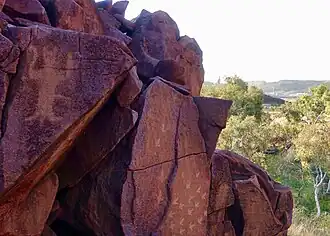
Murujuga National Park sits on the Burrup Peninsula in Western Australia's Pilbara region and protects what is arguably the most significant rock art landscape on Earth — more than one million petroglyphs, some dating back over 47,000 years. Established in 2013 as Western Australia's 100th national park, Murujuga is jointly managed by the Murujuga Aboriginal Corporation, representing the five traditional owner groups (Ngarluma, Yindjibarndi, Mardudhunera, Yaburara and Wong-Goo-Tt-Oo). The petroglyphs depict marine life, dancing human figures, geometric designs, and now-extinct fauna including the thylacine — a living archive of the region's deep history. In July 2025, the Murujuga Cultural Landscape was inscribed on the UNESCO World Heritage List, formally recognising what Traditional Custodians have known for tens of thousands of years.
The park's significance is shadowed by controversy: heavy industry on the Burrup Peninsula, including Woodside's North West Shelf LNG facilities and a fertiliser plant, sits adjacent to (and historically has impacted) the rock art. Estimates suggest 7–24% of the original petroglyph corpus has been damaged or destroyed since industrial development began in the 1960s. Visiting Murujuga is, by design, a sober and contemplative experience rather than a checklist tick — the park has no visitor centre cafés, no campgrounds, no constructed amusements. The reward is engagement with one of humanity's oldest continuous artistic traditions, in the country where it was made.
Climate is classic Pilbara: hot, dry, and harsh. Maximums routinely exceed 40 °C from October through April, and the wet season (roughly January–March) brings cyclone risk and occasional road closures. The cool season (May–September) is the only sensible time to visit, with daytime highs around 25–30 °C and pleasant mornings ideal for the boardwalk. The park is compact — essentially the Burrup Peninsula north of Karratha — and is visited as a day trip rather than as a base; nearby Karratha and Dampier provide all services.
Planning Murujuga National Park? Tell us your dates and we’ll tailor the trip.
Ask on WhatsAppHow do you get there?
By Plane
The nearest airport is Karratha Airport (KTA), about 20 km southeast of the park entrance and roughly 10 km from Karratha town centre. Qantas and Virgin Australia operate daily direct flights from Perth (about 2 hours) and seasonal/charter services link other Pilbara mining centres. There is no public bus from the airport: taxis to Karratha cost around A$30–40, and rideshare (Uber operates in Karratha) is generally cheaper when available. Major car rental brands (Hertz, Avis, Budget, Europcar, Thrifty) have desks at the terminal — booking ahead is essential, as the Karratha fleet is small and fly-in-fly-out workers absorb most of it.
By Car / Road
Murujuga is reached via sealed road from Karratha: head west on Dampier Road, then north along Burrup Peninsula Road. The drive from Karratha town to the Ngajarli (Deep Gorge) trailhead takes about 25–30 minutes. From Port Hedland, allow about 2.5 hours (240 km) west on the North West Coastal Highway (National Route 1) and Karratha Road — the highway is sealed, in good condition, but long and exposed; carry water and fuel. From Broome, it's a serious 620 km / 7-hour drive south on Route 1. From Perth, the trip is roughly 1,550 km / 16+ hours and is typically broken with overnight stops at Geraldton, Carnarvon, and Exmouth.
There are no scheduled coach services into Karratha at the time of writing; Integrity Coach Lines historically ran a Perth–Port Hedland route via Karratha but services have been pared back — confirm before relying on bus travel. A 2WD vehicle is sufficient for the park's sealed access road and trailhead carpark.
There is no public transport within the park, and walking distances between the few short trails make a private vehicle essential. Karratha has a small council bus network but it does not extend to the Burrup. Uber operates in Karratha and Dampier and can sometimes be requested to the park, but return availability is unreliable — don't gamble on it.
Most visitors self-drive from Karratha or Dampier; the alternative is to join a guided tour (see the Do section), which is strongly recommended both for cultural context and for getting access to sites not signposted to the general public. The Ngajarli (Deep Gorge) boardwalk and a handful of other access points are linked by sealed and well-graded gravel roads; a 4WD is not required for the public sites, though some tour operators run 4WD-only itineraries to remote gorges. Phone coverage (Telstra) is patchy on the peninsula — download offline maps before you go.
What are the things to do?
Ngajarli (Deep Gorge) Trail. The park's signature experience and the only fully developed petroglyph-viewing site. A 700-metre return boardwalk, mostly flat and wheelchair-accessible, threads between boulder piles densely covered in engravings — fish, turtles, kangaroos, human figures, and the famous thylacine. Interpretive panels explain Murujuga (Ngarda-Ngarli) culture and the art's significance. Free; open daylight hours. Allow 1–1.5 hours and visit at sunrise or late afternoon when low-angle light makes the petroglyphs pop. Location: Hearson Cove Road / Burrup Peninsula.
Hearson Cove. A sheltered, shallow beach immediately south of the park boundary, popular for picnics and a rare safe(ish) swim spot in stinger season — though always check local advice. Famous for the Staircase to the Moon phenomenon (March–October full moons), when receding tides over the mudflats create an illusion of a glowing staircase reflecting up to the rising moon.
Withnell Bay and Watering Cove. Lookouts on the western side of the peninsula with views over the Dampier Archipelago and further significant (though unsignposted) rock art concentrations. Best appreciated with a guide.
Murujuga Living Knowledge Centre. A planned cultural and visitor centre at Conzinc Bay, due to open in stages from 2026, will become the park's main interpretive hub.
Dampier Archipelago views. From higher points on the peninsula, the 42-island archipelago spreads out — itself part of the UNESCO listing, accessible only by boat from Dampier.
Murujuga Rock Art & Cultural Experience. Run in partnership with Murujuga Aboriginal Corporation rangers, this 1.5-hour walking tour at Ngajarli is the single best way to engage with the site. Traditional Custodians interpret the petroglyphs and explain protocols. Bookings via Karratha Visitor Centre, +61 8 9186 8055, [email protected].
Ngurrangga Tours. Wholly Aboriginal-owned, offering rock art walks, bush tucker tours, and full-day 4WD trips into less-visited corners of Murujuga and the wider Pilbara. From around A$150 per person for half-day options. +61 8 6373 1440, [email protected].
Sunrise / sunset photography on the boardwalk. Light at either end of the day brings the petroglyphs into relief; midday flattens them and bakes you. Bring a polarising filter.
Staircase to the Moon viewing at Hearson Cove. On the two or three evenings each month from March to October when the full moon rises over a low tide, locals gather with deck chairs and an esky. Free.
Snorkelling and fishing from Dampier. Not in the park itself, but boat charters from Dampier reach uninhabited islands in the archipelago for snorkelling, reef fishing, and humpback whale spotting (Jul–Oct).
Visit during NAIDOC Week (July). Karratha and Murujuga programme cultural events and guided experiences worth timing a trip around.
Planning Murujuga National Park? Want these on a customised itinerary?
Ask on WhatsAppWhere to eat?
There is no food or water available inside the park, so pack a substantial picnic and far more water than you think you'll need. Eat in Karratha or Dampier before or after.
A few standouts in the area:
- The Tambrey Tavern (Karratha) — A classic Pilbara pub with hearty steaks, schnitzels and seafood baskets. Mains A$28–45. Reliable counter meals and cold beer after a hot day on the boardwalk.
- Empire 6714 (Karratha city centre) — More polished bistro fare: kangaroo loin, local snapper, share plates. Mains A$30–48. Good wine list.
- Mermaid Hotel Bistro (Dampier) — Waterfront beer-garden views over Hampton Harbour, fresh fish-and-chips, and pub classics. Mains A$25–40.
- Stuffed Beaver Café (Karratha) — Daytime café for big breakfasts, decent coffee, and packed lunches you can take to the park. Mains A$15–25.
- Pilbara Thai (Karratha) — Dependable Thai cooking with strong vegetarian options; pad see ew, green curries, som tum. Mains A$20–30. Good for a low-key evening.
- Coles or Woolworths deli + IGA Dampier — For self-catering picnics: rolls, fruit, ice, and most importantly bottled water in volume.
Vegetarian options exist at all sit-down venues listed but selection is limited; strict vegans and gluten-free travellers should self-cater. Halal is not widely advertised — ask directly.
Where to drink?
Bring at least 3–4 litres of drinking water per person per day in summer; the boardwalk has no shade, no taps, and no shelter. Tap water in Karratha and Dampier is safe to drink and pleasant. Avoid drinking from any ground source in the park.
For something cold after the heat:
- The Tambrey Tavern and Karratha International Hotel bar are the main after-work watering holes, pouring Swan Draught, Emu Bitter, and a respectable selection of WA craft beers (Gage Roads, Little Creatures).
- Mermaid Hotel in Dampier has the best waterfront sundowner spot for a beer or a glass of Margaret River chardonnay.
- The Junction Bar at the Karratha International Hotel does cocktails to a higher standard than you'd expect this far north.
- Café culture in Karratha is modest but growing — try Stuffed Beaver or The Backbeach Café for flat whites and cold brews.
Alcohol restrictions apply across the Pilbara: takeaway purchases require photo ID and quantity limits apply per person per day. These are enforced.
Planning Murujuga National Park? We’ll book the stays and dining for you.
Ask on WhatsAppWhere to stay?
There is no accommodation inside the park and all camping is strictly prohibited. Stay in Karratha (more options) or Dampier (smaller, closer to the park).
Budget
- Karratha Backpackers — One of very few hostel-style options in town; dorms from around A$45 and basic privates from A$90. Books out fast with FIFO workers; reserve well ahead.
- Pilbara Holiday Park (Discovery Parks Karratha) — Cabins from around A$150 and powered van sites from A$50, with a pool. The closest legal "camping" option.
Mid-range
- Ibis Styles Karratha — Reliable chain comfort, pool, on-site restaurant. Doubles typically A$200–260.
- The Ranges Karratha — Apartment-style rooms, kitchenettes, popular with longer stays. Doubles from around A$220.
Upscale
- Karratha International Hotel — The town's flagship, with the best restaurant and bar, pool, gym, and large rooms. From around A$280–360.
- Mercure Hotel Dampier — Quieter, waterside setting in Dampier, ten minutes closer to the park than central Karratha. Doubles from around A$250.
Pilbara accommodation prices are driven by mining demand and can spike sharply when industry projects are in their construction phase — confirmed rates can be double the figures above during peaks.
What should you buy?
There are no shops within Murujuga National Park itself — bring everything you need from Karratha or Dampier.
For souvenirs and supplies:
- Yaburara Heritage Trail and Karratha city centre have small galleries and the Karratha Visitor Centre shop, which stocks books on Pilbara rock art (Robert Bednarik's and Ken Mulvaney's works are essential reading) and locally made art.
- Cheeditha Group / Yinjaa-Barni Art in nearby Roebourne (40 minutes east) is one of the Pilbara's most respected Aboriginal art centres, selling paintings and prints directly from the artists.
- Karratha City Shopping Centre covers groceries (Coles, Woolworths), pharmacy, outdoor gear at BCF, and fuel.
Prices in the Pilbara are notably higher than in Perth — a remote-region surcharge applies to almost everything. Bargaining is not a thing in Australia; prices are fixed.
Where to go next?
- Karratha (15 km / 20 min south) — Regional hub for food, fuel, lodging, and the Yaburara Heritage Trail, a shorter rock art walk closer to town.
- Dampier (20 km / 25 min southwest) — Working port town, launch point for Dampier Archipelago boat trips and home to the Red Dog statue.
- Roebourne and Cossack (40–55 km / 40–60 min east) — Historic Pilbara towns with Aboriginal art centres (Yinjaa-Barni Art) and the ghost town of Cossack on the coast.
- Millstream–Chichester National Park (150 km / 2 hr southeast) — Spring-fed pools, palm-lined gorges, and a striking contrast to Murujuga's coast. 4WD recommended for some tracks.
- Karijini National Park (350 km / 4 hr southeast) — One of Australia's great gorge systems: Hancock, Weano, Kalamina, and Dales Gorge. Worth 2–3 nights minimum.
- Port Hedland (240 km / 2.5 hr northeast) — Industrial iron-ore port, salt flats, and the gateway to the Kimberley further north along Highway 1.
Nearby in Western Australia
More places to explore around Murujuga National Park.
Guide content as of May 2026. Portions adapted from Wikivoyage, CC BY-SA 4.0.

Contact Us
Get in touch with us.
Get in touch
Contact Us
Tell us where you'd like to go and how you like to travel. A real Tripcuro planner — not a bot — will craft an itinerary around you.
- Personalised, hassle-free planning end-to-end
- Transparent pricing, no hidden costs
- 24/7 support for complete peace of mind