
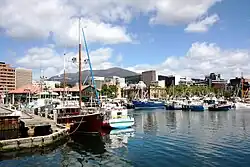
Hobart
Tasmania, Australia
Why visit Hobart?
Founded in 1804 by Colonel David Collins, Hobart began as a penal settlement and grew through the 19th-century whaling boom into a working port. That maritime infrastructure — boat builders, ship chandlers, provedores — is why explorers from Dumont d'Urville to Mawson and Amundsen used the Derwent as their last stop before heading south. Amundsen famously announced his conquest of the South Pole from the steps of Hobart's General Post Office in 1912. The penal-era sandstone is still everywhere: more than 90 buildings are National Trust–classified, with around 60 along Macquarie and Davey streets alone. Battery Point, saved from demolition by a 1970s green ban, remains an essentially intact Georgian village minutes from the CBD.
Modern Hobart has been reshaped by two forces: David Walsh's MONA (the privately funded Museum of Old and New Art, opened 2011), which dragged the city onto the international cultural map, and an obsessive food-and-drink culture built around Tasmanian produce — cool-climate pinot noir, single-malt whisky, oysters, scallops, cheese, berries. Saturday's Salamanca Market is the social anchor of the week.
The climate is mild temperate oceanic. Summer (Dec–Feb) brings highs around 21°C and the longest daylight of any Australian capital (~15 hours at the solstice); winter (Jun–Aug) days are 12–13°C and only ~5.9 hours of sunshine. It rains lightly year-round (~50 mm/month), Mount Wellington is regularly snowcapped in winter, and even summer evenings can drop to 13°C — pack a jumper whatever the season. Best months for visiting are November–April; festival peak is January (MONA FOMA, Taste of Summer) and June (Dark Mofo). Layout-wise, orient yourself around the CBD (Elizabeth Mall, GPO), Sullivans Cove and the waterfront docks immediately east, Salamanca Place and Battery Point to the south, and Sandy Bay further south again.
Planning Hobart? Tell us your dates and we’ll tailor the trip.
Ask on WhatsAppHow do you get there?
By Plane
Hobart International Airport (HBA) sits 15 km north-east of the city at Cambridge. Despite the name it has one international route (Auckland, on Air New Zealand); the workhorses are Jetstar, Qantas and Virgin Australia from Melbourne, Sydney, Brisbane, Adelaide and Perth. It's a small terminal — bag delivery is quick, the departure lounge is cramped when several flights leave at once, and you walk across the tarmac to the aircraft.
- SkyBus airport shuttle meets every arriving flight and drops at most CBD accommodation. ~$22 adult / $19 concession one-way; $38 / $35 return. No booking needed inbound; book the return leg.
- Taxi to the CBD: ~$38–45, 20–25 minutes depending on traffic.
- Car hire desks (Avis, Budget, Hertz, Europcar, Thrifty, Red Spot, Bargain) are just past the arrivals gates.
By Car / Road
Tasmania is best explored by car and Hobart is the usual base. Launceston is about 200 km north via National Highway 1 — roughly 2.5 hours of straightforward driving. From the mainland, the Spirit of Tasmania sails overnight from Geelong (Melbourne) to Devonport; from Devonport it's about a 4-hour drive south to Hobart.
Coach services:
- Kinetic (formerly Redline) arrives at the Hobart Transit Centre, 230 Liverpool St, from Devonport via Launceston (1–2 services most days).
- Tassielink uses the Brisbane St Terminus and serves Devonport, Launceston, the East Coast, Port Arthur and the West Coast.
- Red Decker runs a hop-on/hop-off loop linking the CBD with Mount Wellington and Richmond.
Cruise ships dock at Macquarie Wharf in the heart of Salamanca; volunteer greeters meet arrivals.
The CBD, waterfront, Salamanca and Battery Point are all walkable — you can cross the historic core in 15 minutes, and Sandy Bay via Battery Point is about a half-hour stroll (with hills). For everything else:
- Metro Tasmania buses cover the city and suburbs; the main interchange is on Elizabeth St in front of the GPO. As of 2026 the network does not yet accept contactless Mastercard/Visa tap-on (an upgrade is underway) — buy a Greencard or pay cash to the driver.
- Derwent Ferries run between Brooke Street Pier (city) and Bellerive across the river; no Sunday service. Pay by tapping a Mastercard or Visa on board.
- MONA Ferry (the camo-painted catamaran) runs from Brooke Street Pier to MONA — see Do.
- Ride-hailing: Uber and DiDi both operate; coverage is reliable in the central area, thinner late at night.
- Taxis: 13CABS and Yellow Cab Co are the major operators. Flagfalls are metered.
- Cycling: Hobart is hilly in every direction, but drivers are generally tolerant of cyclists. The Intercity Cycleway, a converted rail line running from the CBD to Claremont, is the standout off-road route.
- Driving and parking: west of the Derwent is rarely congested, but CBD parking is paid — the Hobart City Council parking app is the easiest way to pay. Avoid driving through Salamanca on Saturdays during market hours; road closures cause snarls.
Hobart isn't notorious for tourist scams, but watch the usual: confirm taxi meters are running, and don't leave valuables visible in parked cars at trailhead car parks (Mount Wellington, kunanyi summit road).
What are the things to do?
Historic streets and landmarks
- Salamanca Place — the row of 1830s sandstone whaling-era warehouses fronting Sullivans Cove. Galleries, bars, restaurants and shops occupy the ground floors; the streetscape is the sight.
- Battery Point — behind Salamanca, an almost-intact Georgian residential quarter saved by a 1970s green ban. Don't miss Arthur Circus, one of Australia's oldest planned circuses, ringed by tiny 1840s cottages.
- Parliament House, Salamanca Place — Tasmania's seat of government in a 1840 sandstone customs house. Free public tours on non-sitting weekdays.
- St David's Cathedral, 23 Murray St — sandstone Gothic Revival cathedral, free entry.
- Cascade Brewery, 140 Cascade Rd, South Hobart — Australia's oldest continuously operating brewery (1824), set against Mount Wellington. Guided tours from ~$35; bookings essential.
Museums and galleries
- MONA (Museum of Old and New Art), 655 Main Rd, Berriedale — the reason a lot of people fly to Hobart. David Walsh's private museum is built into a sandstone cliff and pairs antiquities with provocative contemporary art. Adult entry ~$39 for non-Tasmanians (Tasmanians free); open Fri–Mon, closed Tue–Thu. Best reached by MONA ferry from Brooke Street Pier.
- Tasmanian Museum and Art Gallery (TMAG), Dunn Place — free entry, strong on Tasmanian colonial art, natural history and a sobering account of Tasmanian Aboriginal history. Open daily 10AM–4PM (closed Mondays in winter).
- Maritime Museum of Tasmania, 16 Argyle St — Hobart's whaling, shipbuilding and Antarctic-gateway history in the Carnegie Building. ~$12 adult.
- Mawson's Huts Replica Museum, corner Argyle & Davey Sts — full-scale replica of Mawson's 1911 Antarctic base. ~$18 adult, proceeds fund conservation of the originals in Antarctica.
Markets
- Salamanca Market, Salamanca Place — every Saturday 8:30AM–3:00PM, ~300 stalls of Tasmanian produce, crafts, music and street food. Free, and the city's defining weekly event.
Nature and views
kunanyi / Mount Wellington — the 1,271 m peak above the city. The summit road is sealed; in clear weather the views run from Bruny Island to the Central Highlands. ~10°C colder than the city, often snow-dusted in winter.
Royal Tasmanian Botanical Gardens, Lower Domain Rd — free entry, 14 hectares including a Subantarctic Plant House (refrigerated, mimics Macquarie Island). Open daily from 8AM.
Cascades Female Factory, 16 Degraves St, South Hobart — UNESCO-listed convict site for women transportees. ~$25 with the Heritage Tour.
Ride the MONA ferry — board the camo-painted MR-1 at Brooke Street Pier; 25 minutes upriver to the museum, with a "Posh Pit" upgrade option (champagne, canapés). Return same day.
Walk or drive up kunanyi / Mount Wellington — the Pinnacle Track climbs from the Springs to the summit (~3 hours return, demanding). Easier: drive to the summit and walk the boardwalk loop. Always carry warm layers.
Do the Battery Point heritage walk — self-guided loop from Salamanca via Kelly's Steps, Hampden Rd, Arthur Circus and St George's Anglican Church; ~1.5 hours.
Day-trip to Port Arthur — 95 km south-east on the Tasman Peninsula, Australia's most-visited convict site (UNESCO listed). Allow a full day; the night-time Ghost Tour is the standout add-on.
Bruny Island day trip — ferry from Kettering (45 min drive south of Hobart) to a long, narrow island known for oysters, cheese, whisky and the Neck lookout. Pennicott Wilderness Journeys runs a celebrated 3-hour boat cruise around the southern cliffs.
Cellar door touring — the Coal River Valley (20 min east) and Derwent Valley (40 min north) are dense with cool-climate pinot noir and chardonnay producers; Frogmore Creek, Pooley and Stefano Lubiana are standouts.
Whisky tasting — Tasmania's distilleries punch far above their weight. Lark Distillery has a cellar door at 14 Davey St; Sullivans Cove (the 2014 World's Best Single Malt) is at Cambridge near the airport.
Festivals: Dark Mofo (mid-June) — MONA's winter solstice festival of art, fire, food and the nude solstice swim. MONA FOMA (Jan), Taste of Summer (late Dec–early Jan) on the waterfront, and the finish of the Sydney to Hobart Yacht Race on 28–29 December.
Planning Hobart? Want these on a customised itinerary?
Ask on WhatsAppWhere to eat?
Tasmania's small scale and cool climate produce outsized food: oysters and scallops from the surrounding bays, ocean trout, wallaby, abalone, leatherwood honey, berries, and some of Australia's best cheese. Hobart's restaurant scene leans local-and-seasonal almost by default.
- Fish Frenzy, Elizabeth Street Pier — casual waterfront fish-and-chips with proper Tasmanian seafood; mains ~$25–35. Good entry point.
- Flippers Fish Punt, Constitution Dock — a floating fish-and-chip shop that's been at the dock for decades. Beer-battered flake or scallops from ~$15. Cash-friendly Hobart classic.
- Jackman & McRoss, 57–59 Hampden Rd, Battery Point — bakery-café famous for scallop pies and pastries; perfect breakfast or walk-in lunch under $25.
- Templo, 98 Patrick St — 20-seat Italian-inflected neighbourhood restaurant, multi-course menus around $80–95. Book weeks ahead.
- Aløft, Level 5, Brooke Street Pier — modern Asian on the water, tasting menu ~$135. Standout views over Sullivans Cove.
- Dier Makr, 123 Collins St — chef's-counter tasting menu (~$165) showcasing Tasmanian produce; consistently ranked among Australia's best restaurants.
- Faro (at MONA), Berriedale — small-plates pairing with the wow-factor "Pharos" wing; tasting menus from ~$160.
Vegetarian options are widely available in all but the most traditional places; gluten-free is well understood. Halal-specific restaurants are limited — for halal/Middle Eastern food, head to North Hobart along Elizabeth Street, where you'll find Lebanese, Turkish and Ethiopian options.
Where to drink?
Tasmania's cool climate is the story: small-batch single malts, cool-climate pinot noir, craft beer brewed with the world's best hops (the Tasmanian Galaxy and Vic Secret varieties), and excellent specialty coffee.
- Lark Distillery Cellar Door, 14 Davey St — flights of Tasmanian single malt in the heart of the CBD; ~$30 for a guided tasting.
- Evolve Spirits Bar, 14 Davey St (with Lark) — Tasmania's largest curated whisky list.
- Preachers, 5 Knopwood St, Battery Point — beer garden built around a converted 1950s bus, big craft tap list, hearty pub food.
- The New Sydney Hotel, 87 Bathurst St — old-school Hobart pub with ~20 Tasmanian craft taps and live music.
- Shambles Brewery, 222 Elizabeth St, North Hobart — taproom of one of Hobart's better small breweries.
- Cascade Brewery Visitor Centre, 140 Cascade Rd — tours plus a beer garden looking up at Mount Wellington.
- Pigeon Hole, 93 Goulburn St — neighbourhood specialty-coffee café favourite, also great for breakfast.
- Villino, 30 Criterion St — long-running specialty roastery and café in the CBD.
Tap water in Hobart is excellent — among the best in Australia — and safe to drink everywhere. No need to buy bottled.
Planning Hobart? We’ll book the stays and dining for you.
Ask on WhatsAppWhere to stay?
Budget
- The Pickled Frog, 281 Liverpool St — long-running backpackers in a rambling old building, dorm beds from ~$40, private doubles from ~$110. Walking distance to the CBD and North Hobart.
- Montacute Boutique Bunkhouse, 1 Stowell Ave, Battery Point — small, design-conscious hostel in a heritage building; bunks from ~$55, privates from ~$160.
Mid-range
- Hadley's Orient Hotel, 34 Murray St — historic 1834 hotel in the CBD (Roald Amundsen stayed here after returning from the South Pole); doubles from ~$220.
- Salamanca Wharf Hotel, 17a Castray Esplanade — apartment-style hotel right on the waterfront beside Salamanca; one-bedrooms from ~$280.
Upscale / heritage
- The Henry Jones Art Hotel, 25 Hunter St — Australia's first dedicated art hotel, in a converted 1820s jam factory on the wharf; doubles from ~$420, suites considerably more.
- MACq 01, 18 Hunter St — "storytelling hotel" on the waterfront where every room is themed around a Tasmanian character; rooms from ~$450.
- Pavilions at MONA, 655 Main Rd, Berriedale — eight luxury pavilions on the MONA grounds with private terraces over the Derwent; from ~$700, includes MONA entry.
What should you buy?
The shopping is concentrated and quality-focused rather than sprawling.
- Salamanca Market (Sat) is the obvious one: leatherwood honey, Tasmanian whisky and gin, woollen knits, Huon pine woodcraft, sandstone carvings, ceramics.
- Salamanca Arts Centre, 77 Salamanca Place — daily galleries, ceramics and craft studios; a more curated alternative to the Saturday market.
- Elizabeth Street Mall and surrounding Cat & Fiddle Arcade cover the mainstream chain shops.
- North Hobart (Elizabeth St between Burnett & Federal) — independent bookshops, vintage clothing, record shops.
- Local specialities worth packing home: Tasmanian leatherwood honey, single-malt whisky (Lark, Sullivans Cove, Overeem), Bruny Island cheese, Huon pine kitchenware, and merino/possum-blend knitwear.
Bargaining is not part of Australian retail culture — prices are fixed, including at the markets.
Where to go next?
- Port Arthur (95 km / ~1.5 hr south-east) — Australia's most evocative convict site on the Tasman Peninsula, plus dramatic sea-cliff scenery at Cape Raoul and the Tessellated Pavement.
- Bruny Island (1 hr drive + 20 min ferry from Kettering) — oysters, cheese, whisky, the Neck lookout and a famous wilderness cruise.
- Richmond (25 km / 25 min north-east) — picture-perfect Georgian village with Australia's oldest stone-arch bridge (1823) and oldest Catholic church.
- Mount Field National Park (75 km / ~1 hr north-west) — Russell Falls, ancient swamp gums and alpine walks; an easy full-day trip.
- Freycinet National Park / Coles Bay (195 km / ~2.5 hr north-east) — Wineglass Bay and pink-granite Hazards peaks; possible as a long day trip, better as an overnight.
- Launceston (200 km / 2.5 hr north on Highway 1) — Tasmania's second city, gateway to the Tamar Valley wine region and Cataract Gorge.
Nearby in Tasmania
More places to explore around Hobart.
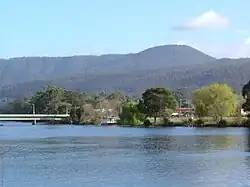
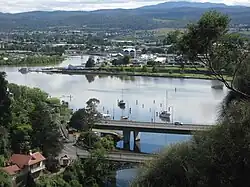
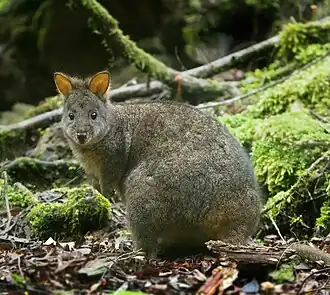
Guide content as of May 2026. Portions adapted from Wikivoyage, CC BY-SA 4.0.

Contact Us
Get in touch with us.
Get in touch
Contact Us
Tell us where you'd like to go and how you like to travel. A real Tripcuro planner — not a bot — will craft an itinerary around you.
- Personalised, hassle-free planning end-to-end
- Transparent pricing, no hidden costs
- 24/7 support for complete peace of mind