
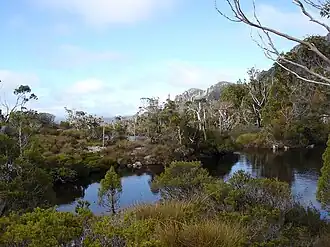
Cradle Mountain
Tasmania, Australia
Why visit Cradle Mountain?
Cradle Mountain-Lake St Clair National Park is the crown jewel of the Tasmanian Wilderness World Heritage Area, a 1,612 km² expanse of jagged dolerite peaks, ancient rainforest, glacial lakes and buttongrass moorland in the Central Highlands of Tasmania. The park has two main gateways nearly 80 km apart by foot but a five-hour drive apart by road: Cradle Mountain at the northern end, anchored by the unmistakable serrated profile of its namesake peak above Dove Lake, and Lake St Clair (Cynthia Bay) at the southern end, on the shore of Australia's deepest natural freshwater lake. Connecting them is the legendary Overland Track, an 80 km, six-day traverse first cut in 1935.
The park's story begins with Austrian-born Gustav Weindorfer, who climbed Cradle Mountain in 1910, fell in love with the place, and famously declared, "This must be a National Park for the people for all time." He built Waldheim Chalet in 1912 and hosted visitors there until his death in 1932. His vision became reality in 1922 with the gazetting of a scenic reserve, and the area was inscribed on the UNESCO World Heritage list in 1982. Today, alongside Uluru and the Great Barrier Reef, Cradle Mountain is one of Australia's most-photographed natural icons.
Climate is the single biggest planning factor. This is one of the wettest parts of Australia — it rains roughly 275 days a year, snow can fall in any month, and conditions on the tops can change from sun to sleet within an hour. December–March is the most reliable season for walking, with long daylight and the best chance of clear summit views. April–May brings the spectacular russet turn of the deciduous beech (Nothofagus gunnii, locally called "fagus"), best viewed at Crater Lake and Tarn Shelf. June–August delivers genuine alpine winter with snow on Cradle and chains needed on Marion's Lookout. Whatever the season, pack as if for cold wet weather — layers, a proper raincoat (not an umbrella, the wind will destroy it), waterproof boots and a warm hat.
Planning Cradle Mountain? Tell us your dates and we’ll tailor the trip.
Ask on WhatsAppHow do you get there?
By Plane
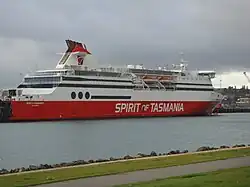
The nearest airports are Devonport (DPO) on the north coast and Launceston (LST), both around 1.5–2.5 hours' drive from the Cradle Mountain end. Hobart (HBA) is the closest major airport to the Lake St Clair end (≈2.5 hours by car). Devonport is also the arrival point for the Spirit of Tasmania car ferry from Geelong, Victoria — a popular option for visitors bringing their own vehicle. There is no direct public transport from any airport to the park; you will either need to drive or pre-book a coach (see below).
By Car / Road
Driving is by far the most practical way in. Roads are sealed and well-signed but narrow and winding in places — allow more time than Google Maps suggests, especially in fog or rain. To Cradle Mountain Visitor Centre (4057 Cradle Mountain Rd):
- Devonport — ≈85 km, 1 hr 15 min via the B19 Forth Road and C132 Wilmot Road
- Burnie — ≈100 km, 1 hr 30 min via the B18 Ridgley Highway, A10 Murchison Highway and C132 Belvoir Road
- Launceston — ≈145 km, 2 hr 30 min via the Bass Highway (NH1), C156, B14, C136 and C132
- Hobart — ≈340 km, 4 hr 30 min via Launceston
To Lake St Clair (Cynthia Bay):
- Hobart — ≈170 km, 2 hr 30 min via the Lyell Highway (A10) to Derwent Bridge, then 5 km south on the C193
- Launceston — ≈205 km, 2 hr 30 min via NH1, A5, B11 and A10
- Devonport / Burnie — ≈3 hr 15 min via NH1 to Deloraine then A5 south
By bus, Cradle Mountain Coaches and McDermott's Coaches operate scheduled services from Launceston, Devonport and Hobart in the warmer months; Tassielink runs a Hobart–Lake St Clair–Strahan service. Booking ahead is essential — these are small operators and seats are limited.
Inside the Cradle Mountain end of the park, private cars are restricted. From around 8 AM to 6 PM in peak season, you must park at the Cradle Mountain Visitor Centre and use the free shuttle bus (included with your park pass) which runs every 10–15 minutes to Snake Hill, Ronny Creek (start of the Overland Track and Wombat Pool walks) and Dove Lake (where the iconic boatshed is). The road is open to private vehicles outside peak hours and in low season, but the carpark at Dove Lake fills very quickly.
At the Lake St Clair end, you can drive directly to Cynthia Bay and park at the visitor centre. From there, a passenger ferry (operated by Lake St Clair Lodge) runs to Echo Point Hut and Narcissus Hut at the lake's northern end — A$48 one way to Narcissus (book at the visitor centre or by radio from Narcissus). This is the standard exit for Overland Track walkers who don't want to add the extra day's lakeshore slog.
Scenic helicopter flights depart from beside the Cradle Mountain Visitor Centre — a Robinson R44 doing short loops over the Cradle/Barn Bluff area, around A$245 per person for 2–3 passengers.
Otherwise: walking is the way to get around. There is no rideshare, no taxi rank, and patchy mobile coverage (Telstra only, and intermittent at that).
What are the things to do?
Mountains and lookouts
- Cradle Mountain — Tasmania's sixth-highest peak (1,545 m), named for its resemblance to a gold-miner's cradle. The summit scramble is a serious 6–8 hour return day from Dove Lake; the view from the top, on a clear day, takes in much of the central plateau.
- Mount Ossa — at 1,617 m, Tasmania's highest mountain. Accessed as a side trip from the Overland Track at Pelion Gap (≈5 hrs return from the gap). A short scramble at the top; serious in winter.
- Barn Bluff — the second peak in the iconic Cradle skyline, 1,559 m. Day-walkable from Waterfall Valley Hut or as a very long day from Dove Lake.
- Marion's Lookout — the classic half-day viewpoint over Dove Lake and Crater Lake. Steep final pitch with fixed chains.
- Mount Olympus — 1,447 m, rising on the western shore of Lake St Clair. Climbed from the lakeside track.
Lakes and waters
- Dove Lake — the postcard view of Cradle Mountain reflected in glacial water, with the famous 1940s Dove Lake Boatshed on the eastern shore. Free to enter, accessed via shuttle from the Cradle Mountain Visitor Centre.
- Lake St Clair (Leeawuleena, "sleeping water") — Australia's deepest natural freshwater lake (167 m), gouged out by glaciers over the last two million years. Cynthia Bay end has swimming beaches and a jetty.
- Crater Lake — small alpine lake en route to Marion's Lookout, particularly dramatic in autumn fagus colour.
- Pencil Pine Falls — easily reached on a wheelchair-accessible boardwalk loop right behind the Cradle Mountain Visitor Centre (8–10 min).
- Knyvet Falls — a short signed walk from Cradle Mountain Lodge, around 20 min return.
Historic and cultural
- Waldheim Chalet — Gustav Weindorfer's reconstructed 1912 chalet near Ronny Creek, with interpretive displays on his life and the park's creation. Free entry, open daylight hours.
- Cradle Mountain Interpretation Centre — at 4057 Cradle Mountain Rd, beside the Visitor Centre. Interactive displays on geology, glaciation, flora and fauna, plus the ranger station. ☎ +61 3 6492 1110.
Visitor centres
Cradle Mountain Visitor Centre, 4057 Cradle Mountain Rd; 9 AM–4 PM; ☎ +61 3 6492 1110; [email protected]
Lake St Clair Visitor Centre, 520 Lake St Clair Rd, Cynthia Bay; 9 AM–4 PM; ☎ +61 3 6289 1172; [email protected] — café and souvenir shop on site.
Walk the Dove Lake Circuit — the park's signature short walk. 6 km loop, 2–3 hours, mostly boardwalk, passing through the moss-cloaked Ballroom Forest and beneath Cradle's southern face. Doable in any weather.
Climb to Marion's Lookout — 2 hrs return from Dove Lake via Wombat Pool and Crater Lake. Steep chained section near the top. The best half-day reward in the park.
Walk the Overland Track — the iconic 65 km (plus optional 17 km Lake St Clair finish) six-day traverse from Ronny Creek to Cynthia Bay, with timber huts and tent platforms at six campsites. Bookings via overlandtrack.com.au; walkers carry all food and fuel; weather changes are the main hazard.
Spot wildlife at dusk — Bennett's wallabies, pademelons and wombats emerge onto the buttongrass plains near Ronny Creek in the late afternoon. Quolls and Tasmanian devils are nocturnal and rare; the Devils@Cradle wildlife sanctuary (3950 Cradle Mountain Rd) runs feeding tours each evening — A$36 adult day pass, A$50 night feeding tour.
Helicopter scenic flight — a 20–30 min loop over Cradle, Barn Bluff and the Du Cane Range. A$245 per person (2–3 passengers).
Cradle Mountain Canyons — guided abseiling and canyoning in nearby Lost World and Dove Canyon, run from the Cradle Mountain village. Day trips around A$245 per person.
Stargazing — Cradle Mountain is part of a Dark Sky area; on clear winter nights the Magellanic Clouds and the southern Milky Way are extraordinary. The Cradle Mountain Lodge runs a small observatory.
Lake St Clair ferry + walk — take the ferry to Narcissus and walk back (5–6 hrs) along the lakeshore for a one-way taste of Overland Track scenery without committing to the whole thing.
Watch the fagus turn — late April to early May, the deciduous beech around Crater Lake and Tarn Shelf turns gold, copper and crimson. Australia's only native deciduous tree.
Planning Cradle Mountain? Want these on a customised itinerary?
Ask on WhatsAppWhere to eat?
The dining scene revolves around three lodges at Cradle Mountain and a couple of roadhouses at Derwent Bridge near Lake St Clair. There are no supermarkets inside or close to the park — the nearest are at Sheffield (1 hr from Cradle) and Hobart/New Norfolk for Lake St Clair. Stock up beforehand if self-catering. Tasmanian specialties to look out for: scallop pies, ocean trout, wallaby, leatherwood honey, King Island brie and Hobart-roasted coffee.
- Hungry Wombat Café, Lyell Highway, Derwent Bridge (Lake St Clair end). Honest road-trip food — scallop pies, burgers, big breakfasts. Around A$15–25. Open 7 AM–6 PM.
- Lake St Clair Lodge Restaurant, Cynthia Bay. The only proper sit-down dining at the southern end of the park. Locally sourced mains around A$30–42; book ahead in peak season.
- Highland Restaurant, Cradle Mountain Hotel, 3718 Cradle Mountain Rd. Mid-range pub-style dining with Tasmanian wines, A$28–45 for mains.
- Altitude Restaurant, Peppers Cradle Mountain Lodge. Tasting-menu dinner using King Island beef, Bruny Island oysters, wallaby and leatherwood honey. Around A$120–160 per head.
- Tavern Bar & Bistro, Peppers Cradle Mountain Lodge. The lodge's casual all-day option with a roaring open fire — perfect after a wet day on the track. Mains A$28–38.
- King Billy Restaurant, Cradle Mountain Lodge. Fine-dining six-course degustation, around A$140 per person.
Vegetarian options are reliably available at all lodge restaurants; gluten-free is well-catered-for in Tasmania generally. Halal and kosher options are essentially nonexistent inside the park — bring supplies if needed.
Where to drink?
Tasmania punches well above its weight for cool-climate wines, single malt whisky and craft beer. At Cradle Mountain:
- Tasmanian whisky — try a dram of Sullivans Cove, Lark, or Hellyers Road (distilled near Burnie) at the Tavern Bar at Peppers. Roughly A$15–28 a nip.
- Cool-climate wines — Tamar Valley and Coal River Valley pinot noir and chardonnay are widely poured. Look for Pipers Brook, Josef Chromy, Domaine A.
- Cascade and James Boag's — Tasmania's two long-standing breweries; cheap and ubiquitous on tap.
- Cradle Mountain Café (at the Visitor Centre) — espresso, hot chocolate and Tasmanian leatherwood-honey lattes; the standard warming refuel after a cold walk.
Tap water is safe to drink throughout Tasmania, including from huts on the Overland Track (though boil or filter creek water on multi-day walks as a precaution). The water at Cradle is some of the cleanest you'll ever taste — straight off the buttongrass plains.
Planning Cradle Mountain? We’ll book the stays and dining for you.
Ask on WhatsAppWhere to stay?
There is no camping at Dove Lake itself, and all accommodation (except Waldheim Cabins, which are a basic Parks-run option just inside the boundary) sits a few kilometres outside the park entrance along Cradle Mountain Rd. Lake St Clair accommodation clusters around Cynthia Bay and Derwent Bridge.
Budget
- Discovery Parks – Cradle Mountain, 3832 Cradle Mountain Rd. Powered sites from A$50, basic cabins from A$130, en-suite cabins around A$210. The closest camping to the park; bookings essential in summer.
- Lake St Clair Tourist Park (Cynthia Bay), 520 Lake St Clair Rd. Unpowered sites around A$25, basic cabins A$120–160. Walk-to-the-jetty location.
Mid-range
- Cradle Mountain Hotel, 3718 Cradle Mountain Rd. Comfortable timber-clad rooms with views into the bush, restaurant and bar on site. Around A$240–340 per night.
- Cradle Mountain Wilderness Village, 3816 Cradle Mountain Rd. Self-contained timber cabins with kitchens — good for families and small groups. From A$280 per night.
- Derwent Bridge Wilderness Hotel, Lyell Highway, Derwent Bridge. The default mid-range option for the southern end, with restaurant and bar. Doubles from A$190.
Upscale / heritage
- Peppers Cradle Mountain Lodge, 4038 Cradle Mountain Rd. The grand old lady of the park — a sprawling timber lodge with 86 self-contained cabins scattered through the rainforest, two restaurants, the Waldheim Alpine Spa, and a roaring central fire. Cabins from A$420; spa suites A$650+.
- Cradle Mountain Lodge King Billy Suites — the lodge's top-tier accommodation with private hot tubs and forest decks. A$700–900 per night.
- Pumphouse Point, Lake St Clair (Lake King William, 30 min from Cynthia Bay). A multi-award-winning luxury retreat housed in a 1940s hydro pumphouse jutting out into the lake, plus the original Shorehouse. Inclusive rates from around A$650 per person per night, including dinner and breakfast — book months ahead.
What should you buy?
The Cradle Mountain end is essentially a small tourism hamlet, not a town — don't expect shopping in any conventional sense. What you can pick up:
- Souvenirs and bushwalking essentials at the Cradle Mountain Visitor Centre shop and the Lake St Clair Visitor Centre — Tasmanian Wilderness Society publications, topographic maps, beanies, postcards, basic stove fuel and gaiters.
- Bushwalking gear is best bought before you arrive — in Launceston (Paddy Pallin, Mountain Designs on Brisbane St) or Hobart (Mountain Creek, Snowgum). Last-minute purchases at Cradle are limited and expensive.
- Tasmanian crafts — Huon pine carvings, leatherwood honey and merino knitwear are sold at the Cradle Mountain Lodge gift shop and the Hungry Wombat Café at Derwent Bridge.
Bargaining is not a thing in Australia — prices are fixed, and tipping is not expected.
Where to go next?
- Strahan and the Gordon River — ≈2 hrs west of Lake St Clair via the Lyell Highway. Wilderness cruises up the tannin-stained Gordon, the abandoned penal settlement of Sarah Island, and the West Coast Wilderness Railway.
- Mount Field National Park — ≈2 hrs east of Lake St Clair. Russell Falls, the Tall Trees Walk (some of the tallest hardwoods on earth) and Tarn Shelf — another fagus hotspot in autumn.
- Sheffield — ≈1 hr north of Cradle Mountain. The "town of murals" with more than 60 large-scale outdoor murals, a tidy gateway lunch stop.
- Stanley — ≈2 hrs north-west of Cradle. A coastal village dwarfed by The Nut, a 152 m flat-topped volcanic plug; pristine beaches and excellent local crayfish.
- Launceston — ≈2.5 hrs north-east. Tasmania's second city, the Cataract Gorge in the middle of town, and the Tamar Valley wine route just to the north.
- Hobart — ≈2.5 hrs south-east of Lake St Clair. Salamanca Market on Saturdays, the MONA museum, kunanyi/Mt Wellington and the city's fast-rising food scene.
Nearby in Tasmania
More places to explore around Cradle Mountain.
Guide content as of May 2026. Portions adapted from Wikivoyage, CC BY-SA 4.0.

Contact Us
Get in touch with us.
Get in touch
Contact Us
Tell us where you'd like to go and how you like to travel. A real Tripcuro planner — not a bot — will craft an itinerary around you.
- Personalised, hassle-free planning end-to-end
- Transparent pricing, no hidden costs
- 24/7 support for complete peace of mind