
Lord Howe Island
New South Wales, Australia
Why visit Lord Howe Island?
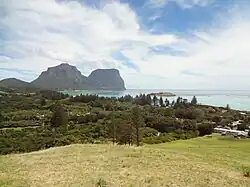
Lord Howe was uninhabited when the HMS Supply charted it in May 1788, just months after the First Fleet's arrival at Sydney Cove. It soon became a victualling stop on the Sydney–Norfolk run and a whaling base, and from the 1930s until 1974 its sheltered lagoon hosted flying boats running between Sydney, New Zealand and the Americas. The island today is the eroded crown of an extinct shield volcano: a 10 km long, 1.5 km wide arc bracketed by the brooding twin summits of Mount Lidgbird (777 m) and Mount Gower (875 m) to the south, with a fringing reef — the world's most southerly true coral reef — sheltering the calm eastern lagoon.
What makes Lord Howe distinctive is not any single sight but the texture of a place where everyone knows everyone. With no mobile phone reception and a cap of 400 tourists, the island substitutes a "people network" for connectivity: messages are passed between locals and visitors as they cross paths on the lagoon road. Restaurants are booked by noon, dinner starts at 6:30 PM islandwide because that's when accommodations run the lift service, and the single ATM lives inside the (usually unlocked) door of the Bowling Club. Expect genuine warmth rather than resort polish.
The climate is subtropical-oceanic. Summer (Dec–Feb) is the prime window — warm, breezy, ideal for swimming, snorkelling and Mount Gower hikes. Shoulder seasons (Oct–Nov, Mar–Apr) are quieter and reliable. Winter (Jun–Aug) is cooler, wetter and windier, and is when flights are most likely to turn around without landing. Tropical cyclones occur but are rare. The settled area runs along the lagoon flats in the island's narrow middle, with the airport at the southern end and Mount Gower's basalt cliffs filling the south.
Planning Lord Howe Island? Tell us your dates and we’ll tailor the trip.
Ask on WhatsAppHow do you get there?
By Plane
Lord Howe Island Airport (LDH) sits at the southern end of the lagoon strip, around 2–3 km from most accommodation. The runway is short and famously difficult, restricting traffic to small turboprops.
- QantasLink operates daily flights (more frequent in summer) from Sydney (SYD) using 36-seat Dash 8-200s. Best option if you have luggage or are nervous about small aircraft.
- Eastern Air Services runs 10-seat twin props from Newcastle, Port Macquarie and the Gold Coast a few times a week.
Flight time is roughly two hours from Sydney. Return fares hover around A$1,000–1,200, making this by some margin Australia's most expensive domestic route. Qantas releases a small number of reward seats; the points price is set by distance and is good value if you can secure one. Book flights at the same time as accommodation — both have hard capacity limits.
Weather diversions ("scenic flights") and luggage left behind for the next day are facts of life, particularly in winter. If you plan to dive, observe the no-fly-after-diving window: there is no decompression chamber on the island.
All flights are met by accommodation hosts who will ask where you're staying and drive you there free of charge.
The island is built for bicycles. The flat lagoon road links the airport, all accommodation, the three shops, the restaurants and the golf and bowling clubs, all within easy cycling distance. Bike racks stand outside every public building, and helmets are mandatory.
- Wilson's Hire — the default bike rental for visitors whose accommodation doesn't supply them. Bikes from around A$8 per day; book ahead, like everything else on Lord Howe.
- Walking works for the village core and most beaches.
- Airport transfers and a 6:30 PM dinner lift are included by every accommodation provider; restaurants return you home after the meal.
There is no taxi, no Uber and no public transport on the island. Speed limits are low (25 km/h in the settlement). Don't bother bringing a SIM — there is no mobile network; landlines and the free phone outside Thompson's Store are how things get arranged.
What are the things to do?
Lord Howe Island Museum — corner of Lagoon Road and Middle Beach Road. One room on island history, one on its World Heritage natural values. A good first stop. Open 9 AM – 3 PM daily. Entry by donation. ☎ +61 2 6563 2111.
Botanic Gardens — small formal garden on Lagoon Road just past the museum. In truth the whole island is a botanic garden, with banyans and pandanus along the lagoon front. Free.
Catalina Wreckage — the Catalina Monument stands beside the bike rack at Old Settlement Beach. The RAAF flying boat struck Malabar Ridge attempting a lagoon landing in poor weather; the wreckage is still visible on the ridge from the path behind the beach.
Malabar Ridge Lookout — the classic short climb (track meets the road about 50 m short of Ned's Beach), with cliff-edge views over nesting seabirds and the turquoise lagoon. Continue to Kim's Lookout and descend the North Bay track to Old Settlement for a half-day loop.
Mount Gower — at 875 m, one of the great day-walks of Australia. Guided only, full-day, pre-booked. Strenuous; ropes on the exposed sections.
Ned's Beach — protected fish-feeding zone where kingfish, wrasse and mullet swarm in ankle-deep water. Bring A$1 coins for the food dispenser.
Ball's Pyramid — a 562 m basalt sea stack 23 km south-east of the island, visible from southern viewpoints and reached by dive and fishing charters. Home to the rediscovered Lord Howe Island stick insect.
Snorkelling — the headline activity. Ned's Beach for coral and reef fish steps from the sand; Erscott's Hole (near the airport reef edge) for some of the best accessible coral, with a longer swim or a boat drop; Comet's Hole, about 100 m off the airport runway, for Galapagos sharks; Old Settlement Beach for green turtles grazing on seagrass. Gear can be hired at Wilson's or on the beach at Ned's.
Scuba diving — multiple operators run trips to the lagoon reef and offshore pinnacles, including the spectacular drop-offs at Ball's Pyramid. Remember: no chamber on the island and the no-fly-after-diving rule.
Glass-bottom boat tours — easy way to see the reef without getting wet, with informative skippers.
Kayaking and stand-up paddleboarding — the lagoon is sheltered and flat-water beginner-friendly. Hires available locally.
Bushwalking — Malabar Ridge / Kim's Lookout / North Bay loop (half-day), Transit Hill, Goat House Cave (steep), and the marquee Mount Gower guided climb. Always carry water.
Fishing — deep-sea, rock and shore charters operate. Spear fishing is prohibited. Catches frequently turn up on restaurant menus that night.
Golf — meticulously kept course; clubs available at the clubhouse. A$40 green fee via honesty box at the clubhouse.
Tennis — court opposite Thompson's Store. A$10 per hour; book and pick up racquets and balls at the store.
Bird-watching — the island is a major seabird breeding site (providence petrels, shearwaters, sooty terns); the endemic Lord Howe woodhen is now back from the brink and easily seen.
Jetty jumping at high tide — a local kids' tradition off the main wharf.
Planning Lord Howe Island? Want these on a customised itinerary?
Ask on WhatsAppWhere to eat?
Lord Howe dining is small, seasonal and high-end. Expect short, often-changing menus dominated by locally caught fish (kingfish is the staple), four or so mains per restaurant per night, and mains around A$25 at the clubs, A$35–55 elsewhere. The island runs on a fixed evening rhythm: book the night before by noon (use the booking sheet outside each restaurant or the free phone outside Thompson's Store), put your name down at your accommodation for the 6:30 PM lift, and the restaurant will drive you home afterwards. Dinner begins at 6:30 PM islandwide.
For lunch, options are limited and finish by 2 PM: Thompson's Store hamburgers (~A$8), rolls and sandwiches from the Anchorage or the Coral Café (around A$15). Most accommodation has self-catering facilities, and there are beach barbecues stocked with wood — bring matches and firelighters.
- Pandanus Restaurant (Pinetrees Lodge) — long-running fine-dining room built around local seafood and island produce; the classic Lord Howe dinner. Mains around A$45–55.
- Anchorage Restaurant — relaxed, with a popular lunch offering and a wood-fired menu in the evening.
- Coral Café — the daytime go-to for breakfast, coffee and sandwiches; closes by mid-afternoon.
- Bowling Club — the locals' choice, with bistro-style mains around A$25, cold beer and the island's only ATM by the door.
- Golf Club — casual clubhouse meals, good value by Lord Howe standards.
Where to drink?
Lord Howe's drinking scene is, like its dining, small and sociable rather than late or loud — there are no nightclubs, and most evenings wind up by 10 PM.
- Bowling Club — the island's social centrepiece. Cheap cold beer, friendly locals, and the only ATM on Lord Howe inside the door.
- Golf Club — a quieter alternative with a clubhouse bar that catches the late-afternoon light.
- Lord Howe Island Brewing Co. — a small craft brewery established on the island; ask at the Bowling Club, Anchorage, or your accommodation for current taps.
- Pinetrees Lodge bar — open to non-residents around dinner; wine list lifted well above what you'd expect for a 350-person island.
Tap water on Lord Howe is rainwater-tank sourced and safe to drink — bring a refillable bottle and skip the imported plastic. Coffee on the island is competent rather than third-wave: the Coral Café and Anchorage are the reliable daytime stops.
Planning Lord Howe Island? We’ll book the stays and dining for you.
Ask on WhatsAppWhere to stay?
The island's 400-visitor cap means accommodation must be booked well in advance — often at the same time as your flights — and lock-in prices are higher than mainland equivalents. There are no large resorts and no true backpacker hostels.
Budget
- Leanda Lei Apartments — self-contained one- and two-bedroom apartments on the lagoon side; the closest Lord Howe gets to "budget" and popular with families. From around A$250–350 per night.
- Ebbtide Apartments — simple, self-catering units close to the village and Ned's Beach. From around A$280 per night.
Mid-range
- Somerset Apartments — well-kept apartments a short walk from Old Settlement Beach, with bikes provided. From around A$350–450 per night.
- Beachcomber Lodge — traditional lodge-style rooms with breakfast included, central to the village. From around A$400 per night.
Upscale / heritage
- Pinetrees Lodge — operating since 1842 and run by the same family for six generations, set in Norfolk pine gardens behind Lagoon Beach. All-inclusive packages (accommodation, meals, transfers, guided activities). From around A$650–900 per person per night, twin share.
- Capella Lodge — boutique luxury perched above the southern end of the island with picture-window views of Mount Gower and Lidgbird; nine suites, multi-night minimums. From around A$1,500+ per person per night, all-inclusive.
- Arajilla Retreat — intimate, kentia-shaded retreat near Old Settlement Beach with a spa and inclusive dining. From around A$900+ per person per night.
What should you buy?
There is no real "shopping" on Lord Howe in the resort sense — three small general stores, a handful of craft outlets, and that's it. Island prices run noticeably higher than the mainland (think A$5.10 for a litre of milk, A$9.90 for a sourdough loaf) because everything arrives on the supply ship.
- Thompson's Store — next to the post office in the village. 9 AM – 6 PM. Groceries, drinks, ice creams, snorkels, beach clothing; sells lunch hamburgers (around A$8, 11 AM – 2 PM).
- Joy's Shop — on Middle Beach Road just before Heartbreak Hill, up from the museum. The widest range of groceries and supplies on the island.
- Diamonds (formerly The Top Shop) — between Thompson's and the lagoon. Fresh island-caught seafood, will deliver to your accommodation. Limited opening hours.
- The Beach Boutique — local clothing and gifts; the closest the island gets to fashion retail.
- Small arts, crafts and souvenir outlets, a hairdressing salon, and limited beauty/masseur facilities round out the offering.
Money: Only Australian dollars are accepted; foreign currency and traveller's cheques cannot be exchanged. Credit cards are widely (but not universally) accepted, usually with a ~2% surcharge — Australian EFTPOS avoids the surcharge. Westpac and Commonwealth Bank both have limited weekday hours, the post office acts as an agent for some others, and there is a single ATM inside the entrance of the Bowling Club. No bargaining culture — prices are prices.
Where to go next?
- Ball's Pyramid (23 km south-east, ~1 hr by boat) — the world's tallest sea stack and a bucket-list dive and fishing destination; day trips run from Lord Howe when conditions allow.
- Sydney (~2 hr flight) — the usual gateway, worth two or three days for the harbour, Bondi and the Blue Mountains.
- Norfolk Island (~900 km north-east) — historically linked to Lord Howe as the next Pacific stop; convict ruins, pine forests and another small-island pace. Reached via Sydney or Brisbane.
- Byron Bay (via Gold Coast or Ballina, if flying Eastern Air Services back to the mainland) — surf town and hinterland rainforest, a natural pair with Lord Howe's outdoors focus.
- Port Macquarie (~1.5 hr Eastern Air Services flight) — laid-back NSW mid-north coast base with koala hospital, beaches and the Hastings River.
- Newcastle (~1.5 hr Eastern Air Services flight) — Australia's second-oldest city, with surf beaches, an emerging food scene and easy onward links to the Hunter Valley wineries.
Nearby in New South Wales
More places to explore around Lord Howe Island.
Guide content as of May 2026. Portions adapted from Wikivoyage, CC BY-SA 4.0.

Contact Us
Get in touch with us.
Get in touch
Contact Us
Tell us where you'd like to go and how you like to travel. A real Tripcuro planner — not a bot — will craft an itinerary around you.
- Personalised, hassle-free planning end-to-end
- Transparent pricing, no hidden costs
- 24/7 support for complete peace of mind