
Goulburn
New South Wales, Australia
Why visit Goulburn?
Goulburn sits at the confluence of the Wollondilly and Mulwaree Rivers, on fertile land that was for centuries home to local Aboriginal peoples. European settlers reached the area in the late 1700s, the first land grant was made in 1825, and the town grew on the road south from Sydney (now the Hume Highway) as the administrative centre of the "Argyle County" district. It prospered during the gold rush — when many of its grand buildings were constructed — and with the arrival of the Main South Railway between Sydney and Melbourne in 1869, which is still in operation. The district became famous for its merino wool, shipped from Goulburn around Australia and overseas.
Goulburn has the unique distinction of being granted city status twice — first in 1853 by Queen Victoria as a "cathedral city" (allowing the construction of St Saviour's Cathedral), and officially again in 1885. In the 20th century its importance declined as coastal cities grew and government bodies drifted to nearby Canberra, and the Hume Highway bypassed it in the 1990s; but it has retained its heritage and remains an important part of Australia's early history. Though quiet compared with Sydney two hours up the road, it has a surprising amount to see and makes a good stop between Sydney, Canberra and the Southern Highlands.
Sitting on the tablelands, Goulburn has a cool four-season climate: warm summers, crisp autumns, cold and often frosty winters, and fresh springs.
Planning Goulburn? Tell us your dates and we’ll tailor the trip.
Ask on WhatsAppHow do you get there?
By Train
Goulburn is on the Main South Line, served by NSW TrainLink XPT and regional services between Sydney and Canberra/Melbourne, with a direct connection to Sydney's Central station (around 2.5 hours). The historic station is close to the city centre.
By Car / Road
Goulburn is just off the Hume Motorway (M31), about 200 km (roughly 2 hours) southwest of Sydney and around 90 km (1 hour) north of Canberra, making it a natural stopping point on the Sydney–Canberra–Melbourne drive. It connects to the Southern Highlands and to Bungonia and the coast via regional roads. Coaches on the Hume corridor also stop here.
The heritage city centre is compact and easily explored on foot, with the main commercial streets, cathedral and public buildings close together. A car is useful for reaching the Big Merino, the surrounding rural attractions and nearby Bungonia National Park. Local bus services cover the city and suburbs.
What are the things to do?
The Big Merino ("Rambo") — Goulburn's giant concrete merino ram, a classic Australian "big thing" celebrating the city's wool heritage, with a gift shop and viewing area inside.
St Saviour's Cathedral — A fine Gothic Revival cathedral, the centrepiece of Goulburn's status as a cathedral city.
Goulburn Historic Waterworks — A rare working steam-powered beam-engine pumping station, an industrial-heritage gem on the river.
Riversdale and heritage streetscapes — National Trust properties and a wealth of 19th-century public buildings reflect the city's gold-era prosperity.
Rocky Hill War Memorial — A hilltop memorial and lookout with views over the city.
Heritage walks — Self-guided trails through the historic centre take in the cathedral, courthouse and grand public buildings.
Industrial heritage — Visit the steam-powered Historic Waterworks on operating days.
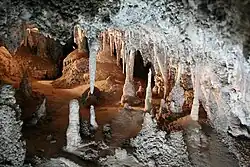
Nearby nature — Bungonia National Park, with its deep limestone gorge and caves, is a short drive east.
Markets and produce — The district's rural produce features at local markets.
Planning Goulburn? Want these on a customised itinerary?
Ask on WhatsAppWhere to eat?
Goulburn has a solid spread of cafés, bakeries, pub bistros and restaurants serving the city and the steady stream of highway travellers, drawing on the produce of the surrounding tablelands.
Where to drink?
The city's historic hotels serve the usual Australian beers and bistro fare, and there is a growing café and small-bar scene in the heritage centre. The surrounding tablelands also have cool-climate wineries within reach. Tap water is safe to drink.
Planning Goulburn? We’ll book the stays and dining for you.
Ask on WhatsAppWhere to stay?
- Budget — Motels along the highway approaches and pub accommodation in the centre.
- Mid-range — Motor inns and modern hotels near the city centre.
- Upscale / heritage — Boutique and heritage accommodation in restored period buildings and rural guesthouses.
What should you buy?
The central streets hold Goulburn's main shopping, mixing national retailers with cafés and specialty shops in heritage buildings. Wool products and regional produce are fitting local buys, and the Big Merino's gift shop leans into the city's sheep heritage.
Where to go next?
- Canberra (ACT) (around 90 km / 1 hr) — The national capital, with its museums, galleries and Parliament.
- Bungonia National Park (around 30 km / 30 min) — Deep limestone gorge, caves and bushwalks.
- Bowral / Southern Highlands (around 60 km / 50 min) — Cool-climate gardens, villages and wineries.
- Yass (around 90 km / 1 hr) — Historic town to the northwest, near the wine country of the Canberra district.
- Crookwell (around 40 km / 40 min) — Highland town known for its windfarms and cool-climate produce.
Nearby in New South Wales
More places to explore around Goulburn.
Guide content as of June 2026. Portions adapted from Wikivoyage, CC BY-SA 4.0.

Contact Us
Get in touch with us.
Get in touch
Contact Us
Tell us where you'd like to go and how you like to travel. A real Tripcuro planner — not a bot — will craft an itinerary around you.
- Personalised, hassle-free planning end-to-end
- Transparent pricing, no hidden costs
- 24/7 support for complete peace of mind